We have become eagles who glaze over the information peaks from sunrise to sunset trumpeted in all languages, in colors, in plumes of sweetness and vigor masters of the dreamlike airs…
Today we are lions who roar their fury of life or spread out, troubled in the sunlight of their screens, watching the family of the world, waiting for the best and theories in the wind
But who would have believed it? by the glow of virtual campfires for a reconstructed holiday, the shadows of the past took pity and before disappearing, they turned us into griffins.
We present this work in honor of the poet’s 150th birthday.
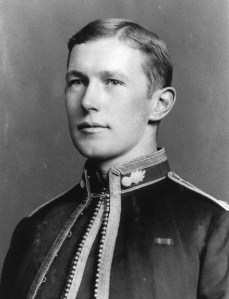
John McCrae Canadian 1872 – 1918
My lover died a century ago, Her dear heart stricken by my sland’rous breath, Wherefore the Gods forbade that I should know The peace of death.
Men pass my grave, and say, “‘Twere well to sleep, Like such an one, amid the uncaring dead!” How should they know the vigil that I keep, The tears I shed?
Upon the grave, I count with lifeless breath, Each night, each year, the flowers that bloom and die, Deeming the leaves, that fall to dreamless death, More blest than I.
‘Twas just last year—I heard two lovers pass So near, I caught the tender words he said: To-night the rain-drenched breezes sway the grass Above his head.
That night full envious of his life was I, That youth and love should stand at his behest; To-night, I envy him, that he should lie At utter rest.
We present this work in honor of the poet’s 190th birthday.
Louisa May Alcott American 1832 – 1888
The moonlight fades from flower and rose And the stars dim one by one; The tale is told, the song is sung, And the Fairy feast is done. The night-wind rocks the sleeping flowers, And sings to them, soft and low. The early birds erelong will wake: ‘T is time for the Elves to go.
O’er the sleeping earth we silently pass, Unseen by mortal eye, And send sweet dreams, as we lightly float Through the quiet moonlit sky;– For the stars’ soft eyes alone may see, And the flowers alone may know, The feasts we hold, the tales we tell; So’t is time for the Elves to go.
From bird, and blossom, and bee, We learn the lessons they teach; And seek, by kindly deeds, to win A loving friend in each. And though unseen on earth we dwell, Sweet voices whisper low, And gentle hearts most joyously greet The Elves where’er they go.
When next we meet in the Fairy dell, May the silver moon’s soft light Shine then on faces gay as now, And Elfin hearts as light. Now spread each wing, for the eastern sky With sunlight soon shall glow. The morning star shall light us home: Farewell! for the Elves must go.
We present this work in honor of the poet’s 115th birthday.
Harivansh Rai Bachchan Indian 1907 – 2003
He who has destroyed all the creeds With fire from his burning breast, He who quits the temple, mosque and church A drunken heretic, unblest, Who sees the snares, and now comes running From Pandit’s, Priest’s and Mullah’s cunning, He, and he only, shall today Be in my House, a welcome Guest.
We present this work in honor of the 75th anniversary of the poet’s death.
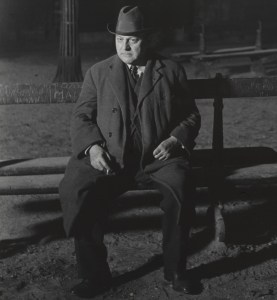
Leon-Paul Fargue French 1876 – 1947
I love to go down into the town at the hour when the sky lies close against the horizon like a vast whale. It sinks down into the heart of the street like a worker into his ditch. The bell has swung before the windows and the panes are lit up. It is as though all the eyes of the evening were filled with tears. In an opal the lamps and the day wrestle gently with each other. The advertising signs write to each other, spreading themselves in letters of lava across the face of the buildings. The rope dancers stride over the abyss. A great long legged spider spins its web from the hooks of a bush full of flowers. An acrobat climbs up and throws himself down. Shipwrecked sailors signal foreign vessels. The houses advance like the prows of galleys with all their portholes blazing. Man runs between their golden flames like a waif in a harbor.
Dark and streaming the autos arrive from everywhere, like sharks to the quarry of a great shipwreck, blind to the fulgurant signals of men.
We present this work in honor of the Japanese holiday, Labor Thanksgiving Day.
Ryuichi Tamura Japanese 1923 – 1998
Hoya is now in the middle of autumn. I am now in the middle of misery The misery has deep origins It has a deep-rooted history.
Blazing summer has finally ended Autumn breezes pass from one end to the other of the Musashino plain My small house sits on a spot in dark Musashino, silent Musashino
In my small house I have a small room of my own In the small room I turn on a light I labor, zeroing in on my misery, until the deep-rooted misery in my heart thrusts its roots into the earth, and grows into that gigantic Zelkova tree in my forsaken backyard
When night stirred at sea And the fire brought a crowd in, They say that her beauty Was music in mouth And few in the candlelight Thought her too proud, For the house of the planter Is known by the trees.
Men that had seen her Drank deep and were silent, The women were speaking Wherever she went — As a bell that is rung Or a wonder told shyly. And O she was the Sunday In every week.





 Poets Corner