I will die mortal, that is to say having passed through this world without breaking or staining it. I didn’t invent a single vice, but I tasted all the virtues: I leased my soul to hypocrisy: I have trafficked with words, with signs, with silence; I surrendered to the lie: I have hoped for hope, I have loved love, and one day I even pronounced the words My Country; I accepted the hoax: I have been mother, citizen, daughter, friend, companion, lover; I believed in the truth: two and two are four, María Mercedes ought to be born, ought to grow, reproduce herself and die and that’s what I’m doing. I am the sampler of the 20th century. And when fear arrives I go to watch television to have a dialogue with my lies.
We present this work in honor of the 45th anniversary of the poet’s death.
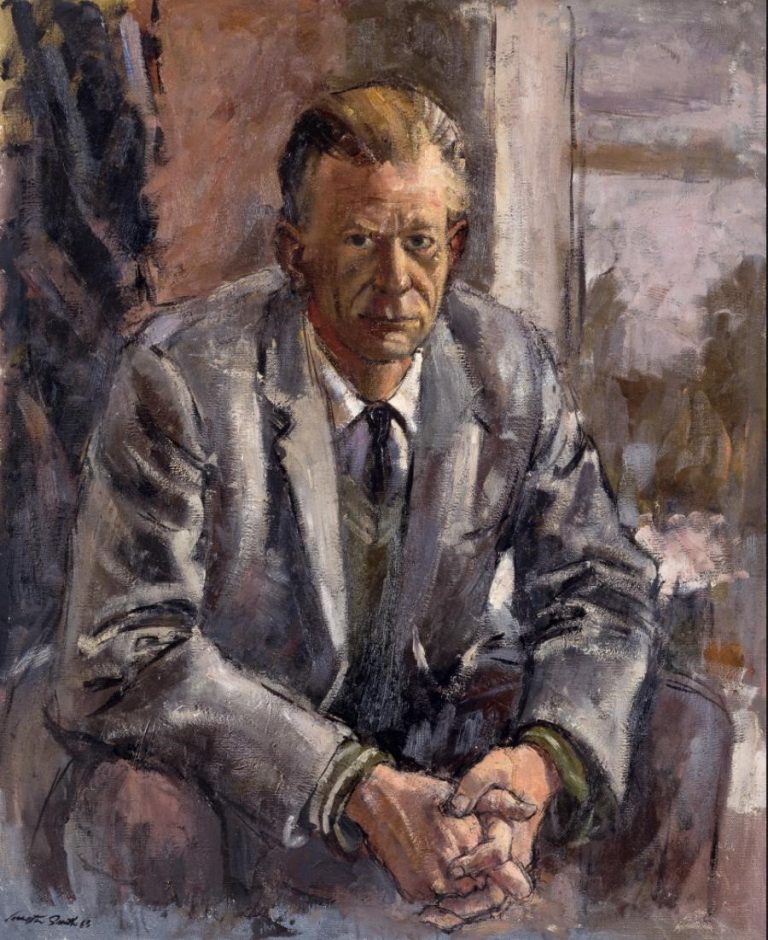
James McAuley Australian 1917 – 1976
My father and my mother never quarrelled. They were united in a kind of love As daily as the Sydney Morning Herald, Rather than like the eagle or the dove.
I never saw them casually touch, Or show a moment’s joy in one another. Why should this matter to me now so much? I think it bore more hardly on my mother,
Who had more generous feelings to express. My father had dammed up his Irish blood Against all drinking praying fecklessness, And stiffened into stone and creaking wood.
His lips would make a switching sound, as though Spontaneous impulse must be kept at bay. That it was mainly weakness I see now, But then my feelings curled back in dismay.
We present this work in honor of the 485th anniversary of the poet’s death.
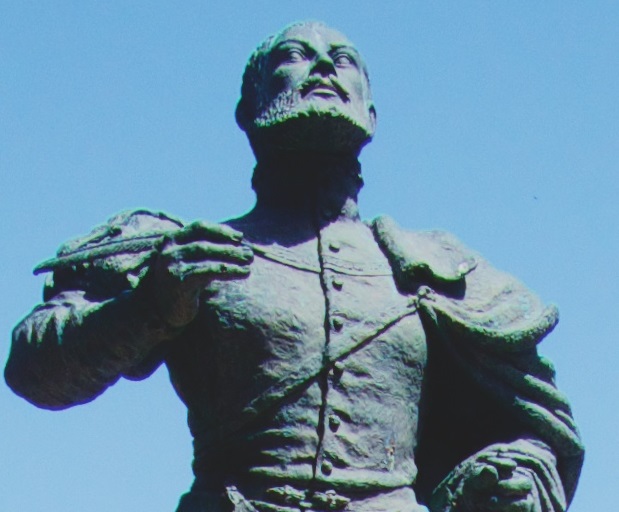
Garcilaso de la Vega Spanish 1501 – 1536
I Had I the sweet resounding lyre Whose voice could in a moment chain The howling wind’s ungoverned ire, And movement of the raging main; On savage hills the leopard rein,
II The lion’s fiery soul entrance, And lead along with golden tones The fascinated trees and stones In voluntary dance, Think not, think not, fair Flower of Gnide,
III It e’er should celebrate the scars, Dust raised, bloodshed, or laurels dyed Beneath the gonfalon of Mars; Or borne sublime on festal cars, The chiefs who to submission sank
IV The rebel German’s soul of soul, And forged the chains that now control The frenzy of the Frank. No, no! its harmonies should ring In vaunt of glories all thine own,
V A discord sometimes from the string Struck forth to make thy harshness known; The fingered chords should speak alone Of Beauty’s triumphs, Love’s alarms, And one who, made by thy disdain
VI Pale as a lily dipt in twain, Bewails thy fatal charms. Of that poor captive, too, contemned, I speak, his doom you might deploreIn Venus’ galliot-shell condemned
VII To strain for life the heavy oar. Through thee no longer as of yore He tames the unmanageable steed, With curb of gold his pride restrains, Or with pressed spurs and shaken reins
VIII Torments him into speed. Not now he wields for thy sweet sake The sword in his accomplished hand, Nor grapples like a poisonous snake, The wrestler on the yellow sand;
IX The old heroic harp his hand Consults not now, it can but kiss The amorous lute’s dissolving strings, Which murmur forth a thousand things Of banishment from bliss.
X Through thee, my dearest friend and best Grows harsh, importunate, and grave; Myself have been his port of rest From shipwreck and the yawning wave; Yet now so high his passions rave
XI Above lost reason ‘s conquered laws, That not the traveller ere he slays The asp, its sting, as he my face So dreads, or so abhors. In snows on rocks, sweet Flower of Gnide,
XII Thou wert not cradled, wert not born, She who has no fault beside Should ne’er be signalized for scorn; Else, tremble at the fate forlorn Of Anaxarete, who spurned
XIII The weeping Iphis from her gate, Who, scoffing long, relenting late, Was to a statue turned. Whilst yet soft pity she repelled, Whilst yet she steeled her heart in pride,
XIV From her friezed window she beheld Aghast, the lifeless suicide; Around his lily neck was tied What freed his spirit from her chains, And purchased with a few short sighs
XV For her immortal agonies, Imperishable pains. Then first she felt her bosom bleed With love and pity; vain distress! Oh what deep rigors must succeed
XVI This first sole touch of tenderness! Her eyes grow glazed and motionless, Nailed on his wavering corse, each bone Hardening in growth, invades her flesh, Which, late so rosy, warm, and fresh,
XVII Now stagnates into stone. From limb to limb the frost aspire, Her vitals curdle with the cold; The blood forgets its crimson fire, The veins that e’er its motion rolled;
XVIII Till now the virgin’s glorious mould Was wholly into marble changed, On which the Salaminians gazed, Less at the prodigy amazed, Than of the crime avenged.
XIX Then tempt not thou Fate’s angry arms, By cruel frown or icy taunt; But let thy perfect deeds and charms To poets’ harps, Divinest, grant Themes worthy their immortal vaunt;
XX Else must our weeping strings presume To celebrate in strains of woe, The justice of some signal blow That strikes thee to the tomb.
In honor of Durga Puja, we present this work by one of modern India’s most evocative poets.
Kamala Surayya Indian 1934 – 2009
You planned to tame a swallow, to hold her In the long summer of your love so that she would forget Not the raw seasons alone, and the homes left behind, but Also her nature, the urge to fly, and the endless Pathways of the sky. It was not to gather knowledge Of yet another man that I came to you but to learn What I was, and by learning, to learn to grow, but every Lesson you gave was about yourself. You were pleased With my body’s response, its weather, its usual shallow Convulsions. You dribbled spittle into my mouth, you poured
Yourself into every nook and cranny, you embalmed My poor lust with your bitter-sweet juices. You called me wife, I was taught to break saccharine into your tea and To offer at the right moment the vitamins. Cowering Beneath your monstrous ego I ate the magic loaf and Became a dwarf. I lost my will and reason, to all your Questions I mumbled incoherent replies. The summer Begins to pall. I remember the rudder breezes Of the fall and the smoke from the burning leaves. Your room is Always lit by artificial lights, your windows always
Shut. Even the air-conditioner helps so little, All pervasive is the male scent of your breath. The cut flowers In the vases have begun to smell of human sweat. There is No more singing, no more dance, my mind is an old Playhouse with all its lights put out. The strong man’s technique is Always the same, he serves his love in lethal doses, For, love is Narcissus at the water’s edge, haunted
By its own lonely face, and yet it must seek at last An end, a pure, total freedom, it must will the mirrors To shatter and the kind night to erase the water.
We present this work in honor of the 230th anniversary of the poet’s death.
Anna Louisa Karsch German 1722 – 1791
My young days were oppressed with cares, On summer mornings I sat there, Sighing my poor stammered song. Not for a young man was my melody, No! for God who the crowds of men does see As if they were an anthill’s throng. Without emotions, as I’ve often said, Without affection, I was wed, Became a mother, as in times of war A young girl would not trust love’s bliss,
On whom a soldier forced his kiss, Whose army reigned as conqueror.
We present this work in honor of the International Day of the Girl.
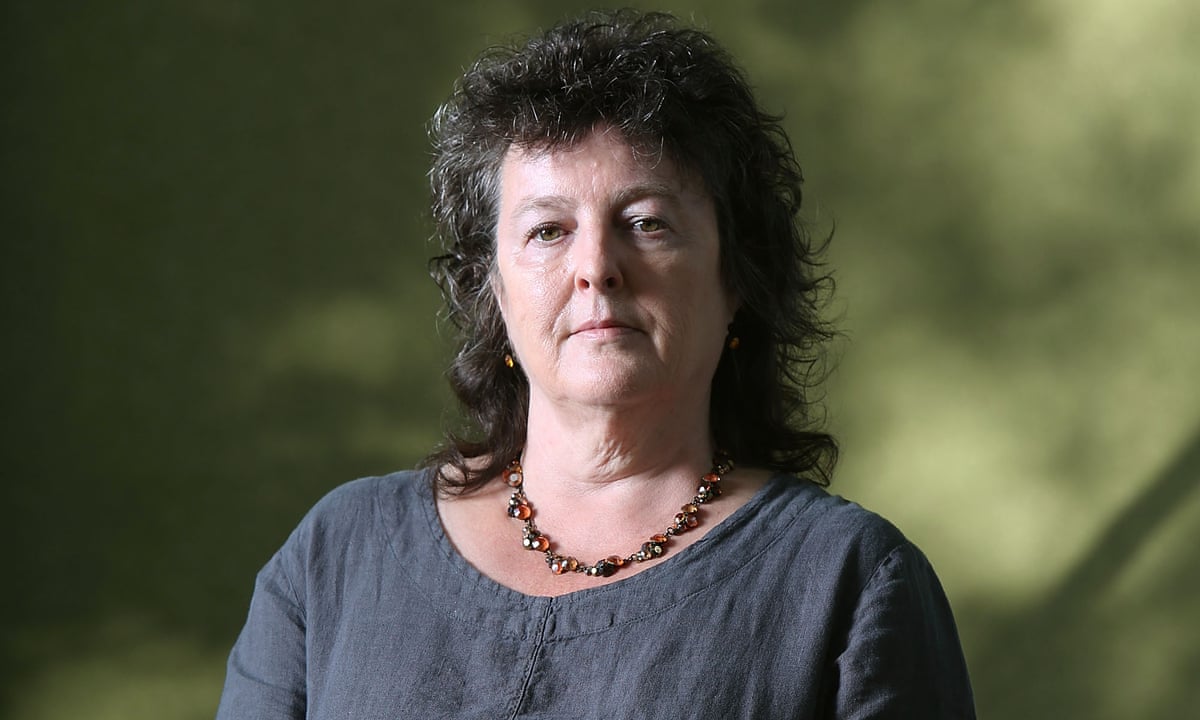
Carol Ann Duffy Scots b. 1955
You could travel up the Blue Nile with your finger, tracing the route while Mrs Tilscher chanted the scenery. Tana. Ethiopia. Khartoum. Aswân. That for an hour, then a skittle of milk and the chalky Pyramids rubbed into dust. A window opened with a long pole. The laugh of a bell swung by a running child.
This was better than home. Enthralling books. The classroom glowed like a sweet shop. Sugar paper. Coloured shapes. Brady and Hindley faded, like the faint, uneasy smudge of a mistake. Mrs Tilscher loved you. Some mornings, you found she’d left a good gold star by your name. The scent of a pencil slowly, carefully, shaved. A xylophone’s nonsense heard from another form.
Over the Easter term, the inky tadpoles changed from commas into exclamation marks. Three frogs hopped in the playground, freed by a dunce, followed by a line of kids, jumping and croaking away from the lunch queue. A rough boy told you how you were born. You kicked him, but stared at your parents, appalled, when you got back home.
That feverish July, the air tasted of electricity. A tangible alarm made you always untidy, hot, fractious under the heavy, sexy sky. You asked her how you were born and Mrs Tilscher smiled, then turned away. Reports were handed out. You ran through the gates, impatient to be grown, as the sky split open into a thunderstorm.
We present this work in honor of the poet’s 70th birthday.
Maria Negroni Argentine b. 1951
Am I that woman in the dance raising inexperience like light addressing herself like a feather to her most elusive whereness? Strange flower growing soft out of the frame of language trying on sandals and flinging into writing unscathed by writing.
Winding the body’s lexicon it hit me in the takeaway shown my treasure in nothing I wavered: submit or escape it’s a question of what is lost in the beat of a voluptuous skirt what battle is evaded what dire endearing enemy abandoned.
Strange as if lit from within with the indicative expounding from neckline to poem curve I learned to conjugate affairs but for what if the nitty-gritty of nothing like eternity consisted in leaving me naked doubtlessly an odd privilege.
What if time were lawless? Where do you keep what wasn’t? They go on like this and that you never know what kills you and January sun and you just came just like a breath and worked me to confine my body’s surrounds to the exacting beauty of lack.
And I who’d thought to interject geography as flamboyant sun retrace my past in slip-ups sweet-talking myself tough and even pin on you a trinket clinched knees sissy feet which you’ll interpret as expertise but is just a pretense for hurt.
If together where the belly bends if I contracted and opened for you if something like a sky disclosed to what encloses inside blue if you drew me so disposed if I existed where you lost me if a spasm and other orphandoms if imperfection is a gift.
Contrary to the clock hands too long in two voices unreleased you walk me through my legs to tumult with no predicate while I angle for the occasional avails of female cunning tattooing the flipside of language digits an animal won’t give up.
Night is a house to wander with Spanish moss poison I mean, to look for looseness beyond your foremost failure maybe that was the attraction out of all you gave me and got how you tossed me into boleos heart antsy the secret clear.






 Poets Corner