The Bear on the Delhi Road

We present this work in honor of the 25th anniversary of the poet’s death.
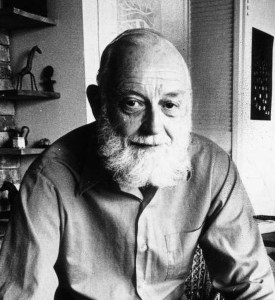
Earle Birney
Canadian
1904 – 1995


Unreal tall as a myth
by the road the Himalayan bear
is beating the brilliant air
with his crooked arms
About him two men bare
spindly as locusts leap
One pulls on a ring
in the great soft nose His mate
flicks flicks with a stick
up at the rolling eyes

They have not led him here
down from the fabulous hills
to this bald alien plain
and the clamorous world to kill
but simply to teach him to dance

They are peaceful both these spare
men of Kashmir and the bear
alive is their living too
If far on the Delhi way
around him galvanic they dance
it is merely to wear wear
from his shaggy body the tranced
wish forever to stay
only an ambling bear
four-footed in berries

It is no more joyous for them
in this hot dust to prance
out of reach of the praying claws
sharpened to paw for ants
in the shadows of deodars
It is not easy to free
myth from reality
or rear this fellow up
to lurch lurch with them
in the tranced dancing of men

After All

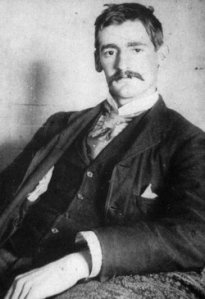
Henry Lawson
Australian
1867 – 1922


The brooding ghosts of Australian night have gone from the bush and town;
My spirit revives in the morning breeze,
though it died when the sun went down;
The river is high and the stream is strong,
and the grass is green and tall,
And I fain would think that this world of ours is a good world after all.

The light of passion in dreamy eyes, and a page of truth well read,
The glorious thrill in a heart grown cold of the spirit I thought was dead,
A song that goes to a comrade’s heart, and a tear of pride let fall —
And my soul is strong! and the world to me is a grand world after all!

Let our enemies go by their old dull tracks,
and theirs be the fault or shame
(The man is bitter against the world who has only himself to blame);
Let the darkest side of the past be dark, and only the good recall;
For I must believe that the world, my dear, is a kind world after all.

It well may be that I saw too plain, and it may be I was blind;
But I’ll keep my face to the dawning light,
though the devil may stand behind!
Though the devil may stand behind my back, I’ll not see his shadow fall,
But read the signs in the morning stars of a good world after all.

Rest, for your eyes are weary, girl — you have driven the worst away —
The ghost of the man that I might have been is gone from my heart to-day;
We’ll live for life and the best it brings till our twilight shadows fall;
My heart grows brave, and the world, my girl, is a good world after all.

A Single Word Can Brighten the Face

In honor of the Turkish holiday, Victory Day, we present this work by Turkey’s greatest folk poet.

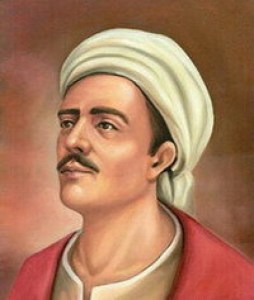
Yunus Emre
Turkey
1238 – 1320


A single word can brighten the face
of one who knows the value of words.
Ripened in silence, a single word
acquires a great energy for work.

War is cut short by a word,
and a word heals the wounds,
and there’s a word that changes
poison into butter and honey.

Let a word mature inside yourself.
Withhold the unripened thought.
Come and understand the kind of word
that reduces money and riches to dust.

Know when to speak a word
and when not to speak at all.
A single word turns the universe of hell
into eight paradises.

Follow the Way. Don’t be fooled
by what you already know. Be watchful.
Reflect before you speak.
A foolish mouth can brand your soul.

Yunus, say one last thing
about the power of words —
Only the word “I”
divides me from God.

Ode on Solitude

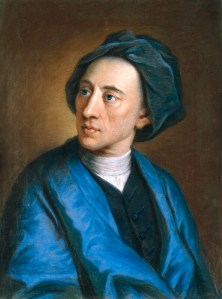
Alexander Pope
English
1688 – 1744


Happy the man, whose wish and care
A few paternal acres bound,
Content to breathe his native air,
In his own ground.

Whose heards with milk, whose fields with bread,
Whose flocks supply him with attire,
Whose trees in summer yield him shade,
In winter fire.

Blest! who can unconcern’dly find
Hours, days, and years slide soft away,
In health of body, peace of mind,
Quiet by day,

Sound sleep by night; study and ease
Together mix’d; sweet recreation,
And innocence, which most does please,
With meditation.

Thus let me live, unseen, unknown;
Thus unlamented let me dye;
Steal from the world, and not a stone
Tell where I lye.

All the Hills and Vales Along

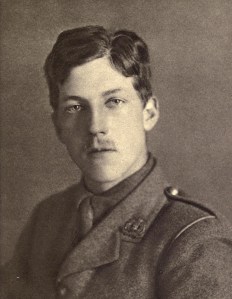
Charles Sorley
Scots
1895 – 1915


All the hills and vales along
Earth is bursting into song,
And the singers are the chaps
Who are going to die perhaps.
O sing, marching men,
Till the valleys ring again.
Give your gladness to earth’s keeping,
So be glad, when you are sleeping.

Cast away regret and rue,
Think what you are marching to.
Little live, great pass.
Jesus Christ and Barabbas
Were found the same day.
This died, that went his way.
So sing with joyful breath,
For why, you are going to death.
Teeming earth will surely store
All the gladness that you pour.

Earth that never doubts nor fears,
Earth that knows of death, not tears,
Earth that bore with joyful ease
Hemlock for Socrates,
Earth that blossomed and was glad
‘Neath the cross that Christ had,
Shall rejoice and blossom too
When the bullet reaches you.
Wherefore, men marching
On the road to death, sing!
Pour your gladness on earth’s head,
So be merry, so be dead.

From the hills and valleys earth
Shouts back the sound of mirth,
Tramp of feet and lilt of sing
Ringing all the road along.
All the music of their going,
Ringing swinging glad song-throwing,
Earth will echo still, when foot
Lies numb and voice mute.
On, marching men, on
To the gates of death with song.
Sow your gladness for earth’s reaping,
So you may be glad, though sleeping.
Strew your gladness on earth’s bed,
So be merry, so be dead.

She Kissed Me Often

We present this work in honor of the poet’s 150th birthday.

Amado Nervo
Mexican
1870 – 1919


She kissed me often, as if she feared
an imminent departure… Her affections
were restless, nervous.

I didn’t understand
such feverish haste. My coarse intention
never saw very far…
She foresaw!

She foresaw that our time would be short,
that the sail battered by the wind’s lash
was already waiting… and in her anxiety
she tried to leave me her soul with every embrace,
to put all eternity into her kisses.

The Inscription

We present this work in honor of the 30th anniversary of the poet’s death.

Mehdi Akhavan-Sales
Persian
1929 – 1990


The stone lay there like a mountain
and we sat here a weary bunch
women, men, young, old
all linked together
at the ankles, by a chain.
You could crawl to whomever your heart desired
as far as you could drag your chain.
We did not know, nor did we ask
was it a voice in our nightmare and weariness
or else, a herald from an unknown corner,
it spoke:
“The stone lying there holds a secret
inscribed on it by wise men of old.”
Thus spoke the voice over and again
and, as a wave recoiling on itself
retreated in the dark
and we said nothing
and for some time we said nothing.
Afterwards, only in our looks
many doubts and queries spoke out
then nothing but the ambush of weariness, oblivion
and silence, even in our looks
and the stone lying there.
One night, moonlight pouring damnation on us
and our swollen feet itching
one of us, whose chain was the heaviest
damned his ears and groaned: “I must go”
and we said, fatigued: “Damn our ears
damn our eyes, we must go.”
and we crawled up to where the stone lay one of us, whose chain was looser

climbed up and read:
“He shall know my secret
who turns me over!”
With a singular joy we repeated this dusty secret
under our breath as if it were a prayer
and the night was a glorious stream filled with moonlight.
One… two… three… heave-ho!
One… two… three… once more!
sweating sad, cursing, at times even crying
again…one…two…three…thus many times
hard was our task, sweet our victory
tired but happy, we felt a familiar joy
soaring with delight and ecstasy.
One of us, whose chain was lighter
saluted all, then climbed the stone
wiped the dirt-caked inscription and mouthed the words
(we were impatient)
wetted his lips (and we did the same)
and remained silent
cast a glance at us and remained silent
read again, his eyes fixed, his tongue dead
his gaze drifting over a far away unknown

we yelled to him”
“Read!” he was speechless
“Read it to us!” he stared at us in silence
after a time
he climbed down, his chain clanking
we held him up, lifeless as he was
we sat him down
he cursed our hands and his
“What did you read? huh?”
He swallowed and said faintly:
“The same was written:
“He shall know my secret
who turns me over!”
We sat
and
stared at the moon and the bright night
and the night was a sickly stream.

The Shadow of the Orange-Leaves

We present this work in honor of the poet’s 175th birthday.

Judith Gautier
French
1845 – 1917


The young girl who works
all day in her solitary chamber
is moved to tenderness if she
hears of a sudden the sound of
a jade flute.
And she imagines that she
hears the voice of a young boy.

Through the paper of the
windows the shadow of the
orange-leaves enters and sits
on her knees;

And she imagines that some-
body has torn her silken dress.