Leavetaking

In honor of the Prophet’s Birthday, we present this work by one of medieval Islam’s greatest poets.

Ibn Jakha
Arab Andalusian
11th century


On the mornings they left
we said goodbye
filled with sadness
for the absence to come.

Inside the palanquins
on the camels’ backs
I saw their faces beautiful as moons
behind veils of gold cloth.

Beneath the veils
tears crept like scorpions
over the fragrant roses
of their cheeks.

These scorpions do not harm
the cheek they mark.
they save their sting
for the heart of the sorrowful lover.

Translation by Cola Franzen

Absence

Abu Bakr Al-turtushi
Arab Andalusian
1057 – 1127


Every night I scan
the heavens with my eyes
seeking the star
that you are contemplating.

I question travelers
from the four corners of the earth
hoping to meet one
who has breathed your fragrance.

When the wind blows
I make sure it blows in my face:
the breeze might bring me
news of you.

I wander over roads
without aim, without purpose.
Perhaps a song
will sound your name.

Secretly I study
every face I see
hoping against hope
to glimpse a trace of your beauty.

Translation by Emilio García Gómez and Cola Franzen

from Lament Over the Fall of the City of Kairouan


Ibn Rashiq al-Qayrawani
Algerian
1000 – 1064


Many great men dwelt in that city
their faces shone with pure faith
they worked together to promote religion
and belief in Allah in overt and covert ways.
Many were renowned for their virtue and generosity,
and jealously preserved their respectability.

And when darkness fell, you would see them
deep in prayer like chaste monks
in the garden of Eden, that honorable place
among the beautiful houris and boys.

Thanks to its tribunes, Kairouan
was ranked among the world’s greatest.
She outranked Egypt—that was fair enough—
and left Baghdad well behind.
When the city greatly prospered
and attracted ambitious pioneers,
as she became a place for all virtues,
as well as safety and faith,
time looked at her with envious eyes
and kept many sorrows in store
—till destiny had decided to unleash the unavoidable:
troubles caused by various clans
that belonged to the Banu Hilal.
They massacred the Prophet’s nation
and defied Allah’s punishment during Ramadan.
They violated former treaties and those
under Allah’s protection without keeping their word.
They preferred to deceive their neighbors
and take their women as prisoners of war.
They tortured them in the cruelest manner
and let rancor show through their hearts.
The Muslims were divided and humiliated
at the hands of these unfaithful:
some were tortured or could do nothing,
others were killed or put in prison.
They called for help but no help came,
and when they couldn’t yell or cry anymore,
they gathered all their belongings
and valuables, whether gold, silver,
pearls, rare ornaments, or crockery.
They went out on bare feet, begging Allah
to protect them and overcome their fear.
They fled with their infants, their children,
their widows, and their spouses.
They kept their virgins safe like gazelles
lest their beauty drive the enemy mad—
chaste beauties covered with shawls
like moons shining on willow trees.

Sorrow will never disappear after such calamity
just as the eternal cycle of night and day will never end.
If Mount Thahlan had suffered the tenth of it,
its highest peaks would have crumbled!
All the cities of Iraq mourned her,
as did the villages of Syria, Egypt, and Khorasan.
Affliction and sorrow even reached
the farthest countries of the Sind and Hind,
and the land turned into a desert
from al=Andalus to Halwan.
I saw the stars rise but they did not shine,
nor did sun or moon.
I saw mountains deeply afflicted,
as were all humans and jinns.
Even Earth, because of this heavy burden,
has now a definite lean.
Will the nights, after they had separated us,
bring us together again?
Will they restore the land of Kairouan
and bring the city back to life again
after time had stolen its beauty
and caused bloodshed among rival clans?
It stands now as if it had never known riches
nor ever been a sacred land.
Time has duped its people
and cut off the ties that used to bind them.
Now they are scattered, like Saba’s peoples,
and err about the lands.
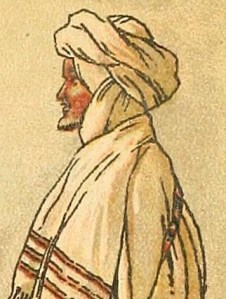
Translation by Abdelfetah Chenni

Fragments from the Qasida in the Rhyme of Nun

Ibn Zaydun
Arab Andalusian
1003 – 1071


Now we are far apart
one from the other
my heart has dried up
but my tears keep falling.

In losing you my days
have turned black.
When I was with you
even my nights were white.

It’s as though we never spent
that night together
with no third presence
save our two selves made one,

a night our lucky star
caused even gossips
who would spy on us
to turn away their eyes.

We were two secrets
held by the heart of darkness
until the tongue of dawn
threatened to denounce us.

Translation by Cola Franzen

From Al-Zahara

Ibn Zaydun
Arab Andalusian
1003 – 1071


With passion from this place
I remember you.
Horizon clear, limpid

The face of earth, and wind,
Come twilight, desists,
A tenderness sweeps me

When I see the silver.
Coiling waterways
Like necklaces detached

From throats. Delicious those
Days we spent while fate
Slept. There was peace, I mean,

And us, thieves of pleasure.
Now only flowers
Withfrost bent stems I see;

At my eyes their vivid
Centers pull, they gaze
Back at me, seeing me

Without sleep, and a light
Flickers through their cups,
In sympathy, I think.

The sun-baked rose-buds in
Bushes, remember
How their color had lit

Our morning air; and still
Breaths of wind dispense
At break of day, as then,

Perfume they gather up
From waterlilies’
Half open drowsy eyes.

Such fresh memories
Of you these few things
Waken in my mind. For

Faraway as you are
In this passion’s grip
I persist with a sigh

And pine to be at one
With you. Please God no
Calm or oblivion

Will occupy my heart,
Or close it. Listen
To the shiver of wings

At your side—it is my
Desire, and still, still
I am shaking with it

Pure love we once exchanged,
It was an unfenced
Field and we ran there, free

Like horses. But alone
I now can lay claim
To have kept faith. You left,

Left this place. In sorrow
To be here again,
l am loving you.

Translation by Christopher Middleton & Leticia Garza-Falcón

The Prisoner in Aghmāt Speaks to His Chains

Muhammad Ii Al-mu’tamid
Arab Andalusian
1040 – 1095


I say to my chains,
don’t you understand?
I have surrendered to you.
Why, then, have you no pity,
no tenderness?

You drank my blood.
You ate my flesh.
Don’t crush my bones.

My son Abu Hasim sees me
fettered by you and turns away
his heart made sore.

Have pity on an innocent boy
who never knew fear
and must now come begging to you.

Have pity on his sisters
innocent like him
who have had to swallow poison
and eat bitter fruit.

Some of them are old enough
to understand and I fear
they will go blind from weeping.

The others are now too young
to take it in and open theirs mouths
only to nurse.

Tranlsation by Cola Franzen