We present this work in honor of the 250th anniversary of the poet’s death.
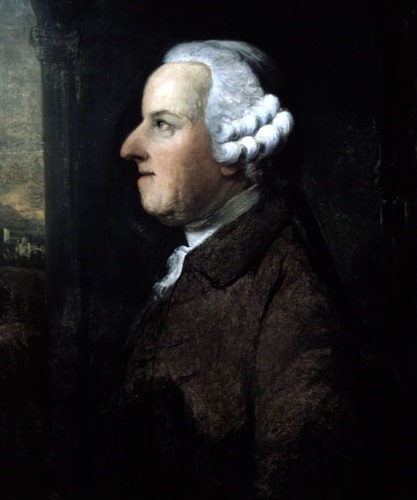
Thomas Gray English 1716 – 1771
T’was on a lofty vase’s side, Where China’s gayest art had dyed The azure flowers that blow; Demurest of the tabby kind, The pensive Selima, reclined, Gazed on the lake below.
Her conscious tail her joy declared; The fair round face, the snowy beard, The velvet of her paws, Her coat, that with the tortoise vies, Her ears of jet, and emerald eyes, She saw; and purred applause.
Still had she gazed; but ‘midst the tide Two angel forms were seen to glide, The genii of the stream: Their scaly armor’s Tyrian hue Through richest purple to the view Betrayed a golden gleam.
The hapless nymph with wonder saw: A whisker first and then a claw, With many an ardent wish, She stretched in vain to reach the prize. What female heart can gold despise? What cat’s averse to fish?
Presumptuous maid! with looks intent Again she stretched, again she bent, Nor knew the gulf between. (Malignant Fate sat by and smiled) The slippery verge her feet beguiled, She tumbled headlong in.
Eight times emerging from the flood She mewed to every watery god, Some speedy aid to send. No dolphin came, no Nereid stirred; Nor cruel Tom, nor Susan heard; A favorite has no friend!
From hence, ye beauties, undeceived, Know, one false step is ne’er retrieved, And be with caution bold. Not all that tempts your wandering eyes And heedless hearts, is lawful prize; Nor all that glisters, gold.
My steadfast love! When I saw you one day by the market-house gable my eye gave a look my heart shone out I fled with you far from friends and home.
And never was sorry: you had parlours painted rooms decked out the oven reddened and loaves made up roasts on spits and cattle slaughtered; I slept in duck-down till noontime came or later if I liked.
My steadfast friend! it comes to my mind that fine Spring day how well your hat looked with the drawn gold band, the sword silver-hilted your fine brave hand and menacing prance, and the fearful tremble of treacherous enemies. You were set to ride your slim white-faced steed and Saxons saluted down to the ground, not from good will but by dint of fear – though you died at their hands, my soul’s beloved…
My steadfast friend! And when they come home, our little pet Conchúr and baby Fear Ó Laoghaire, they will ask at once where I left their father. I will tell them in woe he is left in Cill na Martar, and they’ll call for their father and get no answer…
My steadfast friend! I didn’t credit your death till your horse came home and her reins on the ground, your heart’s blood on her back to the polished saddle where you sat – where you stood…. I gave a leap to the door, a second leap to the gate and a third on your horse.
I clapped my hands quickly and started mad running as hard as I could, to find you there dead by a low furze-bush with no Pope or bishop or clergy or priest to read a psalm over you but a spent old woman who spread her cloak corner where your blood streamed from you, and I didn’t stop to clean it but drank it from my palms.
My steadfast love! Arise, stand up and come with myself and I’ll have cattle slaughtered and call fine company and hurry up the music and make you up a bed with bright sheets upon it and fine speckled quilts to bring you out in a sweat where the cold has caught you.
II
My friend and my treasure! Many fine-made women from Cork of the sails to Droichead na Tóime would bring you great herds and a yellow gold handful, and not sleep in their room on the night of your wake.
My friend and my lamb! Don’t you believe them nor the scandal you heard nor the jealous man’s gossip that it’s sleeping I went. It was no heavy slumber but your babies so troubled and all of them needing to be settled in peace.
People of my heart, what woman in Ireland from setting of sun could stretch out beside him and bear him three sucklings and not run wild losing Art Ó Laoghaire who lies here vanquished since yesterday morning?…
Long loss, bitter grief I was not by your side when the bullet was fired so my right side could take it or the edge of my shift till I freed you to the hills, my fine-handed horseman!
My sharp bitter loss I was not at your back when the powder was fired so my fine waist could take it or the edge of my dress, till I let you go free, My grey-eyed rider, ablest for them all.
III
My friend and my treasure trove! An ugly outfit for a warrior: a coffin and a cap on that great-hearted horseman who fished in the rivers and drank in the halls with white-breasted women. My thousand confusions I have lost the use of you. Ruin and bad cess to you, ugly traitor Morris, who took the man of my house and father of my young ones – a pair walking the house and the third in my womb, and I doubt that I’ll bear it.
My friend and beloved! When you left through the gate you came in again quickly, you kissed both your children, kissed the tips of my fingers. You said: ” Eibhlín, stand up and finish with your work lively and swiftly: I am leaving our home and may never return.” I made nothing of his talk for he spoke often so.
My friend and my share! O bright-sworded rider rise up now, put on your immaculate fine suit of clothes, put on your black beaver and pull on your gloves. There above is your whip and your mare is outside. Take the narrow road Eastward where the bushes bend before you and the stream will narrow for you and men and women will bow if they have their proper manners – as I doubt they have at present…
My love, and my beloved! Not my people who have died – not my three dead children nor big Dónall Ó Conaill nor Conall drowned on the sea nor the girl of twenty-six who went across the ocean alliancing with kings – not all these do I summon but Art, reaped from his feet last night on the inch of Carriginima. The brown mare’s rider deserted here beside me, no living being near him but the little black mill-women – and to top my thousand troubles their eyes not even streaming.
My friend and my calf! O Art Ó Laoghaire son of Conchúr son of Céadach son of Laoiseach Ó Laoghaire: West from the Gaortha and East from the Caolchnoc where the berries grow, yellow nuts on the branches and masses of apples in their proper season – need anyone wonder if Uibh Laoghaire were alight and Béal Atha an Ghaorthaígh and Gúgán the holy or the fine-handed rider who used tire out the hunt as they panted from Greanach and the slim hounds gave up? Alluring-eyed rider, o what ailed you last night? For I thought myself when I bought your uniform the world couldn’t kill you!
IV
My love and my darling! My love, my bright dove! Though I couldn’t be with you nor bring you my people that’s no cause for reproach, for hard pressed were they all in shuttered rooms and narrow coffins in a sleep with no waking.
Were it not for the smallpox and the black death and the spotted fever those rough horse-riders would be rattling their reins and making a tumult on the way to your funeral, Art of the bright breast…
My friend and my calf! A vision in dream was vouchsafed me last night in Cork, a late hour, in bed by myself: our white mansion had fallen, the Gaortha had withered, our slim hounds were silent and no sweet birds, when you were found spent out in midst of the mountain with no priest or cleric but an ancient old woman to spread the edge of her cloak, and you stitched to the earth, Art Ó Laoghaire, and streams of your blood on the breast of your shirt.
My love and my darling! It is well they became you your stocking, five-ply, riding -boots to the knee, cornered Caroline hat and a lively whip on a spirited gelding, many modest mild maidens admiring behind you.
My steadfast love! When you walked through the servile strong-built towns, the merchants’ wives would salute to the ground knowing well in their hearts a fine bed-mate you were a great front-rider and father of children.
Jesus Christ well knows there’s no cap upon my skull nor shift next to my body nor shoe upon my foot-sole nor furniture in my house nor reins on the brown mare but I’ll spend it on the law; that I’ll go across the ocean to argue with the King, and if he won’t pay attention that I’ll come back again to the black-blooded savage that took my treasure.
V
My love and my beloved! Your corn-stacks are standing, your yellow cows milking. Your grief upon my heart all Munster couldn’t cure, nor the smiths of Oiledn na bhFionn.
Till Art Ó Laoghaire comes my grief will not disperse but cram my heart’s core, shut firmly in like a trunk locked up when the key is lost.
Women there weeping, stay there where you are, till Art Mac Conchúir summons drink with some extra for the poor – ere he enter that school not for study or for music but to bear clay and stones.
We present this work in honor of the 225th anniversary of the poet’s death.
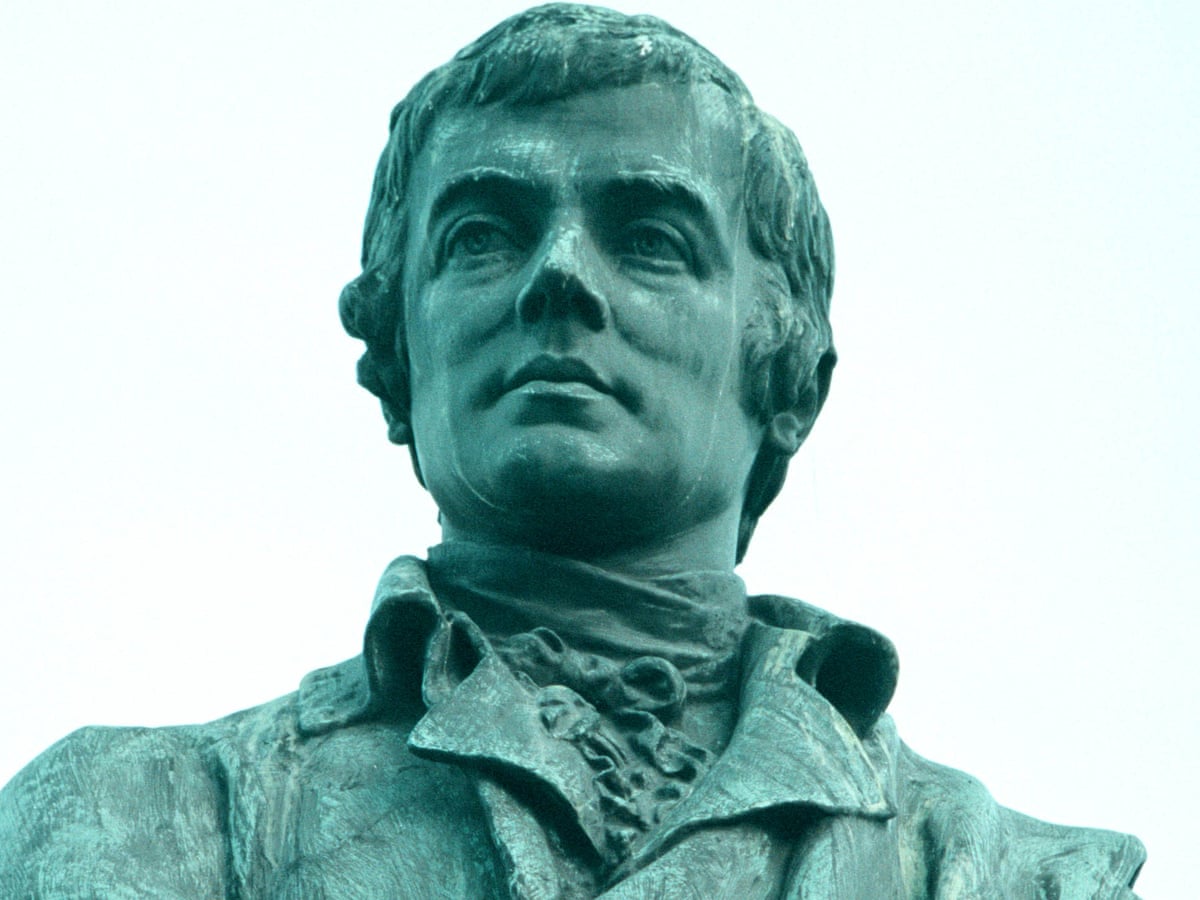
Robert Burns Scots 1759 – 1796
Ye banks and braes o’ bonie Doon, How can ye bloom sae fresh and fair? How can ye chant, ye little birds, And I sae weary fu’ o’ care! Thou’ll break my heart, thou warbling bird, That wantons thro’ the flowering thorn: Thou minds me o’ departed joys, Departed never to return.
Aft hae I rov’d by Bonie Doon, To see the rose and woodbine twine: And ilka bird sang o’ its Luve, And fondly sae did I o’ mine; Wi’ lightsome heart I pu’d a rose, Fu’ sweet upon its thorny tree! And may fause Luver staw my rose, But ah! he left the thorn wi’ me.
O Health! thou dear invaluable guest! Thy rosy subjects, how supremely blest! Hear the blith milk-maid and the plough-boy sing, Nor envy they the station of a king; While Kings thy sweets to gain would gladly bow, Resign their crowns and guide the rustic’s plough: Thou pearl surpassing riches, power or birth! Of blessings thou the greatest known on earth! Thy value’s found like that of bards of yore, We know to prize thee when thou art no more! Ah! Why from me; art thou for ever flown? Why deaf to ev’ry agonizing groan? Not one short month for ten revolving years, But pain within my frame its sceptre rears! In each successive month full twelve long days And tedious nights my sun withdraws his rays! Leaves me in silent anguish on my bed, Afflicting all the members in the head; Through ev’ry particle the torture flies, But centers in the temples, brain and eyes; The efforts of the hands and feet are vain, While bows the head with agonizing pain; While heaves the breast th’ unutterable sigh, And the big tear drops from the languid eye. For ah! my children want a mother’s care, A husband too, should due assistance share; Myself for action form’d would fain thro’ life Be found th’ assiduous–valuable wife; But now, behold, I live unfit for aught; Inactive half my days except in thought, And this so vague while torture clogs my hours, I sigh, Oh, ‘twill derange my mental powers! Or by its dire excess dissolve my sight, And thus entomb me in perptual night! Ye sage Physicians, where’s your wonted skill? In vain the blisters, bolusses and pill; Great Neptune’s swelling waves in vain I try’d, My malady its utmost power defy’d; In vain the British and Cephalic Snuff, All Patent Medicines are empty stuff; The launcet, leech, and cupping swell the train Of useless efforts, which but gave me pain; Each art and application rain has prov’d, For ah! my sad complaint is not remo’v’d. Live’s one on earth possess’d of sympathy, Who knows what is presum’d a remedy? O send it hither! I again would try, Tho’ in the attempt of conqu’ring I die. For thus to languish on is worse than death, And I have hope if Heav’n recall my breath.
We present this work in honor of the 205th anniversary of the poet’s death.
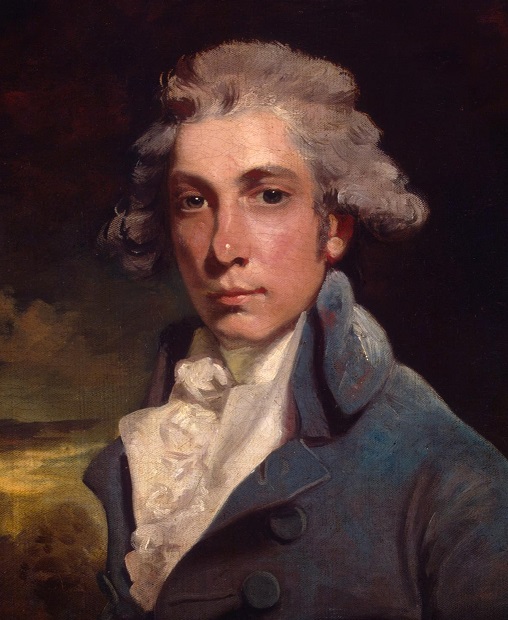
Richard Brinsley Sheridan Irish 1751 – 1816
Here’s to the maiden of bashful fifteen; Here’s to the widow of fifty; Here’s to the flaunting extravagant quean, And here’s to the housewife that’s thrifty.
Let the toast pass,— Drink to the lass, I’ll warrant she’ll prove an excuse for the glass.
Here’s to the charmer whose dimples we prize; Now to the maid who has none, sir: Here’s to the girl with a pair of blue eyes, And here’s to the nymph with but one, sir.
Let the toast pass,— Drink to the lass, I’ll warrant she’ll prove an excuse for the glass.
Here’s to the maid with a bosom of snow; Now to her that’s as brown as a berry: Here’s to the wife with her face full of woe, And now to the damsel that’s merry.
Let the toast pass,— Drink to the lass, I’ll warrant she’ll prove an excuse for the glass.
For let ‘em be clumsy, or let ‘em be slim, Young or ancient, I care not a feather; So fill a pint bumper quite up to the brim, And let us e’en toast them together.
Let the toast pass,— Drink to the lass, I’ll warrant she’ll prove an excuse for the glass.
Friends, yesterday my beloved visited; it was the middle of Ramadan, and it was as if I had gathered honey and roses, but I was accused of breaking the fast— why shouldn’t I have done so, after so much solitude! Isn’t the sick person advised not to fast?
After the long drought, the storm makes its drum rumble; saber at the ready, lightning routs the defeated cavalry; while the wind, that intrepid rider, after a short rest is ready to rumble.
The downpour attacks, standard flying, victorious showers that have the torrents on the run, and wherever the eye turns my overflowing heart sees only green.
From the fields in bloom rises perfume— spring, a king with no rival, and restful shade have invented marvelous new clothes.
Joyous inventor, Spring dispenses his riches: roses, wild flowers, concerts of birdsong— in a festive garden where the bee gathers nectar among the roses.
Friends, yesterday my beloved visited; it was the middle of Ramadan, and it was as if I had gathered honey and roses, but I was accused of breaking the fast— why shouldn’t I have done so, after so much solitude! Isn’t the sick person advised not to fast?
We present this work in honor of the poet’s 270th birthday.
Judith Sargent Murray American 1751 – 1820
When will these rude tumultuous clamours cease, When shall we hear the genial voice of peace; My tir’d soul is sick of these alarms, This vain parade, this constant din of arms. I wish, devoutly wish, for some retreat, Where but the shepherd’s pipe my ear may greet, Where I may calmly hail the rising day, On life’s eventful threshold while I stray. I would in its variety enjoy, The mental feast I would my hours employ, To cull the flowers of wisdom as they grow, To reap the fruits which love and truth bestow.
But ah! Alas! On a rough Ocean tost, To all the bliss of social pleasures lost; My little back by winds of passion driv’n, Blown to, and fro, by each opinion giv’n; Sees in perspective no auspicious shore
Which can its safety, or its hopes restore; Terrifick visions in succession rise, A host of fears the trembling soul surprise.
And can it be, will dark vindictive rage, ‘Gainst helpless towns revengeful battle wage, When far removed from the hostile scene When cities rise, when Oceans roll between
Must Glous’ter though obscure be doom’d to feel, The British thunder, and the British steel, Forbid it British valour, British grace, And spare so little, so remote a place.
We present this work in honor of the 240th anniversary of the poet’s death.
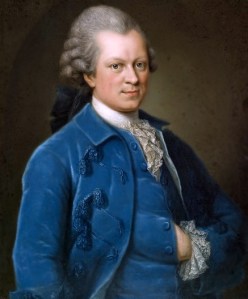
Gotthold Ephraim Lessing German 1729 – 1781
I sought, while drinking, to unfold
Why Nature’s kingdoms are threefold.
Both man and beast, they drink and love,
As each is gifted from above;
The dolphin, eagle, dog and flea,
In that they love and drink, agree.
In all that drink and love then, we
The first of these three kingdoms see.
The plants the second kingdom are,
But lower in creation far;
They do not love, but yet they drink,
When dripping clouds upon them sink;
Thus drinks the clover, thus the pine,
The aloe tree and branching vine,
In all that drink, but love not, we
The second of these kingdoms see.
The stony kingdom is the last,
Here diamonds with sand are classed;
No stone feels thirst, or soft desires,
No love, no draught its bosom fires.
In all that drink not, love not, we
The last of these three kingdoms see.
For without love, or wine, now own!
What wouldst thou be, oh Man? – A stone.
We present this work in honor of the 280th anniversary of the poet’s death.
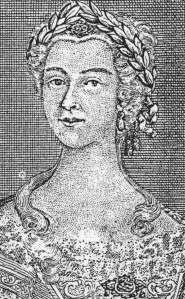
Sidonia Hedwig Zäunemann German 1711 – 1740
If you’ve stained your matrimonial life, deceived your creditor,
gained by lies your neighbour’s pasture and field;
if you’ve hurt your fellow-being’s coat of innocence or good reputation,
and with guile rendered yours
the token of the oppressed, which you had taken as a pawn:
Then you must not turn despondent, even though how grave they’d sue you at the court.
Soon only endeavor after an attorney, after one
who bears his good conscience in the manner that
he wears his sleeves, as if a priest’s,
who feels amused as highly by disputes,
instances of taking advantage as by quarrels,
as may feel a man, who’s been out at war,
who’s come to find lots of things to plunder,
one whose heart is full of spitefulness,
whose head of trickery,
his soul full of deceit and daring malice,
who writes seven lines only on one page,
but always swells all his writings into twenty folders,
who produces as many expenditures, as what is desired in every cause of conflict,
as he tosses and turns the procedure
until the case will have gone on for many a good year.
Him you ought to fill his bent hands with golden treasures from Ophir,
then soon will he lash out and hit on the rights of the opposite party;
then even turn to the counterpart’s and win that attorney’s favor, too;
bestow him a gift of a stately piece to wear,
a staunch and fat pig,
a barrelful of grape wine, as well as other nice things,
thus you will make that one mild and
he’ll be favouring you, too.
Likewise go and see the judge, and fill his hand –
wild men at hand – with gold from the Hungarian land.
And should he refrain from taking your things; then give them to his wife,
damask, silk and velvet for her body,
ribbons, laces, linen, and furs for her petticoats,
Fill up their store-rooms and kitchen house;
thus you’ll gain for any pending case more time,
your attorney will put things off,
your judge procrastinate them;
although how hard your opponent might attempt to see the final verdict coming.
Should he complain, o dear, tired of all the payments,
asking for justice at long last,
then it will be pointed out:
‘you have no rights.
He who’s been sparing the money shall always be the winner.’




 Poets Corner