My soul cries out, Snared by the beauty Of the formless one. As I cry by myself, Night and day, Beauty amassed before my eyes Surpasses numberless moons and suns. If I look at the clouds in the sky, I see his beauty afloat; And I see him walk on the stars Blazing my heart
We present this work in honor of the 90th anniversary of the poet’s death.
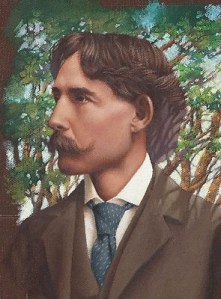
Christopher Brennan Australian 1870 – 1932
Fire in the heavens, and fire along the hills, and fire made solid in the flinty stone, thick-mass’d or scatter’d pebble, fire that fills the breathless hour that lives in fire alone.
This valley, long ago the patient bed of floods that carv’d its antient amplitude, in stillness of the Egyptian crypt outspread, endures to drown in noon-day’s tyrant mood.
Behind the veil of burning silence bound, vast life’s innumerous busy littleness is hush’d in vague-conjectured blur of sound that dulls the brain with slumbrous weight, unless
some dazzling puncture let the stridence throng in the cicada’s torture-point of song.
We present this work in honor of the 120th anniversary of the poet’s death.
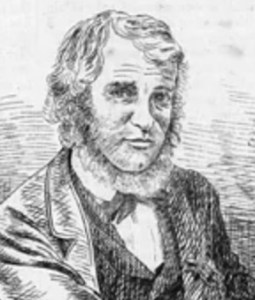
William Topaz McGonagall Scots 1825 – 1902
Beautiful Railway Bridge of the Silv’ry Tay! Alas! I am very sorry to say That ninety lives have been taken away On the last Sabbath day of 1879, Which will be remember’d for a very long time.
‘Twas about seven o’clock at night, And the wind it blew with all its might, And the rain came pouring down, And the dark clouds seemed to frown, And the Demon of the air seem’d to say— “I’ll blow down the Bridge of Tay.”
When the train left Edinburgh The passengers’ hearts were light and felt no sorrow, But Boreas blew a terrific gale, Which made their hearts for to quail, And many of the passengers with fear did say— “I hope God will send us safe across the Bridge of Tay.”
But when the train came near to Wormit Bay, Boreas he did loud and angry bray, And shook the central girders of the Bridge of Tay On the last Sabbath day of 1879, Which will be remember’d for a very long time.
So the train sped on with all its might, And Bonnie Dundee soon hove in sight, And the passengers’ hearts felt light, Thinking they would enjoy themselves on the New Year, With their friends at home they lov’d most dear, And wish them all a happy New Year.
So the train mov’d slowly along the Bridge of Tay, Until it was about midway, Then the central girders with a crash gave way, And down went the train and passengers into the Tay! The Storm Fiend did loudly bray, Because ninety lives had been taken away, On the last Sabbath day of 1879, Which will be remember’d for a very long time.
As soon as the catastrophe came to be known The alarm from mouth to mouth was blown, And the cry rang out all o’er the town, Good heavens! the Tay Bridge is blown down, And a passenger train from Edinburgh, Which fill’d all the people’s hearts with sorrow, And made them all for to turn pale, Because none of the passengers were sav’d to tell the tale How the disaster happen’d on the last Sabbath day of 1879, Which will be remember’d for a very long time.
It must have been an awful sight, To witness in the dusky moonlight, While the Storm Fiend did laugh, and angry did bray, Along the Railway Bridge of the Silv’ry Tay. Oh! ill-fated Bridge of the Silv’ry Tay, I must now conclude my lay By telling the world fearlessly without least dismay, That your central girders would not have given way, At least many sensible men do say, Had they been supported on each side with buttresses, At least many sensible men confesses, For the stronger we our houses do build, The less chance we have of being killed.
We present this work in honor of the 95th anniversary of the poet’s death.
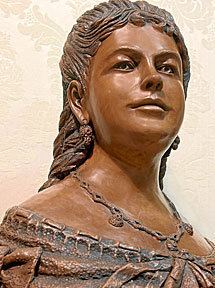
Patrocinio de Biedma y la Moneda Spanish 1848 – 1927
I would like to be the ray of the dawn that lights up your forehead in the morning; to be a flower that you admired for its gallantry and give you an intoxicating essence. I would like to be the echo that disgraces her distant music reaches you: the fugitive and vain sweet shadow that you caress in your dreamy soul. But alas! that the sun the aurora fades, the flower dies and is lost in the wind the soft echo that vibrated in calm: I don’t want to be an illusion that disappears… It’s better to occupy your thoughts and be, like today, the soul of your soul.
From plains that reel to southward, dim, The road runs by me white and bare; Up the steep hill it seems to swim Beyond, and melt into the glare. Upward half-way, or it may be Nearer the summit, slowly steals A hay-cart, moving dustily With idly clacking wheels. By his cart’s side the wagoner Is slouching slowly at his ease, Half-hidden in the windless blur Of white dust puffiing to his knees. This wagon on the height above, From sky to sky on either hand, Is the sole thing that seems to move In all the heat-held land.
Beyond me in the fields the sun Soaks in the grass and hath his will; I count the marguerites one by one; Even the buttercups are still. On the brook yonder not a breath Disturbs the spider or the midge. The water-bugs draw close beneath The cool gloom of the bridge.
Where the far elm-tree shadows flood Dark patches in the burning grass, The cows, each with her peaceful cud, Lie waiting for the heat to pass. From somewhere on the slope near by Into the pale depth of the noon A wandering thrush slides leisurely His thin revolving tune.
In intervals of dreams I hear The cricket from the droughty ground; The grasshoppers spin into mine ear A small innumerable sound. I lift mine eyes sometimes to gaze: The burning sky-line blinds my sight: The woods far off are blue with haze: The hills are drenched in light.
And yet to me not this or that Is always sharp or always sweet; In the sloped shadow of my hat I lean at rest, and drain the heat; Nay more, I think some blessèd power Hath brought me wandering idly here: In the full furnace of this hour My thoughts grow keen and clear.
We present this work in honor of Women’s Equality Day.
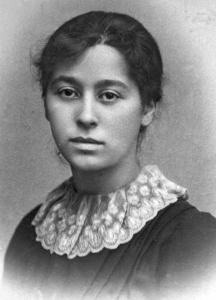
Amy Levy English 1861 – 1889
Swept into limbo is the host Of heavenly angels, row on row; The Father, Son, and Holy Ghost, Pale and defeated, rise and go. The great Jehovah is laid low, Vanished his burning bush and rod— Say, are we doomed to deeper woe? Shall marriage go the way of God?
Monogamous, still at our post, Reluctantly we undergo Domestic round of boiled and roast, Yet deem the whole proceeding slow. Daily the secret murmurs grow; We are no more content to plod Along the beaten paths—and so Marriage must go the way of God.
Soon, before all men, each shall toast The seven strings unto his bow, Like beacon fires along the coast, The flame of love shall glance and glow. Nor let nor hindrance man shall know, From natal bath to funeral sod; Perennial shall his pleasures flow When marriage goes the way of God.
Grant, in a million years at most, Folk shall be neither pairs nor odd— Alas! we sha’n’t be there to boast “Marriage has gone the way of God!”


 Poets Corner