We present this work in honor of the poet’s 250th birthday.
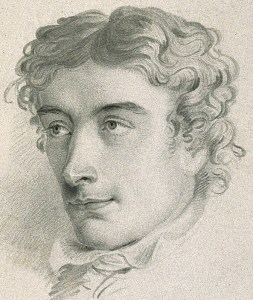
James Hogg Scots 1770 – 1835
Caledonia! thou land of the mountain and rock,
Of the ocean, the mist, and the wind-
Thou land of the torrent, the pine, and the oak,
Of the roebuck, the hart, and the hind;
Though bare are thy cliffs, and though barren thy glens,
Though bleak thy dun islands appear,
Yet kind are the hearts, and undaunted the clans,
That roam on these mountains so drear!
A foe from abroad, or a tyrant at home,
Could never thy ardour restrain;
The marshall’d array of imperial Rome
Essay’d thy proud spirit in vain!
Firm seat of religion, of valour, of truth,
Of genius unshackled and free,
The muses have left all the vales of the south,
My loved Caledonia, for thee!
Sweet land of the bay and wild-winding deeps
Where loveliness slumbers at even,
While far in the depth of the blue water sleeps
A calm little motionless heaven!
Thou land of the valley, the moor, and the hill,
Of the storm and the proud rolling wave-
Yes, thou art the land of fair liberty still,
And the land of my forefathers’ grave!
Awake, my people! How long will you sleep?
The night has passed, the sun shines through.
Awake, cast your eyes hither and yon
Recognize your time and place.
Has the march of time stood still
From the day you left for all parts of the globe?
Thousands of years have come and gone
Since your freedom was lost and you wandered away.
Many generations have been born and died
Oceans and continents have intervened
Remarkable changes have taken place
A different world engulfs us today.
Awake, my people! How long will you sleep?
The night has passed, the sun shines through.
Awake, cast your eyes hither and yon
Recognize your time and place.
The land where we live and are born
Is not thought to be part of Europe?
Europe, the smallest of continents
But the mightiest of all in wisdom and knowledge.
This land of Eden is now open to you
Its sons now call you “brothers.”
How long will you dwell among them as a guest
Why do you reject their hand?
They have already removed the burden from your back
And lifted the yoke from around your neck
They have erased from their hearts hatred and folly
The stretch out their hands to you in peace.
So raise your head high, stand up straight
Look at them with loving eyes,
Open your hearts to wisdom and reason
Become an enlightened nation, speaking their tongue.
Everyone capable of learning should study
Laborers and artisans should take to a craft
The strong and the brave should be soldiers
Farmers should buy fields and ploughs.
To the treasury of the state bring your wealth
Bear your share of its riches and bounty
Be a man in the streets and a Jew at home
A brother to your countryman and a servant to your king.
Awake, my people! How long will you sleep?
The night has passed, the sun shines through.
Awake, cast your eyes hither and yon
Recognize your time and place.
We present this work in honor of the poet’s 185th birthday.
Mark Twain American 1835 – 1910
It was a time of great and exalting excitement.
The country was up in arms, the war was on, in every breast burned the holy fire of patriotism; the drums were beating, the bands playing, the toy pistols popping, the bunched firecrackers hissing and spluttering; on every hand and far down the receding and fading spread of roofs and balconies a fluttering wilderness of flags flashed in the sun; daily the young volunteers marched down the wide avenue gay and fine in their new uniforms, the proud fathers and mothers and sisters and sweethearts cheering them with voices choked with happy emotion as they swung by; nightly the packed mass meetings listened, panting, to patriot oratory which stirred the deepest deeps of their hearts, and which they interrupted at briefest intervals with cyclones of applause, the tears running down their cheeks the while; in the churches the pastors preached devotion to flag and country, and invoked the God of Battles beseeching His aid in our good cause in outpourings of fervid eloquence which moved every listener. It was indeed a glad and gracious time, and the half dozen rash spirits that ventured to disapprove of the war and cast a doubt upon its righteousness straightway got such a stern and angry warning that for their personal safety’s sake they quickly shrank out of sight and offended no more in that way.
Sunday morning came – next day the battalions would leave for the front; the church was filled; the volunteers were there, their young faces alight with martial dreams – visions of the stern advance, the gathering momentum, the rushing charge, the flashing sabers, the flight of the foe, the tumult, the enveloping smoke, the fierce pursuit, the surrender! Then home from the war, bronzed heroes, welcomed, adored, submerged in golden seas of glory! With the volunteers sat their dear ones, proud, happy, and envied by the neighbors and friends who had no sons and brothers to send forth to the field of honor, there to win for the flag, or, failing, die the noblest of noble deaths. The service proceeded; a war chapter from the Old Testament was read; the first prayer was said; it was followed by an organ burst that shook the building, and with one impulse the house rose, with glowing eyes and beating hearts, and poured out that tremendous invocation
God the all-terrible!
Thou who ordainest!
Thunder thy clarion
and lightning thy sword!
Then came the “long” prayer. None could remember the like of it for passionate pleading and moving and beautiful language. The burden of its supplication was, that an ever-merciful and benignant Father of us all would watch over our noble young soldiers, and aid, comfort, and encourage them in their patriotic work; bless them, shield them in the day of battle and the hour of peril, bear them in His mighty hand, make them strong and confident, invincible in the bloody onset; help them to crush the foe, grant to them and to their flag and country imperishable honor and glory –
An aged stranger entered and moved with slow and noiseless step up the main aisle, his eyes fixed upon the minister, his long body clothed in a robe that reached to his feet, his head bare, his white hair descending in a frothy cataract to his shoulders, his seamy face unnaturally pale, pale even to ghastliness. With all eyes following him and wondering, he made his silent way; without pausing, he ascended to the preacher’s side and stood there waiting. With shut lids the preacher, unconscious of his presence, continued with his moving prayer, and at last finished it with the words, uttered in fervent appeal, “Bless our arms, grant us the victory, O Lord our God, Father and Protector of our land and flag!”
The stranger touched his arm, motioned him to step aside – which the startled minister did – and took his place. During some moments he surveyed the spellbound audience with solemn eyes, in which burned an uncanny light; then in a deep voice he said:
“I come from the Throne – bearing a message from Almighty God!” The words smote the house with a shock; if the stranger perceived it he gave no attention. “He has heard the prayer of His servant your shepherd, and will grant it if such shall be your desire after I, His messenger, shall have explained to you its import – that is to say, its full import. For it is like unto many of the prayers of men, in that it asks for more than he who utters it is aware of – except he pause and think.
“God’s servant and yours has prayed his prayer. Has he paused and taken thought? Is it one prayer? No, it is two – one uttered, the other not. Both have reached the ear of Him Who heareth all supplications, the spoken and the unspoken. Ponder this – keep it in mind. If you would beseech a blessing upon yourself, beware! lest without intent you invoke a curse upon a neighbor at the same time. If you pray for the blessing of rain upon your crop which needs it, by that act you are possibly praying for a curse upon some neighbor’s crop which may not need rain and can be injured by it.
“You have heard your servant’s prayer – the uttered part of it. I am commissioned of God to put into words the other part of it – that part which the pastor – and also you in your hearts – fervently prayed silently. And ignorantly and unthinkingly? God grant that it was so! You heard these words: ‘Grant us the victory, O Lord our God!’ That is sufficient. The whole of the uttered prayer is compact into those pregnant words. Elaborations were not necessary. When you have prayed for victory you have prayed for many unmentioned results which follow victory – must follow it, cannot help but follow it. Upon the listening spirit of God fell also the unspoken part of the prayer. He commandeth me to put it into words. Listen!
“O Lord our Father, our young patriots, idols of our hearts, go forth to battle – be Thou near them! With them – in spirit – we also go forth from the sweet peace of our beloved firesides to smite the foe.
O Lord our God,
help us to tear their soldiers to bloody shreds with our shells;
help us to cover their smiling fields with the pale forms of their patriot dead;
help us to drown the thunder of the guns with the shrieks of their wounded, writhing in pain;
help us to lay waste their humble homes with a hurricane of fire;
help us to wring the hearts of their unoffending widows with unavailing grief;
help us to turn them out roofless with little children to wander unfriended the wastes of their desolated land in rags and hunger and thirst,
sports of the sun flames of summer and the icy winds of winter,
broken in spirit,
worn with travail,
imploring Thee for the refuge of the grave and denied it –
for our sakes who adore Thee, Lord,
blast their hopes,
blight their lives,
protract their bitter pilgrimage,
make heavy their steps,
water their way with their tears,
stain the white snow with the blood of their wounded feet!
We ask it, in the spirit of love,
of Him Who is the Source of Love, and Who is the ever-faithful refuge and friend of all that are sore beset and seek His aid with humble and contrite hearts.
Amen.
(After a pause.) “Ye have prayed it; if ye still desire it, speak! The messenger of the Most High waits!”
It was believed afterward that the man was a lunatic, because there was no sense in what he said.
We present this work in honor of the Thanksgiving holiday.
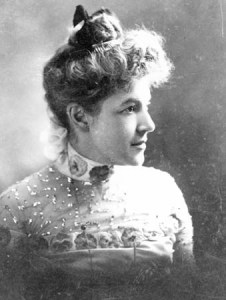
Ella Wheeler Wilcox American 1850 – 1919
We walk on starry fields of white
And do not see the daisies;
For blessings common in our sight
We rarely offer praises.
We sigh for some supreme delight
To crown our lives with splendor,
And quite ignore our daily store
Of pleasures sweet and tender.
Our cares are bold and push their way
Upon our thought and feeling.
They hand about us all the day,
Our time from pleasure stealing.
So unobtrusive many a joy
We pass by and forget it,
But worry strives to own our lives,
And conquers if we let it.
There’s not a day in all the year
But holds some hidden pleasure,
And looking back, joys oft appear
To brim the past’s wide measure.
But blessings are like friends, I hold,
Who love and labor near us.
We ought to raise our notes of praise
While living hearts can hear us.
Full many a blessing wears the guise
Of worry or of trouble;
Far-seeing is the soul, and wise,
Who knows the mask is double.
But he who has the faith and strength
To thank his God for sorrow
Has found a joy without alloy
To gladden every morrow.
We ought to make the moments notes
Of happy, glad Thanksgiving;
The hours and days a silent phrase
Of music we are living.
And so the theme should swell and grow
As weeks and months pass o’er us,
And rise sublime at this good time,
A grand Thanksgiving chorus.
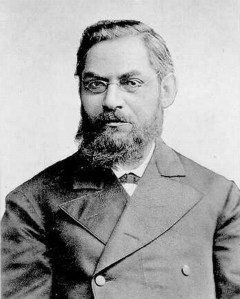
In honor of Revolution Day, we present this work by one of Mexico’s most romantic poets.
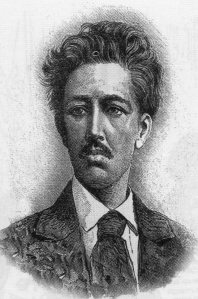
Manuel Acuña Mexican 1849 – 1873
When your bud barely half-opened
Aspires to good fortune and happiness,
Do you already bend tired and breathless,
Giving yourself over to pain and despair?
Do you not see that the vile shadow
Which blackens the firmament’s blue,
Is only a cloud which will at the blow
Of the wind, again let you see the day?…
Wake up and rise!… The time is not yet here
When deep within your heart,
You yield to the pain that humbles you.
Unjust to the sun is your accusation
That the shadow which passes and blinds you
Is darkness, for night hasn’t arrived yet.
Once upon a midnight dreary, while I pondered, weak and weary,
Over many a quaint and curious volume of forgotten lore,
While I nodded, nearly napping, suddenly there came a tapping,
As of some one gently rapping, rapping at my chamber door.
“Tis some visitor,’ I muttered, ‘tapping at my chamber door-
Only this, and nothing more.’
Ah, distinctly I remember it was in the bleak December,
And each separate dying ember wrought its ghost upon the floor.
Eagerly I wished the morrow;- vainly I had sought to borrow
From my books surcease of sorrow- sorrow for the lost Lenore-
For the rare and radiant maiden whom the angels name Lenore-
Nameless here for evermore.
And the silken sad uncertain rustling of each purple curtain
Thrilled me- filled me with fantastic terrors never felt before;
So that now, to still the beating of my heart, I stood repeating,
“Tis some visitor entreating entrance at my chamber door-
Some late visitor entreating entrance at my chamber door;-
This it is, and nothing more.’
Presently my soul grew stronger; hesitating then no longer,
‘Sir,’ said I, ‘or Madam, truly your forgiveness I implore;
But the fact is I was napping, and so gently you came rapping,
And so faintly you came tapping, tapping at my chamber door,
That I scarce was sure I heard you’- here I opened wide the door;-
Darkness there, and nothing more.
Deep into that darkness peering, long I stood there wondering, fearing,
Doubting, dreaming dreams no mortals ever dared to dream before;
But the silence was unbroken, and the stillness gave no token,
And the only word there spoken was the whispered word, ‘Lenore!’
This I whispered, and an echo murmured back the word, ‘Lenore!’-
Merely this, and nothing more.
Back into the chamber turning, all my soul within me burning,
Soon again I heard a tapping somewhat louder than before.
‘Surely,’ said I, ‘surely that is something at my window lattice:
Let me see, then, what thereat is, and this mystery explore-
Let my heart be still a moment and this mystery explore;-
‘Tis the wind and nothing more.’
Open here I flung the shutter, when, with many a flirt and flutter,
In there stepped a stately raven of the saintly days of yore;
Not the least obeisance made he; not a minute stopped or stayed he;
But, with mien of lord or lady, perched above my chamber door-
Perched upon a bust of Pallas just above my chamber door-
Perched, and sat, and nothing more.
Then this ebony bird beguiling my sad fancy into smiling,
By the grave and stern decorum of the countenance it wore.
‘Though thy crest be shorn and shaven, thou,’ I said, ‘art sure no craven,
Ghastly grim and ancient raven wandering from the Nightly shore-
Tell me what thy lordly name is on the Night’s Plutonian shore!’
Quoth the Raven, ‘Nevermore.’
Much I marvelled this ungainly fowl to hear discourse so plainly,
Though its answer little meaning- little relevancy bore;
For we cannot help agreeing that no living human being
Ever yet was blest with seeing bird above his chamber door-
Bird or beast upon the sculptured bust above his chamber door,
With such name as ‘Nevermore.’
But the raven, sitting lonely on the placid bust, spoke only
That one word, as if his soul in that one word he did outpour.
Nothing further then he uttered- not a feather then he fluttered-
Till I scarcely more than muttered, ‘other friends have flown before-
On the morrow he will leave me, as my hopes have flown before.’
Then the bird said, ‘Nevermore.’
Startled at the stillness broken by reply so aptly spoken,
‘Doubtless,’ said I, ‘what it utters is its only stock and store,
Caught from some unhappy master whom unmerciful Disaster
Followed fast and followed faster till his songs one burden bore-
Till the dirges of his Hope that melancholy burden bore
Of ‘Never- nevermore’.’
But the Raven still beguiling all my fancy into smiling,
Straight I wheeled a cushioned seat in front of bird, and bust and door;
Then upon the velvet sinking, I betook myself to linking
Fancy unto fancy, thinking what this ominous bird of yore-
What this grim, ungainly, ghastly, gaunt and ominous bird of yore
Meant in croaking ‘Nevermore.’
This I sat engaged in guessing, but no syllable expressing
To the fowl whose fiery eyes now burned into my bosom’s core;
This and more I sat divining, with my head at ease reclining
On the cushion’s velvet lining that the lamplight gloated o’er,
But whose velvet violet lining with the lamplight gloating o’er,
She shall press, ah, nevermore!
Then methought the air grew denser, perfumed from an unseen censer
Swung by Seraphim whose footfalls tinkled on the tufted floor.
‘Wretch,’ I cried, ‘thy God hath lent thee- by these angels he hath sent thee
Respite- respite and nepenthe, from thy memories of Lenore!
Quaff, oh quaff this kind nepenthe and forget this lost Lenore!’
Quoth the Raven, ‘Nevermore.’
‘Prophet!’ said I, ‘thing of evil!- prophet still, if bird or devil!-
Whether Tempter sent, or whether tempest tossed thee here ashore,
Desolate yet all undaunted, on this desert land enchanted-
On this home by horror haunted- tell me truly, I implore-
Is there- is there balm in Gilead?- tell me- tell me, I implore!’
Quoth the Raven, ‘Nevermore.’
‘Prophet!’ said I, ‘thing of evil- prophet still, if bird or devil!
By that Heaven that bends above us- by that God we both adore-
Tell this soul with sorrow laden if, within the distant Aidenn,
It shall clasp a sainted maiden whom the angels name Lenore-
Clasp a rare and radiant maiden whom the angels name Lenore.’
Quoth the Raven, ‘Nevermore.’
‘Be that word our sign in parting, bird or fiend,’ I shrieked, upstarting-
‘Get thee back into the tempest and the Night’s Plutonian shore!
Leave no black plume as a token of that lie thy soul hath spoken!
Leave my loneliness unbroken!- quit the bust above my door!
Take thy beak from out my heart, and take thy form from off my door!’
Quoth the Raven, ‘Nevermore.’
And the Raven, never flitting, still is sitting, still is sitting
On the pallid bust of Pallas just above my chamber door;
And his eyes have all the seeming of a demon’s that is dreaming,
And the lamplight o’er him streaming throws his shadow on the floor;
And my soul from out that shadow that lies floating on the floor
Shall be lifted- nevermore!
Human life is an endless struggle
The post-horse and plow-ox.
On the brows of the Daoist sadness never grows:
Quietly holding a book of immortality, seated by the window,
What else is there to seek?
Prospects disappear, far, far away,
Months and years are hard to detain.
In a hundred years’ time everyone will be a pat of mud,
So arrange a firm and safe place in your own mind
And let the boat float with the stream.
We present this work in honor of the 175th anniversary of the poet’s death.
Carolina Oliphant Scots 1766 – 1845
The laird o’ Cockpen, he’s proud an’ he’s great,
His mind is ta’en up wi’ things o’ the State;
He wanted a wife, his braw house to keep,
But favour wi’ wooin’ was fashious to seek.
Down by the dyke-side a lady did dwell,
At his table head he thought she’d look well,
McClish’s ae daughter o’ Claversha’ Lee,
A penniless lass wi’ a lang pedigree.
His wig was weel pouther’d and as gude as new,
His waistcoat was white, his coat it was blue;
He put on a ring, a sword, and cock’d hat,
And wha could refuse the laird wi’ a’ that?
He took the grey mare, and rade cannily,
An’ rapp’d at the yett o’ Claversha’ Lee;
‘Gae tell Mistress Jean to come speedily ben,
She’s wanted to speak to the Laird o’ Cockpen’.
Mistress Jean was makin’ the elderflower wine;
‘An’ what brings the laird at sic a like time?’
She put aff her apron, and on her silk gown,
Her mutch wi’ red ribbons, and gaed awa’ down.
An’ when she cam’ ben, he bowed fu’ low,
An’ what was his errand he soon let her know;
Amazed was the laird when the lady said ‘Na’,
And wi’ a laigh curtsie she turned awa’.
Dumfounder’d was he, nae sigh did he gie,
He mounted his mare – he rade cannily;
An’ aften he thought, as he gaed through the glen,
She’s daft to refuse the Laird o’ Cockpen.
And now that the laird his exit had made,
Mistress Jean she reflected on what she had said;
‘Oh, for ane I’ll get better, it’s waur I’ll get ten,
I was daft to refuse the Laird o’ Cockpen’.
Next time that the laird and the lady was seen,
They were gaun arm-in-arm to the kirk on the green;
Now she sits in the ha’ like a weel-tappit hen,
But as yet there’s nae chickens appear’d at Cockpen.



 Poets Corner