from Martin Fierro

We present this work in honor of Argentina’s National Flag Day.
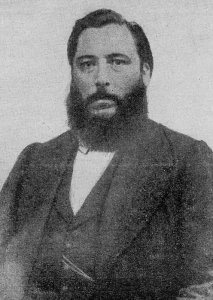
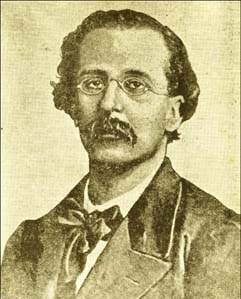
José Hernández
Argentine
1834 – 1886


He lashed the air with two bola shots,
Round his head like rings they spun;
One grazed my arm with a glancing hit,
A hair’s breadth would have splintered it:
Those balls of stone whizz through the air
Like bullets from a gun.

Aijuna! I’ll say he was quick and sly—
He missed me by simple luck;
The blood worked up to his ugly head,
Till like a colt he was seeing red:
He would feint at me with the right-hand ball
Before with the left he struck.

But a bitter turn Fate served me there
As we circled round and round,
I saw my chance and went rushing in,
While he backed away to save his skin.
My foot tripped up in my chiripá
And headlong I hit the ground.

Not a moment’s grace to commend my soul
To the hands of Almighty God
Did the savage give; as he saw me fall
He sprang like a ravening animal.
As I twisted my head, beside my ear
I heard the bolas thud.

And onto my back with tooth and nail
He leapt like a clawing brute
He was reckless then that I’d still my knife,
He was blind with his rage to have my life,
Not a ghost of a chance he let me have,
To strengthen and get my foot.

No trick or dodge could the brute on unlodge
Though I tried the every one;
Flat under him I lay full length,
I couldn’t turn over with all my strength.
As strong as a bull that Indian was
And he seemed to weigh a ton.

The captive that lay in her tears and blood
Half killed by the murderous whip,
When she saw my plight forgot her pang,
Like an arrow there to my help she sprang,
She gave the Indian a sudden tug
That made him loose his grip.

As soon as again to my feet I got
At each other again we tore,
Not a pause for a breather could I get
I was soaking wet with my dripping sweat,
In all my fights I’ve never been in
Such a touch-and-go before.

As madder and madder the savage grew
I calmed down more and more—
Until the Indian has made his kill
There’s nothing his ravening rage can still—
Till one of his whirling cords I cut
And began to press him sore.

As he staggered back, I leapt and closed
With lightning thrust and slash.
Though he kept his feet and escaped my grip
He lost the fight by that fatal slip;
I got home once with a scalping chop
And once with a belly-gash.

I got him again with a ripping lunge,
He began to hmpf and puke;
He was failing fast with each breath he took,
He knew he was done, but even then,
With never a flinch he rushed again,
With such a yell that it seemed to me
That the earth and the heavens shook.

And there, thank God, I finished him;
Well home I rammed my knife.
I was weary and sore, but desperate;
I lifted him up as one lifts a weight;
And gutted there, from the raking steel
I threw him off when I knew by the feel,
That he hadn’t a spark of life.

When I saw him dead I crossed myself,
The help of heaven to thank;
The kneeling woman beside me there,
At the Indian’s body could only stare,
And the to the skies she raised her eyes,
And in tears on the ground she sank.

The Arrival

We present this work in honor of the poet’s 175th birthday.

Dolors Monserdà
Spanish
1845 – 1919


Even here from the foot of the rise
I see those stand-out roses all
embroidering with tender branch
along the faces of the wall.
Already I feel those scents of yours
of jasmine and of lemon trees,
the unmistakable scent of home;
confused with another it cannot be.
Now I see my room beloved…
the windows there are open wide
just like dear friends that offer me
a safe and sheltered sleep inside.
I reach the top! And now, I am home
and all around I feel at ease.
Oh, the dear beloved plants
of my garden evergreen!
What splendid bounty of new leaves
the acacias and the almond trees!
And the branches of the pear
above the bench have spread their boughs
and the jasmine with its white flowers
infuse incense into the air.
Worthy of God! And the mimosa?
With what a bloom itself has dressed!
How lovely! there, at the crest of the tree
what seems like a crib yet must be a nest!
And high up in the canopy
a flock of little birds find rest!
Welcome all! for where they nest
is a home, they say, that God will bless.

To a Swallow

Juan Clemente Zenea
Cuban
1832 – 1871


Thou messenger, far wandering,
Who ‘neath my cell art fluttering
And round and round me gayly fly,
Whence comest thou, on restless wing?
And whither, swallow, dost thou hie?

To this south country thou hast flown
In quest of flowers and zephyr’s breath,
While I within my prison moan
And clamor in my dungeon lone
For wintry skies and snowy heath.

With longing heart I long to see
That which thou’st lightly left behind;
I long to fly beyond the sea,
To feel anew the northern wind,
To be a swallow and to flee.

I long again to find my nest
And there, as was wont of old,
Without a fear to mar my rest,
Repose in midst of Love’s sweet fold,
With wife and child to make me blest.

And if my dear ones, lost to me,
Should ask that thou a message bring
When thou again wilt cross the sea,
Pursue thy flight, thou bird of Spring,
Be not detained by thought of me.

For if thou, wanderer, seekest there
To find a drooping willow where
It shades the dust of him that’s free,
Thou swallow fair! thou swallow fair!
Thou’lt seek in vain where I will be.

So seek not thou with restless flight,
To find my dark and hidden grave,
For know’st thou not, thou winged dace?
O’er the poet’s tomb no willows wave,
No cypress marks his resting-place.

The Fool’s Prayer

We present this work in honor of the Pentecost.

Edward Rowland Sill
American
1841 – 1887


The royal feast was done; the King
Sought some new sport to banish care,
And to his jester cried: ‘Sir Fool,
Kneel now, and make for us a prayer!’

The jester doffed his cap and bells,
And stood the mocking court before;
They could not see the bitter smile
Behind the painted grin he wore.

He bowed his head, and bent his knee
Upon the monarch’s silken stool;
His pleading voice arose: ‘O Lord,
Be merciful to me, a fool!

‘No pity, Lord, could change the heart
From red with wrong to white as wool;
The rod must heal the sin; but Lord,
Be merciful to me, a fool!

‘ ‘Tis not by guilt the onward sweep
Of truth and right, O Lord, we stay;
‘Tis by our follies that so long
We hold the earth from heaven away.

‘These clumsy feet, still in the mire,
Go crushing blossoms without end;
These hard, well-meaning hands we thrust
Among the heart-strings of a friend.

‘The ill-timed truth we might have kept-
Who knows how sharp it pierced and stung?
The word we had not sense to say-
Who knows how grandly it had rung?

‘Our faults no tenderness should ask,
The chastening stripes must cleanse them all;
But for our blunders-oh, in shame
Before the eyes of heaven we fall.

‘Earth bears no balsam for mistakes;
Men crown the knave, and scourge the tool
That did his will; but Thou, O Lord,
Be merciful to me, a fool!’

The room was hushed; in silence rose
The King, and sought his gardens cool,
And walked apart, and murmured low,
‘Be merciful to me, a fool!’

To—

We present this work in honor of the Argentine holiday, May Day Revolution.

José Rivera Indarte
Argentine
1814 – 1845


Written on the Gulf of Mexico

The windswept waves are rolling high,
Our bark bounds o’er an angry sea,
The storm is blackening the sky,
But all my soul is fixed on thee.

Oh, pray for me, thou gentle one,
To him who rules earth, sea and air;
And moved by thy celestial tone,
He yet my wayward life may spare.

It was no strain of earthly love
Which drew my being unto thine;
It was a call from heaven above,
An opening unto love divine.

Thou art with me where high or low,
These widely-wandering steps may roam;
And all the joys of heaven I know,
Are visioned in thy peaceful home.

Before thy presence crossed my life,
Full many a wish strayed wide and far,
To the poor gains of civil strife,
The blood stained laurels snatched from war.

The treacherous lures of low desires,
The breath of popular applause;
But thou hast kindled purer fires,
And oped my eyes to higher laws.

Still bear me ever in thy heart,
E’en though the burden bring thee pain;
‘Tis agony, indeed to part;
But Oh, ‘tis bliss to meet again!

What Unkempt Beard

We present this work in honor of Galician Literature Day.

Eduardo Pondal
Spanish
1835 – 1917


What unkempt beard!
What pallid colour!
What vestments soiled
By prolonged ailment!
Perhaps he is a scoundrel,
Perhaps he is a thief…
Dear mother, help me,
Help me for God’s sake;
Perhaps he is some impaired fellow
Who has taken leave of his senses.
O what a wild look
Full of dread and affliction!
I can not tell whether he frightens me,
Whether he moves me to compassion:
He resembles a pine tree thrashed by the wind,
He looks as if he were cast up by the sea of Niñons.

“Simple young girl:
Do not fear me,
I am not a tramp,
I am not a thief.
Daring hieroglyph
Of the dreamy bog
I carry on, and to myself a stranger
Abstruse enigma am I.
If I am crazy perhaps,
Love crazy am I.
That is why the good folk
Wherever I go
Say with admiration
Upon seeing my slovenliness,
‘He resembles a pine tree thrashed by the wind,
He looks as if he were cast up by the sea of Niñons.’

“The noble soul dared
Sleepless thoughts,
Turbulent ambition,
Ironhanded resolutions.
The turbid regiment
Of a thousand profound yearnings
Took away (as it did from Lucifer)
The original splendor.
Wise bards
Whom fateful law birthed
Dreamers and indolent
Partake of his nature.
That is why I do not
Know myself, no,
And the very trails
I tread exclaim:
‘He resembles a pine tree thrashed by the wind,
He looks as if he were cast up by the sea of Niñons.’”

Thirty Years

Juan Francisco Manzano
Cuban
1797 – 1854


When I think on the course I have run,
From my childhood itself to this day,
I tremble, and fain would I shun,
The remembrance its terrors array.

I marvel at struggles endured,
With a destiny frightful as mine,
At the strength for such efforts:—assured
Tho’ I am, ‘tis in vain to repine.

I have known this sad life thirty years,
And to me, thirty years it has been
Of suff’ring, of sorrow and tears,
Ev’ry day of its bondage I’ve seen.

But ‘tis nothing the past—or the pains,
Hitherto I have struggled to bear,
When I think, oh, my God! on the chains,
That I know I’m yet destined to wear.

Asleep in the Valley

Arthur Rimbaud
French
1854 – 1891


A small green valley where a slow stream flows
And leaves long strands of silver on the bright
Grass; from the mountaintop stream the Sun’s
Rays; they fill the hollow full of light.

A soldier, very young, lies open-mouthed,
A pillow made of fern beneath his head,
Asleep; stretched in the heavy undergrowth,
Pale in his warm, green, sun-soaked bed.

His feet among the flowers, he sleeps. His smile
Is like an infant’s – gentle, without guile.
Ah, Nature, keep him warm; he may catch cold.

The humming insects don’t disturb his rest;
He sleeps in sunlight, one hand on his breast;
At peace. In his side there are two red holes.

Dover Beach

Matthew Arnold
English
1822 – 1888


The sea is calm to-night.
The tide is full, the moon lies fair
Upon the straits; – on the French coast the light
Gleams and is gone; the cliffs of England stand,
Glimmering and vast, out in the tranquil bay.
Come to the window, sweet is the night-air!
Only, from the long line of spray
Where the sea meets the moon-blanch’d land,
Listen! you hear the grating roar
Of pebbles which the waves draw back, and fling,
At their return, up the high strand,
Begin, and cease, and then again begin,
With tremulous cadence slow, and bring
The eternal note of sadness in.

Sophocles long ago
Heard it on the Aegean, and it brought
Into his mind the turbid ebb and flow
Of human misery; we
Find also in the sound a thought,
Hearing it by this distant northern sea.

The Sea of Faith
Was once, too, at the full, and round earth’s shore
Lay like the folds of a bright girdle furl’d.
But now I only hear
Its melancholy, long, withdrawing roar,
Retreating, to the breath
Of the night-wind, down the vast edges drear
And naked shingles of the world.

Ah, love, let us be true
To one another! for the world, which seems
To lie before us like a land of dreams,
So various, so beautiful, so new,
Hath really neither joy, nor love, nor light,
Nor certitude, nor peace, nor help for pain;
And we are here as on a darkling plain
Swept with confused alarms of struggle and flight,
Where ignorant armies clash by night.