Sonnets for My Father

We present this work in honor of the poet’s 100th birthday.

07-06 Labra
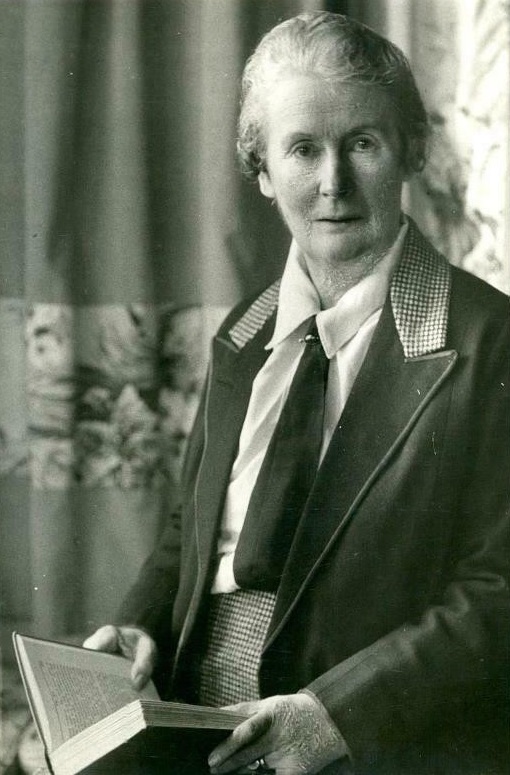
Carilda Oliver Labra
Cuban
1922 – 2018

I.

Father of yesterday who made hope
full of children and debts.
I conjure your hand which was never dry
and never knew stone or spear.

When you were judge, you were ill with insomnia…
as you longed to save so many thieves.
Let the sparrows chirp peace for you
and may you have playthings at last!

I make believe, now, that you’re sleeping
and your affectionate greeting, your amazement, lives on.
My life now moves with entropy;

Now, I’m truly the sad little daughter
that can no longer lean on your shoulder
because you died in January, Father.

II.

Grief arrives so violently
like the rain after the dawn;
today my smile is different:
an invisible tear that doesn’t weep.

(I tell myself in secret: maybe he’s coming by,
and not only as he knows of this grieving
but because I still wait anxiously
in case he asks for the key to our house…)

I can’t believe it… I need you,
and you are dead, my father, little dead one.
This time you are checkmated.

Like a crazy person, in super human delirium,
I lift your chess piece with my hand
and place you playing in the game!

III.

I have dressed in white, green, red,
because grief does not rhyme with love.
It has been a long time, my father, since your eyes
refused darkness or glare.

Don’t let hail and snow fall on your innocent and foreign grave.
Let the birth of spring sing to you
let a flower exude perfume on the ninth!

I reserve the glory of your room for you,
a happy sparkle of the sun, that I keep apart
that piece of earth where you were born,
your robes, your books, your saw…
It’s not enough now to love you so much:
you’re dead, my father, you’re dead.

IV.

Your comfortable chair… where is it?
Your student violin… how does it sound?
You buried pennies in the sand
and gave my mother other names.

I keep all your letters and pictures.
In my dream your prostate is cured.
On the patio floor and in my affection,
your last shoes walk on.

I want to see you beyond the shutter.
Come, spirit; come, my supportive angel.
I no longer know what to do, what to say,

because I long to eat breakfast
with my father, my sage, my almsman,
at 81 Tirrey Avenue.
Depression

07-03-22 Nicholls
Marjorie Nicholls
Kiwi
1890 – 1930

My mind is like a wretched room,
So bare, so drear;
Dull with a heavy, ugly gloom,
No light, no cheer.

My thoughts are like the beetles black
That creep the floor,
Scurry and hide in yawning crack
In wall and door.

My feelings,—like the meagre light
My candle gives,
So faint, so fearful of the night,
It scarcely lives.

My outlook through a dingy pane—
Distress and sin—
Or if I turn around again
To look within—

My room is but a sordid place—
The paper torn,
Nothing of beauty there, nor grace,
All mean, forlorn.

A Rose That Died

We present this work in honor of the poet’s 150th birthday.

07-01-22 Moutran
Khalil Mutran
Egyptian
1872 – 1949


O questing birds, what seek you in your wanderings?
They made answere:
We are the hopes of youth; and here our beloved
lived and suffered.
She was the rose in our garden, reigning
justly with the submission of all therein.
Yet all too soon we saw her fall from her throne,
then disappear.
And so you see us ever searching for some trace of her,
Or flocking where once she was wont to be.

Broken Song

06-28 O'Neill
Moira O’Neill
Irish
1864 – 1955

‘Where am I from?’ From the green hills of Erin.
‘Have I no song then?’ My songs are all sung.
‘What o’ my love?’ ’Tis alone I am farin’.
Old grows my heart, an’ my voice yet is young.

‘If she was tall?’ Like a king’s own daughter.
‘If she was fair?’ Like a mornin’ o’ May.
When she’d come laughin’ ‘twas the runnin’ wather,
When she’d come blushin’ ‘twas the break o’ day.

‘Where did she dwell?’ Where one’st I had my dwellin’.
‘Who loved her best?’ There’s no one now will know.
‘Where is she gone?’ Och, why would I be tellin’!
Where she is gone there I can never go.

We Wear the Mask

We present this work in honor of the poet’s 150th birthday.

06-27 Dunbar
Paul Laurence Dunbar
American
1872 – 1906

We wear the mask that grins and lies,
It hides our cheeks and shades our eyes,—
This debt we pay to human guile;
With torn and bleeding hearts we smile,
And mouth with myriad subtleties.

Why should the world be over-wise,
In counting all our tears and sighs?
Nay, let them only see us, while
We wear the mask.

We smile, but, O great Christ, our cries
To thee from tortured souls arise.
We sing, but oh the clay is vile
Beneath our feet, and long the mile;
But let the world dream otherwise,
We wear the mask!

Life, Life

We present this work in honor of the poet’s 115th birthday.

06-25 Tarkovsky
Arseny Tarkovsky
Russian
1907 – 1989


1

I don’t believe in omens or fear
Forebodings. I flee from neither slander
Nor from poison. Death does not exist.
Everyone’s immortal. Everything is too.
No point in fearing death at seventeen,
Or seventy. There’s only here and now, and light;
Neither death, nor darkness, exists.
We’re all already on the seashore;
I’m one of those who’ll be hauling in the nets
When a shoal of immortality swims by.

2

If you live in a house – the house will not fall.
I’ll summon any of the centuries,
Then enter one and build a house in it.
That’s why your children and your wives
Sit with me at one table, –
The same for ancestor and grandson:
The future is being accomplished now,
If I raise my hand a little,
All five beams of light will stay with you.
Each day I used my collar bones
For shoring up the past, as though with timber,
I measured time with geodetic chains
And marched across it, as though it were the Urals.

3

I tailored the age to fit me.
We walked to the south, raising dust above the steppe;
The tall weeds fumed; the grasshopper danced,
Touching its antenna to the horse-shoes – and it prophesied,
Threatening me with destruction, like a monk.
I strapped my fate to the saddle;
And even now, in these coming times,
I stand up in the stirrups like a child.

I’m satisfied with deathlessness,
For my blood to flow from age to age.
Yet for a corner whose warmth I could rely on
I’d willingly have given all my life,
Whenever her flying needle
Tugged me, like a thread, around the globe.


Translation by Alex Nemser and Nariman Skakov

Isaac’s Dream

06-24 Rosernfarb
Chava Rosenfarb
Canadian
1923 – 2011


As I was standing, all set for my exile,
Doom staring at me from the road’s blinding end,
The door, like a book’s heavy cover, opened,
To bring forth a guest from the biblical land.

His body, half naked, a knife in his loincloth,
In sheep-leather sandals his tanned, bronze-like feet,
A bundle of firewood upon his shoulder—
He said, with a smile very boyish and sweet:

“Good morning, my girl; remember me, dearest?
You’ve waited for me so long—not in vain.
I’m Isaac, your bridegroom, ordained by the Heavens …
Through ages I’ve wandered to you, till I came.

Take off your dress. A sheet of plain linen
Is sufficient to drape round your navel and hips.
Undo your braids and let’s hurry, my sweetheart,
Your hand clasped in mine and a chant on our lips.

Thus will l lead you beyond the horizon,
Between north and south, through the west—to the east,
Until we will reach Mount Moriah, my dearest,
There to be married, to rejoice and to feast.

So come, let us hurry, the distance is calling.
Pray, why do you shiver with anguish and cry?
You’re asking why all that wood on my shoulder,
The glittering knife on my hip—you ask why.

Then turn your soul to my soul, my beloved.
Read your fate in my fate, while I explain:
Out of the wood I will construct an altar
And with love all redeeming set it aflame.

And the knife, my bride, I will file to its sharpest point
Up there, at the peak, on a rough mountain stone.
And who will be offered, you ask me?—then listen:
The offering, my dearest, shall be you, you alone.

A gift of life to the God of All Being,
As Abraham told me, his late-born son:
If you trust in love and love wholly trusting,
Then fear not, nor waver, dear girl, but come.

Though fire will blaze through the wood of the altar,
Flames licking your body, yet you shall see:
The knife will fall from my hand, and a miracle
Will happen to you, as it happened to me.

The rivers and seas shall sing Hallelujah!
The mountain pines, moved, will give praise to all life,
While the Voice Divine will, with thunder and lightning,
Proclaim me your husband, pronounce you my wife.

So hurry, my girl, the sky is already
Spreading its canopy, preparing the rite.
Come to the blue sacrificial fire—
Your last maiden stroll—to the altar, my bride.”

Thus he spoke. I smiled, then said in a whisper,
My eyes not on him, but fixed on the dark night,
Where another road was tracing its outlines
With the red of my blood, with signals of fright:

“Oh leave me, Isaac, you bronzed, sunny man.
This road is not yours, not mine is your day.
I head for those places you never have dreamed of,
Where altars do smolder with their unwilling prey.”

As I spoke a gale swept towards my threshold.
The tempest took hold of my hearth and my house,
Whistling through streets, through the yards of the ghetto,
Hissing with rage: “Juden raus! Juden raus!”

Thus I stepped forward with Abraham, my father,
Who wrapped his arm round me as if with a shawl,
While delicate Isaac, all tremble and flutter,
Pressed his tanned sun-kissed frame to the wall.

“You’re frightened, Isaac?” said I. “I’m your nightmare.
Awake and you’re back in your undying scroll,
Where Rebecca, your true betrothed awaits you,
To be taken with joy on her last maiden stroll.

Make haste, return to the Book that shall save thee.
Hide yourself in the Bible’s fairytale land.
For your God Himself walks with me and my father,
Right now, to the altar; with us—to His end.”

I Cannot Complain

In honor of Argentina’s National Flag Day, we present this work by one of the most cutting-edge Argentine poets.

06-20 Urondo
Francisco Urondo
Argentine
1930 – 1976


I am left with only a few friends and those here
are usually far and I am left
an aftertaste I keep within close reach
as if a firearm. I will use it for noble things:
for defeating the enemy—God
willing—, for speaking modestly
about threatening possibilities.

I hope bitterness won’t intercept
forgiveness, that distant wind
of affections I am trying to describe: I hope the rigor of this
will not convert into the thick glass
of the dead, though I am curious to know the things
they’ll have to say of me, after my death:
to know which were your versions of love,
of those tangential meetings,
because my friends tend to be signals
of my life, by tragic luck, giving me all
that isn’t here. Prematurely, with one foot
on each lip of the crevice that opens
before me, at the feet of glory, I salute you all,
hold my nose and let the abyss surround me.


Translation by Julia Leverone

Those Winter Sundays

We present this work in honor of Father’s Day.

06-19 Hayden
Robert Hayden
American
1913 – 1980

Sundays too my father got up early
and put his clothes on in the blueblack cold,
then with cracked hands that ached
from labor in the weekday weather made
banked fires blaze. No one ever thanked him.

I’d wake and hear the cold splintering, breaking.
When the rooms were warm, he’d call,
and slowly I would rise and dress,
fearing the chronic angers of that house,

Speaking indifferently to him,
who had driven out the cold
and polished my good shoes as well.
What did I know, what did I know
of love’s austere and lonely offices?