We present this work in honor of the poet’s 110th birthday.

Mexican
1914 – 1982
Blessèd be
The humble
Poets
Because
From them
Will rise
The kingdoms
Of the
Grass
We present this work in honor of the poet’s 110th birthday.
Blessèd be
The humble
Poets
Because
From them
Will rise
The kingdoms
Of the
Grass
We present this work in honor of the poet’s 150th birthday.
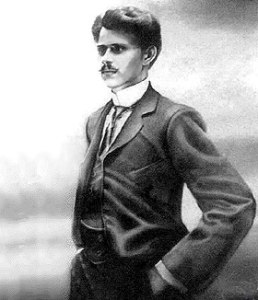
Tropic village night: the hours
slow and grave. The vesper bell,
and then, as the ladies return,
the musical closing of the gate…
Suddenly, the incongruous sound
of peasant clogs. And in the drowsiness
of things, what a smell of chocolate
and cheese, of yucca bread and honey-cake!
Far off in clandestine shadow,
in the rustic stable, a jackass
brays taps for his donkey love
with a friendly squeeze on his accordion…
Only the druggist, my neighbour,
keeps stolid watch behind his counter,
to sell —with a sibylline gesture—
two cents’ worth of castor oil…
While the moon, from its arcane depth,
outlines the church. In its blue vault
the tumid moon is like a pimple…
And the church an enormous nursing-bottle
We present this work in honor of the 40th anniversary of the poet’s death.

When you step over the doorstone, your heart is refreshed
Neither a stain on the stony ground, nor a trace on the wood
This very charming little home smells of soap, winter and summer
Its tablecloths are snow white, its curtains are snow white.
From every corner an elegant feminine taste is shining
In everything there is the eye-straining work and labour of a woman
A delicate young woman is the mistress of this home
Like a shy river, her voice is purling in the heart
Her eyes are dreamy, soft, deep
“Home” is a temple to her, “love of family” is her religion!
She never lacks babies around her
While one of them jumps, the other crawls
Her entire life belongs to the children, to the home
Her thin face resembles a three-night moon
Whatever your position or age is
Wouldn’t you bow your head in front of this woman?
We present this work in honor of the poet’s 100th birthday.
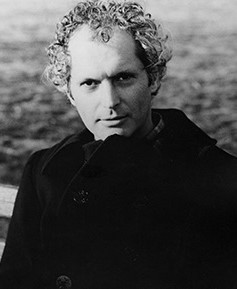
It sometimes happens
that the woman you meet and fall in love with
is of that strange Transylvanian people
with an affinity for cats.
You take her to a restaurant, say, or a show,
on an ordinary date, being attracted
by the glitter in her slitty eyes and her catlike walk,
and afterward of course you take her in your arms,
and she turns into a black panther
and bites you to death.
Or perhaps you are saved in the nick of time,
and she is tormented by the knowledge of her tendency:
that she daren’t hug a man
unless she wants to risk clawing him up.
This puts you both in a difficult position,
panting lovers who are prevented from touching
not by bars but by circumstance:
you have terrible fights and say cruel things,
for having the hots does not give you a sweet temper.
One night you are walking down a dark street
and hear the padpad of a panther following you,
but when you turn around there are only shadows,
or perhaps one shadow too many
You approach, calling, “Who’s there?”
and it leaps on you.
Luckily you have brought along your sword,
and you stab it to death.
And before your eyes it turns into the woman you love,
her breast impaled on your sword,
her mouth dribbling blood saying she loved you
but couldn’t help her tendency.
So death released her from the curse at last,
and you knew from the angelic smile on her dead face
that in spite of a life the devil owned,
love had won, and heaven pardoned her.
We present this work in honor of the poet’s 120th birthday.
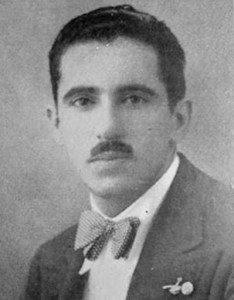
You who go every Sunday to the Botanical Garden
and while away hours in silence, contemplating
the sumptuous colourings of flowers
that you will never have in your own little garden ;
you who ask fascinating things so ingenuously
and explain to me the fantastic ambient of your dreams ;
you who love like a child the leaves of the mint
for the clean memories that its scent awakens;
you who talk about the glittering enamels
of exotic insects that blossom in the air;
you who tell the life of Jean-Jacques, and know
that under a clear sky he cuts herbs at close of day;
you who dress in white for the Month of Mary
and people the silence with images of peace:
because you were my beloved you will lay on my tomb,
when I am dead, lilacs of dark splendour.
We present this work in honor of Western Australia Day.

Australian
b. 1944
Driving into the cut-out mountains
their steepness pushes them closer
as if the tops of much younger ranges crowded together.
We peer past each other’s heads and shoulders
as blue thresholds open to reveal
desiccated sides and ridges
weathered tors just high enough
to impede winter clouds.
We can hardly believe these sun-blasted screes
are those elusive slopes ahead
layered gates behind.
Stop. Get out of the car
wind through stunted trees
water where there is none
and up against as close as a tango
the mountain’s shattered stone the smell of stone
the sound of stone.
Their age is their beauty.
It attracts like iron.
In honor of Republic Day, we present this work by one of Italy’s greatest war poets.

We went out around midnight into the deserted Milan
streets, orso Italia, with Anna Maria Ortese
and Massimo Leli
and Guido Ballo and I don’t know who else,
and I held the tender hand
of a little girl whose black curls
and big eyes I remember but not her name,
and all of a sudden she said in a loud voice:
“It’s dark. When it’s dark, we must be quiet.”
Well then, I thought, we must be quiet all the time.
We present this work in honor of the poet’s 150th birthday.

Fathomless and full
as two brief, graceful immensities,
your eyes inhabit your countenance
like lords;
and when from their depths
I see dallying and rising
the flame of a radiant soul,
it seems that the morning is rising from sleep,
shining, over there between sea and sky,
where that drowsy line rocks
between two blue empires,
the line where our hearts pause
to caress it with their hopes,
to kiss it with their glance;
when our being meditates,
drying its tears,
and, silently,
throws itself open to all the breezes of Life;
when we glimpse
the ashes of days gone by
floating in the Past
like the dust of all our pilgrimages
left behind at the last turn of the road:
Eyes that open like mornings
and, closing, let evening fall.
We present this work in honor of the poet’s 135th birthday.
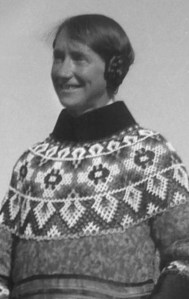
Over the wheatfields the sky was shot with light
And there was one large star.
The Pentland Hills were full of purple night.
I heard afar
The rush of a motor car,
And as I passed by the hedge the corn leaned out
Wind-impelled, and touched my hand about,
Then withdrew.
I knew
The star as my own
And the fields full-grown;
I looked at the wheat and said
‘At Liège the gold is red,
And to-night how still the dead must lie
With their faces stark to the open sky
Or dreadfully earthward turned.’
Over the corn the wind mourned.
I looked at the star and cried,
‘Of Heaven the doors are very wide,
And God has hung a little light
For stragglers who fall in to-night.’
We present this work in honor of the poet’s 125th birthday.

O poets of the future, may you arise
Like the morning sun,
Bright and red like hibiscus blossoms.
In the golden dawn for which we long
May you wake up like countless flocks of birds.
I sing in the hope that you will come
To soar in the blue sky that I create.
I leave behind the memory of my greetings to you:
Play on my veena the song of the new day.
 Poets Corner