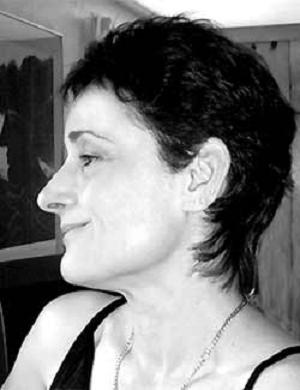
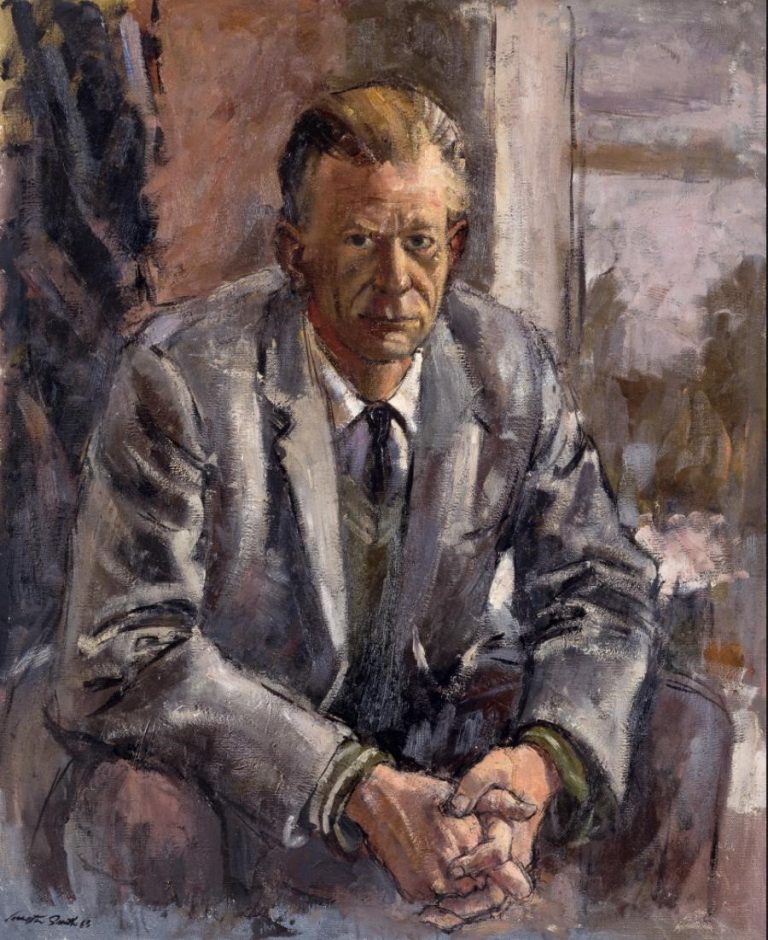
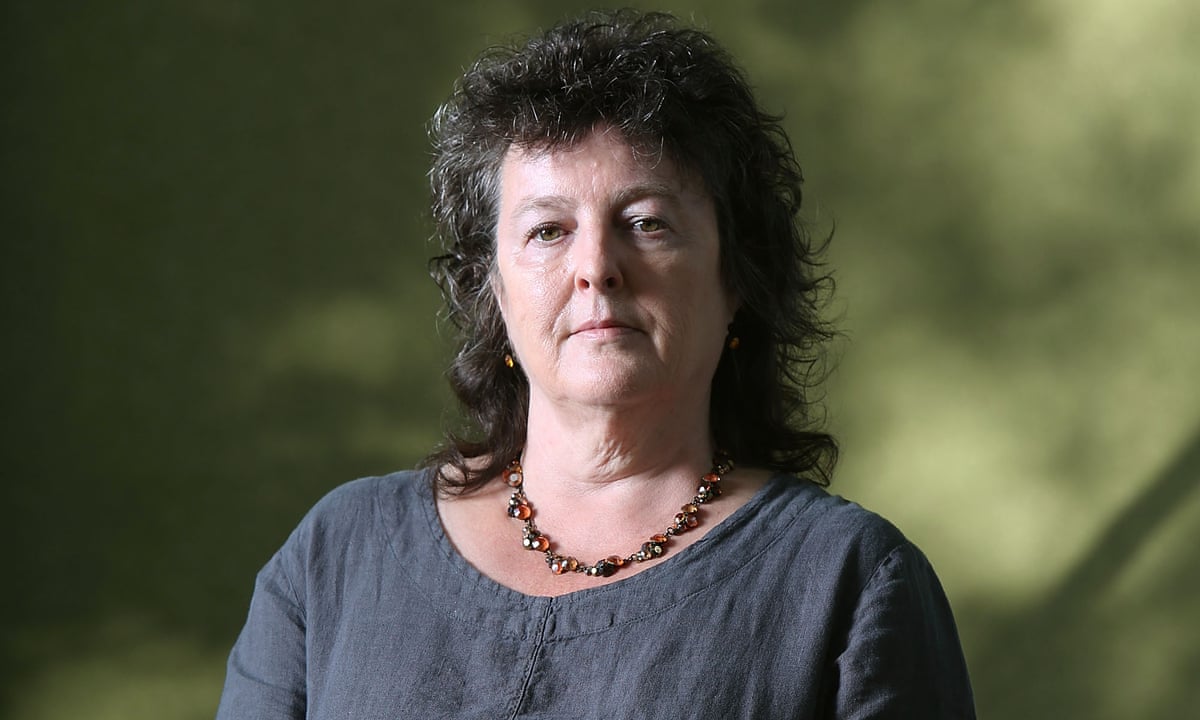
Going Home

We present this work in honor of the poet’s 70th birthday.

10-26 Acholonu
Catherine Obianuju Acholonu
Nigerian
1951 – 2013


I

Our hands grope in vain
the springs have dried up
leaving us with
salt water
and we remember
the days
when the hooting of the owl
sanctified our mortality

we stand paralyzed
like skeletons
mounted
on the sandy soil
struggling against
the dry wind
blowing sand into our eyes
which have since ceased to see

footprints of blessed ages past
deeply backed on to the soil
show the way to the horizon
and beyond
but we cannot reach it
you and I

our kisses bite
like grains of sand in the eye
then our bodies touch
like two scaly fish
we stand paralyzed
like two accursed.

II

We plunge ourselves
into the abyss
mindless of the outcome
our blind eyes
surveying the darkness
and in the labyrinths
we grope and sniff
for signs of our
brothers
in the catacombs
at the gate
we present our printed
tickets
decaying lips
toothless gums
cracking laughter

shameless folk
that seek entrance
into the land of their fathers
you cannot partake
of the coummunion
without you ofo
without your chi

and we are back
at the cross-roads
dreading once more
to cross the horizon
having she our outer shell.

III

Contact telegraphic
our sons speak
a foreign language
devoid of feeling
devoid of meaning

what choice have we
but to take refuge
in obganje
passing excrement
into the mouths
of our daughters
our ever mourning mothers

home again and yet
homeless
a dreary failure
for a nameless folk.
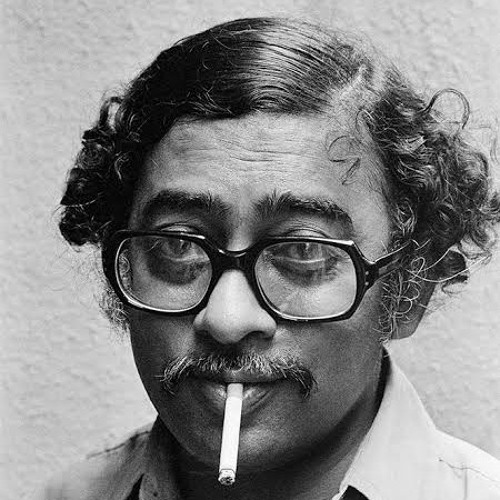
The House of My Childhood

In honor of Vikram Smavat New Year, we present this work by one of modern India’s most evocative poets.

10-25 Chitre
Dilip Chitre
Indian
1938 – 2009


The house of my childhood stood empty
On a grey hill
All its furniture gone
Except my grandmother’s grindstone
And the brass figurines of her gods

After the death of all birds
Bird-cries still fill the mind
After the city’s erasure
A blur still peoples the air
In the colourless crack that comes before morning
In a place where nobody can sing
Words distribute their silence
Among intricately clustered glyphs

My grandmother’s voice shivers on a bare branch
I toddle around the empty house
Spring and summer are both gone
Leaving an elderly infant
To explore the rooms of age

Cinderella

10-21 Broumas
Olga Broumas
Greek
b. 1949


Apart from my sisters, estranged
from my mother, I am a woman alone
in a house of men
who secretly
call themselves princes, alone
with me usually, under cover of dark. I am the one allowed in

to the royal chambers, whose small foot conveniently
fills the slipper of glass. The woman writer, the lady
umpire, the madam chairman, anyone’s wife.
I know what I know.
And I once was glad

of the chance to use it, even alone
in a strange castle doing overtime on my own, cracking
the royal code. The princes spoke
in their father’s language, were eager to praise me
my nimble tongue. I am a woman in a state of siege, alone

as one piece of laundry, strung on a windy clothesline a
mile long. A woman co-opted by promises: the lure
of a job, the ruse of a choice, a woman forced
to bear witness, falsely
against my own kind, as each
other sister was judge inadequate, bitchy, incompetent,
jealous, too thin, too fat. I know what I know.
What sweet bread I make

for myself in this prosperous house
is dirty, what good soup I boil turns
in my mouth to mud. Give
me my ashes. A cold stove, a cinder-block pillow, wet
canvas shoes in my sisters’, my sisters’ hut. Or I swear

I’ll die young
like those favored before me, hand-picked each one
For her joyful heart.

Elegy and Such

10-20 Pinera
Virgilio Piñera
Cuban
1912 – 1979


I invite the word
walking its barren bark among the dogs.
Everything is sad.
If it crowns forehead and breasts with shining leaves
a cold smile will blossom on the moon.
Everything is sad.
Later the sad dogs will eat the leaves
and bark out words with glistening sounds.
Everything is sad.
A dog invites the hyacinths by the river.
Everything is sad.
With loony words, with doggerel arrows,
with tiny toothy leaves
the hyacinths wound the mute damsels.
Everything is sad.
The black grass grows with a quiet hum,
but shiny edges caress the rhythm.
Everything is sad.
Behind the words the serpents laugh,
deaf earth allows no sound.
Everything is sad.

A heavenly bird barks in the sky
to scare death away.
The bird discovers it with with the flowers of night
and seduces it with words of a dog
and buries it with a cupful of earth.
Everything is sad.
I invite the earthbound word
that cuts through life and mirrors
and splits the echo of its image.
Everything is sad.
A play of words and barks.

Everything is sad.
A javelin whooshes through the speeding wind
in virile variations.
Half a cup of earth silenced the music.

Everything is sad.
Then the earth drank itself.
Everything is sad.
And when the time for death arrives
place me before a mirror where I may see myself.
Everything is sad.


Translation by Pablo Medina

Head Over Heels with Life

10-17 Carranza
María Mercedes Carranza
Colombian
1945 – 2003


I will die mortal,
that is to say having passed
through this world
without breaking or staining it.
I didn’t invent a single vice,
but I tasted all the virtues:
I leased my soul
to hypocrisy: I have trafficked
with words,
with signs, with silence;
I surrendered to the lie:
I have hoped for hope,
I have loved love,
and one day I even pronounced
the words My Country;
I accepted the hoax:
I have been mother, citizen,
daughter, friend,
companion, lover;
I believed in the truth:
two and two are four,
María Mercedes ought to be born,
ought to grow, reproduce herself and die
and that’s what I’m doing.
I am the sampler of the 20th century.
And when fear arrives
I go to watch television
to have a dialogue with my lies.


Translation by Mary Crow

Because

We present this work in honor of the 45th anniversary of the poet’s death.

10-15 McAuley
James McAuley
Australian
1917 – 1976

My father and my mother never quarrelled.
They were united in a kind of love
As daily as the Sydney Morning Herald,
Rather than like the eagle or the dove.

I never saw them casually touch,
Or show a moment’s joy in one another.
Why should this matter to me now so much?
I think it bore more hardly on my mother,

Who had more generous feelings to express.
My father had dammed up his Irish blood
Against all drinking praying fecklessness,
And stiffened into stone and creaking wood.

His lips would make a switching sound, as though
Spontaneous impulse must be kept at bay.
That it was mainly weakness I see now,
But then my feelings curled back in dismay.

The Old Playhouse

In honor of Durga Puja, we present this work by one of modern India’s most evocative poets.

z 10-13-21
Kamala Surayya
Indian
1934 – 2009


You planned to tame a swallow, to hold her
In the long summer of your love so that she would forget
Not the raw seasons alone, and the homes left behind, but
Also her nature, the urge to fly, and the endless
Pathways of the sky. It was not to gather knowledge
Of yet another man that I came to you but to learn
What I was, and by learning, to learn to grow, but every
Lesson you gave was about yourself. You were pleased
With my body’s response, its weather, its usual shallow
Convulsions. You dribbled spittle into my mouth, you poured

Yourself into every nook and cranny, you embalmed
My poor lust with your bitter-sweet juices. You called me wife,
I was taught to break saccharine into your tea and
To offer at the right moment the vitamins. Cowering
Beneath your monstrous ego I ate the magic loaf and
Became a dwarf. I lost my will and reason, to all your
Questions I mumbled incoherent replies. The summer
Begins to pall. I remember the rudder breezes
Of the fall and the smoke from the burning leaves. Your room is
Always lit by artificial lights, your windows always

Shut. Even the air-conditioner helps so little,
All pervasive is the male scent of your breath. The cut flowers
In the vases have begun to smell of human sweat. There is
No more singing, no more dance, my mind is an old
Playhouse with all its lights put out. The strong man’s technique is
Always the same, he serves his love in lethal doses,
For, love is Narcissus at the water’s edge, haunted

By its own lonely face, and yet it must seek at last
An end, a pure, total freedom, it must will the mirrors
To shatter and the kind night to erase the water.

Mrs. Tilscher’s Class

We present this work in honor of the International Day of the Girl.

10-11 Duffy
Carol Ann Duffy
Scots
b. 1955


You could travel up the Blue Nile
with your finger, tracing the route
while Mrs Tilscher chanted the scenery.
Tana. Ethiopia. Khartoum. Aswân.
That for an hour, then a skittle of milk
and the chalky Pyramids rubbed into dust.
A window opened with a long pole.
The laugh of a bell swung by a running child.

This was better than home. Enthralling books.
The classroom glowed like a sweet shop.
Sugar paper. Coloured shapes. Brady and Hindley
faded, like the faint, uneasy smudge of a mistake.
Mrs Tilscher loved you. Some mornings, you found
she’d left a good gold star by your name.
The scent of a pencil slowly, carefully, shaved.
A xylophone’s nonsense heard from another form.

Over the Easter term, the inky tadpoles changed
from commas into exclamation marks. Three frogs
hopped in the playground, freed by a dunce,
followed by a line of kids, jumping and croaking
away from the lunch queue. A rough boy
told you how you were born. You kicked him, but stared
at your parents, appalled, when you got back home.

That feverish July, the air tasted of electricity.
A tangible alarm made you always untidy, hot,
fractious under the heavy, sexy sky. You asked her
how you were born and Mrs Tilscher smiled,
then turned away. Reports were handed out.
You ran through the gates, impatient to be grown,
as the sky split open into a thunderstorm.