We present this work in honor of the 85th anniversary of the poet’s death.
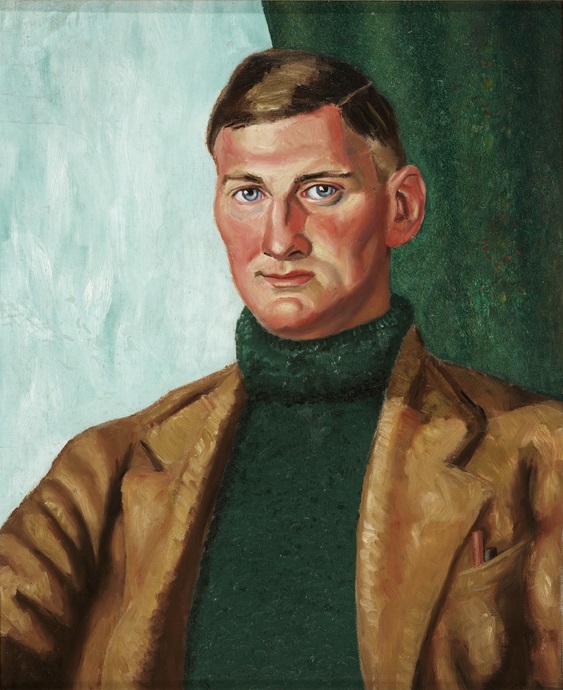
G.K. Chesterton English 1874 – 1936
They haven’t got no noses, The fallen sons of Eve; Even the smell of roses Is not what they supposes; But more than mind discloses And more than men believe.
They haven’t got no noses, They cannot even tell When door and darkness closes The park a Jew encloses, Where even the law of Moses Will let you steal a smell.
The brilliant smell of water, The brave smell of a stone, The smell of dew and thunder, The old bones buried under, Are things in which they blunder And err, if left alone.
The wind from winter forests, The scent of scentless flowers, The breath of brides’ adorning, The smell of snare and warning, The smell of Sunday morning, God gave to us for ours
And Quoodle here discloses All things that Quoodle can, They haven’t got no noses, And goodness only knowses The Noselessness of Man.
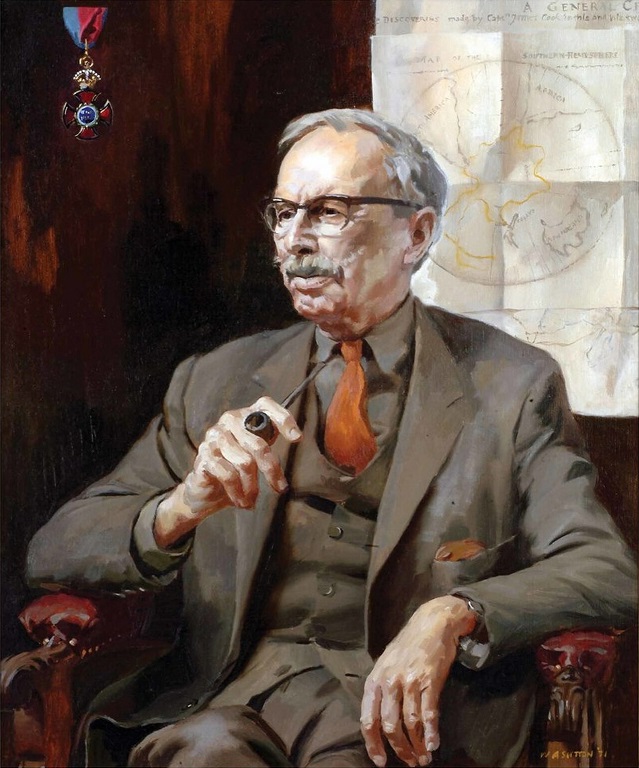
We present this work in honor of Western Australia Day.
Edwin Greenslade Murphy Australian 1866 – 1939
We are sated of songs that drone the praise, Of a world beyond our ken; We are bored by the ballads of beaten ways And milk-and-water men; We are tired of the tales the lovers told To the cooing amorous dove; We have banned the minstrelsy of old, And the lyrics of languid love; We are done with the dirges cut and dried In the London square and slum; But we’re ripe for a rhyme whose metres stride Through salt-bush scrub and gum. Sing us a song unsung by men Of the narrow and cautious creed; Write with a strong and strenuous pen The rhymes our hearts can read.
While we stand where the ways of men have end, And the untrod tracks commence, We weary of songs the poets penned In pastoral indolence; The sleepy sonnet that lovers make Where weeping willows arch, Can not the passionate soul awake, Of men who outward march. Our harps are hung in the towering trees And the mulga low and grey; Our ballads are sung by every breeze That flogs the sea to spray. We want no lay of a moonlit strand, No idyll of daisied mead, For the rhymes that our hearts can understand Are the rhymes our hearts can read.
We need no monody planned and built, In the shade of an abbey grey, But the pulse and throb of a lusty lilt That quickens the human clay. Tell us of men whose axes bite The hearts of the mountain gum; Sing of the pioneers who fight To waken the desert dumb. We want to hark to the heart within, Of the men who feel and know; For only the men who’ve sampled sin Can write of its joy and woe. Give us a ballad that swings along With the bound of a striving steed; Give us — whether it’s right or wrong — The rhymes our hearts can read.
We want to travel from page to page Through dusty drive and stope, To catch the hiss of the rushing cage, The roll of the winding rope. Give us the rip-saw’s grind and scream As it sunders the giant log; The groan and the creek of the bullock team As it flounders across the bog; The swish and the crack of the stockmen’s whips In the roar of the night stampede. Give us the music that bites and grips — The rhymes our hearts can read!
Sing of the days of hasty camps, When Bayley blazed the track. Write of the shining starry lamps That beacon the wild out-back. Sing to the soul of the hardest case That bears his swag of sin; Of nights of wine and the bold embrace When revelry roped him in; Tell of the times we’ve fought for fun, A wearisome hour to wile, And whether we lost or drew or won Swung out with a cheery smile. Write of the men for whom God waits — Men of a Christ-like creed; Sing of the mates who die for mates, In the rhymes our hearts can read!
We present this work in honor of the poet’s 90th birthday.
Kiki Dimoula Greek 1931 – 2020
Lord what’s still not in store for us.
I’m sitting here and sitting. It’s raining without raining just as when a shadow returns to us a body.
I’m sitting here and sitting. Me here, my heart opposite and still further away my weary relationship with it. So we might seem many whenever emptiness counts us.
Empty room blowing. I hold tight to the way I have of being swept off.
I’ve no news of you. Your photo stationary. You stare as if coming you smile as if not. Dried flowers at one side incessantly repeating for you their unadulterated name semprevives semprevives—eternal, eternal in case you forget what you’re not.
I’m asked by time how I want it to pass exactly how I pronounce myself as edging or ageing. Foolishness. No end is ever articulate.
I’ve no news of you. Your photo stationary. Just as it rains without raining.
Just as a shadow returns to me a body. And just as we’ll meet one day up there. In some lush sparseness with shady unexpectations and evergreen rotations. As interpreter of the intense silence that we’ll feel —developed form of the intense intoxication caused by a meeting down here—will come a void.
And we’ll be enraptured then by a passionate unrecognition —developed form of the embrace employed by a meeting down here. Yes we’ll meet. Breathing fine, concealed form attraction. In a downpour of heavy lack of gravity. Perhaps on one of infinity’s trips to ad infinitum; at the ceremony for loss awards to the known for its great contribution to the unknown; guests at destination’s starlight, at cessation’s galas on behalf of dissolving causes and the skies’ farewell importances once great. Expect that this company of distances will be somewhat downcast, cheerless even if non-existence finds cheer from nothing. Perhaps because the soul of the party will be absent. The flesh.
I call to the ash to disarm me. I call upon the ash by its code name: Everything.
You’ll meet regularly I imagine you and the death of that dream. The last-born dream. Of all I had the best-behaved. Clear-headed, gentle, understanding. Not of course so dreamy but neither worthless or mean, no toady to all and sundry. A very thrifty dream, in intensity and errors. Of the dreams I raised my most loving: so I’d not grow old alone.
You’ll meet regularly I imagine you and its death. Give it my regards, tell it to come too without fail when we meet there, at the loss awards ceremony.
Love me as long as you don’t live. Yes yes the impossible’s enough for me. Once I was loved by that. Love me as long as you don’t live. For I’ve no news of you. And heaven forbid that the absurd should show no signs of life.
We present this work in honor of the poet’s 95th birthday.
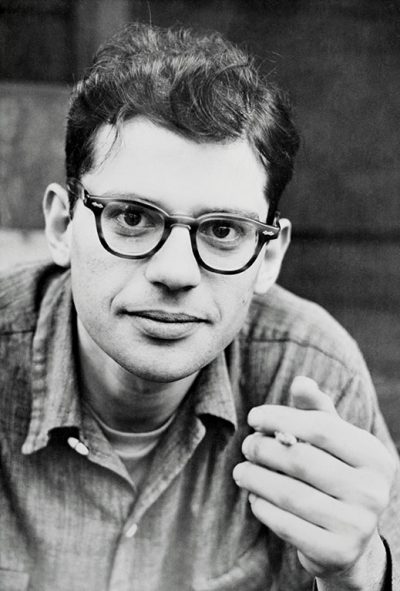
Allen Ginsberg American 1926 – 1997
Blandly mother takes him strolling by railroad and by river -he’s the son of the absconded hot rod angel- and he imagines cars and rides them in his dreams,
so lonely growing up among the imaginary automobiles and dead souls of Tarrytown
to create out of his own imagination the beauty of his wild forebears-a mythology he cannot inherit.
Will he later hallucinate his gods? Waking among mysteries with an insane gleam of recollection?
The recognition- something so rare in his soul, met only in dreams -nostalgias of another life.
A question of the soul. And the injured losing their injury in their innocence -a cock, a cross, an excellence of love.
And the father grieves in flophouse complexities of memory a thousand miles away, unknowing of the unexpected youthful stranger bumming toward his door.
We present this work in honor of the poet’s 65th birthday.
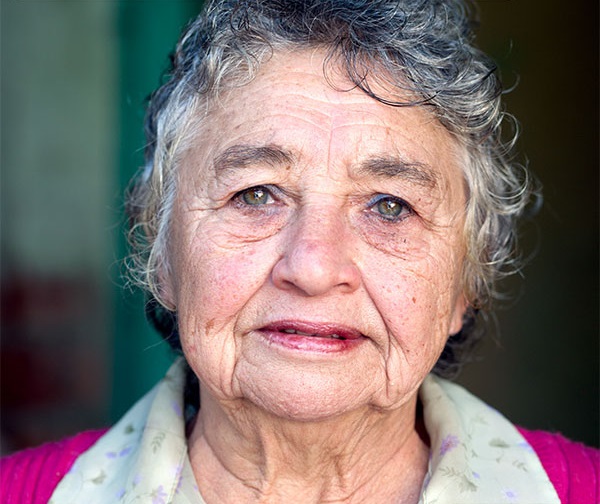
Semra Ertan Turkish 1956 – 1982
Waiting for them each quarter Are neither surgeons nor doctors They don’t have to travel to Paris or Nice They don’t follow fashion trends – Since they can’t find magazines and newspapers
Because the roads to the villages were blocked for months But even if they could, they couldn’t read them Because as children they were denied education, because They were not sent to school
In a cafe, once more I heard Your voice – those sparse and frugal notes. Do they not say that you spoke your native Greek With an English accent?
Briefest of visions: eyes meet across the cafe; A man of about my age – eyelids heavy, Perhaps from recent pleasures. I begin the most innocent of conversations. Again I see that image; Ancient delight of flesh Against guiltless flesh. Sweeter still, in its remembering.
Most innocent of conversations: once more, I am mistaken. He leaves; the moment lost – and to forego The squalor of this place, I read again your lines; those sparse and frugal notes. In a taverna, you found beauty, long ago. And when you draw, with your slim, swift pen The image of that memory – time’s patient hostage; Then how can I forget him, that boy whom you could not forget, Or that music, in a foreign language?






 Poets Corner