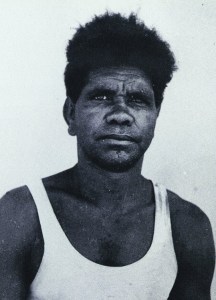
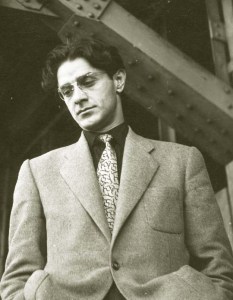
Last Day of Leave

We present this work in honor of Veterans’ Day.
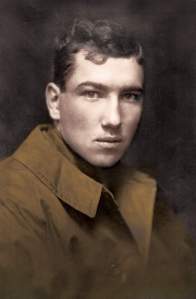
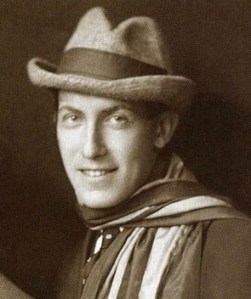
Robert Graves
English
1895 – 1985


We five looked out over the moor
At rough hills blurred with haze, and a still sea:
Our tragic day, bountiful from the first.

We would spend it by the lily lake
(High in a fold beyond the farthest ridge),
Following the cart-track till it faded out.

The time of berries and bell-heather;
Yet all that morning nobody went by
But shepherds and one old man carting turfs.

We were in love: he with her, she with him,
And I, the youngest one, the odd man out,
As deep in love with a yet nameless muse.

No cloud; larks and heath-butterflies,
And herons undisturbed fishing the streams;
A slow cool breeze that hardly stirred the grass.

When we hurried down the rocky slope,
A flock of ewes galloping off in terror,
There shone the waterlilies, yellow and white.

Deep water and a shelving bank.
Off went our clothes and in we went, all five,
Diving like trout between the lily groves.

The basket had been nobly filled:
Wine and fresh rolls, chicken and pineapple—
Our braggadocio under threat of war.

The fire on which we boiled our kettle
We fed with ling and rotten blackthorn root;
And the coffee tasted memorably of peat.

Two of us might stray off together
But never less than three kept by the fire,
Focus of our uncertain destinies.

We spoke little, our minds in tune—
A sigh or laugh would settle any theme;
The sun so hot it made the rocks quiver.

But when it rolled down level with us,
Four pairs of eyes sought mine as if appealing
For a blind-fate-aversive afterword:—

‘Do you remember the lily lake?
We were all there, all five of us in love,
Not one yet killed, widowed or broken-hearted.’
Beach Burial

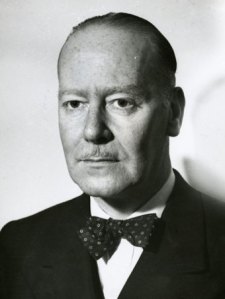
Kenneth Slessor
Australian
1901 – 1971


Softly and humbly to the Gulf of Arabs
The convoys of dead sailors come;
At night they sway and wander in the waters far under,
But morning rolls them in the foam.

Between the sob and clubbing of the gunfire
Someone, it seems, has time for this,
To pluck them from the shallows and bury them in burrows
And tread the sand upon their nakedness;

And each cross, the driven stake of tidewood,
Bears the last signature of men,
Written with such perplexity, with such bewildered pity,
The words choke as they begin –

‘Unknown seaman’ – the ghostly pencil
Wavers and fades, the purple drips,
The breath of wet season has washed their inscriptions
As blue as drowned men’s lips,

Dead seamen, gone in search of the same landfall,
Whether as enemies they fought,
Or fought with us, or neither; the sand joins them together,
Enlisted on the other front.

The Night

In honor of the Russian holiday, National Unity Day, we present this work by one of modern Russia’s finest poets.

Anatoly Marienhof
Russian
1897 – 1962


The night, like a tear, flowed out of an immense eye
and rolled down along the roofs upon the lashes.
Sorrow rose up like Lazarus
and raced in the streets to cry and blame everyone,
throwing herself around necks – and everyone flipped
and screamed: you’re insane!
and with whoops of fear beat the eardrums
ringing like diamond cards.

Ballad of the Totems

We present this work in honor of the poet’s 100th birthday.

Oodgeroo Noonuccal
Australian
1920 – 1993


My father was Noonuccal man and kept old tribal way,
His totem was the Carpet Snake, whom none must ever slay;
But mother was of Peewee clan, and loudly she expressed
The daring view that carpet snakes were nothing but a pest.

Now one lived inside with us in full immunity,
For no one dared to interfere with father’s stern decree:
A mighty fellow ten feet long, and as we lay in bed
We kids could watch him round a beam not far above our head.

Only the dog was scared of him, we’d hear its whines and growls,
But mother fiercely hated him because he took her fowls.
You should have heard her diatribes that flowed in angry torrents,
With words you’d never see in print, except in D.H. Lawrence.

“I kill that robber,” she would scream, fierce as a spotted cat;
“You see that bulge inside of him? My speckly hen make that!”
But father’s loud and strict command made even mother quake;
I think he’d sooner kill a man than kill a carpet snake.

That reptile was a greedy guts, and as each bulge digested
He’d come down on the hunt at night, as appetite suggested.
We heard his stealthy slithering sound across the earthen floor,
While the dog gave a startled yelp and bolted out the door.

Then over in the chicken-yard hysterical fowls gave tongue,
Loud frantic squawks accompanied by the barking of the mung,
Until at last the racket passed, and then to solve the riddle,
Next morning he was back up there with a new bulge in his middle.

When father died we wailed and cried, our grief was deep and sore,
And strange to say from that sad day the snake was seen no more.
The wise old men explained to us: “It was his tribal brother,
And that is why it done a guy” – but some looked hard at mother.

She seemed to have a secret smile, her eyes were smug and wary,
She looked about as innocent as the cat that ate the pet canary.
We never knew, but anyhow (to end this tragic rhyme)
I think we all had snake for tea one day about that time.

Poppies

We present this work in honor of the poet’s 150th birthday.

Christopher Brennan
Australian
1870 – 1932


Where the poppy-banners flow
in and out amongst the corn,
spotless morn
ever saw us come and go

hand in hand, as girl and boy
warming fast to youth and maid,
half afraid
at the hint of passionate joy

still in Summer’s rose unshown:
yet we heard nor knew a fear;
strong and clear
summer’s eager clarion blown

from the sunrise to the set:
now our feet are far away,
night and day,
do the old-known spots forget?

Sweet, I wonder if those hours
breathe of us now parted thence,
if a sense
of our love-birth thrill their flowers.

Poppies flush all tremulous —
has our love grown into them,
root and stem;
are the red blooms red with us?

Summer’s standards are outroll’d,
other lovers wander slow;
I would know
if the morn is that of old.

Here our days bloom fuller yet,
happiness is all our task;
still I ask —
do the vanish’d days forget?

Because You Loved Me

Maria Polydouri
Greek
1902 – 1930


I only sing because you loved me
in the past years.
And in sun, in summer’s prediction
and in rain and snow,
I only sing because you loved me.

Only because you held me in your arms
one night and you kissed my lips,
only for this I’m beautiful as wide open lily
and I still have a shiver in my soul,
only because you held me in your arms.

Only because your eyes looked at me
with the soul in the glance,
proudly I dressed the supreme
crown of my existence,
only because your eyes looked at me.

Only because as I was passing you noticed me
and from your glance I saw to pass
my lissome shadow as a dream
to play, to suffer,
only because as I was passing you noticed me

Because you called me shyly
and you reached after my hand
and you had in your eyes the blurring
– a complete love,
because you called me shyly.

Because, it liked only to you
that’s why my passing remained beautiful.
It was like you were following me where I was
as if you were passing somewhere close to me.
Because it liked only to you.

I was born only because you loved me,
my life was given for this.
In the graceless, unfulfilled life
my life was fulfilled.
I was born only because you loved me.

Only for your unique love
dawn gave to my hands roses.
So that I light your way for a moment
night filled my eyes with stars,
only for your unique love.

Only because you loved me so well
I lived in order to increase
your dreams, beautiful man that you set
and thus sweetly I die
only because you loved me so well.

To See Him Again

Gabriela Mistral
Chilean
1889 – 1957


Never, never again?
Not on nights filled with quivering stars,
or during dawn’s maiden brightness
or afternoons of sacrifice?

Or at the edge of a pale path
that encircles the farmlands,
or upon the rim of a trembling fountain,
whitened by a shimmering moon?

Or beneath the forest’s
luxuriant, raveled tresses
where, calling his name,
I was overtaken by the night?
Not in the grotto that returns
the echo of my cry?

Oh no. To see him again —
it would not matter where —
in heaven’s deadwater
or inside the boiling vortex,
under serene moons or in bloodless fright!

To be with him…
every springtime and winter,
united in one anguished knot
around his bloody neck!

Love Is Not All

We present this work in honor of the 70th anniversary of the poet’s death.

Edna St. Vincent Millay
American
1892 – 1950


Love is not all: it is not meat nor drink
Nor slumber nor a roof against the rain;
Nor yet a floating spar to men that sink
And rise and sink and rise and sink again;

Love can not fill the thickened lung with breath,
Nor clean the blood, nor set the fractured bone;
Yet many a man is making friends with death
Even as I speak, for lack of love alone.

It well may be that in a difficult hour,
Pinned down by pain and moaning for release,
Or nagged by want past resolution’s power,
I might be driven to sell your love for peace,

Or trade the memory of this night for food.
It well may be. I do not think I would.

Burn the Bridges

Lionel Fogarty
Australian
b. 1958


You are vulnerable as glass are fall to peaces
When toiled of the stripping of our prides

You are restless in life
When we’ve born another to fight

All the bridges of your music will burn as soon
As you walk to the centre of our problems

You might have moved to our sacred rights
But your price is high in

Interest rates and then you prowl around
Unrespectful to all black familys homes

You are the dat watch protect and
Laugh as the blackfellas rise

The waiting for the sunrise is like waiting for a past
Of people to come and proclaim the land

But sitting here blocking out the unjustifiable sins
Sins are what you are doing

You Are Indispensable

We present this work in honor of the 15th anniversary of the poet’s death.

Attilâ İlhan
Turkish
1925 – 2005


You are indispensable; how can you not know
that you’re like nails riveting my brain?
I see your eyes as ever-expanding dimensions.
You are indispensable; how can you not know
that I burn within, at the thought of you?

Trees prepare themselves for autumn;
can this city be our lost Istanbul?
Now clouds disintegrate in the darkness
as the street lights flicker
and the streets reek with rain.
You are indispensable, and yet you are absent …

Love sometimes seems akin to terror:
a man tires suddenly at nightfall,
of living enslaved to the razor at his neck.
Sometimes he wrings his hands,
expunging other lives from his existence.
Sometimes whichever door he knocks
echoes back only heartache.

A screechy phonograph is playing in Fatih …
a song about some Friday long ago.
I stop to listen from a vacant corner,
longing to bring you an untouched sky,
but time disintegrates in my hands.
Whatever I do, wherever I go,
you are indispensable, and yet you are absent …

Are you the blue child of June?
Ah, no one knows you—no one knows!
Your deserted eyes are like distant freighters …
perhaps you are boarding in Yesilköy?
Are you drenched there, shivering with the rain
that leaves you blind, beset, broken,
with wind-disheveled hair?

Whenever I think of life
seated at the wolves’ table,
shameless, yet without soiling our hands …
Yes, whenever I think of life,
I begin with your name, defying the silence,
and your secret tides surge within me
making this voyage inevitable.
You are indispensable; how can you not know?