We present this work in honor of the 50th anniversary of the poet’s death.
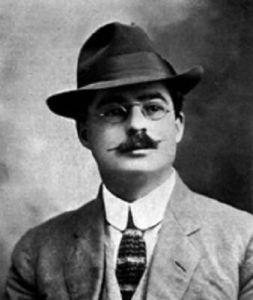
Leopoldo Marechal Argentine 1900 – 1970
The River of your Dreams will recite the alphabet of waters.
It will have trees, like greem flames
sparking out larks
and tall bamboos will net heliotrope moons
in the dream river only you can overleap.
Dawn will be a lotus that perfumes
the death of your nights;
so much pecking at stars will intoxicate hummingbirds.
You will find pools of still water and a pollen that drugs the wind
in the dream river only you can overleap.
Shouldering my oar, I have watched a hundred days set sail.
My brothers will peel the reddest of the world’s fruit.
I, with my stilled oar, night after night,
search for the dream river only you can overleap.
We present this work in honor of the Canadian holiday, Discovery Day.
Tom MacInnes Canadian 1867 – 1951
I woke in the Land of Night,
With a dream of Day at my heart;
Its golden outlines vanished,
But its charm would not depart;
Like music still remaining,
But its meaning–no man can say
In the Land of Night where they know not
Of Day, nor the things of Day.
I dwelt in the chiefest city
Of all the Land of Night;
Where the fires burn ever brighter
That give the people light;
Where the sky above is darkened,
And never a star is seen,
And they think it but children’s fancy
That ever a star hath been.
But out from that city early
I fled by a doubtful way;
And faltering oft and lonely
I sought my dream of Day;
Till I came at last to a Mountain
That rose exceeding high,
And I thought I saw on its summit
A glint as of dawn from the sky.
‘Twas midway on that Mountain
That I found an altar-stone,
Deep-cut with runes forgotten,
And symbols little known;
And scarce could I read the meaning
Of the legends carven there,
But I lay me out on that altar,
Breathing an ancient prayer:
‘By the God of the timeless Sky,
O Saint of the Altar, say
What gift hast thou for me?
For I have dreamed of Day:
But I seek nor gift nor power,
I pray for naught but light;
And only for light to lead me
Out of the Land of Night!’
Long I lay on that altar,
Up-gazing fearfully
Through the awful cold and darkness
That now encompassed me;
Till it seemed as I were lying drowned
Under a lifeless sea.
There shone as a pale blue Star,
Intangible–serene–
And I saw a spark from it fall
As it were a crystal keen;
And it flashed as it fell and pierced
My temples white and cold;
Then round that altar-stone once more
The awful darkness rolled.
But there was light on my brow,
And a calm that steeled me through,
And I was strong with a strength
That never before I knew;
With a strength for the trackless heights,
And scorn of the world below–
But I rose not up from that altar-stone,
I would not leave it so.
‘O Saint of the Altar, say
How may this light redeem?
For though on my brow like a jewel
Its Star hath left a gleam,
O Saint, ‘tis a light too cold and cruel
To be the light of my dream!’
Anon ‘twas a crimson Star
That over the Altar shone,
And there sank as a rose of flame
To my heart ere the Star was gone;
And out from the flames thereof
A subtle fragrance then
Went stealing down the mountain-side
O’er the lowly ways of men.
The Star was gone, but it brought
To light in its crimson glow
The lovely things forgotten
I dreamed of long ago;
And gladly then I had given
My life to all below;
Yet I rose not up from the altar-stone,
I would not leave it so.
And at last was a golden Star;
But I scarce know how nor where;
For it melted all around me,
And the other Stars were there;
And all in one blissful moment
The light of Day had come;
Then I reeled away from that altar-stone,
Old, and blind, and dumb.
I dwell again in the city,
I seek no more for light;
But I go on a mission of silence
To those who would leave the Night;
And for this–and this thing only,
Through the evil streets I stray;
I who am free to the timeless Sky
Illumined forever with Day.
In honor of National Martini Day, we present this work by one of literature’s greatest drinkers.
Tennessee Williams American 1911 – 1983
We have not long to love.
Light does not stay.
The tender things are those
we fold away.
Coarse fabrics are the ones
for common wear.
In silence I have watched you
comb your hair.
Intimate the silence,
dim and warm.
I could but did not, reach
to touch your arm.
I could, but do not, break
that which is still.
(Almost the faintest whisper
would be shrill.)
So moments pass as though
they wished to stay.
We have not long to love.
A night. A day…
We present this work in honor of the poet’s 175th birthday.
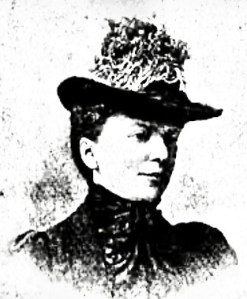
Emily Lawless Irish 1845 – 1913
She said, “They gave me of their best,
They lived, they gave their lives for me;
I tossed them to the howling waste,
And flung them to the foaming sea.”
She said, “I never gave them aught,
Not mine the power, if mine the will;
I let them starve, I let them bleed,—
They bled and starved, and loved me still.”
She said, “Ten times they fought for me,
Ten times they strove with might and main,
Ten times I saw them beaten down,
Ten times they rose, and fought again.”
She said, “I stayed alone at home,
A dreary woman, grey and cold;
I never asked them how they fared,
Yet still they loved me as of old.”
She said, “I never called them sons,
I almost ceased to breathe their name,
Then caught it echoing down the wind,
Blown backwards from the lips of Fame.”
She said, “Not mine, not mine that fame;
Far over sea, far over land,
Cast forth like rubbish from my shores,
They won it yonder, sword in hand.”
She said, “God knows they owe me nought,
I tossed them to the foaming sea,
I tossed them to the howling waste,
Yet still their love comes home to me.”
We present this work in honor of the South African holiday, Youth Day.
Samuel Edward Krune Mqhayi South African 1875 – 1945
Who is this? It is Yeye
with whom is he? With his father
What is he bringing for him? Sour milk
What is the colour of the container? Red
Where did she place it? In the cattle kraal
Which one? The big one
He who drinks is a fool!
He who drinks is a fool!
to not to die, not to go insane…
to live; to live far away from all the expectations
to live…
It is not warm the memory of her lips; no, it is not;
Not the scent of her hair
None of that.
In days like these, when the world is trembling with tempests
I cannot do without her.
Her hand has to be in mine,
I have to look at her eyes,
Have to hear her voice.
We have to eat together
And sometimes laugh.
I do not, I cannot do without her.
You my ugly girl,
You my bread, my poison;
My flavor, my sleep.
I cannot do without you!
Although she feeds me bread of bitterness,
And sinks into my throat her tiger’s tooth,
Stealing my breath of life, I will confess
I love this cultured hell that tests my youth!
Her vigor flows like tides into my blood,
Giving me strength erect against her hate.
Her bigness sweeps my being like a flood.
Yet as a rebel fronts a king in state,
I stand within her walls with not a shred
Of terror, malice, not a word of jeer.
Darkly I gaze into the days ahead,
And see her might and granite wonders there,
Beneath the touch of Time’s unerring hand,
Like priceless treasures sinking in the sand.
We present this work in honor of the poet’s 100th birthday.
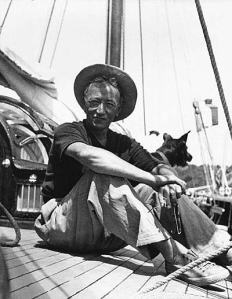
Gwen Harwood Australian 1920 – 1995
She sits in the park. Her clothes are out of date.
Two children whine and bicker, tug her skirt.
A third draws aimless patterns in the dirt
Someone she loved once passed by – too late
to feign indifference to that casual nod.
“How nice” et cetera. “Time holds great surprises.”
From his neat head unquestionably rises
a small balloon…” but for the grace of God…”
They stand a while in flickering light, rehearsing
the children’s names and birthdays. “It’s so sweet
to hear their chatter, watch them grow and thrive,”
she says to his departing smile. Then, nursing
the youngest child, sits staring at her feet.
To the wind she says, “They have eaten me alive.”






 Poets Corner