This land like a mirror turns you inward
And you become a forest in a furtive lake;
The dark pines of your mind reach downward,
You dream in the green of your time,
Your memory is a row of sinking pines.
Explorer, you tell yourself, this is not what you came for
Although it is good here, and green;
You had meant to move with a kind of largeness,
You had planned a heavy grace, an anguished dream.
But the dark pines of your mind dip deeper
And you are sinking, sinking, sleeper
In an elementary world;
There is something down there and you want it told.
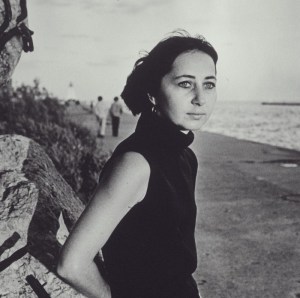
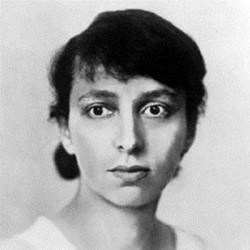
We present this work in honor of the poet’s 125th birthday.
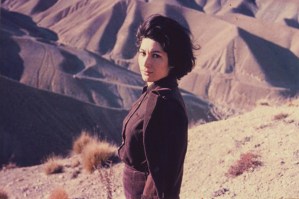
Gertrud Kolmar German 1894 – 1943
I am in the darkness and alone.
In front of me stands the door.
When I open it, I am bathed in light.
There are a father, a mother and sister,
A dog, which, dumb, still barks in friendliness.
How can I lie, and how can I say
That I, hidden there in darkness, have not come to harm them?
I drag myself over the threshold.
Snow blossoms in my eyes.
I saw him bowing to me courteously;
How much that hurt me.
How could my heart find peace,
When round it raced the voice of the old man?
I live in coldness.
I dried my tears and went
To where the man was eating with his family.
It was so calm and loving a reception.
I felt the violins sounding inside me
At first, so sweetly, so gently.
They will never sound again, when I have finished.
Fear drenched my hands.
Beneath me I could almost taste my womb.
A sneer seemed to say: ‘Have you no shame?
What have you done with the wedding-ring on your finger?
Terrible thief, where did you hide your courage?
Does the nakedness of my right hand mean so little to me?’
I felt so poor and naked.
I wriggled in my chair
And trembled to think what I must do.
Pity clawed at my heart and shook my body
Like a tree in a winter field blown by the wind
Shedding leaves.
I told myself it was time to go,
Scolding my wan, faded self for my little worries.
Pleased with myself again, I steeled myself for the torture.
The joy of it! Oh, how I want to be
Just like an animal and be happy again!
I sharpen my claws with a knife.
It is still night, and that thing called shame,
I may not let it show itself.
I know the train that tears through the woods.
I go out to the unfeeling rails.
Weary, I am glad to go to bed,
Running across two flat sticks of iron.
For many days, the hearth wept – the millstone lay, forlorn
For many days, the one-eyed dog slept beside them
For many days, the lizards kept vigil on the wall
For many days, even the mice were as if defeated
For many days, even the mice were as if defeated
Smoke billowed above the courtyard, after many days
The eyes of the household shone again, after many days
The black crow cleaned its feathers, after many days.
If the sun drowns in a sea of clouds
And extends a wave of darkness onto the world
And vision dies in the eyes of the vigilant
And the road is lost in lines and circles
O shrewd traveler in straight lines and in circles,
You have no guide but the eyes of speech
Before I cast anchor in the treasure
Of my last love, I have need
To course the world, fevered as a racer —
In my pockets, youth
And a golden seed
And to embrace a serpent of the Nile
Such as the chlamys of Cleopatra hid,
And to hearken to the quiet soliloquy
Of the Virgin Mary in the pyramid
To disembark in my native land,
To make myself a child and childlike trace
On my old school slate, in crayon,
The profile of a Guadalupean face —
To kiss like the Hindoos or the Polynesians,
Like the striped wood beasts or shaggy bears.
And to cast anchor by a countrywoman of mine,
Wearing long earrings in her small ears.
And to say to Love — of all my sins
Even the blackest were passionate lovers.
Out of my cloisters a miserere rises up
And moves toward you with the steps of a baby,
Or as the white island of bubble hovers
On the surface of a coffee cup.
And, since my five fierce fingers of sense
Grasp the five great continents,
I can, O last love and ultimate goal,
Place my hand upon your Guadalupean soul.
In honor of the Japanese holiday, Labor Thanksgiving Day, we present this work by one of the nation’s most prolific poets.
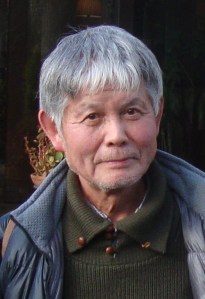
Mutsuo Takahashi Japanese b. 1937
The shade of sooty quince
The bloom of dusty roses
——And beyond that
A fence of metal wire entwined with vines
Of spiderwort or knotgrass perhaps?
There tossed among the plants
Reclining in a weather-worn wooden armchair
Hands folded at his abdomen like a dead man
Who could he be this man who looks as if
He was washed here from some distant world?
This man is a decrepit adolescent a broken angel
Swept here by the ark of dreams a boat in the shape of a box
When was that? Yesterday or a hundred years ago?
The world to which this man really belongs is not here
The world to which this man really belongs
Is far away through the fissures of dream
Guarded by sensible, steadfast parents
This man wearing a starched collar is a clever boy
He has two beautiful younger sisters
And a younger brother with an upright spirit
This family of angels with wings hidden under their fancy dress
Is enveloped in golden happiness
That world of distant memories
Is like a box floating in a galaxy of tears
One morning suddenly that box-shaped boat ran ashore
In the doorway to that timeless world of happiness
When was that? A second or a hundred million years ago?
Dreams are always nightmares interlopers with foul intent
Drawn by death the father was pulled backward
And the rest of the family were dragged quickly away
It was here they disembarked the backyard of a sickly city
Here not even angels could escape human fate
The mother grew ill from anxiety the sisters grew thin
And wrinkles spread across the brother’s spotless soul
In this false world perched atop the scales
This man was the quiet, noble head of the household
Working harder growing old faster than everyone else
But that was not the reality of who he was
His real self is hidden under the disguise of an old man
Strewn across his chair seated like a corpse
He inhales the blue-green seas of his own world of reality
Watches clouds trailing behind airplanes over the sea
And pricks up his ears to overhear the daytime dialogue of the stars
This man suddenly stands from his chair
And slowly descends through the fallen leaves
Underground he finds his own private box-like world
With objects neatly stored in shelves and drawers
Candy boxes pill boxes candle boxes
Cut-outs from old images musical scores lost wooden blocks
Shells brass rings sky blue marbles
Cracked glasses soap bubble sets——
These too are fragments of the real world
Drifted here through the fissures of dream
This man gives himself plenty of time
How long? One week or thirty years?
He chooses the fragments then puts them together
In just the right place in just the right box
While the faint reflection of the golden happiness
Belonging to the real world so far away
Turns into pale afternoon sunlight and falls
Upon his deftly moving fingers
Is this man no longer at his chair in the garden?
Is he no longer at his basement table?
If he is nowhere to be found
This man must never have been here at all
What we thought we saw was nothing more
Than the shadow of his real self
His shadowy eyelashes drawing the bow of vision toward the real world
His shadowy hands caressing the flotsam from the real world
It is not for us to lament his absence
Like little birds we should descend into the garden to bathe as usual
And play on his basement window like light
Then what about these boxes?
The objects captured inside the princesses
The ballerinas the rabbit princes
The parrots the honeybees the butterflies
Does this man lodge inside them
Borrowing the forms of these ephemeral creatures?
Like the garden and basement these boxes are also
Cheap hotel rooms inhabited briefly by this man’s shadow
It swings upon the roost pours some sand
Creates nimble cracks across the panes of glass
And then vanishes
The destination for his shadow is the real world
These wistfully nostalgic boxes before us are
The frames around the well through which
We peer into that world and are drawn in
Through jewelled windows in the walls
The tender daylight smiles;
Majestic music swells and falls
Adown the stately aisles;
Shadows of carven roof and rood,
Of stony saints and angels, brood
Above the altar-glow;
They cannot dim the shining face
Of one conspicuous in his place
Amid the forms below.
He that was once my little boy,
With merry voice and look,
My babe, that quarrelled with his toy
And tore his hated book;
But yesterday a laughing lad,
In his dear worldly garments clad,
Talking of college wins,
Wickets, and bumping boats, and goals,
And not of shepherd and lost souls –
His sermons and their sins.
The same, he kneels there, pale and awed,
In cloud of prayer and hymn,
And we are to behold our Lord
Made manifest in him;
To sit, his pupils, and be taught,
Who knows not what the years have brought
To mothers and to men;
To take him for our heaven-sent guide
On seas he never voyaged – wide
And wild beyond his ken.
With all the lore of schools, and none
Of stern and suffering life,
A child with wooden sword and gun,
Unarmed for vital strife;
His mind a bud of spring, unblown,
Its flowering shape as yet unknown,
Its fruit awaiting birth –
A seedling of a thousand strains,
A parasite of dead men’s brains,
Though sprung from living earth.
There, in his proud belief, he stands,
This simple boy of mine,
Transformed by necromantic hands
To something half divine –
All in a moment, in a breath,
An oracle of life and death,
A judge above us all!
What spell is this that has him fast,
When age of miracle is past,
And past beyond recall?
O knight of dreams, in fairy mail!
If for his sake I pray,
It is that fairy arms may fail
And tough steel win the day –
Aye, though his dear heart take the thrust,
And he be trampled in the dust.
But mother fears forbode
(May God have mercy and forefend!)
A tamer journey and an end
Upon an easier road.
A long fulfilling of the vow
Within the vow he spake –
To close the gates of knowledge now,
And no more dare to take
The broad highways of marching thought
By his unfettered brothers sought,
Who follow every clue
On every line, where’er it leads,
Heedless of heresies or creeds,
To find the Right and True.
The mother-love, so apt for woe,
Visions the joyless track
Where the belovèd feet may go
And nevermore come back;
The boy become a thinking man,
That has outgrown the changeless plan
Once fitted to his shape;
The traveller, confident, serene,
Caught in an ambush unforeseen,
Whence there is no escape.
Struggling a little – overborne –
Perplexed – persuaded – spent
With dim self-pity and self-scorn
Supine in discontent.
No – no escape, by any arts,
Save through a score of bleeding hearts –
A stair too steep to climb;
Wherefore be wise and hide the chains,
Drug conscience, with its pangs and pains.
Give peace, Lord, in our time!
O waste of precious force and fire!
The sacred passion pales.
The soaring pinions droop and tire.
Our standard-bearer fails
To keep his battle-flag aloft;
The strong young arm is slack and soft;
The eager feet are slow;
The shining mail is dulled with rust
Of contact with mediaeval dust,
And will not bear a blow.
And under harness so decayed,
What ravage unrevealed?
What moral textures soiled and frayed
And moral sores unhealed?
He must not know that dares not tell.
Hush! It is nothing. All is well.
Peace in our time, O Lord!
And leave the fighting for the heirs.
The blood of sacrifice be theirs
Who cannot shirk the sword.
O boy of mine, that played the game,
And never learned to cheat,
Nor knew such word or thought as shame
In victory or defeat!
Will he be found, when he grows old,
Passing off spurious coin for gold,
Selling dry husks for grain –
The pottage of the Esau’s bowl
That bought the birthright of a soul
His all-sufficient gain?
The image and the robes of what
He seems to serve and seek
But veils – although he knows it not –
On Mammon’s brazen cheek;
His bishop’s smile, his patron’s nod,
The homage of his flock, his god;
His sensuous worship drest
In forms and colours rich and rare –
The spirit’s sanctuary bare –
Heart emptily at rest . . . . . .
Let organ music swell and peal,
And priests and people pray;
Let those who can at altar kneel –
I have no heart to stay.
I cannot bear to see it done –
The hands whose work has scarce begun
Locked in these gyves of lead –
The living spirit gagged and bound,
And tethered to one plot of ground –
A prisoner of the dead.
hope fails us often
grief never.
that’s why some think
that known grief is better
than unknown grief.
they believe that hope is an illusion.
they are deluded by grief.

 Poets Corner