Say this city has ten million souls,
Some are living in mansions, some are living in holes:
Yet there’s no place for us, my dear, yet there’s no place for us.
Once we had a country and we thought it fair,
Look in the atlas and you’ll find it there:
We cannot go there now, my dear, we cannot go there now.
In the village churchyard there grows an old yew,
Every spring it blossoms anew:
Old passports can’t do that, my dear, old passports can’t do that.
The consul banged the table and said,
“If you’ve got no passport you’re officially dead”:
But we are still alive, my dear, but we are still alive.
Went to a committee; they offered me a chair;
Asked me politely to return next year:
But where shall we go to-day, my dear, but where shall we go to-day?
Came to a public meeting; the speaker got up and said;
“If we let them in, they will steal our daily bread”:
He was talking of you and me, my dear, he was talking of you and me.
Thought I heard the thunder rumbling in the sky;
It was Hitler over Europe, saying, “They must die”:
O we were in his mind, my dear, O we were in his mind.
Saw a poodle in a jacket fastened with a pin,
Saw a door opened and a cat let in:
But they weren’t German Jews, my dear, but they weren’t German Jews.
Went down the harbour and stood upon the quay,
Saw the fish swimming as if they were free:
Only ten feet away, my dear, only ten feet away.
Walked through a wood, saw the birds in the trees;
They had no politicians and sang at their ease:
They weren’t the human race, my dear, they weren’t the human race.
Dreamed I saw a building with a thousand floors,
A thousand windows and a thousand doors:
Not one of them was ours, my dear, not one of them was ours.
Stood on a great plain in the falling snow;
Ten thousand soldiers marched to and fro:
Looking for you and me, my dear, looking for you and me.
In honor of the Turkish holiday, Victory Day, we present this work by one of modern Turkey’s most poignant authors.
Nilgun Marmara Turkish 1958 – 1987
My bird and I are fast asleep
reflected in a mirror, our cage our bed
our visages reflecting that of one another
we sleep beneath the eternally falling snow
my bird and I.
A crimson ribbon binds us – my mate and I
indelibly together.
Destitution would delight in its severance.
In our mirror there’s naught beyond this bond…
This crimson tie between us – my mate my bird and I…
“I’ve come to take you home –
home, remember the veld?
the lush green grass beneath the big oak trees
the air is cool there and the sun does not burn.
I have made your bed at the foot of the hill,
your blankets are covered in buchu and mint,
the proteas stand in yellow and white
and the water in the stream chuckle sing-songs
as it hobbles along over little stones.
I have come to wretch you away –
away from the poking eyes
of the man-made monster
who lives in the dark
with his clutches of imperialism
who dissects your body bit by bit
who likens your soul to that of Satan
and declares himself the ultimate god!
I have come to soothe your heavy heart
I offer my bosom to your weary soul
I will cover your face with the palms of my hands
I will run my lips over lines in your neck
I will feast my eyes on the beauty of you
and I will sing for you
for I have come to bring you peace.
I have come to take you home
where the ancient mountains shout your name.
I have made your bed at the foot of the hill,
your blankets are covered in buchu and mint,
the proteas stand in yellow and white –
I have come to take you home
where I will sing for you
for you have brought me peace.”
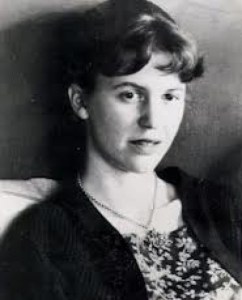
We present this work in honor of Women’s Equality Day.
Sylvia Plath American 1932 – 1963
All day she plays at chess with the bones of the world:
Favored (while suddenly the rains begin
Beyond the window) she lies on cushions curled
And nibbles an occasional bonbon of sin.
Prim, pink-breasted, feminine, she nurses
Chocolate fancies in rose-papered rooms
Where polished highboys whisper creaking curses
And hothouse roses shed immortal blooms.
The garnets on her fingers twinkle quick
And blood reflects across the manuscript;
She muses on the odor, sweet and sick,
Of festering gardenias in a crypt,
And lost in subtle metaphor, retreats
From gray child faces crying in the streets.
When you set out on your journey to Ithaca,
pray that the road is long,
full of adventure, full of knowledge.
The Lestrygonians and the Cyclops,
the angry Poseidon — do not fear them:
You will never find such as these on your path,
if your thoughts remain lofty, if a fine
emotion touches your spirit and your body.
The Lestrygonians and the Cyclops,
the fierce Poseidon you will never encounter,
if you do not carry them within your soul,
if your soul does not set them up before you.
Pray that the road is long.
That the summer mornings are many, when,
with such pleasure, with such joy
you will enter ports seen for the first time;
stop at Phoenician markets,
and purchase fine merchandise,
mother-of-pearl and coral, amber and ebony,
and sensual perfumes of all kinds,
as many sensual perfumes as you can;
visit many Egyptian cities,
to learn and learn from scholars.
Always keep Ithaca in your mind.
To arrive there is your ultimate goal.
But do not hurry the voyage at all.
It is better to let it last for many years;
and to anchor at the island when you are old,
rich with all you have gained on the way,
not expecting that Ithaca will offer you riches.
Ithaca has given you the beautiful voyage.
Without her you would have never set out on the road.
She has nothing more to give you.
And if you find her poor, Ithaca has not deceived you.
Wise as you have become, with so much experience,
you must already have understood what Ithacas mean.
We present this work in honor of the poet’s 115th birthday.
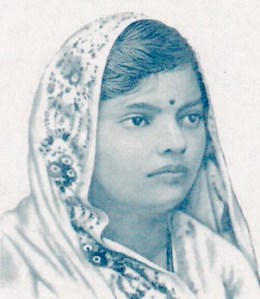
Subhadra Kumari Chauhan Indian 1904 – 1948
The throne was shaken and tensions rose among the Raajvanshs, the royal heirs,
In aged India, new ideas were taking hold,
The people of all India lamented their lost freedom,
And decided to cast off British rule,
Old swords glittered anew as the freedom movement of 1857 started.
The Bandelas and Harbolas sang once again of the courage of the Queen of Jhansi,
How she fought like a man against the British intruders
So was the Queen of Jhansi.
She was as dear to the Nana (Nana Ghunghupant) of Kanpur as his real sister,
Laxmibai was her name, her parents only daughter
She’d been with Nana since her schoolgirl days
The spear, knife, sword, and axe were her constant companions.
She knew by heart the tales of valor of Shivaji
The Bandelas and Harbolas sang once again of the courage of the Queen of Jhansi,
How she fought like a man against the British intruders
So was the Queen of Jhansi.
None were sure, was she Laxmi or Durga devi or Devi durga reincarnate?
The people of Marathward were awed by her (expertise) skill with the sword,
They learned from her how to fight, the strategy of war,
To attack and humiliate the enemy were her favorite sports.
Her love for Maharashatra-kul-Devi was equaled only by her love for Bhavani.
The Bandelas and Harbolas sang once again of the courage of the Queen of Jhansi,
How she fought like a man against the British intruders,
So was the Queen of Jhansi.
Laxmibai was married in Jhansi, with great jubilation
Entering the joyous city as Queen,
Grand celebrations were held in the palace in Jhansi, in honor of her coming.
Just as when Chitra met Arjun or Shiv had found his beloved Bhavani.
The Bandelas and Harbolas sang once again of the courage of the Queen of Jhansi,
How she fought like a man against the British intruders,
So was the Queen of Jhansi.
Her presence was a blessing at the palace of Jhansi and candles of celebration burned long
But as days passed the dark clouds of misfortune overshadowed the royal palace.
She put aside her bangles and prepared for battle
For fate was unkind and made her a widow
Grief stricken she was, with no heir for her king,
The Bandelas and Harbolas sang once again of the courage of the Queen of Jhansi,
How she fought like a man against the British intruders,
So was the Queen of Jhansi.
The candlelit hope of Jhansi had died and Dalhousie was overjoyed at his luck.
He’d long awaited the time to usurp this kingdom
He sent his solders to Citadel and raised the flag of Britain on the royal palace,
British rule came to Jhansi as a guardian comes to an orphan,
While with tear filled eyes the Rani watched as her city became deserted.
The Bandelas and Harbolas sang once again of the courage of the Queen of Jhansi,
How she fought like a man against the British intruders,
So was the Queen of Jhansi.
Despotic kings used flattery and lies
And came to India disguised as poor merchants
Dalhousi exerted his power, ill-gotten, and changed the fate of India,
Insulting all of India’s leaders, without exception.
The Queen played the part of a maidservant, but truly she was still the Queen,
The Bandelas and Harbolas sang once again of the courage of the Queen of Jhansi,
How she fought like a man against the British intruders,
So was the Queen of Jhansi.
The capital Delhi fell, followed by the fall of Lucknow,
Peshwa was imprisoned in Bithur and the Nagpur tragedy occurred.
And after the fall of Nagpur, Udaipur, Tanjore satara, and Karnatak fell quickly at the hands of the intruders.
The British already had control of Sindh, Punjab and Assam.
It was the same sad tale for Bengal,Madras and many other states.
The Bandelas and Harbolas sang once again of the courage of the Queen of Jhansi,
How she fought like a man against the British intruders
So was the Queen of Jhansi.
Feeling sick with helplessness the Rani wept bitterly for her beloved India.
Her royal ornaments and clothes were being sold in the markets of Calcutta.
This humiliation was published in the British daily papers:
“Buy the ornaments of Nagpur, buy the Naulakha locket of Lucknow” were the highlights of this loss of honor.
This is how the honor of the royal ladies of India was sold to foreigners.
The Bandelas and Harbolas sang once again of the courage of the Queen of Jhansi,
How she fought like a man against the British intruders
So was the Queen of Jhansi.
Both the poor and the royals suffered insult and atrocity at the hands of the British rulers.
Brave soldiers of India recalled the honor of their ancestors,
The lost treasures, the names and titles of great warriors and leaders, like Ghunghupant, and Nana,
The beloved sister of Nana, Rani, the Queen, invited him to Ran-Chandi,
To awaken the sleeping, divine spirit of the Indian people, the holy war had already begun.
The Bandelas and Harbolas sang once again of the courage of the Queen od Jhnasi,
How she fought like a man against the British intruders
So was the Queen of Jhansi.
The desire for freedom was as a burning fire of revolt, from the royal palace to the poor and common folk,
This spark, which was born in the inner soul of the people.
It consumed Jhansi first, then spread in Delhi and engulfed even Lucknow,
In Merat, Kanpur and Patna, the struggle for freedom raged strong,
Which inspired the peoples of Jabalpur and Kolhapur
The Bandelas and Harbolas sang once again of the courage of the Queen of Jhansi,
How she fought like a man against the British intruders
So was the Queen of Jhansi.
In that great freedom struggle, many brave brothers lost their lives.
Among them: Nana Ghunghupant, Tantya, great Azeemullah,
And many more: Ahmedshah Moulvi, Thakur Kunwar singh, Sainik Abhiram.
Though by the British, they were considered rebels and their sacrifices a crime,
Their names will always shine in the heavens of the ancient history of India.
The Bandelas and Harbolas sang once again of the courage of the Queen of Jhansi,
How she fought like a man against the British intruders
So was the Queen of Jhansi.
Well, leave the tale of the bravery of those great men, and back to the battlefield of Jhansi
Where Laxmibai stands boldly like a man among other brave men,
Lt. Walker met her in battle, and pushed back this brave army of men,
But as Rani drew her sword, drums thundered in Heaven,
Walker retreated after Rani wounded him, astonished at her skill and agility.
The Bandelas and Harbolas sang once again of the courage of the Queen of Jhansi,
How she fought like a man against the British intruders,
So was the Queen of Jhansi.
Rani pursued Walker for hundreds of miles to the (city) of Kalpi,
Where his horse was exhausted and fell to the ground, Walker was thrown off as well.
In the field of Yamuna, Rani was defeating the British once more,
Rani pushed back the British and took control of the state of Gawalior,
The British soon left and ended their rule of Vsindia of Gawalior,
The Bandelas and Harbolas sang once again of the courage of the Queen of Jhansi,
How she fought like a man against the British intruders
So was the Queen of Jhansi.
The British army reorganized, under the command of General Smith,
And still the freedom fighters prevailed.
Rani was joined in the battle by Kaana and Mandra, and all together they fought furiously,
But, alas, when Commander Hughrose came with reinforcements,
The Rani was completely surrounded on the field.
The Bandelas and Harbolas sang once again of the courage of the Queen of Jhansi,
How she fought like a man against the British intruders,
So was the Queen of Jhansi.
Though deeply wounded, Rani still fought her way through the British army,
But alas! Rani’s horse became mired in a canal at the edge of the field of battle,
And while she struggled with the untrained animal, the British caught up with her there,
Like a lioness she fought, all alone while being attacked from all sides,
She fell mortally wounded, the glorious death of a martyr.
The Bandelas and Harbolas sang once again of the courage of the Queen of Jhansi,
How she fought like a man against the British intruders,
So was the Queen of Jhansi.
A battlefield martyr was Rani. Her departed soul was then riding a divine vehicle, moving towards heavens
Her light enjoined to the Divine, as a true heir of divinity
Only 30 years of age, she was a superhuman, she was a holy being.
In the form of a freedom fighter, she came to give us light and a noble life,
She showed us the path of freedom and taught us the lesson of courage
The Bandelas and Harbolas sang once agina of the courage of the Queen of Jhansi,
How she fought like a man against the British intruders,
So was the Queen of Jhansi.
Oh Rani Laxmibai, India will remember you forever, Blessed Rani,
Your life’s sacrifice awakens an Eternal freedom in the soul of India’s people,
History may forget, Jhansi may be destroyed,
But your name Rani, Queen of Jhansi, will be an eternal memorial of courage
The Bandelas and Harbolas sang once again of the courage of the Queen of Jhansi,
How she fought like a man against the British intruders,
So was the Queen of Jhansi.
Busy with his ropes and gears,
tides and currents,
he didn’t know and never
will how he came to appear
scowling in our
family snapshot.
We brought him home
by accident
on a film showing
part of a holiday,
children in jerseys on the dock,
grinning, puddled in sun,
and at the edge,
the ferryman’s dark image.
Well, that’s one way
to survive,
to be captured alive
by someone, caught
by a click and locked
in a box held by an unknown
hand at an unknown hour.
Later to rise from
a chemical bath imprinted on
a glossy three-by-five
to glare
out forever,
unknowing.
We present this work in honor of the Japanese holiday, Mountain Day.
Shigeji Tsuboi Japanese 1897 – 1975
Deep at the bottom of a precipice
a swift stream intensely blue goes bubbling by,
in the unlimited sky beyond
a cable car moves along
burdened by a load that is heavy
and unseen by eyes.
Its thick cable
might be cut off at any unknown time.
Inside myself also
something continually keeps moving along.
Possibly
it might be an express train.
The middle of the night . . .
though almost all noises have faded away,
in the ears’ intensely dark tunnel
there is something hurrying through.
Danger!
Unconsciously shouting,
my own voice awakens me,
the one eye of an intensely red signal
keeps staring at me.
From morning
until late at night
time is regulated by stop-go signals.
Danger!
Larger than an infant’s head,
a single egg
comes rolling down from somewhere
and crosses the street. . . .
Inside the intense darkness
now again
cable cars
are seen to be crossing.
For the sake of public construction work,
I thought, maybe, they were loaded
full of cement,
but with skeletons only
the cable cars were loaded,
one after another
endlessly moving away.
We present this work in honor of International Day of the World’s Indigenous Peoples.
Oodgeroo Noonuccal Australian 1920 – 1993
They came in to the little town
A semi-naked band subdued and silent
All that remained of their tribe.
They came here to the place of their old bora ground
Where now the many white men hurry about like ants.
Notice of the estate agent reads: ‘Rubbish May Be Tipped Here’.
Now it half covers the traces of the old bora ring.
‘We are as strangers here now, but the white tribe are the strangers.
We belong here, we are of the old ways.
We are the corroboree and the bora ground,
We are the old ceremonies, the laws of the elders.
We are the wonder tales of Dream Time, the tribal legends told.
We are the past, the hunts and the laughing games, the wandering camp fires.
We are the lightening bolt over Gaphembah Hill
Quick and terrible,
And the Thunderer after him, that loud fellow.
We are the quiet daybreak paling the dark lagoon.
We are the shadow-ghosts creeping back as the camp fires burn low.
We are nature and the past, all the old ways
Gone now and scattered.
The scrubs are gone, the hunting and the laughter.
The eagle is gone, the emu and the kangaroo are gone from this place.
The bora ring is gone.
The corroboree is gone.
And we are going.’



 Poets Corner