In honor of the Chilean holiday, the Feast of St. Peter and Paul, we present this work by one of the great Chilean poets of the 20th century.
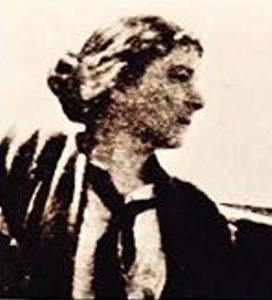
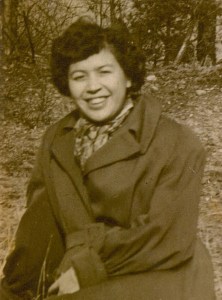
Winétt de Rokha Chilean 1892 – 1951
Beneath the white arch,
terrified of the blue winds,
I throw a glance
(like lips on their way to a kiss)
through the balustrade at the yellow ocean.
How it lives, the odour
of rosebush and orange after rain.
A cat — flower of the winter thistle —
electrifies itself, begins to sing;
flies look for smoke-blackened beams;
chickens cluck and shake out their underclothes;
and my heart, trying
to house its sorrow when all covering has been ripped to pieces,
goes barefoot, and blindly.
You, whom the grave cannot bind,
Shall a song hold you?
Still you escape from the mesh
Spun to enfold you.
Your woven texture of flesh
Short time confined you.
Sib to the sun and the wind,
Shall a song bind you?
It means
no madcap delight will intrude
into the calm flow of my working hours
no ecstatic errors perplex
my literary pretensions.
It means
there will be time enough for thought
undistracted by brown peril of eye
and measured litany of routine deeds
undone by the ghost of a scent.
It means
my neglect of the Sonnets will cease
and Homer come into battle once more.
I might even find turgid old Tennyson
less of a dead loss now.
It means
there will be whole days to spare
for findings important to a man –
like learning to live without a woman
without altogether losing one’s mind.
It means
there is no one now to read my latest poem
with veiled unhurried eyes
putting my nerves on the feline rack
in silence sheer she – devil hell for me.
It means
there is no silly woman to tell me
‘Take it easy – life’s long anyway –
don’t drink too much – get plenty of sleep – ’
and other tremendous clichés.
Oh! Daughter of Heaven, whom
we swear to serve faithfully! To the end
that you may accomplish the work
of your deified ancestors, never forget
the ten precepts which are the rule
of conduct of all sovereigns. As they
are engraved here on the precious jade,
it is my privilege to read them to you
this day in the hearing of all.
Fear Heaven.
Love the people.
Exalt the soul.
Cultivate the sciences.
Honour merit.
Listen to wise counsels.
Lessen taxes.
Mitigate the laws.
Spare the treasury.
Avoid the allurements of the senses!
Obeying these commands, one is sure
to follow in the right path.
But one must advance along this road
without turnings aside or falterings.
Oh! our Sovereign, be attentive
and anxious, as though each hour
of the day you carried a chalice filled
to the brim with water not one drop
must be spilled. Act thus, and then
your conduct will be just and
your dynasty endure eternally—
Ten thousand years!
Ten thousand years!
The wind was a torrent of darkness among the gusty trees.
The moon was a ghostly galleon tossed upon cloudy seas.
The road was a ribbon of moonlight over the purple moor,
And the highwayman came riding—
Riding—riding—
The highwayman came riding, up to the old inn-door.
He’d a French cocked-hat on his forehead, a bunch of lace at his chin,
A coat of the claret velvet, and breeches of brown doe-skin.
They fitted with never a wrinkle. His boots were up to the thigh.
And he rode with a jewelled twinkle,
His pistol butts a-twinkle,
His rapier hilt a-twinkle, under the jewelled sky.
Over the cobbles he clattered and clashed in the dark inn-yard.
He tapped with his whip on the shutters, but all was locked and barred.
He whistled a tune to the window, and who should be waiting there
But the landlord’s black-eyed daughter,
Bess, the landlord’s daughter,
Plaiting a dark red love-knot into her long black hair.
And dark in the dark old inn-yard a stable-wicket creaked
Where Tim the ostler listened. His face was white and peaked.
His eyes were hollows of madness, his hair like mouldy hay,
But he loved the landlord’s daughter,
The landlord’s red-lipped daughter.
Dumb as a dog he listened, and he heard the robber say—
“One kiss, my bonny sweetheart, I’m after a prize to-night,
But I shall be back with the yellow gold before the morning light;
Yet, if they press me sharply, and harry me through the day,
Then look for me by moonlight,
Watch for me by moonlight,
I’ll come to thee by moonlight, though hell should bar the way.”
He rose upright in the stirrups. He scarce could reach her hand,
But she loosened her hair in the casement. His face burnt like a brand
As the black cascade of perfume came tumbling over his breast;
And he kissed its waves in the moonlight,
(O, sweet black waves in the moonlight!)
Then he tugged at his rein in the moonlight, and galloped away to the west.
PART TWO
He did not come in the dawning. He did not come at noon;
And out of the tawny sunset, before the rise of the moon,
When the road was a gypsy’s ribbon, looping the purple moor,
A red-coat troop came marching—
Marching—marching—
King George’s men came marching, up to the old inn-door.
They said no word to the landlord. They drank his ale instead.
But they gagged his daughter, and bound her, to the foot of her narrow bed.
Two of them knelt at her casement, with muskets at their side!
There was death at every window;
And hell at one dark window;
For Bess could see, through her casement, the road that he would ride.
They had tied her up to attention, with many a sniggering jest.
They had bound a musket beside her, with the muzzle beneath her breast!
“Now, keep good watch!” and they kissed her. She heard the doomed man say—
Look for me by moonlight;
Watch for me by moonlight;
I’ll come to thee by moonlight, though hell should bar the way!
She twisted her hands behind her; but all the knots held good!
She writhed her hands till her fingers were wet with sweat or blood!
They stretched and strained in the darkness, and the hours crawled by like years
Till, now, on the stroke of midnight,
Cold, on the stroke of midnight,
The tip of one finger touched it! The trigger at least was hers!
The tip of one finger touched it. She strove no more for the rest.
Up, she stood up to attention, with the muzzle beneath her breast.
She would not risk their hearing; she would not strive again;
For the road lay bare in the moonlight;
Blank and bare in the moonlight;
And the blood of her veins, in the moonlight, throbbed to her love’s refrain.
Tlot-tlot; tlot-tlot! Had they heard it? The horsehoofs ringing clear;
Tlot-tlot; tlot-tlot, in the distance? Were they deaf that they did not hear?
Down the ribbon of moonlight, over the brow of the hill,
The highwayman came riding—
Riding—riding—
The red coats looked to their priming! She stood up, straight and still.
Tlot-tlot, in the frosty silence! Tlot-tlot, in the echoing night!
Nearer he came and nearer. Her face was like a light.
Her eyes grew wide for a moment; she drew one last deep breath,
Then her finger moved in the moonlight,
Her musket shattered the moonlight,
Shattered her breast in the moonlight and warned him—with her death.
He turned. He spurred to the west; he did not know who stood
Bowed, with her head o’er the musket, drenched with her own blood!
Not till the dawn he heard it, and his face grew grey to hear
How Bess, the landlord’s daughter,
The landlord’s black-eyed daughter,
Had watched for her love in the moonlight, and died in the darkness there.
Back, he spurred like a madman, shrieking a curse to the sky,
With the white road smoking behind him and his rapier brandished high.
Blood red were his spurs in the golden noon; wine-red was his velvet coat;
When they shot him down on the highway,
Down like a dog on the highway,
And he lay in his blood on the highway, with a bunch of lace at his throat.
. . .
And still of a winter’s night, they say, when the wind is in the trees,
When the moon is a ghostly galleon tossed upon cloudy seas,
When the road is a ribbon of moonlight over the purple moor,
A highwayman comes riding—
Riding—riding—
A highwayman comes riding, up to the old inn-door.
Over the cobbles he clatters and clangs in the dark inn-yard.
He taps with his whip on the shutters, but all is locked and barred.
He whistles a tune to the window, and who should be waiting there
But the landlord’s black-eyed daughter,
Bess, the landlord’s daughter,
Plaiting a dark red love-knot into her long black hair.
This ev’nin’ I was sittin’ wiv Doreen,
Peaceful an’ ‘appy wiv the day’s work done,
Watchin’, be’ind the orchard’s bonzer green,
The flamin’ wonder of the settin’ sun.
Another day gone by; another night
Creepin’ along to douse Day’s golden light;
Another dawning when the night is gone,
To live an’ love — an’ so life mooches on.
Times I ‘ave thought, when things was goin’ crook,
When ‘Ope turned nark an’ Love forgot to smile,
Of somethin’ I once seen in some old book
Where an ole sorehead arsts, “Is life worf w’ile?”
But in that stillness, as the day grows dim,
An’ I am sittin’ there wiv ‘er an’ ‘im—
My wife, my son! an’ strength in me to strive,
I only know — it’s good to be alive!
Yeh live, yeh love, yeh learn; an’ when yeh come
To square the ledger in some thortful hour,
The everlastin’ answer to the sum
Must allus be, “Where’s sense in gittin’ sour?”
Fer when yeh’ve come to weigh the good an’ bad —
The gladness wiv the sadness you ‘ave ‘ad —
Then ‘im ‘oo’s faith in ‘uman goodness fails
Fergits to put ‘is liver in the scales.
Livin’ an’ loving learnin’ day be day;
Pausin’ a minute in the barmy strife
To find that ‘elpin’ others on the way
Is gold coined fer your profit — sich is life.
I’ve studied books wiv yearnings to improve,
To ‘eave meself out of me lowly groove,
An’ ‘ere is orl the change I ever got:
“‘Ark at yer ‘eart, an’ you kin learn the lot.”
I gives it in — that wisdom o’ the mind —
I wasn’t built to play no lofty part.
Orl such is welkim to the joys they find;
I only know the wisdom o’ the ‘eart.
An’ ever it ‘as taught me, day be day,
The one same lesson in the same ole way:
“Look fer yer profits in the ‘earts o’ friends,
Fer ‘atin’ never paid no dividends.”
Life’s wot yeh make it; an’ the bloke ‘oo tries
To grab the shinin’ stars frum out the skies
Goes crook on life, an’ calls the world a cheat,
An’ tramples on the daisies at ‘is feet.
But when the moon comes creepin’ o’er the hill,
An’ when the mopoke calls along the creek,
I takes me cup o’ joy an’ drinks me fill,
An’ arsts meself wot better could I seek.
An’ ev’ry song I ‘ear the thrushes sing
That everlastin’ message seems to bring;
An’ ev’ry wind that whispers in the trees
Gives me the tip there ain’t no joys like these:
Livin’ an’ loving wand’rin’ on yeh way;
Reapin’ the ‘arvest of a kind deed done;
An’ watching in the sundown of yer day,
Yerself again, grown nobler in yer son.
Knowin’ that ev’ry coin o’ kindness spent
Bears interest in yer ‘eart at cent per cent;
Measurin’ wisdom by the peace it brings
To simple minds that values simple things.
An’ when I take a look along the way
That I ‘ave trod, it seems the man knows best,
Who’s met wiv slabs of sorrer in ‘is day,
When ‘e is truly rich an’ truly blest.
An’ I am rich, becos me eyes ‘ave seen
The lovelight in the eyes of my Doreen;
An’ I am blest, becos me feet ‘ave trod
A land ‘oo’s fields reflect the smile o’ God.
Livin’ an’ lovin’; learnin’ to fergive
The deeds an’ words of some un’appy bloke
Who’s missed the bus — so ‘ave I come to live,
An’ take the ‘ole mad world as ‘arf a joke.
Sittin’ at ev’nin’ in this sunset-land,
Wiv ‘Er in all the World to ‘old me ‘and,
A son, to bear me name when I am gone…
Livin’ an’ lovin’ — so life mooches on.
In honor of the Argentine holiday, National Flag Day, we present this work by Argentina’s most legendary author.
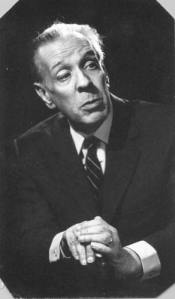
Jorge Luis Borges Argentine 1899 – 1986
Among these streets that deepen the red west
There must be one I’ve gone along not knowing
That that time, in that street, will have been my last—
Both unconcerned and unaware, obeying
The great Whoever-It-Is that sets a term,
A secret and inviolable end,
To every shadow, every dream and form
That ravels life and knits it up again.
And if for all there is a norm and measure,
A last time, a nevermore, and a forgetting,
Who can tell which visitor, departing,
Is one to whom we’ve said goodbye forever?
Beyond the greying window night is fading
And in the stack of books whose lopped shadow
Makes it seem taller on the dim-lit table,
There’s one we’ll never get around to reading.
There are on the Southside more than one ruined dooryard
With prickly pear and rubble masonry planters
Where I shall no more be allowed to enter
Than if it were a picture on a postcard.
There is a door that you have closed for good,
A mirror that waits in vain to hold your face;
A four-faced Janus guards your next crossroad
Though it seems you might go any of its ways.
In the midst of all your memories there is one
Faded away beyond recovering;
Neither the yellow moon nor the white sun
Will ever see you drinking from that spring.
Your voice will not recapture what the Persian
Said in his tongue of rose and nightingale
When you may wish at dusk, as the light disperses,
To say things that are unforgettable.
And the everflowing Rhône, and certain lake,
All that is present to me from the past,
Will sink like Carthage that the Roman took,
Destroyed with fire and with salt erased.
I believe I hear in the dawn the strenuously
Long murmur of a multitude departing.
They are what has loved me and forgotten.
Space, time, and Borges are deserting me.
We present this work in honor of National Dry Martini Day.
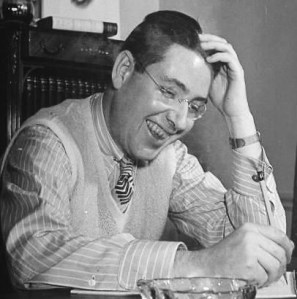
Ogden Nash American 1902 – 1971
There is something about a Martini,
A tingle remarkably pleasant;
A yellow, a mellow Martini;
I wish that I had one at present.
There is something about a Martini,
Ere the dining and dancing begin,
And to tell you the truth,
It is not the vermouth-
I think that perhaps it’s the gin.
There is something about an old-fashioned
That kindles a cardiac glow;
It is soothing and soft and impassioned
As a lyric by Swinburne or Poe.
There is something about an old-fashioned
When dusk has enveloped the sky,
And it may the ice,
Or the pineapple slice,
But I strong suspect it’s the rye.
There is something about a mint julep.
It is nectar imbibed in a dream,
As fresh as the bud of the tulip,
As cool as the bed of the stream.
There is something about a mint julep,
A fragrance beloved by the lucky.
And perhaps it’s the tint
Of the frost and the mint,
But I think it was born in Kentucky.
There is something they put in a highball
That awakens the torpidest brain,
That kindles a spark in the eyeball,
Gliding singing through vein after vein.
There is something they put in a highball
Which you’ll notice one day, if you watch;
And it may be the soda,
But judged by the odor,
I rather believe it’s the Scotch
Then here’s to the heartening wassail,
Wherever good fellows are found;
Be its mater instead of its vassal,
And order the glasses around.
For there’s something they put in the wassail
That prevents it from tasting like wicker;
Since it’s not tapioca,
Or mustard, or mocha,
I’m forced to conclude it’s the liquor.
Authors and actors and artists and such
Never know nothing, and never know much.
Sculptors and singers and those of their kidney
Tell their affairs from Seattle to Sydney.
Playwrights and poets and such horses’ necks
Start off from anywhere, end up at sex.
Diarists, critics, and similar roe
Never say nothing, and never say no.
People Who Do Things exceed my endurance;
God, for a man that solicits insurance!


 Poets Corner