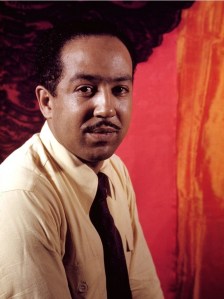
Let America be America again.
Let it be the dream it used to be.
Let it be the pioneer on the plain
Seeking a home where he himself is free.
(America never was America to me.)
Let America be the dream the dreamers dreamed—
Let it be that great strong land of love
Where never kings connive nor tyrants scheme
That any man be crushed by one above.
(It never was America to me.)
O, let my land be a land where Liberty
Is crowned with no false patriotic wreath,
But opportunity is real, and life is free,
Equality is in the air we breathe.
(There’s never been equality for me,
Nor freedom in this “homeland of the free.”)
Say, who are you that mumbles in the dark?
And who are you that draws your veil across the stars?
I am the poor white, fooled and pushed apart,
I am the Negro bearing slavery’s scars.
I am the red man driven from the land,
I am the immigrant clutching the hope I seek—
And finding only the same old stupid plan
Of dog eat dog, of mighty crush the weak.
I am the young man, full of strength and hope,
Tangled in that ancient endless chain
Of profit, power, gain, of grab the land!
Of grab the gold! Of grab the ways of satisfying need!
Of work the men! Of take the pay!
Of owning everything for one’s own greed!
I am the farmer, bondsman to the soil.
I am the worker sold to the machine.
I am the Negro, servant to you all.
I am the people, humble, hungry, mean—
Hungry yet today despite the dream.
Beaten yet today—O, Pioneers!
I am the man who never got ahead,
The poorest worker bartered through the years.
Yet I’m the one who dreamt our basic dream
In the Old World while still a serf of kings,
Who dreamt a dream so strong, so brave, so true,
That even yet its mighty daring sings
In every brick and stone, in every furrow turned
That’s made America the land it has become.
O, I’m the man who sailed those early seas
In search of what I meant to be my home—
For I’m the one who left dark Ireland’s shore,
And Poland’s plain, and England’s grassy lea,
And torn from Black Africa’s strand I came
To build a “homeland of the free.”
The free?
Who said the free? Not me?
Surely not me? The millions on relief today?
The millions shot down when we strike?
The millions who have nothing for our pay?
For all the dreams we’ve dreamed
And all the songs we’ve sung
And all the hopes we’ve held
And all the flags we’ve hung,
The millions who have nothing for our pay—
Except the dream that’s almost dead today.
O, let America be America again—
The land that never has been yet—
And yet must be—the land where every man is free.
The land that’s mine—the poor man’s, Indian’s, Negro’s, ME—
Who made America,
Whose sweat and blood, whose faith and pain,
Whose hand at the foundry, whose plow in the rain,
Must bring back our mighty dream again.
Sure, call me any ugly name you choose—
The steel of freedom does not stain.
From those who live like leeches on the people’s lives,
We must take back our land again,
America!
O, yes,
I say it plain,
America never was America to me,
And yet I swear this oath—
America will be!
Out of the rack and ruin of our gangster death,
The rape and rot of graft, and stealth, and lies,
We, the people, must redeem
The land, the mines, the plants, the rivers.
The mountains and the endless plain—
All, all the stretch of these great green states—
And make America again!
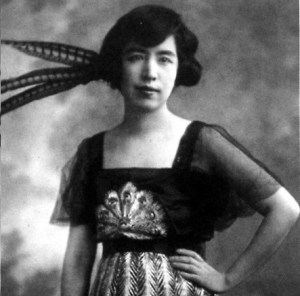
In honor of Dragon Boat Day, we present his work from one of the genius poets of modern China.
Lü Bicheng Chinese 1883 – 1943
Dark is our country—
I rejoice in the ray of dawn shooting up in the distance.
Who will sing loudly of women’s rights?
Joan of Arc.
Eight thousand feet of snow-capped waves—I am saddened by a sea of sin,
I look at East Asia in the stormy tide of the twentieth century.
If you hear mad words and weeping coming from my boudoir,
Don’t be surprised.
Isolated and confined,
Like the eternity of night.
Fettered and bound,
With no end in sight.
Knocking on Heaven’s door—no response,
How can I pour out my angry feelings?
Far and wide I summon the departed souls to no avail,
Nowhere to let out my hot-blooded zeal.
Alas, a frog at the bottom of a well; my wish always denied.
In vain emotions are stirred.
– No, no!
and the dirtyneck boy starts crying and running
without getting away, in a moment, on the streets.
His hands,
he’s got something in his hands!
he doesn’t know what it is, but he runs to the dawn
With his hidden prize.
Endlessly beforehand, we know what his trophy is;
something ignored, that the soul keeps awake in us.
We almost start to glitter inside his gold
with extravagant nakedness…
– No, no!
and the dirtyneck boy starts crying and running
without getting away, in a moment, on the street.
The arm is strong, it could easily grab him…
The heart, also a beggar, lets him go.
If instead of being hanged by the neck
you’re thrown inside
for not giving up hope
in the world, your country, your people,
if you do ten or fifteen years
apart from the time you have left,
you won’t say,
“Better I had swung from the end of a rope
like a flag” —
You’ll put your foot down and live.
It may not be a pleasure exactly,
but it’s your solemn duty
to live one more day
to spite the enemy.
Part of you may live alone inside,
like a tone at the bottom of a well.
But the other part
must be so caught up
in the flurry of the world
that you shiver there inside
when outside, at forty days’ distance, a leaf moves.
To wait for letters inside,
to sing sad songs,
or to lie awake all night staring at the ceiling
is sweet but dangerous.
Look at your face from shave to shave,
forget your age,
watch out for lice
and for spring nights,
and always remember
to eat every last piece of bread—
also, don’t forget to laugh heartily.
And who knows,
the woman you love may stop loving you.
Don’t say it’s no big thing:
it’s like the snapping of a green branch
to the man inside.
To think of roses and gardens inside is bad,
to think of seas and mountains is good.
Read and write without rest,
and I also advise weaving
and making mirrors.
I mean, it’s not that you can’t pass
ten or fifteen years inside
and more —
you can,
as long as the jewel
on the left side of your chest doesn’t lose it’s luster!
We present this work in honor of Western Australia Day.
Patrick White Australian 1912 – 1990
I saw a ploughman against the sky,
The wind of the sea in his horses’ manes,
And the share it was shod with gold;
Down to the sea, on the curve of the hill.
A foam of gulls in the furrow.
The ploughman walking behind his plough.
I heard the cry of the wave in the throats of the gulls,
Far off cry like the voice from a shell,
Yet beating down on me out of the trees,
Out of the net of the leafless trees.
I watched the ploughman stooping behind his plough.
As if Tune crouched on his shoulders there on the hill;
As if he had ploughed all yesterday, when the ships
Sailed fleecy into the harbour down below;
As if he had ploughed all the day before
When men were bright with steel in the valley.
With steel as bright as a winter sky
When the sun ebbs under the rim of the sea;
Ploughing, ploughing, ploughing the bones of
the centuries into the earth:
All pain yielded up in the sigh of the gulls;
Sorrow hid beneath poppy and dock,
To be soothed by the tremulous flame of the corn in spring.
The ploughman was singing, yet wordless his song,
For words are forgotten while thrushes’ notes linger
And music of water is graven in stone.
All is forgotten: the tramping of soldiers;
And proud white list of the clippers from China;
Only the ploughman remains as he follows
The plumed and glistening path of his furrow
Over the field that is strown with gulls.
See, cold island, we stand
Here to-night on your shore.
To-night, but never again;
Lingering a moment more.
See, beneath us our boat
Tugs at its tightening chain.
Holds out its sail to the breeze.
Pants to be gone again.
Off then with shouts and mirth,
Off with laughter and jests.
Mirth and song on our lips.
Hearts like lead in our breasts.
Death and the grave behind,
Death and a traitor’s bier;
Honour and fame before,
Why do we linger here?
Why do we stand and gaze,
Fools, whom fools despise,
Fools untaught by the years.
Fools renounced by the wise?
Heartsick, a moment more.
Heartsick, sorry, fierce.
Lingering, lingering on.
Dreaming the dreams of yore
Dreaming the dreams of our youth,
Dreaming the days when we stood
Joyous, expectant, serene,
Glad, exultant of mood.
Singing with hearts afire.
Singing with joyous strain.
Singing aloud in our pride,
We shall redeem her again
Ah, not to-night that strain,
Silent to-night we stand,
A scanty, a toil-worn crew.
Strangers, foes in the land
Gone the light of our youth.
Gone for ever, and gone
Hope with the beautiful eyes.
Who laughed as she lured us on
Lured us to danger and death.
To honour, perchance to fame,
Empty fame at the best,
Glory half dimmed with shame.
War-battered dogs are we.
Fighters in every clime.
Fillers of trench and of grave.
Mockers, bemocked by time.
War-dogs, hungry and grey,
Gnawing a naked bone,
Fighters in every clime.
Every cause but our own.
See us, cold isle of our love
Coldest, saddest of isles
Cold as the hopes of our youth.
Cold as your own wan smiles.
Coldly your streams outpour.
Each apart on the height.
Trickling, indifferent, slow,
Lost in the hush of the night.
Colder, sadder the clouds,
Comfortless bringers of rain;
Desolate daughters of air,
Sweep o’er your sad grey plain
Hiding the form of your hills.
Hiding your low sand duns;
But coldest, saddest, oh isle
Are the homeless hearts of your sons.
Coldest, and saddest there.
In yon sun-lit land of the south.
Where we sicken, and sorrow, and pine,
And the jest flies from mouth to mouth.
And the church bells crash overhead,
And the idle hours flit by.
And the beaded wine-cups clink.
And the sun burns fierce in the sky;
And your exiles, the merry of heart.
Laugh and boast with the best,
Boast, and extol their part.
Boast, till some lifted brow,
Crossed with a line severe.
Seems with displeasure to ask.
Are these loud braggarts we hear,
Are they the sons of the West,
The wept-for, the theme of songs.
The exiled, the injured, the banned.
The men of a thousand wrongs?
Fool, did you never hear
Of sunshine which broke through rain?
Sunshine which came with storm?
Laughter that rang of pain?
Boastings begotten of grief,
Vauntings to hide a smart.
Braggings with trembling lip.
Tricks of a broken heart?
Sudden some wayward gleam,
Sudden some passing sound,
The careless splash of an oar.
The idle bark of a hound,
A shadow crossing the sun,
An unknown step in the hall,
A nothing, a folly, a straw!
Back it returns all all
Back with the rush of a storm,
Back the old anguish and ill.
The sad, green landscape of home.
The small grey house by the hill.
The wide grey shores of the lake.
The low sky, seeming to weave
Its tender pitiful arms
Round the sick lone landscape at eve.
Back with its pains and its wrongs.
Back with its toils and its strife.
Back with its struggle and woe.
Back flows the stream of our life.
Darkened with treason and wrong.
Darkened with anguish and ruth,
Bitter, tumultuous, fierce,
Yet glad in the light of our youth.
So, cold island, we stand
Here to-night on your shore,
To-night, but never again,
Lingering a moment more.
See, beneath us our boat
Tugs at its tightening chain.
Holds out its sail to the breeze.
Pants to be gone again.
OfF then with shouts and mirth.
Off with laughter and jests.
Jests and song on our lips,
Hearts like lead in our breasts.
Where does such tenderness come from?
These aren’t the first curls
I’ve wound around my finger—
I’ve kissed lips darker than yours.
The sky is washed and dark
(Where does such tenderness come from?)
Other eyes have known
and shifted away from my eyes.
But I’ve never heard words like this
in the night
(Where does such tenderness come from?)
with my head on your chest, rest.
Where does this tenderness come from?
And what will I do with it? Young
stranger, poet, wandering through town,
you and your eyelashes—longer than anyone’s.
In Flanders fields the poppies blow
Between the crosses, row on row,
That mark our place; and in the sky
The larks, still bravely singing, fly
Scarce heard amid the guns below.
We are the Dead. Short days ago
We lived, felt dawn, saw sunset glow,
Loved and were loved, and now we lie,
In Flanders fields.
Take up our quarrel with the foe:
To you from failing hands we throw
The torch; be yours to hold it high.
If ye break faith with us who die
We shall not sleep, though poppies grow
In Flanders fields.


 Poets Corner