The long delayed end of the laborious war and the ambush, even the horse fashioned of Argive Athena, straightway to me in my haste do thou tell, O Calliopeia, remitting copious speech; and the ancient strife of men, in that war now decided, do thou resolve with speedy song.
Already the tenth year was rolling on and old had grown the strain of war, insatiate of blood, for Trojans and Danaans. With slaying of men the spears were weary, the menace of the swords died, quenched was the din of breastplate, rent and perishing the coiled fabric of shield-carrying baldricks; the shield endured no more to abide the hurtling of javelins, unstrung was the bent bow, the swift arrows decayed. And the horse — some apart at the idle manger, with heads bowed piteously, bewailed their fellow horses, some mourned to miss their perished charioteers.
Low lay the son of Peleus and with him his comrade dead: over his young son Antilochus old Nestor mourned: Aias with self-dealt wound had unstrung his mighty form, and bathed his foeman’s sword in the rain of frenzied blood. The Trojans, lamenting over the shameful dragging of Hector, had not only their domestic pain, but groaning for the woes of men of alien speech they wept in turn for their many-tongued allies. The Lycians wept for Sarpedon whom his mother, glorying in the bed of Zeus, had sent to Troy; howbeit he fell by the spear of Patroclus, son of Menoetius, and there was shed about him by his sire a mist that wept tears of blood. The Thracians wailed for Rhesus that in the guileful night was fettered by an evil sleep. And for the fate of Memnon Eos, his mother, hung aloft a cloud in heaven and stole away the light of shamefast day. The women from Thermodon dear to Ares, beating the unripe, unsucked circle of their breasts, mourned the warlike maiden Penthesileia, who came unto the dance of war, that war of many guests, and with her woman’s hand scattered the cloud of men back to their ships beside the sea; only Achilles withstood her with his ashen spear and slew and despoiled her and gave her funeral.
And still all Ilios stood, by reason of her god-built towers, established upon unshaken foundations, and at the tedious delay the people of the Achaeans chafed. And now Athena, unwearying though she be, would have shrunk from her latest labour and all her sweat had been in vain, had not the seer turned from the bride-stealing lust of Deiphobus, and come from Ilios as guest of the Danaans, and, as doing a favour to Menelaus in his travail, prophesied the late-fulfilled ruin of his own fatherland. And at the prophesying of jealous Helenus they straightway prepared an end of their long toil. From Scyros, too, leaving that city of fair maidens, came the so of Achilles and august Deidameia; who, albeit he mantled not yet on his goodly temples the down of manhood, showed the prowess of his sire, young warrior though he was. Came, too, Athena to the Danaans with her holy image; the prey of war but a helper to her friends.
High rises the Eastern Peak Soaring up to the blue sky. Among the rocks—an empty hollow, Secret, still, mysterious! Uncarved and unhewn, Screened by nature with a roof of clouds. Times and Seasons, what things are you Bringing to my life ceaseless change? I will lodge for ever in this hollow Where Springs and Autumns unheeded pass.
So feasted they through Troy, and in their midst Loud pealed the flutes and pipes: on every hand Were song and dance, laughter and cries confused Of banqueters beside the meats and wine. They, lifting in their hands the beakers brimmed, Recklessly drank, till heavy of brain they grew, Till rolled their fluctuant eyes. Now and again Some mouth would babble the drunkard’s broken words. The household gear, the very roof and walls Seemed as they rocked: all things they looked on seemed Whirled in wild dance. About their eyes a veil Of mist dropped, for the drunkard’s sight is dimmed, And the wit dulled, when rise the fumes to the brain: And thus a heavy-headed feaster cried: “For naught the Danaans mustered that great host Hither! Fools, they have wrought not their intent, But with hopes unaccomplished from our town Like silly boys or women have they fled.”
So cried a Trojan wit-befogged with wine, Fool, nor discerned destruction at the doors.
When sleep had locked his fetters everywhere Through Troy on folk fulfilled of wine and meat, Then Sinon lifted high a blazing torch To show the Argive men the splendour of fire. But fearfully the while his heart beat, lest The men of Troy might see it, and the plot Be suddenly revealed. But on their beds Sleeping their last sleep lay they, heavy with wine. The host saw, and from Tenedos set sail.
Then nigh the Horse drew Sinon: softly he called, Full softly, that no man of Troy might hear, But only Achaea’s chiefs, far from whose eyes Sleep hovered, so athirst were they for fight. They heard, and to Odysseus all inclined Their ears: he bade them urgently go forth Softly and fearlessly; and they obeyed That battle-summons, pressing in hot haste To leap to earth: but in his subtlety He stayed them from all thrusting eagerly forth. But first himself with swift unfaltering hands, Helped of Epeius, here and there unbarred The ribs of the Horse of beams: above the planks A little he raised his head, and gazed around On all sides, if he haply might descry One Trojan waking yet. As when a wolf, With hunger stung to the heart, comes from the hills, And ravenous for flesh draws nigh the flock Penned in the wide fold, slinking past the men And dogs that watch, all keen to ward the sheep, Then o’er the fold-wall leaps with soundless feet; So stole Odysseus down from the Horse: with him Followed the war-fain lords of Hellas’ League, Orderly stepping down the ladders, which Epeius framed for paths of mighty men, For entering and for passing forth the Horse, Who down them now on this side, that side, streamed As fearless wasps startled by stroke of axe In angry mood pour all together forth From the tree-bole, at sound of woodman’s blow; So battle-kindled forth the Horse they poured Into the midst of that strong city of Troy With hearts that leapt expectant. [With swift hands Snatched they the brands from dying hearths, and fired Temple and palace. Onward then to the gates Sped they,] and swiftly slew the slumbering guards, [Then held the gate-towers till their friends should come.] Fast rowed the host the while; on swept the ships Over the great flood: Thetis made their paths Straight, and behind them sent a driving wind Speeding them, and the hearts Achaean glowed. Swiftly to Hellespont’s shore they came, and there Beached they the keels again, and deftly dealt With whatso tackling appertains to ships. Then leapt they aland, and hasted on to Troy Silent as sheep that hurry to the fold From woodland pasture on an autumn eve; So without sound of voices marched they on Unto the Trojans’ fortress, eager all To help those mighty chiefs with foes begirt. Now these—as famished wolves fierce-glaring round Fall on a fold mid the long forest-hills, While sleeps the toil-worn watchman, and they rend The sheep on every hand within the wall In darkness, and all round [are heaped the slain; So these within the city smote and slew, As swarmed the awakened foe around them; yet, Fast as they slew, aye faster closed on them Those thousands, mad to thrust them from the gates.] Slipping in blood and stumbling o’er the dead [Their line reeled,] and destruction loomed o’er them, Though Danaan thousands near and nearer drew.
We present this work in honor of the Ching Ming Festival.
Tao Yuanming Chinese 365 – 427
Though life is brief, feeling is everlasting; That is why man wants to live long. The sun and moon follow the stars. The whole world loves this name. The dew is cold, and the warm wind drops; The air is penetrating, the day bright. The departing swallow leaves no shadow; The returning wild goose brings a lingering cry. Wine can wash away a hundred woes, And chrysanthemums set a pattern for old age. Why should I, a hermit, Gaze vacantly at the change of seasons? The ministers are ashamed of their empty grain jars. The autumn chrysanthemums are alone in their beauty. I alone sing while fastening my garments. A feeling of melancholy stirs deep within me. It is true that there is much amusement in living, But in idling is there no accomplishment?
Old with a young heart, witty, kind, whose mind, dipped in much honey with now gall, imparted nothing bitter in your whole life. Nepotianus, comfort to my heart, partaking as much in games as serious work: when silent, you’d outdo Amyclas in speechlessness: Ulysses—who left the Sirens singing their enchantments— could not leave you when you were talking: honest and modest, moderate, thrifty, abstemious, eloquent, in style yielding place to no orator: debater approaching the Stoic Cleanthes: knowing well by heart Scaurus and Probus, your memory greater than Cineas’s of Epirus: friend table-companion and frequent guest— too seldom, for you stimulated my mind. No one gave counsel with so pure a heart or hid confidences with deeper secrecy. With the honor of an illustrious governorship conferred, having lived through the changes of ninety years, leaving two children, you meet your death, with much grief to your family, as to me.
Once I wrote of leaders violating sacred tracts, of those who cling to their terrible thirst for power; of so many slaughters, the cruel campaigns of Kings, of blood-brothers at battle, illustrious shields spattered with kindred gore, trophies taken from would-be allies, cities widowed once again of their countless peoples: of these, I confess, I once wrote. It is enough to record such evil. Now, all-powerful God, take, I pray, my sacred song, loosen the voices of your eternal, seven-fold Spirit; unlock the innermost chambers of my heart, that I, Proba, the prophet, might reveal its secrets. Now I spurn the nectar of Olympus, find no joy in calling down the Muses from their high mountain haunts; not for me to spread the idle boast that rocks can speak, or pursue the theme of laureled tripods, voided vows, the brawling gods of princes, vanquished votive idols: Nor do I seek to extend my glory through mere words or court their petty praise in the vain pursuits of men. But baptised, like the blest, in the Castalian font – I, who in my thirst have drunk libations of the Light – now begin my song: be at my side, Lord, set my thoughts straight, as I tell how Virgil sang the offices of Christ.
Your mother is a cause for wonder: the Lord entered her and became a servant; He who is the Word entered —and became silent within her; thunder entered her —and made no sound; there entered the Shepherd of all, and in her he became the Lamb, bleating as he came forth. Your mother’s womb has reversed the roles: the Establisher of all entered in His richness, but came forth poor; the Exalted One entered her, but came forth meek; the Splendrous One entered her, but came forth having put on a lowly hue. The Mighty One entered, and put on insecurity from her womb; the Provisioner of all entered —and experienced hunger; He who gives drink to all entered —and experienced thirst: naked and stripped there came forth from her He who clothes all.
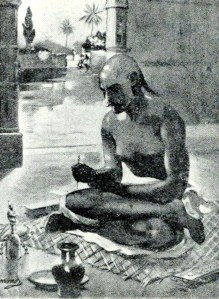
In honor of Thiruvalluvar Day, we present this work by one of India’s greatest Sanskrit poets.
Kalidasa Indian c. 350
Look to this day:
For it is life, the very life of life.
In its brief course
Lie all the verities and realities of your existence.
The bliss of growth,
The glory of action,
The splendour of achievement
Are but experiences of time.
For yesterday is but a dream
And tomorrow is only a vision;
And today well-lived, makes
Yesterday a dream of happiness
And every tomorrow a vision of hope.
Look well therefore to this day;
Such is the salutation to the ever-new dawn!





 Poets Corner