from John Brown’s Body

We present this work in honor of Citizenship Day.
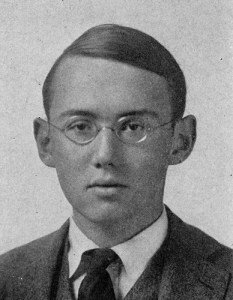
Stephen Vincent Benet
American
1898 – 1943


Thirteen sisters beside the sea,
(Have a care, my son.)
Builded a house called Liberty
And locked the doors with a stately key.
None should enter it but the free.
(Have a care, my son.)

The walls are solid as Plymouth Rock.
(Rock can crumble, my son.)
The door of seasoned New England stock.
Before it a Yankee fighting-cock.
Pecks redcoat kings away from the lock.
(Fighters can die, my son.)

The hearth is a corner where sages sit.
(Sages pass, my son.)
Washington’s heart lies under it.
And the long roof-beams are chiseled and split
From hickory tough as Jackson’s wit.
(Bones in the dust, my son.)

The trees in the garden are fair and fine.
(Trees blow down, my son.)
Connecticut elm and Georgia pine.
The warehouse groans with cotton and swine.
The cellar is full of scuppernong-wine.
(Wine turns sour, my son.)

Surely a house so strong and bold,
(The wind is rising, my son,)
Will last till Time is a pinch of mould!
There is a ghost, when the night is old.
There is a ghost who walks in the cold.
(The trees are shaking, my son.)

The sisters sleep on Liberty’s breast,
(The thunder thunders, my son,)
Like thirteen swans in a single nest.
But the ghost is naked and will not rest
Until the sun rise out of the West.
(The lightning lightens, my son.)

All night long like a moving stain,
(The trees are breaking, my son,)
The black ghost wanders his house of pain.
There is blood where his hand has lain.
It is wrong he should wear a chain.
(The sky is falling, my son.)

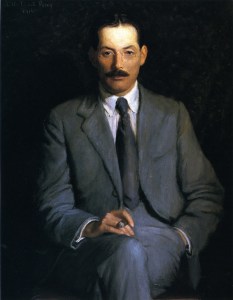
Worker’s Song

We present this work in honor of Labor Day.

Maya Angelou
American
1928 – 2014

Big ships shudder down to the sea
Because of me
Railroads run on the twinness track
‘Cause of my back

Whoppa, Whoppa
Whoppa, Whoppa

Cars stretch to a super length
‘Cause of my strength
Planes fly high over seas and lands
‘Cause of my hands

Whoppa, Whoppa
Whoppa, Whoppa

I wake
starts the factory humming
I work late
keep the whole world running
And I got something… something coming… coming

Whoppa, Whoppa
Whoppa

Richard Cory

Edward Arlington Robinson
American
1869 – 1935


Whenever Richard Cory went down town,
We people on the pavement looked at him:
He was a gentleman from sole to crown,
Clean favored, and imperially slim.

And he was always quietly arrayed,
And he was always human when he talked;
But still he fluttered pulses when he said,
‘Good-morning,’ and he glittered when he walked.

And he was rich – yes, richer than a king –
And admirably schooled in every grace:
In fine, we thought that he was everything
To make us wish that we were in his place.

So on we worked, and waited for the light,
And went without the meat, and cursed the bread;
And Richard Cory, one calm summer night,
Went home and put a bullet through his head.

High Flight

We present this work in honor of National Aviation Day.

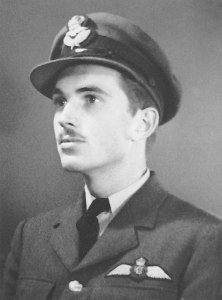
John Gillespie Magee, Jr.
American
1922 – 1941


Oh, I have slipped the surly bonds of earth,
And danced the skies on laughter-silvered wings;
Sunward I’ve climbed and joined the tumbling mirth of sun-split clouds –
and done a hundred things You have not dreamed of –
wheeled and soared and swung high in the sunlit silence.
Hovering there I’ve chased the shouting wind along
and flung my eager craft through footless halls of air.

Up, up the long delirious burning blue
I’ve topped the wind-swept heights with easy grace,
where never lark, or even eagle, flew;
and, while with silent, lifting mind I’ve trod
the high untrespassed sanctity of space,
put out my hand and touched the face of God.

Be Kind

We present this work in honor of the poet’s 100th birthday.

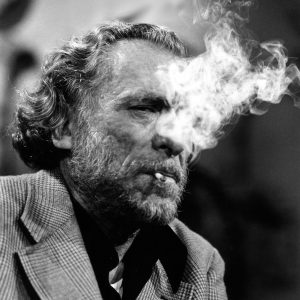
Charles Bukowski
American
1920 – 1994


we are always asked
to understand the other person’s
viewpoint
no matter how
out-dated
foolish or
obnoxious.

one is asked
to view
their total error
their life-waste
with
kindliness,
especially if they are
aged.

but age is the total of
our doing.
they have aged
badly
because they have
lived
out of focus,
they have refused to
see.

not their fault?

whose fault?
mine?

I am asked to hide
my viewpoint
from them
for fear of their
fear.

age is no crime

but the shame
of a deliberately
wasted
life

among so many
deliberately
wasted
lives

is.

Of Dying Beauty

Louis Zukofsky
American
1904 – 1978


“Spare us of dying beauty,” cries out Youth,
“Of marble gods that moulder into dust—
Wide-eyed and pensive with an ancient truth
That even gods will go as old things must.”

Where fading splendor grays to powdered earth,
And time’s slow movement darkens quiet skies,
Youth weeps the old, yet gives new beauty birth
And molds again, though the old beauty dies.

Time plays an ancient dirge amid old places
Where ruins are a sign of passing strength,
As is the weariness of aged faces
A token of a beauty gone at length.

Yet youth will always come self-willed and gay—
A sun-god in a temple of decay.

Fellow Citizens

In honor of Independence Day, we present this work by one of the most quintessentially American of all American poets.

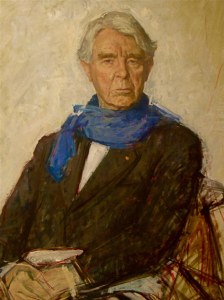
Carl Sandburg
American
1878 – 1967


I drank musty ale at the Illinois Athletic Club with the millionaire manufacturer of Green River butter one night

And his face had the shining light of an old-time Quaker, he spoke of a beautiful daughter, and I knew he had a peace and a happiness up his sleeve somewhere. Then I heard Jim Kirch make a speech to the Advertising Association on the trade resources of South America.

And the way he lighted a three-for-a-nickel stogie and cocked it at an angle regardless of the manners of our best people,

I knew he had a clutch on a real happiness even though some of the reporters on his newspaper say he is the living double of Jack London’s Sea Wolf.

In the mayor’s office the mayor himself told me he was happy though it is a hard job to satisfy all the office-seekers and eat all the dinners he is asked to eat.

Down in Gilpin Place, near Hull House, was a man with his jaw wrapped for a bad toothache,

And he had it all over the butter millionaire, Jim Kirch and the mayor when it came to happiness.

He is a maker of accordions and guitars and not only makes them from start to finish, but plays them after he makes them.

And he had a guitar of mahogany with a walnut bottom he offered for seven dollars and a half if I wanted it,

And another just like it, only smaller, for six dollars, though he never mentioned the price till I asked him,

And he stated the price in a sorry way, as though the music and the make of an instrument count for a million times more than the price in money.

I thought he had a real soul and knew a lot about God.

There was light in his eyes of one who has conquered sorrow in so far as sorrow is conquerable or worth conquering.

Anyway he is the only Chicago citizen I was jealous of that day.

He played a dance they play in some parts of Italy when the harvest of grapes is over and the wine presses are ready for work.

We Have Not Long to Love

In honor of National Martini Day, we present this work by one of literature’s greatest drinkers.

Tennessee Williams
American
1911 – 1983


We have not long to love.
Light does not stay.
The tender things are those
we fold away.
Coarse fabrics are the ones
for common wear.
In silence I have watched you
comb your hair.
Intimate the silence,
dim and warm.
I could but did not, reach
to touch your arm.
I could, but do not, break
that which is still.
(Almost the faintest whisper
would be shrill.)
So moments pass as though
they wished to stay.
We have not long to love.
A night. A day…

America

We present this work in honor of Flag Day.

Claude McKay
American
1889 – 1948


Although she feeds me bread of bitterness,
And sinks into my throat her tiger’s tooth,
Stealing my breath of life, I will confess
I love this cultured hell that tests my youth!
Her vigor flows like tides into my blood,
Giving me strength erect against her hate.
Her bigness sweeps my being like a flood.
Yet as a rebel fronts a king in state,
I stand within her walls with not a shred
Of terror, malice, not a word of jeer.
Darkly I gaze into the days ahead,
And see her might and granite wonders there,
Beneath the touch of Time’s unerring hand,
Like priceless treasures sinking in the sand.

The Fool’s Prayer

We present this work in honor of the Pentecost.

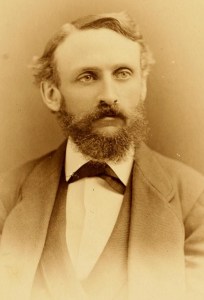
Edward Rowland Sill
American
1841 – 1887


The royal feast was done; the King
Sought some new sport to banish care,
And to his jester cried: ‘Sir Fool,
Kneel now, and make for us a prayer!’

The jester doffed his cap and bells,
And stood the mocking court before;
They could not see the bitter smile
Behind the painted grin he wore.

He bowed his head, and bent his knee
Upon the monarch’s silken stool;
His pleading voice arose: ‘O Lord,
Be merciful to me, a fool!

‘No pity, Lord, could change the heart
From red with wrong to white as wool;
The rod must heal the sin; but Lord,
Be merciful to me, a fool!

‘ ‘Tis not by guilt the onward sweep
Of truth and right, O Lord, we stay;
‘Tis by our follies that so long
We hold the earth from heaven away.

‘These clumsy feet, still in the mire,
Go crushing blossoms without end;
These hard, well-meaning hands we thrust
Among the heart-strings of a friend.

‘The ill-timed truth we might have kept-
Who knows how sharp it pierced and stung?
The word we had not sense to say-
Who knows how grandly it had rung?

‘Our faults no tenderness should ask,
The chastening stripes must cleanse them all;
But for our blunders-oh, in shame
Before the eyes of heaven we fall.

‘Earth bears no balsam for mistakes;
Men crown the knave, and scourge the tool
That did his will; but Thou, O Lord,
Be merciful to me, a fool!’

The room was hushed; in silence rose
The King, and sought his gardens cool,
And walked apart, and murmured low,
‘Be merciful to me, a fool!’