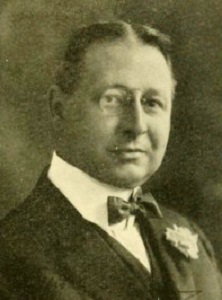
pete the parrot and shakespeare

We present this work in honor of the 85th anniversary of the poet’s death.

Don Marquis
American
1878 – 1937


i got acquainted with
a parrot named pete recently
who is an interesting bird
pete says he used
to belong to the fellow
that ran the mermaid tavern
in london then i said
you must have known
shakespeare know him said pete
poor mutt i knew him well
he called me pete and i called him
bill but why do you say poor mutt
well said pete bill was a
disappointed man and was always
boring his friends about what
he might have been and done
if he only had a fair break
two or three pints of sack
and sherris and the tears
would trickle down into his
beard and his beard would get
soppy and wilt his collar
i remember one night when
bill and ben johnson and
frankie beaumont
were sopping it up

here i am ben says bill
nothing but a lousy playwright
and with anything like luck
in the breaks i might have been
a fairly decent sonnet writer
i might have been a poet
if i had kept away from the theatre
yes says ben i ve often
thought of that bill
but one consolation is
you are making pretty good money
out of the theatre

money money says bill what the hell
is money what i want is to be
a poet not a business man
these damned cheap shows
i turn out to keep the
theatre running break my heart
slap stick comedies and
blood and thunder tragedies
and melodramas say i wonder
if that boy heard you order
another bottle frankie
the only compensation is that i get
a chance now and then
to stick in a little poetry
when nobody is looking
but hells bells that isn t
what i want to do
i want to write sonnets and
songs and spenserian stanzas
and i might have done it too
if i hadn t got
into this frightful show game
business business business
grind grind grind
what a life for a man
that might have been a poet

well says frankie beaumont
why don t you cut it bill
i can t says bill
i need the money i ve got
a family to support down in
the country well says frankie
anyhow you write pretty good
plays bill any mutt can write
plays for this london public
says bill if he puts enough
murder in them what they want
is kings talking like kings
never had sense enough to talk
and stabbings and stranglings
and fat men making love
and clown basting each
other with clubs and cheap puns
and off color allusions to all
the smut of the day oh i know
what the low brows want
and i give it to them

well says ben johnson
don t blubber into the drink
brace up like a man
and quit the rotten business
i can t i can t says bill
i ve been at it too long i ve got to
the place now where i can t
write anything else
but this cheap stuff
i m ashamed to look an honest
young sonneteer in the face
i live a hell of a life i do
the manager hands me some mouldy old
manuscript and says
bill here s a plot for you
this is the third of the month
by the tenth i want a good
script out this that we
can start rehearsals on
not too big a cast
and not too much of your
damned poetry either
you know your old
familiar line of hokum
they eat up that falstaff stuff
of yours ring him in again
and give them a good ghost
or two and remember we gotta
have something dick burbage can get
his teeth into and be sure
and stick in a speech
somewhere the queen will take
for a personal compliment and if
you get in a line or two somewhere
about the honest english yeoman
it s always good stuff
and it s a pretty good stunt
bill to have the heavy villain
a moor or a dago or a jew
or something like that and say
i want another
comic welshman in this
but i don t need to tell
you bill you know this game
just some of your ordinary
hokum and maybe you could
kill a little kid or two a prince
or something they like
a little pathos along with
the dirt now you better see burbage
tonight and see what he wants
in that part oh says bill
to think i am
debasing my talents with junk
like that oh god what i wanted
was to be a poet
and write sonnet serials
like a gentleman should

well says i pete
bill s plays are highly
esteemed to this day
is that so says pete
poor mutt little he would
care what poor bill wanted
was to be a poet

archy

Christmas Bells

We present this work in honor of Christmas Day.

Henry Wadsworth Longfellow
American
1807 – 1882


I heard the bells on Christmas Day
Their old, familiar carols play,
and mild and sweet
The words repeat
Of peace on earth, good-will to men!

And thought how, as the day had come,
The belfries of all Christendom
Had rolled along
The unbroken song
Of peace on earth, good-will to men!

Till ringing, singing on its way,
The world revolved from night to day,
A voice, a chime,
A chant sublime
Of peace on earth, good-will to men!

Then from each black, accursed mouth
The cannon thundered in the South,
And with the sound
The carols drowned
Of peace on earth, good-will to men!

It was as if an earthquake rent
The hearth-stones of a continent,
And made forlorn
The households born
Of peace on earth, good-will to men!

And in despair I bowed my head;
“There is no peace on earth,” I said;
“For hate is strong,
And mocks the song
Of peace on earth, good-will to men!”

Then pealed the bells more loud and deep:
“God is not dead, nor doth He sleep;
The Wrong shall fail,
The Right prevail,
With peace on earth, good-will to men.”

The Frost Spirit

We present this work in honor of the poet’s 215th birthday.

John Greenleaf Whittier
American
1807 – 1892


He comes, – he comes, – the Frost Spirit comes!
You may trace his footsteps now
On the naked woods and the blasted fields
And the brown hill’s withered brow.
He has smitten the leaves of the gray old trees
Where their pleasant green came forth,
And the winds, which follow wherever he goes,
Have shaken them down to earth.

He comes, – he comes, – the Frost Spirit comes!
From the frozen Labrador,
From the icy bridge of the northern seas,
Which the white bear wanders o’er,
Where the fisherman’s sail is stiff with ice,
And the luckless forms below
In the sunless cold of the lingering night
Into marble statues grow!

He comes, – he comes, – the Frost Spirit comes!
On the rushing Northern blast,
And the dark Norwegian pines have bowed
As his fearful breath went past.
With an unscorched wing he has hurried on,
Where the fires of Hecla glow
On the darkly beautiful sky above
And the ancient ice below.

He comes, – he comes, – the Frost Spirit comes!
And the quiet lake shall feel
The torpid touch of his glazing breath,
And ring to the skater’s heel;
And the streams which danced on the broken rocks,
Or sang to the leaning grass,
Shall bow again to their winter chain,
And in mournful silence pass.

He comes, – he comes, – the Frost Spirit comes!
Let us meet him as we may,
And turn with the light of the parlor–fire
His evil power away;
And gather closer the circle ‘round,
When the firelight dances high,
And laugh at the shriek of the baffled Fiend
As his sounding wing goes by!

Fairy Song

We present this work in honor of the poet’s 190th birthday.

Louisa May Alcott
American
1832 – 1888


The moonlight fades from flower and rose
And the stars dim one by one;
The tale is told, the song is sung,
And the Fairy feast is done.
The night-wind rocks the sleeping flowers,
And sings to them, soft and low.
The early birds erelong will wake:
‘T is time for the Elves to go.

O’er the sleeping earth we silently pass,
Unseen by mortal eye,
And send sweet dreams, as we lightly float
Through the quiet moonlit sky;–
For the stars’ soft eyes alone may see,
And the flowers alone may know,
The feasts we hold, the tales we tell;
So’t is time for the Elves to go.

From bird, and blossom, and bee,
We learn the lessons they teach;
And seek, by kindly deeds, to win
A loving friend in each.
And though unseen on earth we dwell,
Sweet voices whisper low,
And gentle hearts most joyously greet
The Elves where’er they go.

When next we meet in the Fairy dell,
May the silver moon’s soft light
Shine then on faces gay as now,
And Elfin hearts as light.
Now spread each wing, for the eastern sky
With sunlight soon shall glow.
The morning star shall light us home:
Farewell! for the Elves must go.

Recreation

We present this work in honor of the 30th anniversary of the poet’s death.

Audre Lorde
American
1934 – 1992


Coming together
it is easier to work
after our bodies
meet
paper and pen
neither care nor profit
whether we write or not
but as your body moves
under my hands
charged and waiting
we cut the leash
you create me against your thighs
hilly with images
moving through our word countries
my body
writes into your flesh
the poem
you make of me.

Touching you I catch midnight
as moon fires set in my throat
I love you flesh into blossom
I made you
and take you made
into me.

Morning Song

We present this work in honor of the poet’s 90th birthday.

Sylvia Plath
American
1932 – 1963


Love set you going like a fat gold watch.
The midwife slapped your footsoles, and your bald cry
Took its place among the elements.

Our voices echo, magnifying your arrival. New statue.
In a drafty museum, your nakedness
Shadows our safety. We stand round blankly as walls.

I’m no more your mother
Than the cloud that distills a mirror to reflect its own slow
Effacement at the wind’s hand.

All night your moth-breath
Flickers among the flat pink roses. I wake to listen:
A far sea moves in my ear.

One cry, and I stumble from bed, cow-heavy and floral
In my Victorian nightgown.
Your mouth opens clean as a cat’s. The window square

Whitens and swallows its dull stars. And now you try
Your handful of notes;
The clear vowels rise like balloons.

Head of the Year

We present this work in honor of Rosh Hashanah.

Marge Piercy
American
b. 1936


The moon is dark tonight, a new
moon for a new year. It is
hollow and hungers to be full.
It is the black zero of beginning.

Now you must void yourself
of injuries, insults, incursions.
Go with empty hands to those
you have hurt and make amends.

It is not too late. It is early
and about to grow. Now
is the time to do what you
know you must and have feared
to begin. Your face is dark
too as you turn inward to face
yourself, the hidden twin of
all you must grow to be.

Forgive the dead year. Forgive
yourself. What will be wants
to push through your fingers.
The light you seek hides
in your belly. The light you
crave longs to stream from
your eyes. You are the moon
that will wax in new goodness.

His Excellency General Washington

In honor of Constitution Day and Citizenship Day, we present this work by a poet who was denied the benefits of both.

Phillis Wheatley
American
1753 – 1784


Celestial choir! enthron’d in realms of light,
Columbia’s scenes of glorious toils I write.
While freedom’s cause her anxious breast alarms,
She flashes dreadful in refulgent arms.
See mother earth her offspring’s fate bemoan,
And nations gaze at scenes before unknown!
See the bright beams of heaven’s revolving light
Involved in sorrows and the veil of night!
The Goddess comes, she moves divinely fair,
Olive and laurel binds Her golden hair:
Wherever shines this native of the skies,
Unnumber’d charms and recent graces rise.
Muse! Bow propitious while my pen relates
How pour her armies through a thousand gates,
As when Eolus heaven’s fair face deforms,
Enwrapp’d in tempest and a night of storms;
Astonish’d ocean feels the wild uproar,
The refluent surges beat the sounding shore;
Or think as leaves in Autumn’s golden reign,
Such, and so many, moves the warrior’s train.
In bright array they seek the work of war,
Where high unfurl’d the ensign waves in air.
Shall I to Washington their praise recite?
Enough thou know’st them in the fields of fight.
Thee, first in peace and honors-we demand
The grace and glory of thy martial band.
Fam’d for thy valour, for thy virtues more,
Hear every tongue thy guardian aid implore!
One century scarce perform’d its destined round,
When Gallic powers Columbia’s fury found;
And so may you, whoever dares disgrace
The land of freedom’s heaven-defended race!
Fix’d are the eyes of nations on the scales,
For in their hopes Columbia’s arm prevails.
Anon Britannia droops the pensive head,
While round increase the rising hills of dead.
Ah! Cruel blindness to Columbia’s state!
Lament thy thirst of boundless power too late.
Proceed, great chief, with virtue on thy side,
Thy ev’ry action let the Goddess guide.
A crown, a mansion, and a throne that shine,
With gold unfading, Washington! Be thine.

The Romance of Patrolman Casey

We present this work in honor of the 85th anniversary of the poet’s death.

Ellis Parker Butler
American
1869 – 1937


There was a young patrolman who
Had large but tender feet;
They always hurt him badly when
He walked upon his beat.
(He always took them with him when
He walked upon his beat.)

His name was Patrick Casey and
A sweetheart fair had he;
Her face was full of freckles but
Her name was Kate McGee.
(It was in spite of freckles that
Her name was Kate McGee.)

‘Oh, Pat!’ she said, ‘I’ll wed you when
Promotion comes to you!’
‘I’m much-obliged,’ he answered, and
‘I’ll see what I can do.’
(I may remark he said it thus?
‘Oi’ll say phwat Oi kin do.’)

So then he bought some new shoes which
Allowed his feet more ease?
They may have been large twelves. Perhaps
Eighteens, or twenty-threes.
(That’s rather large for shoes, I think?
Eighteens or twenty-threes!)

What last they were I don’t know, but
Somehow it seems to me
I’ve heard somewhere they either were
A, B, C, D, or E.
(More likely they were five lasts wide?
A, B plus C, D, E.)

They were the stoutest cowhide that
Could be peeled off a cow.

But he was not promoted

So
Kate wed him anyhow.

(This world is crowded full of Kates
That wed them anyhow.)

Scars Don’t Tan

We present this work in honor of the 10th anniversary of the poet’s death.

M.Z. Ribalow
American
1948 – 2012


It takes so little for the unraveling to
commence—a careless gesture, a reassuring
phrase never quite uttered, a heedless
moment that seemed rhapsodically hopeful
but which left resonant repercussions that
altered everything. A legacy of scars:
emotional ones fade but not away,
physical ones blend but don’t tan.

The rap music you give as a birthday gift
to your nephew because it’s what he likes,
the visit you force yourself to make because
your relatives need cheering up, your friend’s
neurotic phone call that consumes the night—
the recipients are grateful, but none of it
ever washes away your secret detritus.
Expiation seems a goal, but is a way of life.

It began happening so long ago, in details too
nuanced to notice. A slight misstep sprains an
ankle that never fully heals; a dropped stitch
subtly renders imperfect the entire tapestry.
Nothing to be done now but to recover; make
The most of what remains, the best of what
May be. Though you recall the white whale,
Do not pursue him through the oceanic past.