We present this work in honor of the 10th anniversary of the poet’s death.
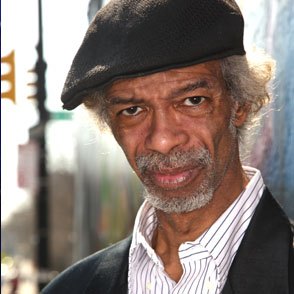
Gil Scott-Heron American 1949 – 2011
Was there a touch of spring? Did she have a pink dress on? And when she smiled, her shyest smile Could you almost touch the warmth? And was it your first love, a very precious time?
Was there the faintest breeze? And did she have a ponytail? And could she make you feel ten feet tall, Walking down the grassy trail? Was it your first love, a very precious time, time?
Now they got me trying to define, in later life What her love means to me And it keeps me struggling to remember, my first touch of spring.
Was there a touch of spring, in the air? And did she have a pink dress on? And when she smiled, her shyest smile Could you almost touch the warmth? Was it your first love, A very precious, very precious, very precious time, time.
We present this work in honor of the 50th anniversary of the poet’s death.
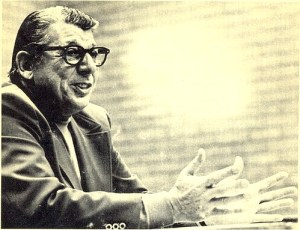
Ogden Nash American 1902 – 1971
Belinda lived in a little white house, With a little black kitten and a little gray mouse, And a little yellow dog and a little red wagon, And a realio, trulio, little pet dragon.
Now the name of the little black kitten was Ink, And the little gray mouse, she called her Blink, And the little yellow dog was sharp as Mustard, But the dragon was a coward, and she called him Custard.
Custard the dragon had big sharp teeth, And spikes on top of him and scales underneath, Mouth like a fireplace, chimney for a nose, And realio, trulio, daggers on his toes.
Belinda was as brave as a barrel full of bears, And Ink and Blink chased lions down the stairs, Mustard was as brave as a tiger in a rage, But Custard cried for a nice safe cage.
Belinda tickled him, she tickled him unmerciful, Ink, Blink and Mustard, they rudely called him Percival, They all sat laughing in the little red wagon At the realio, trulio, cowardly dragon.
Belinda giggled till she shook the house, And Blink said Week! , which is giggling for a mouse, Ink and Mustard rudely asked his age, When Custard cried for a nice safe cage.
Suddenly, suddenly they heard a nasty sound, And Mustard growled, and they all looked around. Meowch! cried Ink, and Ooh! cried Belinda, For there was a pirate, climbing in the winda.
Pistol in his left hand, pistol in his right, And he held in his teeth a cutlass bright, His beard was black, one leg was wood; It was clear that the pirate meant no good.
Belinda paled, and she cried, Help! Help! But Mustard fled with a terrified yelp, Ink trickled down to the bottom of the household, And little mouse Blink strategically mouseholed.
But up jumped Custard, snorting like an engine, Clashed his tail like irons in a dungeon, With a clatter and a clank and a jangling squirm He went at the pirate like a robin at a worm.
The pirate gaped at Belinda’s dragon, And gulped some grog from his pocket flagon, He fired two bullets but they didn’t hit, And Custard gobbled him, every bit.
Belinda embraced him, Mustard licked him, No one mourned for his pirate victim Ink and Blink in glee did gyrate Around the dragon that ate the pyrate.
But presently up spoke little dog Mustard, I’d been twice as brave if I hadn’t been flustered. And up spoke Ink and up spoke Blink, We’d have been three times as brave, we think, And Custard said, I quite agree That everybody is braver than me.
Belinda still lives in her little white house, With her little black kitten and her little gray mouse, And her little yellow dog and her little red wagon, And her realio, trulio, little pet dragon.
Belinda is as brave as a barrel full of bears, And Ink and Blink chase lions down the stairs, Mustard is as brave as a tiger in a rage, But Custard keeps crying for a nice safe cage.
We present this work in honor of the 135th anniversary of the poet’s death.
Emily Dickinson American 1830 – 1886
I went to heaven,— ‘Twas a small town, Lit with a ruby, Lathed with down. Stiller than the fields At the full dew, Beautiful as pictures No man drew. People like the moth, Of mechlin, frames, Duties of gossamer, And eider names. Almost contented I could be ‘Mong such unique Society.
We present this work in honor of the poet’s 270th birthday.
Judith Sargent Murray American 1751 – 1820
When will these rude tumultuous clamours cease, When shall we hear the genial voice of peace; My tir’d soul is sick of these alarms, This vain parade, this constant din of arms. I wish, devoutly wish, for some retreat, Where but the shepherd’s pipe my ear may greet, Where I may calmly hail the rising day, On life’s eventful threshold while I stray. I would in its variety enjoy, The mental feast I would my hours employ, To cull the flowers of wisdom as they grow, To reap the fruits which love and truth bestow.
But ah! Alas! On a rough Ocean tost, To all the bliss of social pleasures lost; My little back by winds of passion driv’n, Blown to, and fro, by each opinion giv’n; Sees in perspective no auspicious shore
Which can its safety, or its hopes restore; Terrifick visions in succession rise, A host of fears the trembling soul surprise.
And can it be, will dark vindictive rage, ‘Gainst helpless towns revengeful battle wage, When far removed from the hostile scene When cities rise, when Oceans roll between
Must Glous’ter though obscure be doom’d to feel, The British thunder, and the British steel, Forbid it British valour, British grace, And spare so little, so remote a place.
We present this work in honor of the poet’s 180th birthday.
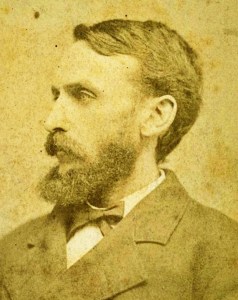
Edward Rowland Sill American 1841 – 1887
This I beheld, or dreamed it in a dream:— There spread a cloud of dust along a plain; And underneath the cloud, or in it, raged A furious battle, and men yelled, and swords Shocked upon swords and shields. A prince’s banner Wavered, then staggered backward, hemmed by foes. A craven hung along the battle’s edge, And thought, “Had I a sword of keener steal— That blue blade that the king’s son bears,— but this Blunt thing—!” He snapped and flung it from his hand, And lowering crept away and left the field. Then came the king’s son, wounded sore bestead, And weaponless, and saw the broken sword Hilt-buried in the dry and trodden sand, And ran and snatched it, and with battle-shout Lifted afresh he hewed his enemy down And saved a great cause that heroic day.
Mary sat musing on the lamp-flame at the table Waiting for Warren. When she heard his step, She ran on tip-toe down the darkened passage To meet him in the doorway with the news And put him on his guard. “Silas is back.” She pushed him outward with her through the door And shut it after her. “Be kind,” she said. She took the market things from Warren’s arms And set them on the porch, then drew him down To sit beside her on the wooden steps.
“When was I ever anything but kind to him? But I’ll not have the fellow back,” he said. “I told him so last haying, didn’t I? ‘If he left then,’ I said, ‘that ended it.’ What good is he? Who else will harbour him At his age for the little he can do? What help he is there’s no depending on. Off he goes always when I need him most. ‘He thinks he ought to earn a little pay, Enough at least to buy tobacco with, So he won’t have to beg and be beholden.’ ‘All right,’ I say, ‘I can’t afford to pay Any fixed wages, though I wish I could.’ ‘Someone else can.’ ‘Then someone else will have to.’ I shouldn’t mind his bettering himself If that was what it was. You can be certain, When he begins like that, there’s someone at him Trying to coax him off with pocket-money,— In haying time, when any help is scarce. In winter he comes back to us. I’m done.”
“Sh! not so loud: he’ll hear you,” Mary said.
“I want him to: he’ll have to soon or late.”
“He’s worn out. He’s asleep beside the stove. When I came up from Rowe’s I found him here, Huddled against the barn-door fast asleep, A miserable sight, and frightening, too— You needn’t smile—I didn’t recognise him— I wasn’t looking for him—and he’s changed. Wait till you see.”
“Where did you say he’d been?”
“He didn’t say. I dragged him to the house, And gave him tea and tried to make him smoke. I tried to make him talk about his travels. Nothing would do: he just kept nodding off.”
“What did he say? Did he say anything?”
“But little.”
“Anything? Mary, confess He said he’d come to ditch the meadow for me.”
“Warren!”
“But did he? I just want to know.”
“Of course he did. What would you have him say? Surely you wouldn’t grudge the poor old man Some humble way to save his self-respect. He added, if you really care to know, He meant to clear the upper pasture, too. That sounds like something you have heard before? Warren, I wish you could have heard the way He jumbled everything. I stopped to look Two or three times—he made me feel so queer— To see if he was talking in his sleep. He ran on Harold Wilson—you remember— The boy you had in haying four years since. He’s finished school, and teaching in his college. Silas declares you’ll have to get him back. He says they two will make a team for work: Between them they will lay this farm as smooth! The way he mixed that in with other things. He thinks young Wilson a likely lad, though daft On education—you know how they fought All through July under the blazing sun, Silas up on the cart to build the load, Harold along beside to pitch it on.”
“Yes, I took care to keep well out of earshot.”
“Well, those days trouble Silas like a dream. You wouldn’t think they would. How some things linger! Harold’s young college boy’s assurance piqued him. After so many years he still keeps finding Good arguments he sees he might have used. I sympathise. I know just how it feels To think of the right thing to say too late. Harold’s associated in his mind with Latin. He asked me what I thought of Harold’s saying He studied Latin like the violin Because he liked it—that an argument! He said he couldn’t make the boy believe He could find water with a hazel prong— Which showed how much good school had ever done him. He wanted to go over that. But most of all He thinks if he could have another chance To teach him how to build a load of hay——”
“I know, that’s Silas’ one accomplishment. He bundles every forkful in its place, And tags and numbers it for future reference, So he can find and easily dislodge it In the unloading. Silas does that well. He takes it out in bunches like big birds’ nests. You never see him standing on the hay He’s trying to lift, straining to lift himself.”
“He thinks if he could teach him that, he’d be Some good perhaps to someone in the world. He hates to see a boy the fool of books. Poor Silas, so concerned for other folk, And nothing to look backward to with pride, And nothing to look forward to with hope, So now and never any different.”
Part of a moon was falling down the west, Dragging the whole sky with it to the hills. Its light poured softly in her lap. She saw And spread her apron to it. She put out her hand Among the harp-like morning-glory strings, Taut with the dew from garden bed to eaves, As if she played unheard some tenderness That wrought on him beside her in the night. “Warren,” she said, “he has come home to die: You needn’t be afraid he’ll leave you this time.”
“Home,” he mocked gently.
“Yes, what else but home? It all depends on what you mean by home. Of course he’s nothing to us, any more Than was the hound that came a stranger to us Out of the woods, worn out upon the trail.”
“Home is the place where, when you have to go there, They have to take you in.”
“I should have called it Something you somehow haven’t to deserve.”
Warren leaned out and took a step or two, Picked up a little stick, and brought it back And broke it in his hand and tossed it by. “Silas has better claim on us you think Than on his brother? Thirteen little miles As the road winds would bring him to his door. Silas has walked that far no doubt to-day. Why didn’t he go there? His brother’s rich, A somebody—director in the bank.”
“He never told us that.”
“We know it though.”
“I think his brother ought to help, of course. I’ll see to that if there is need. He ought of right To take him in, and might be willing to— He may be better than appearances. But have some pity on Silas. Do you think If he’d had any pride in claiming kin Or anything he looked for from his brother, He’d keep so still about him all this time?”
“I wonder what’s between them.”
“I can tell you. Silas is what he is—we wouldn’t mind him— But just the kind that kinsfolk can’t abide. He never did a thing so very bad. He don’t know why he isn’t quite as good As anybody. Worthless though he is, He won’t be made ashamed to please his brother.”
“I can’t think Si ever hurt anyone.”
“No, but he hurt my heart the way he lay And rolled his old head on that sharp-edged chair-back. He wouldn’t let me put him on the lounge. You must go in and see what you can do. I made the bed up for him there to-night. You’ll be surprised at him—how much he’s broken. His working days are done; I’m sure of it.”
“I’d not be in a hurry to say that.”
“I haven’t been. Go, look, see for yourself. But, Warren, please remember how it is: He’s come to help you ditch the meadow. He has a plan. You mustn’t laugh at him. He may not speak of it, and then he may. I’ll sit and see if that small sailing cloud Will hit or miss the moon.”
It hit the moon. Then there were three there, making a dim row, The moon, the little silver cloud, and she.
Warren returned—too soon, it seemed to her, Slipped to her side, caught up her hand and waited.
We present this work in honor of the poet’s 95th birthday.
Frank O’Hara American 1926 – 1966
I am not a painter, I am a poet.
Why? I think I would rather be
a painter, but I am not. Well,
for instance, Mike Goldberg
is starting a painting. I drop in.
“Sit down and have a drink” he
says. I drink; we drink. I look
up. “You have SARDINES in it.”
“Yes, it needed something there.”
“Oh.” I go and the days go by
and I drop in again. The painting
is going on, and I go, and the days
go by. I drop in. The painting is
finished. “Where’s SARDINES?”
All that’s left is just
letters, “It was too much,” Mike says.
But me? One day I am thinking of
a color: orange. I write a line
about orange. Pretty soon it is a
whole page of words, not lines.
Then another page. There should be
so much more, not of orange, of
words, of how terrible orange is
and life. Days go by. It is even in
prose, I am a real poet. My poem
is finished and I haven’t mentioned
orange yet. It’s twelve poems, I call
it ORANGES. And one day in a gallery
I see Mike’s painting, called SARDINES.
The art of losing isn’t hard to master;
so many things seem filled with the intent
to be lost that their loss is no disaster,
Lose something every day. Accept the fluster
of lost door keys, the hour badly spent.
The art of losing isn’t hard to master.
Then practice losing farther, losing faster:
places, and names, and where it was you meant
to travel. None of these will bring disaster.
I lost my mother’s watch. And look! my last, or
next-to-last, of three loved houses went.
The art of losing isn’t hard to master.
I lost two cities, lovely ones. And, vaster,
some realms I owned, two rivers, a continent.
I miss them, but it wasn’t a disaster.
– Even losing you (the joking voice, a gesture
I love) I shan’t have lied. It’s evident
the art of losing’s not too hard to master
though it may look like (Write it!) like disaster.
We present this work in honor of the poet’s 90th birthday.
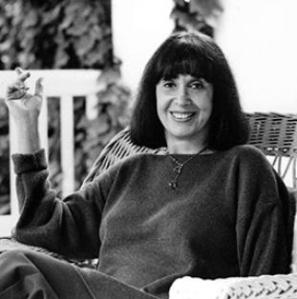
Judith Viorst American b. 1931
Mother doesn’t want a dog.
Mother says they smell,
And never sit when you say sit,
Or even when you yell.
And when you come home late at night
And there is ice and snow,
You have to go back out because
The dumb dog has to go.
Mother doesn’t want a dog.
Mother says they shed,
And always let the strangers in
And bark at friends instead,
And do disgraceful things on rugs,
And track mud on the floor,
And flop upon your bed at night
And snore their doggy snore.
Mother doesn’t want a dog.
She’s making a mistake.
Because, more than a dog, I think
She will not want this snake.






 Poets Corner