Nenia

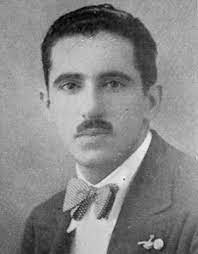
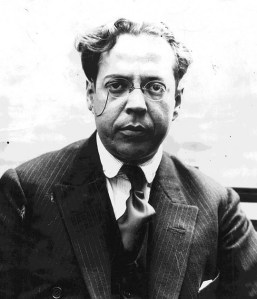
Carlos Guido y Spano
Argentine
1827 – 1918


In the Guarani language
a young Paraguayan girl
a sweet lament rehearses,
singing, on her harp, like this,
in the Guarani language:

“Cry, cry, urutaú,
on the branches of the yatay;
Paraguay is no more,
where I was born, the same as you!
Cry, cry, urutaú!

In the sweet city of Lambaré,
happy, I lived in my cabin;
then comes war, and all its rage
leaves nothing standing
in the sweet city of Lambaré.

Father, mother, siblings, Ay!
All in the world, I have lost;
in my broken heart
only a savage sorrow;
mother, father, siblings, Ay!

Beside a green ubirapitá tree,
my love, who fought
heroically in the Timbó,
is now buried there,
beside a green ubirapitá tree.

Ripping my white tipoy skirt
I wear as sign of grief,
upon that holy ground
upon it, forever on my knees,
ripping my white tipoy skirt!

They killed him, the cambá people,
powerless to make him kneel;
he was the last to leave
from Curuzú and Humaitá;
they killed him, the cambá people.

Oh heavens, why did I not die
when, triumphant, my love embraced me,
returned from Curupaití?
Oh heavens, why, did I not die?

Cry, cry, urutaú,
on the branches of the yatay;
Paraguay is no more,
where I was born, the same as you!
Cry, cry, urutaú!”
Your Secret

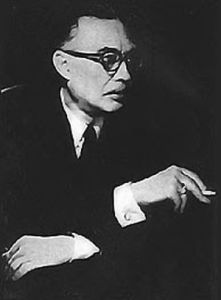
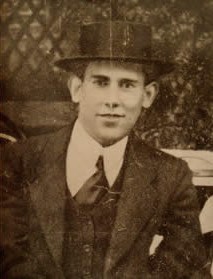
Evaristo Carriego
Argentine
1883 – 1912


You are so forgetful! Yesterday you left behind
here, over the piano that you no longer play,
a bit of your ailing girl soul:
a book, forbidden, of tender memories.

Intimate memories. I opened it, carelessly,
And knew, smiling, your deepest woe,
The sweet secret that I will not tell:
That you mention me no one wants to know.

…Come, take the book, you faraway, full
of light and daydreams. Crazy romantic…
Leaving all your loves here, over the piano!…
You are so forgetful, absent-minded!

Translation by Facundo Rodriguez

Testimony

Alicia Partnoy
Argentine
b. 1955


This microphone
with its cable coiling around it,
bows to me.
I walk up to it,
open my eyes
open
my book
open
my mouth.
That’s right, I open my mouth wide
and begin my story.
They say
I speak too softly,
that I am practically mumbling,
that they can’t hear
the screams piercing.
I open
my memory
like a rotten cantaloupe.

They say
I have not managed
to forcefully convey the pitiless rage
of the cattle prod.
They say that in matters such as this
nothing must be left
open
to the imagination or to doubt.
I take out
the Amnesty report
and begin speaking through that ink.
I urge: “Read.”
I, in my turn, coil around
my bowing accomplice,
this microphone.
I urge action as a prescription,
information as an infallible antidote
and, one every knot is untied,
I recite my verses.
I resist. I am whole.
This microphone
with its cable coiling around it,
bows to me.

Translation by Richard Schaaf and Regina Kreger

My Cousins on Sunday Come to Cut Roses

Francisco López Merino
Argentine
1904 – 1928


My cousins, on Sundays, come to cut roses
and to ask me for some book of verses in French.

They move about the garden lawn, cutting flowers,
straight from the pages of Musset or Samain.

They love pretty phrases and clear bright mornings.

An imperturbable statue can thrill them through and through.
They are waitmg for the coming of the autumn evenings
because through the window-panes everything looks gold…

And they come to cut roses on Sundays… They know
that the echo of their voices is pleasing to me.

Among the petals they leave their harmonious laughter;
surely they are laughing unaware.

My cousins, when it rains, do not come. Sweedy
I bring away whatever buds the wind has blown down;

I make a bouquet with them, and place beneath the bouquet
a volume of poems by Musset or Samain.

useless, useless for all slavery

We present this work in honor of the 25th anniversary of the poet’s death.

Mario Romero
Argentine
1943 – 1998


Thank you
for showing me this woman’s body
while the branches, you remember, shook the roof
and I went after the mystery.

And it was a great scare that
in the Casa della Pazzia
from where we came out terrified by so much nothingness;
to the open air, to the pure images;
nourishment for the mind of those who want a new world
and the feeling that shines
and the body relieved.

Because when you take my hand I take fire
but your smile is this light
and I wait in peace for the dark to bite me
with its mouth of fury
so that once and for all those on the shore
they can hear the scream.

Translation by Calendaria Romero and Rocio Bolanos

Love is a Mechanical Bull that No One Dismounts Elegantly

Valeria Tentoni
Argentine
b. 1985


An abandoned ride
at a fair,
challenging the elements.

Everyone stops at the bull and says
I can do this.
Everyone, without exception, has confidence
in their heels
and they mount the electric violence
of its back. They’re still confident when the movement
begins,
as if a powerful, invisible hand
has slipped a token into the machine
without warning.
The metallic click cuts through the sound,
a tiny bulldozer
flattening
the silence. Then everything begins,
and there’s no way
to keep the body straight, that form
we once thought we dominated but that now
reveals itself to us
as if it has been waiting its turn
biting its nails
since it was given a name.

If I were a mouse
I would rather
lose my tail in the trap
than miss out on my cheese.

Over and over again.

Adagio

We present this work in honor of the 85th anniversary of the poet’s death.

Leopoldo Lugones
Artgentine
1874 – 1938


Your slow desolation, you coal
of delirium, puts my soul
into mourning. Yet a phrase
of black notes transforms my sigh
into a heavenly butterfly.

The taste of fresh rose petals
intoxicates my arid tongue,
and moistens my song unsung:
my naïve happiness in the loss above
only to find the lips of my love.

Themes of love, my humble flute
will sing in praise.
I am pale yet happy all my days,
and in the evening, as the piragua sails,
marking the water with childlike nails,
my sweetheart will sing the same salute.

Translation by John H. Reid

Life is Fleeting

We present this work in honor of the poet’s 125th birthday.

Maria Luisa Carnelli
Argentine
1898 – 1987


Life is fleeting,
is fleeting and will never return.
Listen to my advice:
if a rich man promises you a good life,
you must accept it.
Life is fleeting, fleeting,
and not even God will stop it.
The best you can do
is to enjoy life and forget your sorrows and pains.
The days and the years elapse
and happiness is elusive.
You must not think
either of suffering or of virtue:
you must fully live your youth.

In Vain

We present this work in honor of the 55th anniversary of the poet’s death.

Arturo Capdevila
Argentine
1889 – 1967


How many poems of love, sung in vain!
Oh, how old becomes my soul
when I recall the ancient
absurd story of yesterday.

How many poems of love, moaned in vain!
First you were a flower, I, the Bee.
Then my heart found in your window
the bitter snow that drove me old.

How many poems of love, lost in vain!
Today, my windows are wide open,
there is sunshine… many flowers, and it’s summer…

But it’s sad to see by my doorstep,
among so many dead butterflies,
so many poems of love cried in vain!…

Translation by Octavio Corvalán