Waking, Child, While You Slept

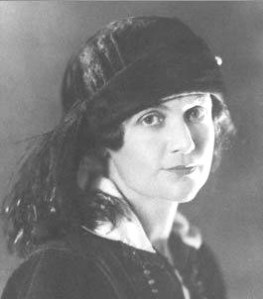
Ethel Anderson
Australian
1883 – 1958


Waking, child, while you slept, your mother took
Down from its wooden peg her reaping-hook,
Rustless with use, to cut (her task when dawn
With nervous light would bead the dusky leaves)
From the cold wheat-paddock’s shivering fringe, two sheaves;
Against a block she’d thrash, the golden grain,
Then winnow corn and husk, and toss again…
With bustling care, in genial haste, not late
Her cows she’d milk, her butter churn, and set
Fresh cream in scalded pans. Her hens she’d feed
With hot scraps, stirred in pollard from the bin;
Then give her dribbling calves what drink they need;
Or drive with flowery staff
Meek stragglers through the gate;
Or on her youngest-born
Impose the fret,
The letter’d tyranny, of the alphabet.

To dig, to delve, to drive wild cattle in,
(“Ester, ley thou thy meekness al a-doun”)
To scour, to sweep, to wash and iron, to spin;
(Penelopee and Marcia Catoun
Make of your wifehood no comparisoun,”)
To sew, to darn, to cook; to bake, to brew,
To bear, to rear, to burse her children, too;
(“And Cleopatre, with al thy passioun
Hyde ye your trouthe of love and your renoun.”)

Though, child, your mother, trembling, smiled at fear,
Fears had she; the blackfellow’s cruel spear,
White desperadoes. When to the open well
She crept at nightfall, being all alone,
For comfort, then, she’d watch her frugal rush,
The only gleam in all that virgin bush,
Cheer the unshutter’d, distant window-pane;
Then hoist her twirling bucket yet again.

When in a drought the waterholes ran dry
And of “dry-bible” half the herds would die,
And others in their agony creep to lie
About the homestead, moaning piteously,
Or, famished, on the deadly purple weed,
Or poisonous variegated thistle, feed,
The men being absent, then, to give release,
She brought to every suffering brute death’s peace;
Who never heard the rain
Fall, but she heard again
The cattle in their pain.

But in a lucky year your mother’s care
Was all to save the wealth her orchard bore;
Apples and plums, peach, apricot and pear,
Mandarins, nectarines, tangerines, a score
Of rosy berries, currants and their kind;
Drying these last, through muslin she would squeeze
Damson or apple cheese;
Quinces, conserve; bottle black mulberries…

She for her cellar with a cheerful mind
Would brew in tubs peach-beer,
Sparkling and clear,
Rub pears and trinities of apples bruise
To perry and cider in a wooden cruse.
Of keeving and pomace then grossip ran,
One Servant assigned her being a Devon man,
Whose convict clothes and homely face—so kind—Smiling, you may remember, music on The knight, his grandson and the judge, his son.
The Mooch o’ Life

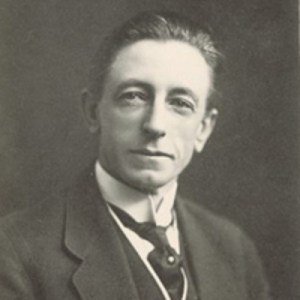
C.J. Dennis
Australian
1876 – 1938


This ev’nin’ I was sittin’ wiv Doreen,
Peaceful an’ ‘appy wiv the day’s work done,
Watchin’, be’ind the orchard’s bonzer green,
The flamin’ wonder of the settin’ sun.

Another day gone by; another night
Creepin’ along to douse Day’s golden light;
Another dawning when the night is gone,
To live an’ love — an’ so life mooches on.

Times I ‘ave thought, when things was goin’ crook,
When ‘Ope turned nark an’ Love forgot to smile,
Of somethin’ I once seen in some old book
Where an ole sorehead arsts, “Is life worf w’ile?”

But in that stillness, as the day grows dim,
An’ I am sittin’ there wiv ‘er an’ ‘im—
My wife, my son! an’ strength in me to strive,
I only know — it’s good to be alive!

Yeh live, yeh love, yeh learn; an’ when yeh come
To square the ledger in some thortful hour,
The everlastin’ answer to the sum
Must allus be, “Where’s sense in gittin’ sour?”

Fer when yeh’ve come to weigh the good an’ bad —
The gladness wiv the sadness you ‘ave ‘ad —
Then ‘im ‘oo’s faith in ‘uman goodness fails
Fergits to put ‘is liver in the scales.

Livin’ an’ loving learnin’ day be day;
Pausin’ a minute in the barmy strife
To find that ‘elpin’ others on the way
Is gold coined fer your profit — sich is life.

I’ve studied books wiv yearnings to improve,
To ‘eave meself out of me lowly groove,
An’ ‘ere is orl the change I ever got:
“‘Ark at yer ‘eart, an’ you kin learn the lot.”

I gives it in — that wisdom o’ the mind —
I wasn’t built to play no lofty part.
Orl such is welkim to the joys they find;
I only know the wisdom o’ the ‘eart.

An’ ever it ‘as taught me, day be day,
The one same lesson in the same ole way:
“Look fer yer profits in the ‘earts o’ friends,
Fer ‘atin’ never paid no dividends.”

Life’s wot yeh make it; an’ the bloke ‘oo tries
To grab the shinin’ stars frum out the skies
Goes crook on life, an’ calls the world a cheat,
An’ tramples on the daisies at ‘is feet.

But when the moon comes creepin’ o’er the hill,
An’ when the mopoke calls along the creek,
I takes me cup o’ joy an’ drinks me fill,
An’ arsts meself wot better could I seek.

An’ ev’ry song I ‘ear the thrushes sing
That everlastin’ message seems to bring;
An’ ev’ry wind that whispers in the trees
Gives me the tip there ain’t no joys like these:

Livin’ an’ loving wand’rin’ on yeh way;
Reapin’ the ‘arvest of a kind deed done;
An’ watching in the sundown of yer day,
Yerself again, grown nobler in yer son.

Knowin’ that ev’ry coin o’ kindness spent
Bears interest in yer ‘eart at cent per cent;
Measurin’ wisdom by the peace it brings
To simple minds that values simple things.

An’ when I take a look along the way
That I ‘ave trod, it seems the man knows best,
Who’s met wiv slabs of sorrer in ‘is day,
When ‘e is truly rich an’ truly blest.

An’ I am rich, becos me eyes ‘ave seen
The lovelight in the eyes of my Doreen;
An’ I am blest, becos me feet ‘ave trod
A land ‘oo’s fields reflect the smile o’ God.

Livin’ an’ lovin’; learnin’ to fergive
The deeds an’ words of some un’appy bloke
Who’s missed the bus — so ‘ave I come to live,
An’ take the ‘ole mad world as ‘arf a joke.

Sittin’ at ev’nin’ in this sunset-land,
Wiv ‘Er in all the World to ‘old me ‘and,
A son, to bear me name when I am gone…
Livin’ an’ lovin’ — so life mooches on.

The Ploughman

We present this work in honor of Western Australia Day.

Patrick White
Australian
1912 – 1990


I saw a ploughman against the sky,
The wind of the sea in his horses’ manes,
And the share it was shod with gold;
Down to the sea, on the curve of the hill.
A foam of gulls in the furrow.
The ploughman walking behind his plough.
I heard the cry of the wave in the throats of the gulls,
Far off cry like the voice from a shell,
Yet beating down on me out of the trees,
Out of the net of the leafless trees.
I watched the ploughman stooping behind his plough.
As if Tune crouched on his shoulders there on the hill;
As if he had ploughed all yesterday, when the ships
Sailed fleecy into the harbour down below;
As if he had ploughed all the day before
When men were bright with steel in the valley.
With steel as bright as a winter sky
When the sun ebbs under the rim of the sea;
Ploughing, ploughing, ploughing the bones of
the centuries into the earth:
All pain yielded up in the sigh of the gulls;
Sorrow hid beneath poppy and dock,
To be soothed by the tremulous flame of the corn in spring.
The ploughman was singing, yet wordless his song,
For words are forgotten while thrushes’ notes linger
And music of water is graven in stone.
All is forgotten: the tramping of soldiers;
And proud white list of the clippers from China;
Only the ploughman remains as he follows
The plumed and glistening path of his furrow
Over the field that is strown with gulls.

The Dark Fires

Dorothy Hewett
Australian
1923 – 2002


The dark fires shall burn in many rooms;
will they sometimes miss me with my tangled hair—
still girls in dark uniforms
crouching in winter with their cold hands trembling,
still voices echoing as our voices echoed
and the faded frumped-up form
of a mistress teaching French?
Does she remember us or do we pass
only like dreams of dark figures,
some with different hair or deep voices,
or merely countless hats hanging on pegs,
countless columns of moving massed black legs?
Our minds are sprawled on unforbidden lawns,
our voices lie like queer leaves in the clipped grass,
as we believe so we shall pass.

War

Dame Mary Gilmore
Australian
1865 – 1962


Out in the dust he lies;
Flies in his mouth,
Ants in his eyes…
I stood at the door

Where he went out;
Full-grown man,
Ruddy and stout;
I heard the march

Of the trampling feet,
Slow and steady
Come down the street;
The beat of the drum

Was clods on the heart,
For all that the regiment
Looked so smart!
I heard the crackle

Of hasty cheers
Run like the breaking
Of unshed tears,
And just for a moment,

As he went by,
I had sight of his face,
And the flash of his eye.
He died a hero’s death,

They said,
When they came to tell me
My boy was dead;
But out in the street

A dead dog lies;
Flies in his mouth,
Ants in his eyes.

Marginal Note

James McAuley
Australian
1917 – 1976


A ray of light, to an oblique observer,
Remains invisible in pure dry air;
But shone into a turbid element
It throws distracting side-gleams everywhere

And is diminished by what takes the eye.
So poetry that moves by chance collision
Scatters its brightness at each random mote
And mars the lucid order of its vision.

The purest meditation will appear
Faint or invisible to those who glance
Obliquely at its unreflected beam.

Hinkler in Italy

In honor of ANZAC Day, we bring you this work from Tasmania’s greatest poet.

Bertha Southey Brammal
Australian
1878 – 1957


High on the shoulders of the Apennines,

Where only grey wolves roam,
They found our Hinkler ‘mid the twisted pines,
Ten thousand miles from home.

Only the pale stars, and the wailing winds,
That lay the pine trees low,
Knew where he slept through the long winter nights,

Wrapped in his shroud of snow.

A Meditation

Ronald McCuaig
Australian
1908 – 1993


I was annoyed with myself for
Saying I loved her, because
What I wanted, then, was
Less, or more.

And it was no fun
Putting her head in a whirl;
She was such a quiet girl;
It’s not done.

Anyhow, I didn’t do it;
I just kissed her, and then
Tried not to see her again,
Feeling rather a brute.

Perhaps I should have gone
Through with it; she’d have had
One sin, when she was old and sad,
To congratulate herself on.

But I remember, I thought at the time:
You’d better not;
They hang on to what they’ve got
Like birdlime.

You eat the fruit and sing;
When you’ve had enough,
They talk all about love,
And you’re caught there, twittering;

Afraid to look her in the face,
Afraid of what people may say,
Afraid of her relations all day,
And at night, of an imagined disgrace;

Or you have her tagged on to you
For the term of your natural life,
And have to say, “This is my wife;
This is the best I could do”;

And somehow in the end you find
She sits like an over-ripe tomato,
Or walks like a scarecrow,
Because of her beautiful mind:

Like something or other; like a red crystal
Dropped into the pellucid cup
Of a man’s life; time melts it up,
And the lying purple permeates all.

I have seen how many a match
Has gone this way; how an honest man
With a clear mind, can
Turn slowly to a lovely purple patch.

Sometimes I wish I could myself; but
I should not easily come to heel,
I feel, and I feel
I should feel I was getting into a rut.

So perhaps it’s all in the best. interest
Of girls in general; for their part
They take heart;
Indeed, they seem singularly unimpressed

While I sit wearily in my sitting room
And watch the virtuous hands of the clock
Turning the afternoon into a lock
On shadows coinciding with my gloom.

It’s the way I’m made,
Probably. God knows.
As the twig’s bent, it grows,
I’m afraid.

My Country

In honor of Canberra Day, we offer this widely-loved work of Australian patriotism.

Dorothea MacKellar
Australian
1885 – 1968


The love of field and coppice
Of green and shaded lanes,
Of ordered woods and gardens
Is running in your veins.
Strong love of grey-blue distance,
Brown streams and soft, dim skies
I know, but cannot share it,
My love is otherwise.

I love a sunburnt country,
A land of sweeping plains,
Of ragged mountain ranges,
Of droughts and flooding rains.
I love her far horizons,
I love her jewel-sea,
Her beauty and her terror
The wide brown land for me!

The stark white ring-barked forests,
All tragic to the moon,
The sapphire-misted mountains,
The hot gold hush of noon,
Green tangle of the brushes
Where lithe lianas coil,
And orchids deck the tree-tops,
And ferns the warm dark soil.

Core of my heart, my country!
Her pitiless blue sky,
When, sick at heart, around us
We see the cattle die
But then the grey clouds gather,
And we can bless again
The drumming of an army,
The steady soaking rain.

Core of my heart, my country!
Land of the rainbow gold,
For flood and fire and famine
She pays us back threefold.
Over the thirsty paddocks,
Watch, after many days,
The filmy veil of greenness
That thickens as we gaze …

An opal-hearted country,
A wilful, lavish land
All you who have not loved her,
You will not understand
though Earth holds many splendours,
Wherever I may die,
I know to what brown country
My homing thoughts will fly.