Clancy of the Overflow

We present this work in honor of the poet’s 155th birthday.
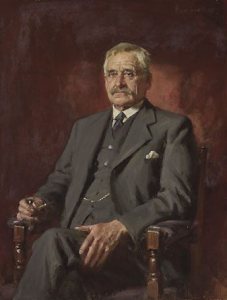
Banjo Paterson
Australian
1864 – 1941


I had written him a letter which I had, for want of better
Knowledge, sent to where I met him down the Lachlan, years ago,
He was shearing when I knew him, so I sent the letter to him,
Just ‘on spec’, addressed as follows, ‘Clancy, of The Overflow’.

And an answer came directed in a writing unexpected,
(And I think the same was written with a thumb-nail dipped in tar)
‘Twas his shearing mate who wrote it, and verbatim I will quote it:
‘Clancy’s gone to Queensland droving, and we don’t know where he are.’

In my wild erratic fancy visions come to me of Clancy
Gone a-droving ‘down the Cooper’ where the Western drovers go;
As the stock are slowly stringing, Clancy rides behind them singing,
For the drover’s life has pleasures that the townsfolk never know.

And the bush hath friends to meet him, and their kindly voices greet him
In the murmur of the breezes and the river on its bars,
And he sees the vision splendid of the sunlit plains extended,
And at night the wond’rous glory of the everlasting stars.

I am sitting in my dingy little office, where a stingy
Ray of sunlight struggles feebly down between the houses tall,
And the foetid air and gritty of the dusty, dirty city
Through the open window floating, spreads its foulness over all

And in place of lowing cattle, I can hear the fiendish rattle
Of the tramways and the ‘buses making hurry down the street,
And the language uninviting of the gutter children fighting,
Comes fitfully and faintly through the ceaseless tramp of feet.

And the hurrying people daunt me, and their pallid faces haunt me
As they shoulder one another in their rush and nervous haste,
With their eager eyes and greedy, and their stunted forms and weedy,
For townsfolk have no time to grow, they have no time to waste.

And I somehow rather fancy that I’d like to change with Clancy,
Like to take a turn at droving where the seasons come and go,
While he faced the round eternal of the cash-book and the journal–
But I doubt he’d suit the office, Clancy, of ‘The Overflow’.
The Bold Buccaneer

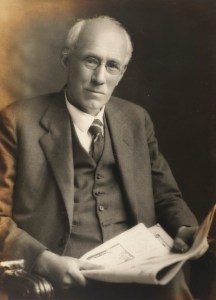
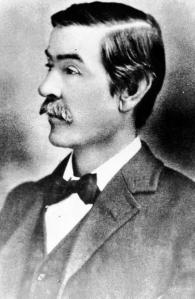
John Le Gay Brereton
Australian
1871 – 1943


One very rough day on the Pride of the Fray
In the scuppers a poor little cabin-boy lay,
When the Bosun drew nigh with wrath in his eye
And gave him a kick to remember him by,
As he cried with a sneer: “What good are you here?
Go home to your mammy, my bold buccaneer.”

Now the Captain beheld, and his pity upwelled:
With a plug in the peeper the Bosun he felled.
With humility grand he extended his hand
And helped the poor lad, who was weeping, to stand,
As he cried: “Have no fear; I’m the manager here.
Take heart, and you’ll yet be a bold buccaneer.”

But how he did flare when the lad then and there
Doffed his cap and shook down a gold banner of hair.
Though his movements were shy, he’d a laugh in his eye,
And he sank on the Captain’s broad breast with a sigh,
As he cried: “Is it queer that I’ve followed you here?
I’m your sweetheart from Bristol, my bold buccaneer.”

On an isle in the west, by the breezes caressed,
The bold buccaneer has a warm little nest,
And he sits there in state amid pieces of eight
And tackles his rum with a manner elate,
As he cries: “O my dear little cabin-boy, here
Is a toast to the babe of the bold buccaneer!”

Breaking the News

In honor of Australia Day, we present this work by a poet who was known as the Father of the Australian Novel.

Joseph Furphy
Australian
1843 – 1912

Johnny’s drowned — here’s his clo’es
Where he’s got to, we dunno;
Sure enough, he never rose;
So we thought we’d let you know.
Gosh! the fright has knocked us flat —
Here’s his shirt, an’ here’s his hat.

Never seen him since he plopp’d,
Jist a’side the big red-gum;
So, thinks we, poor Johnny’s copp’d —
All so suddent! — ain’t it rum?
Must be snagg’d among the roots —
Here’s his pants, an’ socks, an’ boots.

Simplest thing you ever seen —
Only just a common swim —
Cripes! it might as ready been
Me or Bill in place o’ him!
Try to snake him out, I s’pose?
Anyway, we fetch’d his clo’es.

Memory

We present this work in honor of the 55th anniversary of the poet’s death.

Zora Cross
Australian
1890 – 1964


Late, late last night, when the whole world slept,
Along to the garden of dreams I crept.
And I pulled the bell of an old, old house
Where the moon dipped down like a little white mouse.
I tapped the door and I tossed my head:
“Are you in, little girl? Are you in?” I said.
And while I waited and shook with cold
Through the door tripped me—just eight years old.
I looked so sweet with my pigtails down,
Tied up with a ribbon of dusky brown,
With a dimpled chin full of childish charme,
And my old black dolly asleep in my arms.
I sat me down when I saw myself,
And I told little tales of a moonland elf.
I laughed and sang as I used to do
When the world was ruled by Little Boy Blue.
Then I danced with a toss and a twirl
And said: “Now have you been a good, good girl?
Have you had much spanking since you were Me?
And does it feel fine to be twenty-three?”
I kissed me then, and I said farewell,
For I’ve earned more spanks than I dared to tell,
And Eight must never see Twenty-three
As she peeps through the door of Memory.

Children

Nancy Keesing
Australian
1923 – 1993

Long-summer scorched, my surfing children
Catch random waves or thump in dumpers,
Whirling, gasping, tossed disjointed.
I watching, fear they may be broken –
That all those foaming limbs will never
Re-assemble whole, together.
All under such a peaceful sky.
All under such another sky

The pictures show some village children
Caught at random, tossed, exploded,
Torn, disjointed, like sticks broken,
Whose jagged scorching limbs will never
Re-assemble whole together.

Zimeo

Charles Tompson
Australian
1807 – 1883

In a slave-cultured isle, on the verge of the main,
Sable Zimeo’s form was reclined;
He wept his dark destiny, gazed on his chain,
And mingled his sighs with the wind.

“O ye Gods!” he exclaimed, “whose beneficent care
Shields the innocent suff’rer from woe;
Permit me no longer these shackles to bear,
Some gleam of soft pity bestow!

“In the dawn of my youth, dear companions! with you,
When I rambled in Afric’s green shade.
When my hours, ‘mid your smiles, so delightfully flew,
I dreamed not they ever would fade.

“On the lip of my Ninda, when panting with love,
With what exstacy heaved my fond heart!
When we vowed by those pow’rs in the mansions above,
That we never—no, never, would part.

‘The bright sun of prosperity glistened awhile,
Diffusing ephemeral rays;
I basked ‘neath the phantom’s encouraging smile,
And bliss was the badge of my days!

“ ‘Till a little black cloud, wing’d by demons of air,
And urged by the fates from below,
Interposed ‘tween my sight and that sun’s cheering glare,
And hurled me from bliss into woe.

“Inured to the arts of seduction and wile,
White merchants arrived in our bay,
Allured us on board, unsuspicious of guile,
And bore us in triumph away.

“On that accurst day all my happiness fled,
My Ninda—my country—my home;
Here slavery’s ignoble fetters are spread,
Here liberty never will come!

“O, never!—what horrors compose that dread word,
But this weary pilgrimage o’er,
I go where the sound of sweet mercy is heard,
Where mis’ry’s remember’d no more.

“See, bright from elysium, a seraph appears,
And smiling she calls me away;
“ ‘My Zimeo, quit this dull region of tears!
Lo, thy Ninda!’ “—”Loved shade, I obey.”

Oblivion shed her dark veil o’er his woes;
Young Hope soothed the horrors of death;
From the cliff where he pondered, undaunted he rose,
And plunged in the billows beneath.