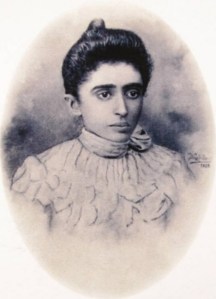
The Immortality of the Soul

Sousa Caldas
Brazilian
1762 – 1814


Yes, I am immortal. Roaring foam
The cruel and disheveled wickedness
Bite itself away, for it cannot in anger
Extinguish the living flame of reason.

Believe me, dear friends,
the raging sickle of time does not consume
this living spark, which, burning,
fell from the breath of the Supreme God.

The righteous on earth, raising
His shackled arms to heaven, and the tyrant
Vice from his throne with his foot stamping,

They make the false deception flee
That struggles in vain, to see
the sober disillusionment of the truth groaning.

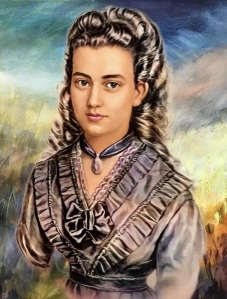
Sonnet II

Tomás António Gonzaga
Brazilian
1744 – c.1810


In a fertile field of superb Douro,
Sleeping on the grass, she rested,
When I saw that Fortune showed me
With joyful countenance her treasure.

On the one hand, a lot of silver and gold
With valuable stones the ground curved;
Here a scepter, there a throne stood,
Thousands of grass and laurel wreaths hung.

– The misadventure is over – he tells me then:
Of how many goods I show you, which one pleases you,
For I grant them with kindness, go, seek.

I chose, woke up, and saw nothing:
I settled down with me as soon as the adventure
It never goes beyond being dreamed.

Why Am I Strong?

We present this work in honor of the 100th anniversary of the poet’s death.

Narcisa Amália
Brazilian
1856 – 1924


You will say that it is false. It is not right. I descend
To the depths of my soul every time I hesitate…
Every time a tear or a scream
Betrays my anguish – when I feel myself fainting…
And all astonishment, all love, I confess,
The threshold of this blessed country
I cross : – The parties of infinity await me!
The horror of life, dazzled, I forget!
It’s just that there are valleys, skies, heights inside,
That the gaze of the world does not tarnish, the tender
Moon, flowers, dear creatures,
And it sounds in every bush, in every cave,
The symphony of eternal passion!…
– And behold- make me strong again for the fight.

Her Scarf

Álvares de Azevedo
Brazilian
1831 – 1852


When the first time, from my land
I left the nights of loving charm,
My sweet lover sighing My
eyes damp with tears.

A romance sang goodbye,
But longing dulled the song!
Tears wiped her beautiful eyes…
And she gave me the handkerchief that dipped her tears.

How many years have passed yet!
Do not forget but love so holy!
I still keep it in a perfumed safe
Her handkerchief that wet the tears…

I never met her again in my life.
I, however, my God, loved her so much!
Oh! when I die spread on my face
The handkerchief that I also bathed in tears!

Our Lady of Suffering

Auta de Souza
Brazilian
1876 – 1901

Mother of Pains, Lady of Suffering,
I contemplate your lacerate heart.
For the suffering endured by your beloved son,
In a life filled with harshness and ingratitude.
There is in your eyes such tenderness,
So much affection and divine love,
That from your tortured semblance
A lovely and pure light irradiates;
A light that illuminates the most shadowy pathway
A divine light, sublime and splendorous
That enlightens, guides, and supports.
Dear Lady, so beautiful are your tears
That they resemble gleaming stars,
Drops of light in the darkness of anguish.

Translation by Jussara Korngold

The Song of Exile

Gonçalves Dias
Brazilian
1823 – 1864


My homeland has many palm-trees
and the thrush-song fills its air;
no bird here can sing as well
as the birds sing over there.

We have fields more full of flowers
and a starrier sky above,
we have woods more full of life
and a life more full of love.

Lonely night-time meditations
please me more when I am there;
my homeland has many palm-trees
and the thrush-song fills its air.

Such delights as my land offers
Are not found here nor elsewhere;
lonely night-time meditations
please me more when I am there;
My homeland has many palm-trees
and the thrush-song fills its air.

Don’t allow me, God, to die
without getting back to where
I belong, without enjoying
the delights found only there,
without seeing all those palm-trees,
hearing thrush-songs fill the air.

Translation by Nelson Ascher

Old Trees

We present this work in honor of the 105th anniversary of the poet’s death.

Olavo Bilac
Brazilian
1865 – 1918


Look at these old trees, more lovely these
Than younger trees, more friendly too by far:
More beautiful the older that they are,
Victorious over age and stormy seas …

The beasts, the insects, man, under the tree
Have lived, and been from toil and hunger free;
And in its higher branches safe and sound
Incessant songs of birds and love are found.

Our youth now lost, my friend, let’s not bemoan!
Let’s laugh as we grow old! Let us grow old
As do the trees, so nobly, strong and bold

Enjoy the glorious kindness we have sown,
And succor in our branches those who seek,
The shade and comfort offered to the weak!

Translation by Frederic G. William

Ladies’ Talk

We present this work in honor of the 40th anniversary of the poet’s death.

Ana Cristina Cesar
Brazilian
1952 – 1983

I don’t even need to marry
I get all I need from him
I won’t leave here anymore
I really doubt it
This subject of women has come to an end
The cat ate it and enjoyed himself
He dances just like a barrel organ
The writer no longer exists
But also doesn’t have to become a god
Someone’s at the house
Do you think he can stand it?
Mr. Tenderness is knocking
I couldn’t care less
Conspiring: I answer back again
Trap: dying to know
She’s strange
Also you lie too much
He’s stalking me
Who did you sell your time to?
I don’t really know: I slept with that klutz
It makes no sense at all
But what about the gig?
He’s being a good boy
I think it’s an act
Don’t even start

Translation by Brenda Hillman

Vicious Circle

We present this work in honor of the 115th anniversary of the poet’s death.

Machado De Assis
Brazilian
1839 – 1908


The firefly danced in the air impatiently:
“Oh how I wish that I could be that yellow,
That burns in the eternal blue, a candle far!”
And yet the star gazed on the moon with jealousy:

“If only I could copy such transparency,
Which, from the Grecian column to the Gothic sill,
Has contemplated lovers’ faces sighingly!”
And yet the moon gazed on the sun with bitter will:

“Oh misery! If l could be that giant ball,
Immortal clarity, the sum of all that’s light!”
The sun, though, leans his brilliant chaplet o´er the wall:

I’m burdened by this numen’s aureole bright…
Pm wearied by this blue, unbounded parasol…
Why could I not be born a firefly at night?”

Translation by Frederic G. William