We present this work in honor of the 60th anniversary of the poet’s death.
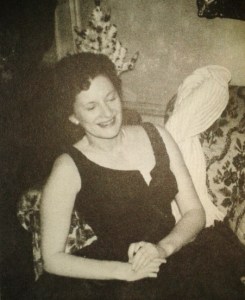
Anne Wilkinson Canadian 1910 – 1961
Willow weep, let the lake lap up your green trickled tears. Water, love, lip the hot roots, cradle the leaf; Turn a new moon on your tongue, water, lick the deaf rocks, With silk of your pebble-pitched song, water, wimple the beach; Water, wash over the feet of the summer-bowed trees, Wash age from the face of the stone.
I am a hearer of water; My ears hold the sound and the feel of the sound of it mortally. My skin is in love with lake water. My skin is in love and it sings in the arms of its lover, My skin is the leaf of the willow, My nerves are the roots of the weeping willow tree.
My blood is a clot in the stone, The blood of my heart is fused to a pit in the rock; The lips of my lover can wear away stone, My lover can free the blocked heart; The leaf and the root and the red sap will run with lake water, The arms of my lover will carry me home to the sea.
We present this work in honor of the poet’s 160th birthday.
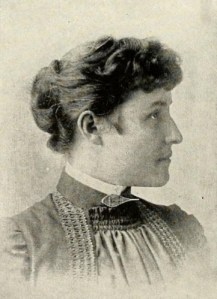
Bliss Carman Canadian 1861 – 1929
There is something in the autumn that is native to my blood— Touch of manner, hint of mood; And my heart is like a rhyme, With the yellow and the purple and the crimson keeping time.
The scarlet of the maples can shake me like a cry Of bugles going by. And my lonely spirit thrills To see the frosty asters like a smoke upon the hills.
There is something in October sets the gypsy blood astir; We must rise and follow her, When from every hill of flame She calls and calls each vagabond by name.
We present this work in honor of the 40th anniversary of the poet’s death.
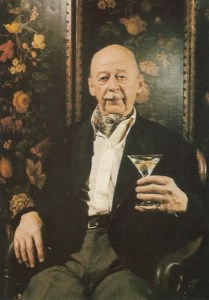
John Glassco Canadian 1909 – 1981
I
So this is what it is,
The world of things, arrested.
The music in my brain has stopped.
The armies are simply sheep, the giants windmills,
Dulcinea a cow-girl,
Mambrinus’ helmet a barber basin –
And the priest is delighted,
Fussing over me as I lie here
After my marvellous interminable journeys,
Shorn of my armour, extenuated,
Now in my five wits, restored,
Ready to make a good death.
– Rosinante and Dapple are dead too
Where are their bones?
Are we all as dead as my Amadis
Who slew so many giants, indomitable?
I who modelled my endeavour, who tried…
Yes, this is what it is to be alive,
To die, to cease
To force a folly of the world.
II
The trees beyond the window are blowing green
The long road white in the distance, the sunshine,
There are flowers at my window
What do I know?
Well, that nothing partakes of reality,
And I too am simply Alonso Quixano the Good,
The wise gentleman, the resorted,
Lying in my bed, tended
By my loving people, ready
To make a good death…
I appear to have killed myself
By believing in some other God:
Or perhaps it was the drubbings did forme,
The horseplay, the jokes
Wore out my silly casing of flesh.
In any event, as I lie here,
The withdrawal of the vision,
The removal of the madness,
The supplanting of a world of beauty
By God’s sticks and stones and smells
Are afflictions, I find, of something more absurd
Than any book of chivalry.
III
O my God
I have lost everyting
In the calm of my sanity
Like a tree which regards itself
In still water
Seeing only another tree,
Not as when the crazy winds of heaven blew
Turning in to a perpetual fountain
Of shaken leaves,
The image of an endless waltz of being
So close to my heart I was always asking
Why should we not dance so far ever, be always
Trees tossed against the sky?
Why are we men at all if not to defy
This painted quietude of God’s world?
Well, everything must have en end.
I have had my day
I have come home
I see things as they are.
My ingenious creator has abandoned me
With the insouciance of a nobleman
The flickeness of an author
The phgelm of an alguazil-
Only Sancho is faithful unto death
But in his eyes I discern the terrible dismay
For he sees that mine are at last a mirror of his own.
We present this work in honor of the 15th anniversary of the poet’s death.
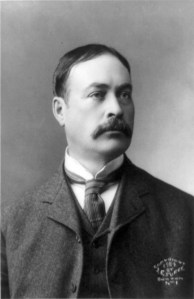
Irving Layton Canadian 1912 – 2006
I have seen respectable
death
served up like bread and wine
in stores and offices,
in club and hostel,
and from the streetcorner
church
that faces
two ways
I have seen death
served up
like ice.
Against this death,
slow, certain:
the body,
this burly sun,
the exhalations
of your breath,
your cheeks
rose and lovely,
and the secret
life
of the imagination
scheming freedom
from labour
and stone.
On wan dark night on Lac St. Pierre,
De win’ she blow, blow, blow,
An’ de crew of de wood scow “Julie Plante”
Got scar’t an’ run below—
For de win’ she blow lak hurricane,
Bimeby she blow some more,
An’ de scow bus’ up on Lac St. Pierre
Wan arpent from de shore.
De captinne walk on de fronte deck,
An’ walk de hin’ deck too—
He call de crew from up de hole,
He call de cook also.
De cook she ‘s name was Rosie,
She come from Montreal,
Was chambre maid on lumber barge,
On de Grande Lachine Canal.
De win’ she blow from nor’ -eas’ -wes’,—
De sout’ win’ she blow too,
W’en Rosie cry, “Mon cher captinne,
Mon cher, w’at I shall do ?”
Den de captinne t’row de beeg ankerre,
But still de scow she dreef,
De crew he can’t pass on de shore,
Becos’ he los’ hees skeef.
De night was dark lak wan black cat,
De wave run high an’ fas’,
W’en de captinne tak’ de Rosie girl
An’ tie her to de mas’.
Den he also tak’ de life preserve,
An’ jomp off on de lak’,
An’ say, “Good-bye, ma Rosie dear,
I go drown for your sak’.”
Nex’ morning very early
‘Bout ha’f-pas’ two—t’ree—four—
De captinne—scow—an’ de poor Rosie
Was corpses on de shore,
For de win’ she blow lak hurricane,
Bimeby she blow some more,
An’ de scow bus’ up on Lac St. Pierre,
Wan arpent from de shore.
MORAL
Now all good wood scow sailor man
Tak’ warning by dat storm
An’ go an’ marry some nice French girl
An’ leev on wan beeg farm.
De win’ can blow lak hurricane
An’ s’pose she blow some more,
You can’t get drown on Lac St. Pierre
So long you stay on shore.
There are strange things done in the midnight sun By the men who moil for gold; The Arctic trails have their secret tales That would make your blood run cold; The Northern Lights have seen queer sights, But the queerest they ever did see Was that night on the marge of Lake Lebarge I cremated Sam McGee.
Now Sam McGee was from Tennessee, where the cotton blooms and blows.
Why he left his home in the South to roam ‘round the Pole, God only knows.
He was always cold, but the land of gold seemed to hold him like a spell;
Though he’d often say in his homely way that he’d “sooner live in hell”.
On a Christmas Day we were mushing our way over the Dawson trail.
Talk of your cold! through the parka’s fold it stabbed like a driven nail.
If our eyes we’d close, then the lashes froze till sometimes we couldn’t see;
It wasn’t much fun, but the only one to whimper was Sam McGee.
And that very night, as we lay packed tight in our robes beneath the snow,
And the dogs were fed, and the stars o’erhead were dancing heel and toe,
He turned to me, and “Cap,” says he, “I’ll cash in this trip, I guess;
And if I do, I’m asking that you won’t refuse my last request.”
Well, he seemed so low that I couldn’t say no; then he says with a sort of moan:
“It’s the cursed cold, and it’s got right hold till I’m chilled clean through to the bone.
Yet ‘tain’t being dead — it’s my awful dread of the icy grave that pains;
So I want you to swear that, foul or fair, you’ll cremate my last remains.”
A pal’s last need is a thing to heed, so I swore I would not fail;
And we started on at the streak of dawn; but God! he looked ghastly pale.
He crouched on the sleigh, and he raved all day of his home in Tennessee;
And before nightfall a corpse was all that was left of Sam McGee.
There wasn’t a breath in that land of death, and I hurried, horror-driven,
With a corpse half hid that I couldn’t get rid, because of a promise given;
It was lashed to the sleigh, and it seemed to say:
“You may tax your brawn and brains,
But you promised true, and it’s up to you to cremate those last remains.”
Now a promise made is a debt unpaid, and the trail has its own stern code.
In the days to come, though my lips were dumb, in my heart how I cursed that load.
In the long, long night, by the lone firelight, while the huskies, round in a ring,
Howled out their woes to the homeless snows — O God! how I loathed the thing.
And every day that quiet clay seemed to heavy and heavier grow;
And on I went, though the dogs were spent and the grub was getting low;
The trail was bad, and I felt half mad, but I swore I would not give in;
And I’d often sing to the hateful thing, and it hearkened with a grin.
Till I came to the marge of Lake Lebarge, and a derelict there lay;
It was jammed in the ice, but I saw in a trice it was called the “Alice May”.
And I looked at it, and I thought a bit, and I looked at my frozen chum;
Then “Here,” said I, with a sudden cry, “is my cre-ma-tor-eum.”
Some planks I tore from the cabin floor, and I lit the boiler fire;
Some coal I found that was lying around, and I heaped the fuel higher;
The flames just soared, and the furnace roared — such a blaze you seldom see;
And I burrowed a hole in the glowing coal, and I stuffed in Sam McGee.
Then I made a hike, for I didn’t like to hear him sizzle so;
And the heavens scowled, and the huskies howled, and the wind began to blow.
It was icy cold, but the hot sweat rolled down my cheeks, and I don’t know why;
And the greasy smoke in an inky cloak went streaking down the sky.
I do not know how long in the snow I wrestled with grisly fear;
But the stars came out and they danced about ere again I ventured near;
I was sick with dread, but I bravely said: “I’ll just take a peep inside.
I guess he’s cooked, and it’s time I looked”;… then the door I opened wide.
And there sat Sam, looking cool and calm, in the heart of the furnace roar;
And he wore a smile you could see a mile, and he said: “Please close that door.
It’s fine in here, but I greatly fear you’ll let in the cold and storm —
Since I left Plumtree, down in Tennessee, it’s the first time I’ve been warm.”
There are strange things done in the midnight sun By the men who moil for gold; The Arctic trails have their secret tales That would make your blood run cold; The Northern Lights have seen queer sights, But the queerest they ever did see Was that night on the marge of Lake Lebarge I cremated Sam McGee.
Sometimes as an antidote
To fear of death,
I eat the stars.
Those nights, lying on my back,
I suck them from the quenching dark
Til they are all, all inside me,
Pepper hot and sharp.
Sometimes, instead, I stir myself
Into a universe still young,
Still warm as blood:
No outer space, just space,
The light of all the not yet stars
Drifting like a bright mist,
And all of us, and everything
Already there
But unconstrained by form.
And sometime it’s enough
To lie down here on earth
Beside our long ancestral bones:
To walk across the cobble fields
Of our discarded skulls,
Each like a treasure, like a chrysalis,
Thinking: whatever left these husks
Flew off on bright wings.
I wrote in verse what bothered me
The lies recorded in history
And beautiful words became my tool
Showing our life, a golden rule
And if our children today respond as much
You my people are their teacher,
Sharing,
They in turn will honor your word
And future generations they touch
She died — as die the roses
On the ruddy clouds of dawn,
When the envious sun discloses
His flame and morning’s gone.
She died—like waves of sun-glow
By fleeting shadows chased;
She died— like heaven’s rainbow
By gushing showers effaced.
She died—like snow glad-gracing
Some sea-marge fair, when lo!
Rude waves each other chasing,
Quick hide it ‘neath their flow.
She died— as dies the glory
Of music’s sweetest swell:
She died—as dies the story
When the best is still to tell
She died— as dies moon-beaming.
When scowls the rayless main:
She died— like sweetest dreaming
Quick changed to waking pain.
She died— and died she early;
Heaven wearied for its own.
As the dipping sun, my Mary,
Thy morning ray went down!




 Poets Corner