Since my wife was born
she must have eaten
the equivalent of two-thirds
of the original garden of Eden.
Not the dripping lush fruit
or the meat in the ribs of animals
but the green salad gardens of that place.
The whole arena of green
would have been eradicated
as if the right filter had been removed
leaving only the skeleton of coarse brightness.
All green ends up eventually
churning in her left cheek.
Her mouth is a laundromat of spinning drowning herbs.
She is never in fields
but is sucking the pith out of grass.
I have noticed the very leaves from flower decorations
grow sparse in their week long performance in our house.
The garden is a dust bowl.
On our last day in Eden as we walked out
she nibbled the leaves at her breasts and crotch.
But there’s none to touch
none to equal
the Chlorophyll Kiss
When we come to the end of the furrow,
When our last day’s work is done,
We will drink of the long red shaft of light
That slants from the westering sun.
We will turn from the field of our labour,
From the warm earth glad and brown,
And wend our feet up that village street,
And with our folk lie down.
Yea, after the long toil, surcease,
Rest to the hearts that roam,
When we join in the mystic silence of eve
The glad procession home.
Busy with his ropes and gears,
tides and currents,
he didn’t know and never
will how he came to appear
scowling in our
family snapshot.
We brought him home
by accident
on a film showing
part of a holiday,
children in jerseys on the dock,
grinning, puddled in sun,
and at the edge,
the ferryman’s dark image.
Well, that’s one way
to survive,
to be captured alive
by someone, caught
by a click and locked
in a box held by an unknown
hand at an unknown hour.
Later to rise from
a chemical bath imprinted on
a glossy three-by-five
to glare
out forever,
unknowing.
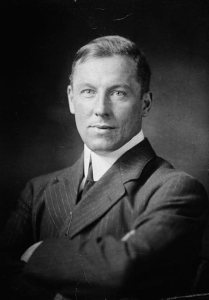
In honor of Civic Day, we present this work by one of Canada’s most important poets.
Robert Service Canadian 1874 – 1958
The cruel war was over — oh, the triumph was so sweet!
We watched the troops returning, through our tears;
There was triumph, triumph, triumph down the scarlet glittering street,
And you scarce could hear the music for the cheers.
And you scarce could see the house-tops for the flags that flew between;
The bells were pealing madly to the sky;
And everyone was shouting for the Soldiers of the Queen,
And the glory of an age was passing by.
And then there came a shadow, swift and sudden, dark and drear;
The bells were silent, not an echo stirred.
The flags were drooping sullenly, the men forgot to cheer;
We waited, and we never spoke a word.
The sky grew darker, darker, till from out the gloomy rack
There came a voice that checked the heart with dread:
“Tear down, tear down your bunting now, and hang up sable black;
They are coming — it’s the Army of the Dead.”
They were coming, they were coming, gaunt and ghastly, sad and slow;
They were coming, all the crimson wrecks of pride;
With faces seared, and cheeks red smeared, and haunting eyes of woe,
And clotted holes the khaki couldn’t hide.
Oh, the clammy brow of anguish! the livid, foam-flecked lips!
The reeling ranks of ruin swept along!
The limb that trailed, the hand that failed, the bloody finger tips!
And oh, the dreary rhythm of their song!
“They left us on the veldt-side, but we felt we couldn’t stop
On this, our England’s crowning festal day;
We’re the men of Magersfontein, we’re the men of Spion Kop,
Colenso — we’re the men who had to pay.
We’re the men who paid the blood-price. Shall the grave be all our gain?
You owe us. Long and heavy is the score.
Then cheer us for our glory now, and cheer us for our pain,
And cheer us as ye never cheered before.”
The folks were white and stricken, and each tongue seemed weighted with lead;
Each heart was clutched in hollow hand of ice;
And every eye was staring at the horror of the dead,
The pity of the men who paid the price.
They were come, were come to mock us, in the first flush of our peace;
Through writhing lips their teeth were all agleam;
They were coming in their thousands — oh, would they never cease!
I closed my eyes, and then — it was a dream.
There was triumph, triumph, triumph down the scarlet gleaming street;
The town was mad; a man was like a boy.
A thousand flags were flaming where the sky and city meet;
A thousand bells were thundering the joy.
There was music, mirth and sunshine; but some eyes shone with regret;
And while we stun with cheers our homing braves,
O God, in Thy great mercy, let us nevermore forget
The graves they left behind, the bitter graves.
I have laid my cheek to Nature’s, placed my puny hand in hers,
Felt a kindred spirit warming all the life-blood of my face,
Moved amid the very foremost of her truest worshippers,
Studying each curve of beauty, marking every minute grace;
Loved not less the mountain cedar than the flowers at its feet,
Looking skyward from the valley, open-lipped as if in prayer,
Felt a pleasure in the brooklet singing of its wild retreat,
But I knelt before the splendour of the thunderous Chaudiere.
All my manhood waked within me, every nerve had tenfold force,
And my soul stood up rejoicing, looking on with cheerful eyes,
Watching the resistless waters speeding on their downward course,
Titan strength and queenly beauty diademed with rainbow dyes.
Eye and ear, with spirit quickened, mingled with the lovely strife,
Saw the living Genius shrined within her sanctuary fair,
Heard her voice of sweetness singing, peered into her hidden life,
And discerned the tuneful secret of the jubilant Chaudiere:
‘Within my pearl-roofed shell,
Whose floor is woven with the iris bright,
Genius and Queen of the Chaudiere I dwell,
As in a world of immaterial light.
My throne, an ancient rock,
Marked by the foot of ages long-departed,
My joy, the cataract’s stupendous shock,
Whose roll is music to the grateful-hearted.
I’ve seen the eras glide
With muffled tread to their eternal dreams,
While I have lived in vale and mountain side,
With leaping torrents and sweet purling streams.
The Red-Man’s active life;
His love, pride, passions, courage, and great deeds;
His perfect freedom, and his thirst for strife;
His swift revenge, at which the memory bleeds:
The sanguinary years,
When sullen Terror, like a raging Fate,
Swept down the stately tribes like slaughtered deers,
And war and hatred joined to decimate
The remnants of the race,
And spread decay through centuries of pain-
No more I mark their sure, avenging pace,
And forests wave where war-whoops shook the plain.
Their deeds I envied not.
The royal tyrant on his purple throne,
I, in secluded grove or shady grot,
Had purer joys than he had ever known,
God made the ancient hills,
The valleys and the solemn wildernesses,
The merry-hearted and melodious rills,
And strung with diamond dews the pine-trees’ tresses;
But man’s hand built the palace,
And he that reigns therein is simply man;
Man turns God’s gifts to poison in the chalice
That brimmed with nectar in the primal plan.
Here I abide alone-
The wild Chaudiere’s eternal jubilee
Has such sweet divination in its tone,
And utters nature’s truest prophecy
In thunderings of zeal!
I’ve seen the Atheist in terror start,
Awed to contrition by the strong appeal
That waked conviction in his doubting heart:
‘Teachers speak throughout all nature,
From the womb of Silence born,
Heed ye not their words, O Scoffer?
Flinging back thy scorn with scorn!
To the desert spring that leapeth,
Pulsing, from the parched sod,
Points the famished trav’ler, saying-
‘Brothers, here, indeed, is God!’
From the patriarchal fountains,
Sending forth their tribes of rills,
From the cedar-shadowed lakelets
In the hearts of distant hills,
Whispers softer than the moonbeams
Wisdom’s gentle heart have awed,
Till its lips approved the cadence-
‘Surely here, indeed, is God!’
Lo! o’er all, the Torrent Prophet,
An inspired Demosthenes,
To the Doubter’s soul appealing,
Louder than the preacher-seas:
Dreamer! wouldst have nature spurn thee
For a dumb, insensate clod?
Dare to doubt! and these shall teach thee
Of a truth there lives a God!’
By day and night, for hours,
I watch the cataract’s impulsive leap,
Refreshed and gladdened by the cheering showers
Wrung from the passion of the seething deep.
Pleased when the buried waves
Emerge again, like incorporeal hosts
Rising, white-sheeted, from their gloomy graves,
As if the depths had yielded up their ghosts.
And when the midnight storm
Enfolds the welkin in its robe of clouds,
Through the dim vapours of the cauldron swarm
The sheeted spectres in their whitest shrouds,
By the lightning’s flash betrayed.
These gather from the insubstantial vapour
The lunar rainbows, which by them are made-
Woven with moonbeams by some starry taper,
To decorate the halls
Of my fair palace, whence I’m pained to see
Thy human brethren watch the waterfalls-
Not with such rev’rence as I’ve found in thee:
Too many with an eye
To speculation and the worldling’s dreams;
Others, who seek from nature no reply,
Nor read the oral language of the streams.
But of the few who loved
The beautiful with grateful heart and soul,
Who looked on nature fondly, and were moved
By one sweet glance, as by the mighty whole:
Of these, the thoughtful few,
Thou wert the first to seek the inner temple,
And stand before the Priestess. Thou wert true
To nature and thyself. Be thy example
The harbinger of times
When the Chaudiere’s imposing majesty
Will awe the spirits of the heartless mimes
To worship God in truth, with nature’s constancy.’
Still I heard the mellow sweetness of her voice at intervals,
Mingling with the fall of waters, rising with the snowy spray,
Ringing through the sportive current like the joy of waterfalls,
Sending up their hearty vespers at the calmy close of day.
Loath to leave the scene of beauty, lover-like I stayed, and stayed,
Folding to my eager bosom memories beyond compare;
Deeper, stronger, more enduring than my dreams of wood and glade,
Were the eloquent appeals of the magnificent Chaudiere.
E’en the solid bridge is trembling, whence I look my last farewell,
Dizzy with the roar and trampling of the mighty herd of waves,
Speeding past the rocky Island, steadfast as a sentinel,
Towards the loveliest bay that ever mirrored the Algonquin Braves.
Soul of Beauty! Genius! Spirit! Priestess of the lovely strife!
In my heart thy words are shrined, as in a sanctuary fair;
Echoes of thy voice of sweetness, rousing all my better life,
Ever haunt my wildest visions of the jubilant Chaudiere.
In honor of Discovery Day, we present this work by one of Canada’s greatest immigrant poets.
Evan MacColl Canadian 1808 – 1898
Though Missouri’stide may majestic glide,
There’s a curse on the soil it laves;
The Ohio, too, may be fair, but who
Would sojourn in the land of slaves?
Be my prouder lot a Canadian cot
And the bread of a freeman’s toils;
Then hurrah for the land of the forests grand,
And the Lake of the Thousand Isles!
I would seek no wealth, at the cost of health,
‘Mid the city’s din and strife;
More I love the grace of fair nature’s face,
And the calm of a woodland life;
I would shun the road by ambition trod,
And the lore which the heart defiles;–
Then hurrah for the land of the forests grand,
And the Lake of the Thousand Isles!
O away, away! I would gladly stray
Where the freedom I love is found;
Where the pine and oak by the woodman’s stroke
Are disturbed in their ancient bound;
Where the gladsome swain reaps the golden grain,
And the trout from the stream beguiles;
Then hurrah for the land of the forests grand,
And the Lake of the Thousand Isles.
In Flanders fields the poppies blow
Between the crosses, row on row,
That mark our place; and in the sky
The larks, still bravely singing, fly
Scarce heard amid the guns below.
We are the Dead. Short days ago
We lived, felt dawn, saw sunset glow,
Loved and were loved, and now we lie,
In Flanders fields.
Take up our quarrel with the foe:
To you from failing hands we throw
The torch; be yours to hold it high.
If ye break faith with us who die
We shall not sleep, though poppies grow
In Flanders fields.
Outside the afterlight’s lucent rose
Is smiting the hills and brimming the valleys,
And shadows are stealing across the snows;
From the mystic gloom of the pineland alleys.
Glamour of mingled night and day
Over the wide, white world has sway,
And through their prisoning azure bars,
Gaze the calm, cold eyes of the early stars.
But here, in this long, low-raftered room,
Where the blood-red light is crouching and leaping,
The fire that colors the heart of the gloom
The lost sunshine of old summers is keeping¬
The wealth of forests that held in fee
Many a season’s rare alchemy,
And the glow and gladness without a name
That dwells in the deeps of unstinted flame.
Gather we now round the opulent blaze
With the face that loves and the heart that rejoices,
Dream we once more of the old-time days,
Listen once more to the old-time voices!
From the clutch of the cities and paths of the sea
We have come again to our own roof-tree,
And forgetting the loves of the stranger lands
We yearn for the clasp of our kindred’s hands.
There are tales to tell, there are tears to shed,
There are children’s flower-faces and women’s sweet laughter;
There’s a chair left vacant for one who is dead
Where the firelight crimsons the ancient rafter;
What reck we of the world that waits
With care and clamor beyond our gates,
We, with our own, in this witching light,
Who keep our tryst with the past tonight?
Ho! how the elf-flames laugh in glee!
Closer yet let us draw together,
Holding our revel of memory
In the guiling twilight of winter weather;
Out on the waste the wind is chill,
And the moon swings low o’er the western hill,
But old hates die and old loves burn higher
With the wane and flash of the farmhouse fire.

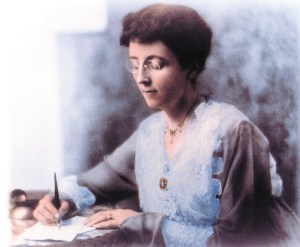
 Poets Corner