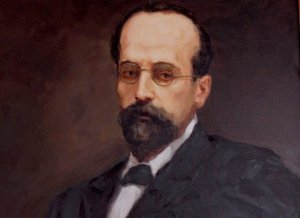
We present this work in honor of the 30th anniversary of the poet’s death.
Nicolás Guillén Cuban 1902 – 1989
This is hunger. An animal
all fangs and eyes.
It cannot be distracted or deceived.
It is not satisfied with one meal.
It is not content
with a lunch or a dinner.
Always threatens blood.
Roars like alion, squeezes like a boa,
thinks like a person.
The specimen before you
Was captured in India (outskirts of Bombay),
but it exists in a more or less savage state
in many others places.
The evening empties, inexplicably.
Places no longer receive us,
toss us out, to the elements. There’s
cold and wind. Sounds
linger, trembling in the air,
don’t know to disappear.
And then a poet
the usual one, somewhere,
takes a blank sheet of paper, totals up
the void (consoled by
the fine arabesque of his writing
on silence), drafts
an image, a lovely
turn of phrase perhaps, perhaps
fleeting, no matter.
No one will know the other half
of his day, falling into shadow,
the real, the not written, what was
knocking at the doors of everything beautiful
like a beggar. And who knows
if the snow, the star,
are also the void’s
merciful stories, and you,
you, too, lights
of autumn, lit up
houses, so many other
beggar poets?
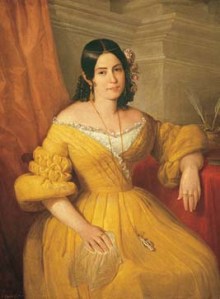
We present this work in honor of the poet’s 205th birthday.
La Avellaneda Cuban 1814 – 1873
There are no ties to bind us now; all ties are broken:
I asked that Heaven make it so; thanks be to God!
A bitter cup once filled with pleasure, is now empty;
My soul, at last, can find repose; it desires nothing.
I loved you once, I do not love you now; ponder on that, at least.
If I erred it was because I could not face that truth.
Let all these many years of bitterness and strife
Be swallowed in memory’s void; and let my heart breathe free.
You have battered and destroyed it without pity;
And madly trampled, once and again, my pride …
Yet never from these lips will you hear a murmur
To condemn the tyranny you wielded over me.
Terrible avenger of great wrongs, how meekly
You fulfilled your mission. Are you unaware of it?
It was not your irresistible power that caused me
To lay at your feet my unconquerable strength.
God willed it so; and so it was. Blessed be his name!
All’s over now; and I at last recover my own self.
All-avenging angel, you are now a man! …
And I behold you and feel nor love nor fear.
Your sceptre is shattered and your sword is broken …
And, oh, what melancholy freedom do I breathe!
I made a world of you; that world is gone;
In vast and profound loneliness, I dwell.
I wish you happiness; and if some day you chance
To read this, my eternal farewell, know even then
There will always be in my heart for you,
Generous pardon and tender affection.
I still smell the foam of the sea they made me cross.
The night, I can’t remember it.
The ocean itself could not remember it.
But I don’t forget the first gull I made out in the distance.
High, the clouds, like innocent eye-witnesses.
Perhaps I have not forgotten my lost coast,
nor my ancestral language.
The left me here and here I have lived.
And because I worked like an animal,
here I came to be born.
How many Mandinga epics did I look to for strength.
I rebelled.
His Worship bought me in a public square.
I embroidered His Worship’s coat and bore him a male child.
My son had no name.
And His Worship died at the hands of an impeccable English lord.
I walked.
This is the land where I suffered
mouth-in-the-dust and the lash.
I rode the length of all its rivers.
Under its sun I sowed seeds, gathered crops,
but did not eat the harvests.
A slave barracks was my house.
I myself brought stones to raise it up,
but I sang to the natural rhythm of native birds.
I rose up.
In this same land I touched the wet blood
and decayed bones of many others,
brought to this land, or not, the same as I.
I no longer imagined the road to Guinea.
Was it to Guinea? To Benin?
To Madagascar? Or Cape Verde?


 Poets Corner