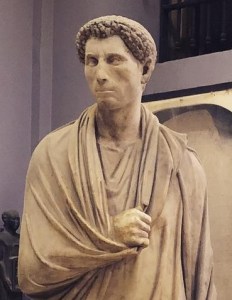
Egyptian
4th century
The long delayed end of the laborious war and the ambush, even the horse fashioned of Argive Athena, straightway to me in my haste do thou tell, O Calliopeia, remitting copious speech; and the ancient strife of men, in that war now decided, do thou resolve with speedy song.
Already the tenth year was rolling on and old had grown the strain of war, insatiate of blood, for Trojans and Danaans. With slaying of men the spears were weary, the menace of the swords died, quenched was the din of breastplate, rent and perishing the coiled fabric of shield-carrying baldricks; the shield endured no more to abide the hurtling of javelins, unstrung was the bent bow, the swift arrows decayed. And the horse — some apart at the idle manger, with heads bowed piteously, bewailed their fellow horses, some mourned to miss their perished charioteers.
Low lay the son of Peleus and with him his comrade dead: over his young son Antilochus old Nestor mourned: Aias with self-dealt wound had unstrung his mighty form, and bathed his foeman’s sword in the rain of frenzied blood. The Trojans, lamenting over the shameful dragging of Hector, had not only their domestic pain, but groaning for the woes of men of alien speech they wept in turn for their many-tongued allies. The Lycians wept for Sarpedon whom his mother, glorying in the bed of Zeus, had sent to Troy; howbeit he fell by the spear of Patroclus, son of Menoetius, and there was shed about him by his sire a mist that wept tears of blood. The Thracians wailed for Rhesus that in the guileful night was fettered by an evil sleep. And for the fate of Memnon Eos, his mother, hung aloft a cloud in heaven and stole away the light of shamefast day. The women from Thermodon dear to Ares, beating the unripe, unsucked circle of their breasts, mourned the warlike maiden Penthesileia, who came unto the dance of war, that war of many guests, and with her woman’s hand scattered the cloud of men back to their ships beside the sea; only Achilles withstood her with his ashen spear and slew and despoiled her and gave her funeral.
And still all Ilios stood, by reason of her god-built towers, established upon unshaken foundations, and at the tedious delay the people of the Achaeans chafed. And now Athena, unwearying though she be, would have shrunk from her latest labour and all her sweat had been in vain, had not the seer turned from the bride-stealing lust of Deiphobus, and come from Ilios as guest of the Danaans, and, as doing a favour to Menelaus in his travail, prophesied the late-fulfilled ruin of his own fatherland. And at the prophesying of jealous Helenus they straightway prepared an end of their long toil. From Scyros, too, leaving that city of fair maidens, came the so of Achilles and august Deidameia; who, albeit he mantled not yet on his goodly temples the down of manhood, showed the prowess of his sire, young warrior though he was. Came, too, Athena to the Danaans with her holy image; the prey of war but a helper to her friends.





 Poets Corner