My mother, who hates thunder storms,
Holds up each summer day and shakes
It out suspiciously, lest swarms
Of grape-dark clouds are lurking there;
But when the August weather breaks
And rains begin, and brittle frost
Sharpens the bird-abandoned air,
Her worried summer look is lost,
And I her son, though summer-born
And summer-loving, none the less
Am easier when the leaves are gone
Too often summer days appear
Emblems of perfect happiness
I can’t confront: I must await
A time less bold, less rich, less clear:
An autumn more appropriate.
Today we have naming of parts. Yesterday,
We had daily cleaning. And tomorrow morning,
We shall have what to do after firing. But today,
Today we have naming of parts. Japonica
Glistens like coral in all the neighboring gardens,
And today we have naming of parts.
This is the lower sling swivel. And this
Is the upper sling swivel, whose use you will see,
When you are given your slings. And this is the piling swivel,
Which in your case you have not got. The branches
Hold in the gardens their silent, eloquent gestures,
Which in our case we have not got.
This is the safety-catch, which is always released
With an easy flick of the thumb. And please do not let me
See anyone using his finger. You can do it quite easy
If you have any strength in your thumb. The blossoms
Are fragile and motionless, never letting anyone see
Any of them using their finger.
And this you can see is the bolt. The purpose of this
Is to open the breech, as you see. We can slide it
Rapidly backwards and forwards: we call this
Easing the spring. And rapidly backwards and forwards
The early bees are assaulting and fumbling the flowers:
They call it easing the Spring.
They call it easing the Spring: it is perfectly easy
If you have any strength in your thumb: like the bolt,
And the breech, the cocking-piece, and the point of balance,
Which in our case we have not got; and the almond blossom
Silent in all of the gardens and the bees going backwards and forwards,
For today we have the naming of parts.
The sea is calm to-night.
The tide is full, the moon lies fair
Upon the straits; – on the French coast the light
Gleams and is gone; the cliffs of England stand,
Glimmering and vast, out in the tranquil bay.
Come to the window, sweet is the night-air!
Only, from the long line of spray
Where the sea meets the moon-blanch’d land,
Listen! you hear the grating roar
Of pebbles which the waves draw back, and fling,
At their return, up the high strand,
Begin, and cease, and then again begin,
With tremulous cadence slow, and bring
The eternal note of sadness in.
Sophocles long ago
Heard it on the Aegean, and it brought
Into his mind the turbid ebb and flow
Of human misery; we
Find also in the sound a thought,
Hearing it by this distant northern sea.
The Sea of Faith
Was once, too, at the full, and round earth’s shore
Lay like the folds of a bright girdle furl’d.
But now I only hear
Its melancholy, long, withdrawing roar,
Retreating, to the breath
Of the night-wind, down the vast edges drear
And naked shingles of the world.
Ah, love, let us be true
To one another! for the world, which seems
To lie before us like a land of dreams,
So various, so beautiful, so new,
Hath really neither joy, nor love, nor light,
Nor certitude, nor peace, nor help for pain;
And we are here as on a darkling plain
Swept with confused alarms of struggle and flight,
Where ignorant armies clash by night.
Most glorious Lord of life, that on this day,
Didst make thy triumph over death and sin:
And having harrow’d hell, didst bring away
Captivity thence captive, us to win:
This joyous day, dear Lord, with joy begin,
And grant that we for whom thou diddest die,
Being with thy dear blood clean wash’d from sin,
May live for ever in felicity.
And that thy love we weighing worthily,
May likewise love thee for the same again:
And for thy sake, that all like dear didst buy,
With love may one another entertain.
So let us love, dear love, like as we ought,
Love is the lesson which the Lord us taught.
I’d been on duty from two till four.
I went and stared at the dug-out door.
Down in the frowst I heard them snore.
‘Stand to!’ Somebody grunted and swore.
Dawn was misty; the skies were still;
Larks were singing, discordant, shrill;
They seemed happy; but I felt ill.
Deep in water I splashed my way
Up the trench to our bogged front line.
Rain had fallen the whole damned night.
O Jesus, send me a wound to-day,
And I’ll believe in Your bread and wine,
And get my bloody old sins washed white!
Between the brown hands of a server-lad
The silver cross was offered to be kissed.
The men came up, lugubrious, but not sad,
And knelt reluctantly, half-prejudiced.
(And kissing, kissed the emblem of a creed.)
Then mourning women knelt; meek mouths they had,
(And kissed the Body of the Christ indeed.)
Young children came, with eager lips and glad.
(These kissed a silver doll, immensely bright.)
Then I, too, knelt before that acolyte.
Above the crucifix I bent my head:
The Christ was thin, and cold, and very dead:
And yet I bowed, yea, kissed – my lips did cling.
(I kissed the warm live hand that held the thing.)
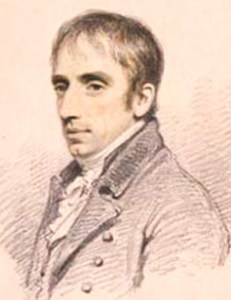
We present this work in honor of the poet’s 250th birthday.
William Wordsworth English 1770 – 1850
Earth has not anything to show more fair:
Dull would he be of soul who could pass by
A sight so touching in its majesty:
This City now doth, like a garment, wear
The beauty of the morning; silent, bare,
Ships, towers, domes, theatres, and temples lie
Open unto the fields, and to the sky;
All bright and glittering in the smokeless air.
Never did sun more beautifully steep
In his first splendour, valley, rock, or hill;
Ne’er saw I, never felt, a calm so deep!
The river glideth at his own sweet will:
Dear God! the very houses seem asleep;
And all that mighty heart is lying still!
The Curfew tolls the knell of parting day,
The lowing herd wind slowly o’er the lea,
The plowman homeward plods his weary way,
And leaves the world to darkness and to me.
Now fades the glimmering landscape on the sight,
And all the air a solemn stillness holds,
Save where the beetle wheels his droning flight,
And drowsy tinklings lull the distant folds;
Save that from yonder ivy-mantled tow’r
The moping owl does to the moon complain
Of such as, wand’ring near her secret bow’r,
Molest her ancient solitary reign.
Beneath those rugged elms, that yew-tree’s shade,
Where heaves the turf in many a mould’ring heap,
Each in his narrow cell for ever laid,
The rude Forefathers of the hamlet sleep.
The breezy call of incense-breathing Morn,
The swallow twitt’ring from the straw-built shed,
The cock’s shrill clarion, or the echoing horn,
No more shall rouse them from their lowly bed.
For them no more the blazing hearth shall burn,
Or busy housewife ply her evening care:
No children run to lisp their sire’s return,
Or climb his knees the envied kiss to share.
Oft did the harvest to their sickle yield,
Their furrow oft the stubborn glebe has broke:
How jocund did they drive their team afield!
How bow’d the woods beneath their sturdy stroke!
Let not Ambition mock their useful toil,
Their homely joys, and destiny obscure;
Nor Grandeur hear with a disdainful smile
The short and simple annals of the poor.
The boast of heraldry, the pomp of pow’r,
And all that beauty, all that wealth e’er gave,
Awaits alike th’ inevitable hour:
The paths of glory lead but to the grave.
Nor you, ye Proud, impute to These the fault,
If Memory o’er their Tomb no Trophies raise,
Where through the long-drawn aisle and fretted vault
The pealing anthem swells the note of praise.
Can storied urn or animated bust
Back to its mansion call the fleeting breath?
Can Honour’s voice provoke the silent dust,
Or Flatt’ry soothe the dull cold ear of death?
Perhaps in this neglected spot is laid
Some heart once pregnant with celestial fire;
Hands, that the rod of empire might have sway’d,
Or waked to ecstasy the living lyre.
But Knowledge to their eyes her ample page
Rich with the spoils of time did ne’er unroll;
Chill Penury repress’d their noble rage,
And froze the genial current of the soul.
Full many a gem of purest ray serene
The dark unfathom’d caves of ocean bear:
Full many a flower is born to blush unseen,
And waste its sweetness on the desert air.
Some village Hampden that with dauntless breast
The little tyrant of his fields withstood,
Some mute inglorious Milton here may rest,
Some Cromwell guiltless of his country’s blood.
Th’ applause of list’ning senates to command,
The threats of pain and ruin to despise,
To scatter plenty o’er a smiling land,
And read their history in a nation’s eyes,
Their lot forbade: nor circumscribed alone
Their glowing virtues, but their crimes confined;
Forbade to wade through slaughter to a throne,
And shut the gates of mercy on mankind,
The struggling pangs of conscious truth to hide,
To quench the blushes of ingenuous shame,
Or heap the shrine of Luxury and Pride
With incense kindled at the Muse’s flame.
Far from the madding crowd’s ignoble strife,
Their sober wishes never learn’d to stray;
Along the cool sequester’d vale of life
They kept the noiseless tenor of their way.
Yet ev’n these bones from insult to protect
Some frail memorial still erected nigh,
With uncouth rhymes and shapeless sculpture deck’d,
Implores the passing tribute of a sigh.
Their name, their years, spelt by th’ unletter’d muse,
The place of fame and elegy supply:
And many a holy text around she strews,
That teach the rustic moralist to die.
For who, to dumb Forgetfulness a prey,
This pleasing anxious being e’er resign’d,
Left the warm precincts of the cheerful day,
Nor cast one longing ling’ring look behind?
On some fond breast the parting soul relies,
Some pious drops the closing eye requires;
Ev’n from the tomb the voice of Nature cries,
Ev’n in our Ashes live their wonted Fires.
For thee, who, mindful of th’ unhonour’d dead,
Dost in these lines their artless tale relate;
If chance, by lonely contemplation led,
Some kindred spirit shall inquire thy fate,
Haply some hoary-headed Swain may say,
‘Oft have we seen him at the peep of dawn
Brushing with hasty steps the dews away
To meet the sun upon the upland lawn.
‘There at the foot of yonder nodding beech
That wreathes its old fantastic roots so high,
His listless length at noontide would he stretch,
And pore upon the brook that babbles by.
‘Hard by yon wood, now smiling as in scorn,
Mutt’ring his wayward fancies he would rove,
Now drooping, woeful wan, like one forlorn,
Or crazed with care, or cross’d in hopeless love.
‘One morn I miss’d him on the custom’d hill,
Along the heath and near his fav’rite tree;
Another came; nor yet beside the rill,
Nor up the lawn, nor at the wood was he;
‘The next with dirges due in sad array
Slow through the church-way path we saw him borne.
Approach and read (for thou canst read) the lay
Graved on the stone beneath yon aged thorn:’
The Epitaph
Here rests his head upon the lap of Earth
A Youth to Fortune and to Fame unknown.
Fair Science frown’d not on his humble birth,
And Melancholy mark’d him for her own.
Large was his bounty, and his soul sincere,
Heav’n did a recompense as largely send:
He gave to Mis’ry all he had, a tear,
He gain’d from Heav’n (‘twas all he wish’d) a friend.
No farther seek his merits to disclose,
Or draw his frailties from their dread abode,
(There they alike in trembling hope repose,)
The bosom of his Father and his God.
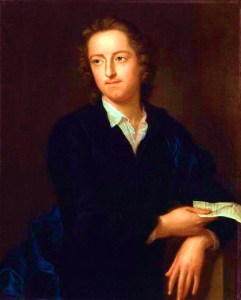
We present this work in honor of the 165th anniversary of the poet’s death.
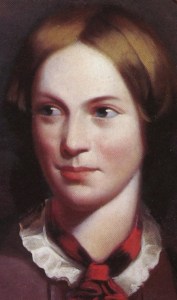
Charlotte Brontë English 1816 – 1855
The human heart has hidden treasures,
In secret kept, in silence sealed;¬
The thoughts, the hopes, the dreams, the pleasures,
Whose charms were broken if revealed.
And days may pass in gay confusion,
And nights in rosy riot fly,
While, lost in Fame’s or Wealth’s illusion,
The memory of the Past may die.
But, there are hours of lonely musing,
Such as in evening silence come,
When, soft as birds their pinions closing,
The heart’s best feelings gather home.
Then in our souls there seems to languish
A tender grief that is not woe;
And thoughts that once wrung groans of anguish,
Now cause but some mild tears to flow.
And feelings, once as strong as passions,
Float softly back ¬a faded dream;
Our own sharp griefs and wild sensations,
The tale of others’ sufferings seem.
Oh ! when the heart is freshly bleeding,
How longs it for that time to be,
When, through the mist of years receding,
Its woes but live in reverie!
And it can dwell on moonlight glimmer,
On evening shade and loneliness;
And, while the sky grows dim and dimmer,
Feel no untold and strange distress¬
Only a deeper impulse given
By lonely hour and darkened room,
To solemn thoughts that soar to heaven,
Seeking a life and world to come.


 Poets Corner