We present this work in honor of the poet’s 100th birthday.
Doris Lessing English 1919 – 2013
When I look back I seem to remember singing.
Yet it was always silent in that long warm room.
Impenetrable, those walls, we thought,
Dark with ancient shields. The light
Shone on the head of a girl or young limbs
Spread carelessly. And the low voices
Rose in the silence and were lost as in water.
Yet, for all it was quiet and warm as a hand,
If one of us drew the curtains
A threaded rain blew carelessly outside.
Sometimes a wind crept, swaying the flames,
And set shadows crouching on the walls,
Or a wolf howled in the wide night outside,
And feeling our flesh chilled we drew together.
But for a while the dance went on –
That is how it seems to me now:
Slow forms moving calm through
Pools of light like gold net on the floor.
It might have gone on, dream-like, for ever.
But between one year and the next – a new wind blew?
The rain rotted the walls at last?
Wolves’ snouts came thrusting at the fallen beams?
It is so long ago.
But sometimes I remember the curtained room
And hear the far-off youthful voices singing.
Since I from Love escaped am so fat,
I ne’er think to be in his prison ta’en;
Since I am free, I count him not a bean.
He may answer, and saye this and that;
I do no force, I speak right as I mean;
Since I from Love escaped am so fat.
Love hath my name struck out of his slat,
And he is struck out of my bookes clean,
For ever more; there is none other mean;
Since I from Love escaped am so fat.
Now this is the Law of the Jungle — as old and as true as the sky;
And the Wolf that shall keep it may prosper, but the Wolf that shall break it must die.
As the creeper that girdles the tree-trunk the Law runneth forward and back —
For the strength of the Pack is the Wolf, and the strength of the Wolf is the Pack.
Wash daily from nose-tip to tail-tip; drink deeply, but never too deep;
And remember the night is for hunting, and forget not the day is for sleep.
The Jackal may follow the Tiger, but, Cub, when thy whiskers are grown,
Remember the Wolf is a Hunter — go forth and get food of thine own.
Keep peace withe Lords of the Jungle — the Tiger, the Panther, and Bear.
And trouble not Hathi the Silent, and mock not the Boar in his lair.
When Pack meets with Pack in the Jungle, and neither will go from the trail,
Lie down till the leaders have spoken — it may be fair words shall prevail.
When ye fight with a Wolf of the Pack, ye must fight him alone and afar,
Lest others take part in the quarrel, and the Pack be diminished by war.
The Lair of the Wolf is his refuge, and where he has made him his home,
Not even the Head Wolf may enter, not even the Council may come.
The Lair of the Wolf is his refuge, but where he has digged it too plain,
The Council shall send him a message, and so he shall change it again.
If ye kill before midnight, be silent, and wake not the woods with your bay,
Lest ye frighten the deer from the crop, and your brothers go empty away.
Ye may kill for yourselves, and your mates, and your cubs as they need, and ye can;
But kill not for pleasure of killing, and seven times never kill Man!
If ye plunder his Kill from a weaker, devour not all in thy pride;
Pack-Right is the right of the meanest; so leave him the head and the hide.
The Kill of the Pack is the meat of the Pack. Ye must eat where it lies;
And no one may carry away of that meat to his lair, or he dies.
The Kill of the Wolf is the meat of the Wolf. He may do what he will;
But, till he has given permission, the Pack may not eat of that Kill.
Cub-Right is the right of the Yearling. From all of his Pack he may claim
Full-gorge when the killer has eaten; and none may refuse him the same.
Lair-Right is the right of the Mother. From all of her year she may claim
One haunch of each kill for her litter, and none may deny her the same.
Cave-Right is the right of the Father — to hunt by himself for his own:
He is freed of all calls to the Pack; he is judged by the Council alone.
Because of his age and his cunning, because of his gripe and his paw,
In all that the Law leaveth open, the word of your Head Wolf is Law.
Now these are the Laws of the Jungle, and many and mighty are they;
But the head and the hoof of the Law and the haunch and the hump is — Obey!
Give me my scallop shell of quiet,
My staff of faith to walk upon,
My scrip of joy, immortal diet,
My bottle of salvation,
My gown of glory, hope’s true gage,
And thus I’ll take my pilgrimage.
Blood must be my body’s balmer,
No other balm will there be given,
Whilst my soul, like a white palmer,
Travels to the land of heaven;
Over the silver mountains,
Where spring the nectar fountains;
And there I’ll kiss
The bowl of bliss,
And drink my eternal fill
On every milken hill.
My soul will be a-dry before,
But after it will ne’er thirst more;
And by the happy blissful way
More peaceful pilgrims I shall see,
That have shook off their gowns of clay,
And go apparelled fresh like me.
I’ll bring them first
To slake their thirst,
And then to taste those nectar suckets,
At the clear wells
Where sweetness dwells,
Drawn up by saints in crystal buckets.
And when our bottles and all we
Are fill’d with immortality,
Then the holy paths we’ll travel,
Strew’d with rubies thick as gravel,
Ceilings of diamonds, sapphire floors,
High walls of coral, and pearl bowers.
From thence to heaven’s bribeless hall
Where no corrupted voices brawl,
No conscience molten into gold,
Nor forg’d accusers bought and sold,
No cause deferr’d, nor vain-spent journey,
For there Christ is the king’s attorney,
Who pleads for all without degrees,
And he hath angels, but no fees.
When the grand twelve million jury
Of our sins and sinful fury,
‘Gainst our souls black verdicts give,
Christ pleads his death, and then we live.
Be thou my speaker, taintless pleader,
Unblotted lawyer, true proceeder,
Thou movest salvation even for alms,
Not with a bribed lawyer’s palms.
And this is my eternal plea
To him that made heaven, earth, and sea,
Seeing my flesh must die so soon,
And want a head to dine next noon,
Just at the stroke when my veins start and spread,
Set on my soul an everlasting head.
Then am I ready, like a palmer fit,
To tread those blest paths which before I writ.
Through Rohan over fen and field where the long grass grows,
The West Wind comes walking, and about the walls it goes.
‘What news from the West, O wandering wind, do you bring to me tonight?
Have you seen Boromir the Tall by moon or by starlight?’
‘I saw him ride over seven streams, over waters wide and grey.
I saw him walk in empty lands, until he passed away
Into the shadows of the North. I saw him then no more.
The North Wind may have heard the horn of the son of Denethor.’
‘O Boromir! From the high walls westward I looked afar,
But you came not from the empty lands where no men are.’
From the mouths of the sea the South Wind flies, from the sandhills and the stones;
The wailing of the gulls it hears, and at the gate it moans.
‘What news from the South, O sighing wind, do you bring to me at eve?
Where now is Boromir the fair? He tarries and I grieve!’
‘Ask me not of where he doth dwell—so many bones there lie
On the white shores and the dark shores under the stormy sky;
So many have passed down Anduin to find the flowing Sea.
Ask of the North Wind news of them the North Wind sends to me!’
‘O Boromir! Beyond the gate the seaward road runs south,
But you came not with the wailing gulls from the grey sea’s mouth.’
From the Gate of Kings the North Wind rides, and past the roaring falls;
And clear and cold about the tower its loud horn calls.
‘What news from the North, O mighty wind, do you bring to me today?
What news of Boromir the Bold? For he is long away.’
‘Beneath Amon Hen I heard his cry. There many foes he fought.
His cloven shield, his broken sword, they to the water brought.
His head so proud, his face so fair, his limbs they laid to rest;
And Rauros, golden Rauros-falls, bore him upon its breast.’
‘O Boromir! The Tower of Guard shall ever northward gaze
To Rauros, golden Rauros-falls, until the end of days.’
Say this city has ten million souls,
Some are living in mansions, some are living in holes:
Yet there’s no place for us, my dear, yet there’s no place for us.
Once we had a country and we thought it fair,
Look in the atlas and you’ll find it there:
We cannot go there now, my dear, we cannot go there now.
In the village churchyard there grows an old yew,
Every spring it blossoms anew:
Old passports can’t do that, my dear, old passports can’t do that.
The consul banged the table and said,
“If you’ve got no passport you’re officially dead”:
But we are still alive, my dear, but we are still alive.
Went to a committee; they offered me a chair;
Asked me politely to return next year:
But where shall we go to-day, my dear, but where shall we go to-day?
Came to a public meeting; the speaker got up and said;
“If we let them in, they will steal our daily bread”:
He was talking of you and me, my dear, he was talking of you and me.
Thought I heard the thunder rumbling in the sky;
It was Hitler over Europe, saying, “They must die”:
O we were in his mind, my dear, O we were in his mind.
Saw a poodle in a jacket fastened with a pin,
Saw a door opened and a cat let in:
But they weren’t German Jews, my dear, but they weren’t German Jews.
Went down the harbour and stood upon the quay,
Saw the fish swimming as if they were free:
Only ten feet away, my dear, only ten feet away.
Walked through a wood, saw the birds in the trees;
They had no politicians and sang at their ease:
They weren’t the human race, my dear, they weren’t the human race.
Dreamed I saw a building with a thousand floors,
A thousand windows and a thousand doors:
Not one of them was ours, my dear, not one of them was ours.
Stood on a great plain in the falling snow;
Ten thousand soldiers marched to and fro:
Looking for you and me, my dear, looking for you and me.
Had we but World enough, and Time,
This coyness Lady were no crime.
We would sit down, and think which way
To walk, and pass our long Loves Day.
Thou by the Indian Ganges side.
Should’st Rubies find: I by the Tide
Of Humber would complain. I would
Love you ten years before the Flood:
And you should if you please refuse
Till the Conversion of the Jews.
My vegetable Love should grow
Vaster then Empires, and more slow.
An hundred years should go to praise
Thine Eyes, and on thy Forehead Gaze.
Two hundred to adore each Breast.
But thirty thousand to the rest.
An Age at least to every part,
And the last Age should show your Heart.
For Lady you deserve this State;
Nor would I love at lower rate.
But at my back I alwaies hear
Times winged Charriot hurrying near:
And yonder all before us lye
Desarts of vast Eternity.
Thy Beauty shall no more be found;
Nor, in thy marble Vault, shall sound
My ecchoing Song: then Worms shall try
That long preserv’d Virginity:
And your quaint Honour turn to durst;
And into ashes all my Lust.
The Grave’s a fine and private place,
But none I think do there embrace.
Now therefore, while the youthful hew
Sits on thy skin like morning glew,
And while thy willing Soul transpires
At every pore with instant Fires,
Now let us sport us while we may;
And now, like am’rous birds of prey,
Rather at once our Time devour,
Than languish in his slow-chapt pow’r.
Let us roll all our Strength, and all
Our sweetness, up into one Ball:
And tear our Pleasures with rough strife,
Thorough the Iron gates of Life.
Thus, though we cannot make our Sun
Stand still, yet we will make him run.
We present this work in honor of National Senior Citizens’ Day.
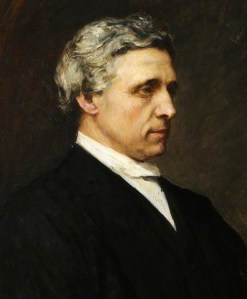
Lewis Carroll English 1832 – 1898
“You are old, Father William,” the young man said,
“And your hair has become very white;
And yet you incessantly stand on your head—
Do you think, at your age, it is right?”
“In my youth,” Father William replied to his son,
“I feared it might injure the brain;
But now that I’m perfectly sure I have none,
Why, I do it again and again.”
“You are old,” said the youth, “As I mentioned before,
And have grown most uncommonly fat;
Yet you turned a back-somersault in at the door—
Pray, what is the reason of that?”
“In my youth,” said the sage, as he shook his grey locks,
“I kept all my limbs very supple
By the use of this ointment—one shilling a box—
Allow me to sell you a couple?”
“You are old,” said the youth, “And your jaws are too weak
For anything tougher than suet;
Yet you finished the goose, with the bones and the beak—
Pray, how did you manage to do it?”
“In my youth,” said his father, “I took to the law,
And argued each case with my wife;
And the muscular strength which it gave to my jaw,
Has lasted the rest of my life.”
“You are old,” said the youth, “one would hardly suppose
That your eye was as steady as ever;
Yet you balanced an eel on the end of your nose—
What made you so awfully clever?”
“I have answered three questions, and that is enough,”
Said his father; “don’t give yourself airs!
Do you think I can listen all day to such stuff?
Be off, or I’ll kick you down stairs!”
Amyntas led me to a Grove,
Where all the Trees did shade us;
The Sun it self, though it had Strove,
It could not have betray’d us:
The place secur’d from humane Eyes,
No other fear allows.
But when the Winds that gently rise,
Doe Kiss the yielding Boughs.
Down there we satt upon the Moss,
And id begin to play
A Thousand Amorous Tricks, to pass
The heat of all the day.
A many Kisses he did give:
And I return’d the same
Which made me willing to receive
That which I dare not name.
His Charming Eyes no Aid requir’d
To tell their softning Tale;
On her that was already fir’d
‘Twas easy to prevaile.
He did but Kiss and Clasp me round,
Whilst those his thoughts Exprest:
And lay’d me gently on the Ground;
Ah who can guess the rest?
We present this work in honor of the poet’s 175th birthday.
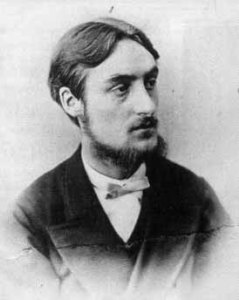
Gerard Manley Hopkins English 1844 – 1889
Glory be to God for dappled things—
For skies of couple-colour as a brinded cow;
For rose-moles all in stipple upon trout that swim;
Fresh-firecoal chestnut-falls; finches’ wings;
Landscape plotted and pieced—fold, fallow, and plough;
And all trades, their gear and tackle and trim.
All things counter, original, spare, strange;
Whatever is fickle, freckled (who knows how?)
With swift, slow; sweet, sour; adazzle, dim;
He fathers-forth whose beauty is past change:
Praise Him.




 Poets Corner