We present this work in honor of the 115th anniversary of the poet’s death.
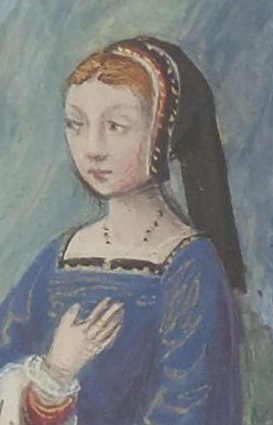
Qiu Jin Chinese 1875 – 1907
Just a short stay at the Capital But it is already the mid autumn festival Chrysanthemums infect the landscape Autumn is making its mark The infernal isolation has become unbearable here All eight years of it make me long for my home It is the bitter guile of them forcing us women into femininity We cannot win! Despite our ability, men hold the highest rank But while our hearts are pure, those of men are rank My insides are afire in anger at such an outrage How could vile men claim to know who I am? Heroism is borne out of this kind of torment To think that so putrid a society can provide no camaraderie Brings me to tears!
In honor of the Twelfth, we present this work by one of modern Ireland’s liveliest poets.
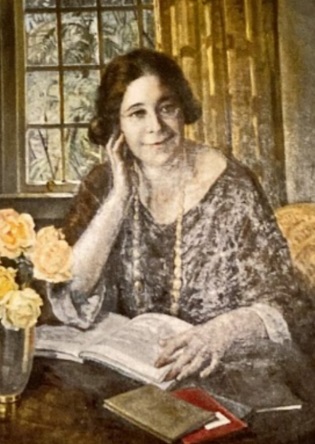
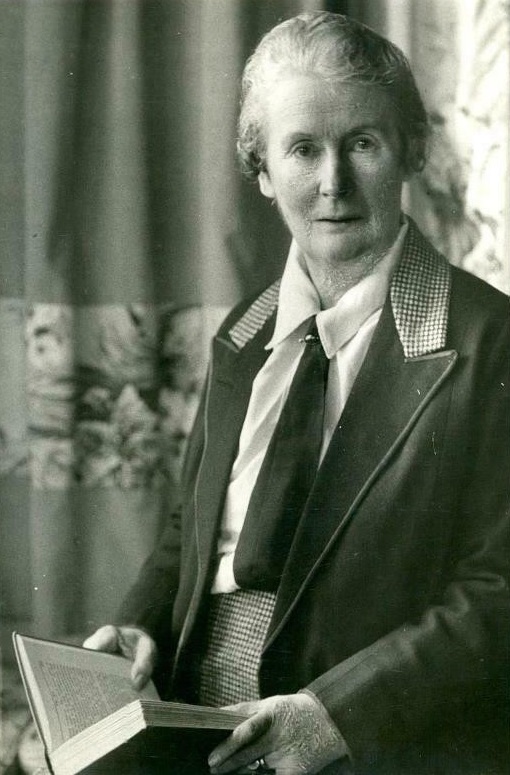
Leland Bardwell Irish 1922 – 2016
I have willed my body to the furthering of science Although I’ll not be there to chronicle my findings I can imagine all the students poring over me: “My God, is that a liver? And those brown caulifowers are lungs?” “Yes, sir, a fine example of how not to live.” “And what about the brain?” “Alas the brain. I doubt if this poor sample ever had one.” As with his forceps he extracts a single rose.
We present this work in honor of the poet’s 65th birthday.
Makhosazana Xaba South African b. 1957
She is my friend. No, she was my friend – Over time, we went our separate ways.
She became richer when her father died; I became poorer when my parents retired.
When she moved to the coast, another inconvenience: The distance between our homes.
When she visits the city, she worries about the safety of her car outside my home. When I travel for work not too far from the coast, I cannot afford to travel to hers.
Although we still chat, the content builds walls between us; Her holidays longer, the number of her white friends larger.
Although she still plans on learning an indigenous language, I—her preferred practice ground—have become an absence.
She was my friend when we were anti-apartheid activists. What are we today? The common enemy has yet to surface.
We present this work in honor of the poet’s 100th birthday.
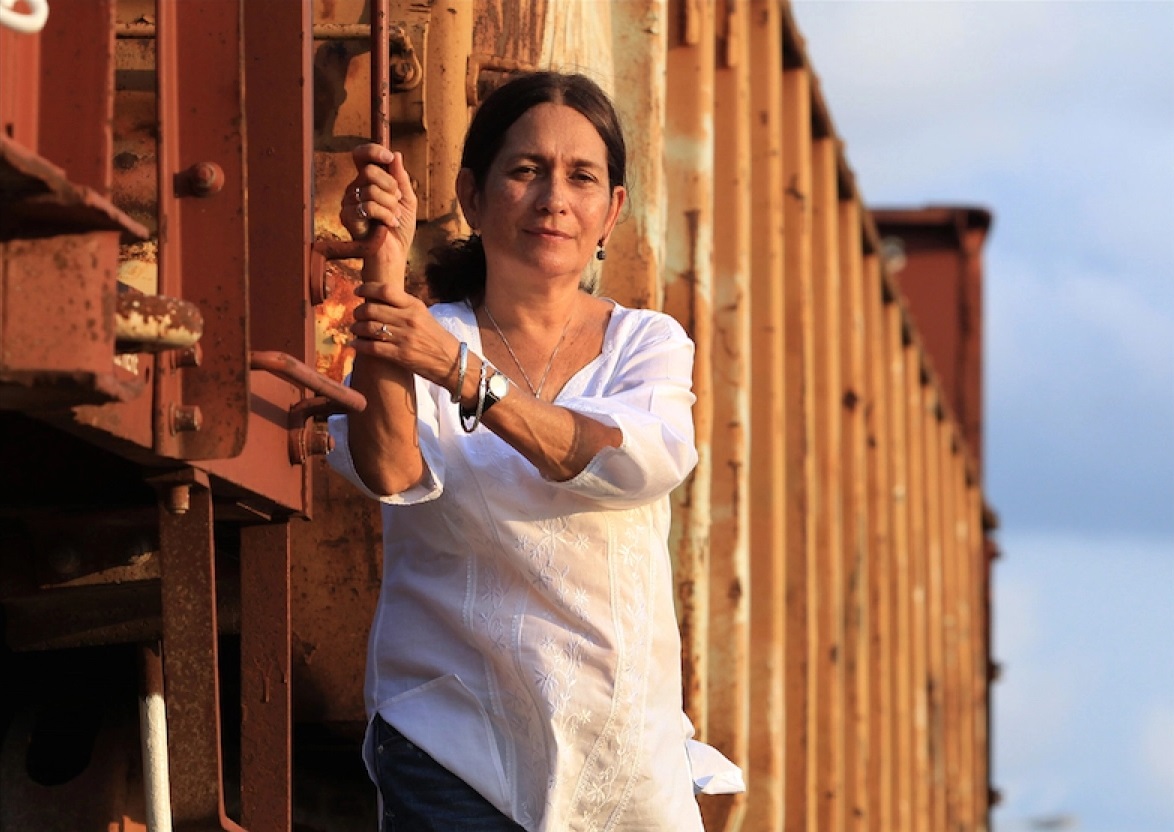
Carilda Oliver Labra
Cuban
1922 – 2018
I.
Father of yesterday who made hope full of children and debts. I conjure your hand which was never dry and never knew stone or spear.
When you were judge, you were ill with insomnia… as you longed to save so many thieves. Let the sparrows chirp peace for you and may you have playthings at last!
I make believe, now, that you’re sleeping and your affectionate greeting, your amazement, lives on. My life now moves with entropy;
Now, I’m truly the sad little daughter that can no longer lean on your shoulder because you died in January, Father.
II.
Grief arrives so violently like the rain after the dawn; today my smile is different: an invisible tear that doesn’t weep.
(I tell myself in secret: maybe he’s coming by, and not only as he knows of this grieving but because I still wait anxiously in case he asks for the key to our house…)
I can’t believe it… I need you, and you are dead, my father, little dead one. This time you are checkmated.
Like a crazy person, in super human delirium, I lift your chess piece with my hand and place you playing in the game!
III.
I have dressed in white, green, red, because grief does not rhyme with love. It has been a long time, my father, since your eyes refused darkness or glare.
Don’t let hail and snow fall on your innocent and foreign grave. Let the birth of spring sing to you let a flower exude perfume on the ninth!
I reserve the glory of your room for you, a happy sparkle of the sun, that I keep apart that piece of earth where you were born, your robes, your books, your saw… It’s not enough now to love you so much: you’re dead, my father, you’re dead.
IV.
Your comfortable chair… where is it? Your student violin… how does it sound? You buried pennies in the sand and gave my mother other names.
I keep all your letters and pictures. In my dream your prostate is cured. On the patio floor and in my affection, your last shoes walk on.
I want to see you beyond the shutter. Come, spirit; come, my supportive angel. I no longer know what to do, what to say,
because I long to eat breakfast with my father, my sage, my almsman, at 81 Tirrey Avenue.
Angels, Thrones and Dominations, Principalities, Archangels, Cherubim, Bow to the lower regions With Virtues, Potestés, Seraphim, Fly through high crystalline skies To decorate the triumphant entrance And the most worthy adored birth, The holy concept by mysteres tres haults Of that Virgin, where all grace abounds, Decree by dits imperiaulx The most beautiful that ever was in the world.
Give sermons and sermons, Devout Carmelites, Cordeliers, Augustins; From the holy concept wear relationships, Caldeyens, Hebrieux and Latins; Romanians, sing on the Palatine Hills That Jouachim Saincte Anne met, And that by eulx is administered to us Ceste Virgo without love conjugaulx That God created of fruitful pleasure, Without feeling any original defects, The most beautiful that ever was in the world.
His honest beautiful receptions Of soul and body in the beautiful places of the intestines Have transcended all conceptions Personal, by divine mysteries. Because to feed Jesus with his painful breasts God always has him without a maculle monster, Declaring it by right and ultree law: All beautiful for the all beautiful of the beautiful, All clergy, nect, modest and world, All pure above all bladders, The most beautiful that ever was in the world.
Muses, come in jubilations And transmigrate your crystal-clear streams, Come, Aurora, by lucidations, Precursing the beautiful morning days; Come, Orpheus, sound harp and clarins, Come, Amphion, from the beautiful country, Come, Music, pleasantly acoustrée, Come on, Royne Hester, adorned with joyaulx, Come, Judith, Rachel and Florimonde, Accompanied by special honors The most beautiful that ever was in the world.
Tres doulx zephirs, by sibilations Sow roses and roumarins everywhere, Nimphes, stop your floods, Marine stigieulx and carybd places; Ring horns, viols, stools; May my mistress, the honored Virgin Either from everyone in all places decorated Come, Apolo, play the blowpipes, Ring, Panna, so hault that everything redundant, Collapse all in generaulx terms The most beautiful that ever was in the world.
Devoted spirits, faithful and loyal, In paradise, beautiful mansions and chasteins, To the pleasure God, the Virgin for us founds Or see her in her Royaulx palaces, The most beautiful that ever was in the world.
We present this work in honor of the poet’s 70th birthday.
Reina María Rodríguez
Cuban
b. 1952
Naturally, Flaubert’s parrot could not be called Chucho, his author wouldn’t stick him with a name like that. From which follows the importance of names. But in the stories last night —the reconstruction of a postcard which we were creating to resemble Christmas— chess pieces nearly dismembered in the children’s hands before midnight, they had to pull out the parrot with his blue half-exposed chest feathers and the nun who comes when he sings “o whore, o whore, o whore,” and her face colors all the way to the wine all the way to believing herself so —though she wasn’t— with the pleasure of momentarily believing herself something she is not, spilling shame into the alien cup. Is it true that after an outcry they erupt – the things we believed ourselves to be?
II
The parrot Loulou “…used to descend the stairs by setting the curve of her beak on the steps.” Then she disappeared forever and her owner, Felicity, never got over it, or the nun either. The family blames themselves and they still make the sign of the cross, for they didn’t train him to the level of the occasion: he was not Flaubert’s parrot who upheld a name with her hauteur – her meaning – just an ordinary parrot named, to his disadvantage, Chucho.
‘Where am I from?’ From the green hills of Erin. ‘Have I no song then?’ My songs are all sung. ‘What o’ my love?’ ’Tis alone I am farin’. Old grows my heart, an’ my voice yet is young.
‘If she was tall?’ Like a king’s own daughter. ‘If she was fair?’ Like a mornin’ o’ May. When she’d come laughin’ ‘twas the runnin’ wather, When she’d come blushin’ ‘twas the break o’ day.
‘Where did she dwell?’ Where one’st I had my dwellin’. ‘Who loved her best?’ There’s no one now will know. ‘Where is she gone?’ Och, why would I be tellin’! Where she is gone there I can never go.
As I was standing, all set for my exile, Doom staring at me from the road’s blinding end, The door, like a book’s heavy cover, opened, To bring forth a guest from the biblical land.
His body, half naked, a knife in his loincloth, In sheep-leather sandals his tanned, bronze-like feet, A bundle of firewood upon his shoulder— He said, with a smile very boyish and sweet:
“Good morning, my girl; remember me, dearest? You’ve waited for me so long—not in vain. I’m Isaac, your bridegroom, ordained by the Heavens … Through ages I’ve wandered to you, till I came.
Take off your dress. A sheet of plain linen Is sufficient to drape round your navel and hips. Undo your braids and let’s hurry, my sweetheart, Your hand clasped in mine and a chant on our lips.
Thus will l lead you beyond the horizon, Between north and south, through the west—to the east, Until we will reach Mount Moriah, my dearest, There to be married, to rejoice and to feast.
So come, let us hurry, the distance is calling. Pray, why do you shiver with anguish and cry? You’re asking why all that wood on my shoulder, The glittering knife on my hip—you ask why.
Then turn your soul to my soul, my beloved. Read your fate in my fate, while I explain: Out of the wood I will construct an altar And with love all redeeming set it aflame.
And the knife, my bride, I will file to its sharpest point Up there, at the peak, on a rough mountain stone. And who will be offered, you ask me?—then listen: The offering, my dearest, shall be you, you alone.
A gift of life to the God of All Being, As Abraham told me, his late-born son: If you trust in love and love wholly trusting, Then fear not, nor waver, dear girl, but come.
Though fire will blaze through the wood of the altar, Flames licking your body, yet you shall see: The knife will fall from my hand, and a miracle Will happen to you, as it happened to me.
The rivers and seas shall sing Hallelujah! The mountain pines, moved, will give praise to all life, While the Voice Divine will, with thunder and lightning, Proclaim me your husband, pronounce you my wife.
So hurry, my girl, the sky is already Spreading its canopy, preparing the rite. Come to the blue sacrificial fire— Your last maiden stroll—to the altar, my bride.”
Thus he spoke. I smiled, then said in a whisper, My eyes not on him, but fixed on the dark night, Where another road was tracing its outlines With the red of my blood, with signals of fright:
“Oh leave me, Isaac, you bronzed, sunny man. This road is not yours, not mine is your day. I head for those places you never have dreamed of, Where altars do smolder with their unwilling prey.”
As I spoke a gale swept towards my threshold. The tempest took hold of my hearth and my house, Whistling through streets, through the yards of the ghetto, Hissing with rage: “Juden raus! Juden raus!”
Thus I stepped forward with Abraham, my father, Who wrapped his arm round me as if with a shawl, While delicate Isaac, all tremble and flutter, Pressed his tanned sun-kissed frame to the wall.
“You’re frightened, Isaac?” said I. “I’m your nightmare. Awake and you’re back in your undying scroll, Where Rebecca, your true betrothed awaits you, To be taken with joy on her last maiden stroll.
Make haste, return to the Book that shall save thee. Hide yourself in the Bible’s fairytale land. For your God Himself walks with me and my father, Right now, to the altar; with us—to His end.”






 Poets Corner