Lament for Airt Uí Laoghaire

07-28 Ni Chonaill
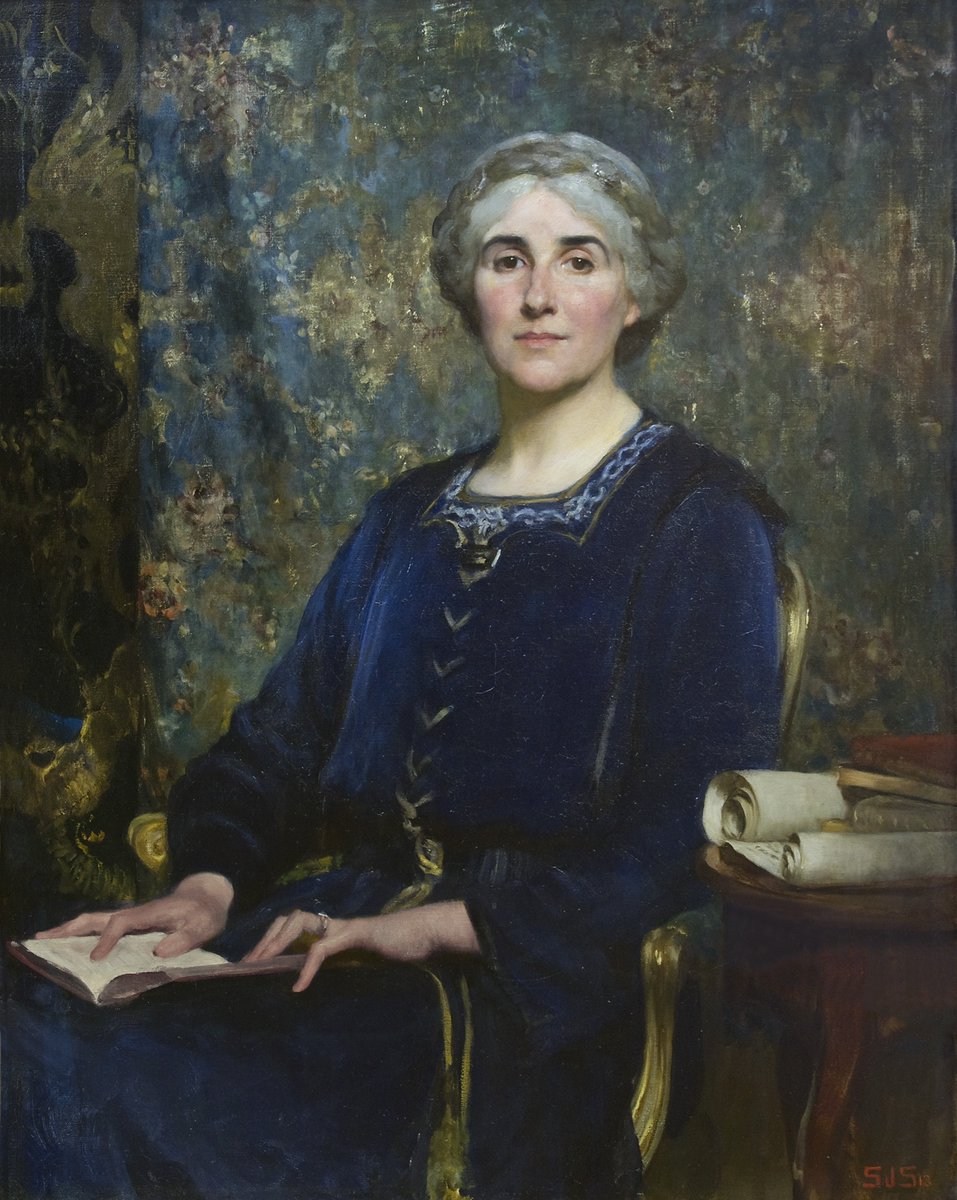
Eibhlín Dubh Ní Chonaill
Irish
1743 – 1800


I

My steadfast love!
When I saw you one day
by the market-house gable
my eye gave a look
my heart shone out
I fled with you far
from friends and home.

And never was sorry:
you had parlours painted
rooms decked out
the oven reddened
and loaves made up
roasts on spits
and cattle slaughtered;
I slept in duck-down
till noontime came
or later if I liked.

My steadfast friend!
it comes to my mind
that fine Spring day
how well your hat looked
with the drawn gold band,
the sword silver-hilted
your fine brave hand
and menacing prance,
and the fearful tremble
of treacherous enemies.
You were set to ride
your slim white-faced steed
and Saxons saluted
down to the ground,
not from good will
but by dint of fear
– though you died at their hands,
my soul’s beloved…

My steadfast friend!
And when they come home,
our little pet Conchúr
and baby Fear Ó Laoghaire,
they will ask at once
where I left their father.
I will tell them in woe
he is left in Cill na Martar,
and they’ll call for their father
and get no answer…

My steadfast friend!
I didn’t credit your death
till your horse came home
and her reins on the ground,
your heart’s blood on her back
to the polished saddle
where you sat – where you stood….
I gave a leap to the door,
a second leap to the gate
and a third on your horse.

I clapped my hands quickly
and started mad running
as hard as I could,
to find you there dead
by a low furze-bush
with no Pope or bishop
or clergy or priest
to read a psalm over you
but a spent old woman
who spread her cloak corner
where your blood streamed from you,
and I didn’t stop to clean it
but drank it from my palms.

My steadfast love!
Arise, stand up
and come with myself
and I’ll have cattle slaughtered
and call fine company
and hurry up the music
and make you up a bed
with bright sheets upon it
and fine speckled quilts
to bring you out in a sweat
where the cold has caught you.

II

My friend and my treasure!
Many fine-made women
from Cork of the sails
to Droichead na Tóime
would bring you great herds
and a yellow gold handful,
and not sleep in their room
on the night of your wake.

My friend and my lamb!
Don’t you believe them
nor the scandal you heard
nor the jealous man’s gossip
that it’s sleeping I went.
It was no heavy slumber
but your babies so troubled
and all of them needing
to be settled in peace.

People of my heart,
what woman in Ireland
from setting of sun
could stretch out beside him
and bear him three sucklings
and not run wild
losing Art Ó Laoghaire
who lies here vanquished
since yesterday morning?…

Long loss, bitter grief
I was not by your side
when the bullet was fired
so my right side could take it
or the edge of my shift
till I freed you to the hills,
my fine-handed horseman!

My sharp bitter loss
I was not at your back
when the powder was fired
so my fine waist could take it
or the edge of my dress,
till I let you go free,
My grey-eyed rider,
ablest for them all.

III

My friend and my treasure trove!
An ugly outfit for a warrior:
a coffin and a cap
on that great-hearted horseman
who fished in the rivers
and drank in the halls
with white-breasted women.
My thousand confusions
I have lost the use of you.
Ruin and bad cess to you,
ugly traitor Morris,
who took the man of my house
and father of my young ones
– a pair walking the house
and the third in my womb,
and I doubt that I’ll bear it.

My friend and beloved!
When you left through the gate
you came in again quickly,
you kissed both your children,
kissed the tips of my fingers.
You said: ” Eibhlín, stand up
and finish with your work
lively and swiftly:
I am leaving our home
and may never return.”
I made nothing of his talk
for he spoke often so.

My friend and my share!
O bright-sworded rider
rise up now,
put on your immaculate
fine suit of clothes,
put on your black beaver
and pull on your gloves.
There above is your whip
and your mare is outside.
Take the narrow road Eastward
where the bushes bend before you
and the stream will narrow for you
and men and women will bow
if they have their proper manners
– as I doubt they have at present…

My love, and my beloved!
Not my people who have died
– not my three dead children
nor big Dónall Ó Conaill
nor Conall drowned on the sea
nor the girl of twenty-six
who went across the ocean
alliancing with kings
– not all these do I summon
but Art, reaped from his feet last night
on the inch of Carriginima.
The brown mare’s rider
deserted here beside me,
no living being near him
but the little black mill-women
– and to top my thousand troubles
their eyes not even streaming.

My friend and my calf!
O Art Ó Laoghaire
son of Conchúr son of Céadach
son of Laoiseach Ó Laoghaire:
West from the Gaortha
and East from the Caolchnoc
where the berries grow,
yellow nuts on the branches
and masses of apples
in their proper season
– need anyone wonder
if Uibh Laoghaire were alight
and Béal Atha an Ghaorthaígh
and Gúgán the holy
or the fine-handed rider
who used tire out the hunt
as they panted from Greanach
and the slim hounds gave up?
Alluring-eyed rider,
o what ailed you last night?
For I thought myself
when I bought your uniform
the world couldn’t kill you!

IV

My love and my darling!
My love, my bright dove!
Though I couldn’t be with you
nor bring you my people
that’s no cause for reproach,
for hard pressed were they all
in shuttered rooms
and narrow coffins
in a sleep with no waking.

Were it not for the smallpox
and the black death
and the spotted fever
those rough horse-riders
would be rattling their reins
and making a tumult
on the way to your funeral,
Art of the bright breast…

My friend and my calf!
A vision in dream
was vouchsafed me last night
in Cork, a late hour,
in bed by myself:
our white mansion had fallen,
the Gaortha had withered,
our slim hounds were silent
and no sweet birds,
when you were found spent
out in midst of the mountain
with no priest or cleric
but an ancient old woman
to spread the edge of her cloak,
and you stitched to the earth,
Art Ó Laoghaire,
and streams of your blood
on the breast of your shirt.

My love and my darling!
It is well they became you
your stocking, five-ply,
riding -boots to the knee,
cornered Caroline hat
and a lively whip
on a spirited gelding,
many modest mild maidens
admiring behind you.

My steadfast love!
When you walked through the servile
strong-built towns,
the merchants’ wives
would salute to the ground
knowing well in their hearts
a fine bed-mate you were
a great front-rider
and father of children.

Jesus Christ well knows
there’s no cap upon my skull
nor shift next to my body
nor shoe upon my foot-sole
nor furniture in my house
nor reins on the brown mare
but I’ll spend it on the law;
that I’ll go across the ocean
to argue with the King,
and if he won’t pay attention
that I’ll come back again
to the black-blooded savage
that took my treasure.

V

My love and my beloved!
Your corn-stacks are standing,
your yellow cows milking.
Your grief upon my heart
all Munster couldn’t cure,
nor the smiths of Oiledn na bhFionn.

Till Art Ó Laoghaire comes
my grief will not disperse
but cram my heart’s core,
shut firmly in
like a trunk locked up
when the key is lost.

Women there weeping,
stay there where you are,
till Art Mac Conchúir summons drink
with some extra for the poor
– ere he enter that school
not for study or for music
but to bear clay and stones.
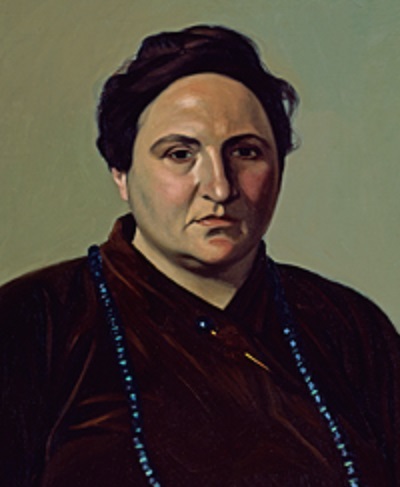
 

Translation by Thomas Kinsella

from The Baths at Hamat Gader

Aelia Eudocia
Greek
c. 401


I have seen many wonders in my life, countless,
But who, noble Clibanus, however many his mouths, could proclaim
Your might, when born a worthless mortal? But rather
It is right for you to be called a new fiery ocean,
Paean and parent, provider of sweet streams.
From you the thousandfold swell is born, one here, one there,
On this side boiling-hot, on that side in turn icy-cold and tepid.
Into fountains four-fold four you pour out your beauty.
Indian and Matrona, Repentius, holy Elijah,
Antoninus the Good, Dewy Galatia, and
Hygieia herself, warm baths both large and small,
Pearl, ancient Clibanus, Indian and other
Matrona, Strong, Nun, and the Patriarch’s.
For those in pain your powerful might is always everlasting.
But I will sing of a god, renowned for wisdom
For the benefit of speaking mortals.

A Mood in the Silence

07-24 Salaman
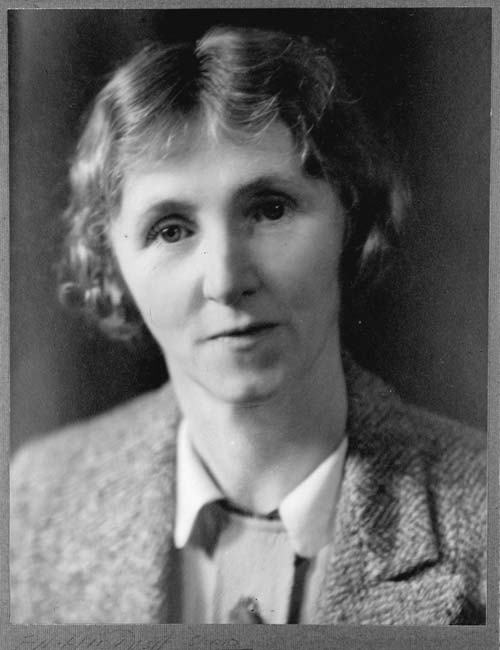
Nina Salaman
English
1877 – 1925


Let us be quiet now; let all the voice
Be of calm waters, while the silence singe,
Like a vast rumour of unheard-of things
That know not grief, nor dream how men rejoice.

The low hills love the silence; in the haze
They dream of what the sea is murmuring
In dim reverberance—some hidden thing
The sea learns from its heavenward endless gaze.

These things hold perfect knowledge: lo! The sea,
The hills all satisfied for ever; lo!
The full sun seeth, and the great winds know;
And these things are, while we but strive to be.

To Marco Venier

We present this work in honor of the 430th anniversary of the poet’s death.

07-22 Franco
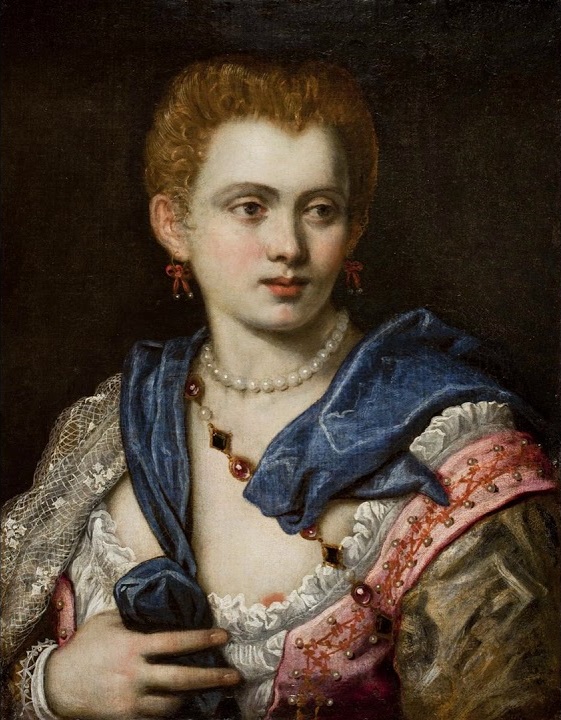
Veronica Franco
Italian
1546 – 1591


If I could be certain of your love,
from what your words and face display,
which often conceal a changing mind;
if external signs revealed what the mind
conceals within, so that a person
were not so often entrapped by deceit,
I would cast aside this fear, for which,
however I tried to protect myself,
I would be mocked as simple and unwise;
“to the same place one can take many roads,”

the proverb says; and it is never safe
to change one’s direction according to appearances.
Let no one stray from the beaten path
who is trying to find safe shelter
before the night comes to catch up with him.
The path of hope is not straightforward,
for more often than not, it leads astray
with lying words and false pretense;
the path of certainty is the right way,
which always leads to peaceful rest

and is safe on both sides and from. behind;
to this path I raise up my eyes’ thought
and, disappointed by words and charm,
I leave behind all their misleading lures.
May you find this an acceptable excuse,
may it acquit me of the charge that I believe
neither your gestures nor your words.
And if you truly love me, it grieves me very much
that you do not reveal yourself by deeds,
as a man who loves truly usually does:

I am sorry, on one hand, that you feel pain,
and on the other, that you frustrate me
in my desire to satisfy your true love.
Since I will not believe that I am loved,
nor should I believe it or reward you
for the pledge you have made me up to now,
win my approval, sir, with deeds:
prove yourself through them, if I, too,
am expected to prove my love with deeds;
but if instead you long for fictions,

as long as you persist in spinning out tales,
my welcome to you will be just as false;
and, when, fatigued and annoyed by fictions,
you show me your love in deeds,
I will assure you of mine in the same way.
I will show you my heart open in my breast,
once you no longer hide yours from me,
and my delight will be to please you;
and if you think I am so dear to Phoebus
for composing poems, in the works of love
you’ll find me dearer still to Venus.

Certain qualities concealed within me,
I will reveal to you, infinitely sweetly,
which prose or verse has never shown another,
on this condition: that you prove your love to me
by other means than compliments, for I
take care not to be fooled by them;
please me more with deeds and praise me less,
and where your courtesy overflows into praise,
distribute it in some other way.
Does what I say seem right to you,

or do you instead perhaps think I am wrong,
lacking experience to choose the right path?
Sir, being mocked is a most painful thing,
especially in love; and let whoever
does not believe this show his reason why.
I am ready to walk in step with you,
and I will love you beyond any doubt,
just as your merit requires I should.
If in your breast you have love’s burning fire
I’ll feel it by your side, for it will have

The power to set my heart aflame, too;
it’s not possible to escape its blows,
and whoever feels truly loved
is bound to love the lover in return;
but attempting to make white pass for black
is something that everybody dislikes,
even those whose judgment is weak.
So show me the fruits of your love for me,
for only foolish folk are deceived
by the lure of empty words.

Despite what I now answer you,
I’d not want you to think me greedy for gain,
for that vice is not concealed in my breast;
but I would like you to believe
that when I love, my courteous desires,
if not chaste, are decidedly chary;
and as soon as I have understood
that a man is brave and that he loves me,
I’ve returned his principal with interest.
But whoever, on this account, should decide

to try to fool me is himself a fool;
and anyone he asks could tell him so.
And what I now request from you
is not that you express your love
for me with silver or with gold;
for to make a deal with a gentleman
in order to extract a treasure from him
is most improper if one’s not entirely venal.
Such an act doesn’t suit my profession,
but I want to see, I say it clearly,

your love in deeds instead of words.
You know well what I most cherish:
behave in this as I’ve already told you,
and you’ll be my special, matchless lover.
My heart falls in love with virtues,
and you, who possess so many of them
that in you all the finest wisdom dwells,
don’t deny me your effort in such a great cause
let me see you longing in this way
to acquire a lover’s claim upon me;

be diligent and eager in this task
and in order to grant my wish,
do not be idle in your free time.
This will be no burden to you
for to your prowess any undertaking,
however difficult, comes with ease.
And if such a small task weighs you down,
think of how iron and stone fly aloft,
when set in motion by a burning flame;
whatever by nature tends to sink downward

through the fury of fire, more than any other force,
turns to rise from the center to the rim;
so love for me has no place within you
since it lacks the power to make you do
what even without love would be a small thing.
And do you then hope to make me love
as if you believed that with one single leap
I should suddenly fall in love with you?
I don’t glory in this or exalt myself;
but, to tell you the truth, you want to fly

without wings and rise too high all at once;
let your desire match your ability,
for you can easily reach a height
that others, with effort, cannot attain.
I long to have a real reason to love you
and I leave it up to you to decide,
so that you have no right to complain.
There’ll be no gap between merit and reward
if you’ll give me what, though in my opinion
it has great value, costs you not a thing;

your reward from me will be
not only to fly but to soar so high
that your hope will match your desires.
And my beauty, such as it is,
which you never tire of praising,
I’ll then employ for your contentment;
sweetly lying at your left side,
I will make you taste the delights of love
when they have been expertly learned;
And doing this, I could give you such pleasure

that you could say you were fully content,
and at once fall more deeply in love.
So sweet and delicious do I become,
when I am in bed with a man
who, I sense, loves and enjoys me,
that the pleasure I bring excels all delight,
so the knot of love, however tight
it seemed before, is tied tighter still.
Phoebus, who serves the goddess of love,
and obtains from her as a sweet reward

what blesses him far more than being a god,
comes from her to reveal to my mind
the positions that Venus assumes with him
when she holds him in sweet embraces;
so that I, well taught in such matters,
know how to perform so well in bed
that this art exceeds Apollo’s by far,
and my singing and writing are both forgotten
by the man who experiences me in this way,
which Venus reveals to people who serve her.

If your soul is vanquished by love for me,
arrange to have me in far sweeter fashion
than anything my pen can declare.
Your valor is the steadfast knot
that can pull me to your lap,
joined to you more tightly than a nail in hard wood;
your skill can make you master of my life,
for which you show so much love
that skill that miraculously stands out in you.
Let me see the works I’ve asked for from you,

for then you’ll enjoy my sweetness to the full;
and I will also take pleasure in yours,
in the way that mutual love allows,
which provides delight free from all pain.
I yearn and long to have a good reason
to love you: decide what you think best,
for every outcome depends on your will.

I have no more to say; go in peace.


Translation by Ann Rosalind Jones and Margaret F. Rosenthal

Fallen

07-19 Cambridge
Ada Cambridge
Australian
1844 – 1926


For want of bread to eat and clothes to wear —
Because work failed and streets were deep in snow,
And this meant food and fire — she fell so low,
Sinning for dear life’s sake, in sheer despair.
Or, because life was else so bald and bare,
The natural woman in her craved to know
The warmth of passion — as pale buds to blow
And feel the noonday sun and fertile air.

And who condemns? She who, for vulgar gain
And in cold blood, and not for love or need,
Has sold her body to more vile disgrace —
The prosperous matron, with her comely face —
Wife by the law, but prostitute in deed,
In whose gross wedlock womanhood is slain.

The Head-Ach or An Ode to Health

07-10 Cave
Jane Cave
Welsh
1754 – 1812


O Health! thou dear invaluable guest!
Thy rosy subjects, how supremely blest!
Hear the blith milk-maid and the plough-boy sing,
Nor envy they the station of a king;
While Kings thy sweets to gain would gladly bow,
Resign their crowns and guide the rustic’s plough:
Thou pearl surpassing riches, power or birth!
Of blessings thou the greatest known on earth!
Thy value’s found like that of bards of yore,
We know to prize thee when thou art no more!
Ah! Why from me; art thou for ever flown?
Why deaf to ev’ry agonizing groan?
Not one short month for ten revolving years,
But pain within my frame its sceptre rears!
In each successive month full twelve long days
And tedious nights my sun withdraws his rays!
Leaves me in silent anguish on my bed,
Afflicting all the members in the head;
Through ev’ry particle the torture flies,
But centers in the temples, brain and eyes;
The efforts of the hands and feet are vain,
While bows the head with agonizing pain;
While heaves the breast th’ unutterable sigh,
And the big tear drops from the languid eye.
For ah! my children want a mother’s care,
A husband too, should due assistance share;
Myself for action form’d would fain thro’ life
Be found th’ assiduous–valuable wife;
But now, behold, I live unfit for aught;
Inactive half my days except in thought,
And this so vague while torture clogs my hours,
I sigh, Oh, ‘twill derange my mental powers!
Or by its dire excess dissolve my sight,
And thus entomb me in perptual night!
Ye sage Physicians, where’s your wonted skill?
In vain the blisters, bolusses and pill;
Great Neptune’s swelling waves in vain I try’d,
My malady its utmost power defy’d;
In vain the British and Cephalic Snuff,
All Patent Medicines are empty stuff;
The launcet, leech, and cupping swell the train
Of useless efforts, which but gave me pain;
Each art and application rain has prov’d,
For ah! my sad complaint is not remo’v’d.
Live’s one on earth possess’d of sympathy,
Who knows what is presum’d a remedy?
O send it hither! I again would try,
Tho’ in the attempt of conqu’ring I die.
For thus to languish on is worse than death,
And I have hope if Heav’n recall my breath.

At the End

07-03 Duggan
Eileen Duggan
Kiwi
1894 – 1972


Once on a dewy morning
With the blue sky blowing apart,
Each bud broke on my eyelids,
Each bird flew through my heart.

I prayed for the faith of a starling
Under the tawny trees,
child or a holy woman,
What could be greater than these?

But now on a heavy morning
With the dull sky blowing apart,
When no flower blesses my eyelids,
And no wing brushes my heart,

I, made surer by sorrow,
Beg what seems more to me,
The faith of a willow in winter,
Or a blind hound nosing the knee.