We present this work in honor of Women’s Day.

Arab Andalusian
? – 1009
I am a lioness
and will never allow my body
to be anyone’s resting place. But if I did,
I wouldn’t yield to a dog ─
and O! the lions I’ve turned away!
We present this work in honor of Women’s Day.
I am a lioness
and will never allow my body
to be anyone’s resting place. But if I did,
I wouldn’t yield to a dog ─
and O! the lions I’ve turned away!
We present this work in honor of the 50th anniversary of the poet’s death.

The nearly right
And yet not quite
In love is wholly evil
And every heart
That loves in part
Is mortgaged to the devil
I loved or thought
I loved in sort
Was this to love akin?
To take the best
And leave the rest
And let the devil in?
O lovers true
And others too
Whose best is only better
Take my advice
Shun compromise
Forget him and forget her
We present this work in honor of the poet’s 215th birthday.
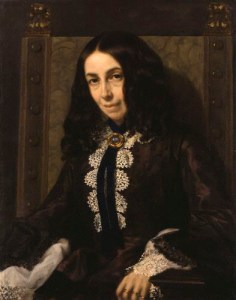
If thou must love me, let it be for nought
Except for love’s sake only. Do not say
‘I love her for her smile—her look—her way
Of speaking gently,—for a trick of thought
That falls in well with mine, and certes brought
A sense of pleasant ease on such a day’—
For these things in themselves, Beloved, may
Be changed, or change for thee,—and love, so wrought,
May be unwrought so. Neither love me for
Thine own dear pity’s wiping my cheeks dry,—
A creature might forget to weep, who bore
Thy comfort long, and lose thy love thereby!
But love me for love’s sake, that evermore
Thou mayst love on, through love’s eternity.
We present this work in honor of the 55th anniversary of the poet’s death.
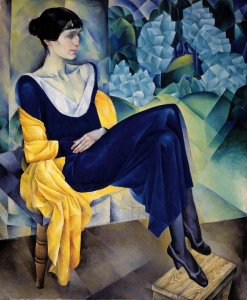
You will hear thunder and remember me,
And think: she wanted storms. The rim
Of the sky will be the colour of hard crimson,
And your heart, as it was then, will be on fire.
That day in Moscow, it will all come true,
when, for the last time, I take my leave,
And hasten to the heights that I have longed for,
Leaving my shadow still to be with you.

I live on this depraved and lonely cliff
like a sad bird abhorring a green tree
or splashing water. I move forcefully
away from those I love, and I am stiff
even before myself so that my thoughts
may rise and fly to him: sun I adore
and worship. Though their wings could hurry more,
they race only to him. The forest rots
until the instant when they reach that place.
Then deep in ecstasy, though quick, they feel
a joy beyond all earthly joy. I reel,
and yet if they could recreate his face
as my mind craving and consuming would,
then here perhaps I’d own the perfect good.
We present this work in honor of the poet’s 95th birthday.
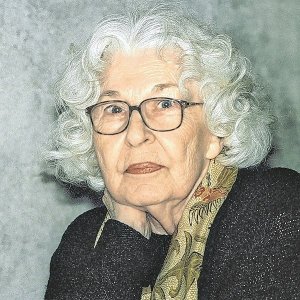
Someone is silent
and you think he is speaking
and you answer
and speak well
and reveal yourself
layer by layer that you cannot
give you who is speaking
and it gets cold and colder
someone is silent
and you wait
for the silence
to all ends
and further
and the word does not carry
and you do not know
where the light is
the light and dark
someone is walking
and you think
he is walking well
and you follow him
and keep up with him
and do not go mad
someone is walking
and you think he is walking softly
on soft soles
and you pluck the softness
and leave the hard
and the ice crunches
and you say I can’t hear it
Beside the parson’s dusky bow’r
Why strays a troubl’d sprite,
That dimly shines in lonely hour
Thro’ curtains of the night?
Why steals along yon slimy bank
An hov’ring fire so blue,
That lights a spot both drear and dank,
Where falls nor rain nor dew?
The parson once a daughter had,
Fair village maids above;
Unstain’d as fair—and many a lad
Had sought the maiden’s love.
High o’er the hamlet proudly dight
Beyond the winding stream,
The windows of yon mansion bright
Shone in the evening beam.
A Bacchanalian lord dwelt there,
Unworthy of his name;
He plung’d a father in despair,
And robb’d a maiden’s fame.
With wine and tapers sparkling round,
The night flew swift away;
In huntsman’s dress, with horn and hound,
He met the dawning day.
He sent the maid his picture, deck’d
With diamonds, pearls, and gold;
Ah! silly maid, why not reject
What on the back was told?
‘Despise the love of shepherd boys;
Shalt thou be basely woo’d
That worthy art of highest joys,
And youths of noble blood?
‘The tale I would to thee unfold
In secret must be said;
And when the midnight hour is told,
Fair love, be not afraid.
‘And when the am’rous nightingale
Like thee shall sweetly sing,
A stone thy window shall assail,
My idol forth to bring.’
Attired in vest of gayest blue,
He came with lonely tread,
And silent as the beams that threw
Their pale light o’er her head.
And did no thought affect his breast,
Or bid his feet delay?
Ah! no! the crime but adds a zest
To spur his guilty way.
And when the sweet-pip’d nightingale
Sang from the dusky bow’r,
A stone her window did assail
Just at the midnight hour.
And ah! she came;—his treacherous arms
The trembling maid receive;
How soon do they in lover’s charms
A lover’s truth believe!
Lock’d in his arms, she scarcely strove,
Seduc’d by young desire,
The glowing twin brother of Love,
Possess’d with wilder fire.
Still struggling, faint, he led her on
Tow’rd the fatal bow’r,
So still—so dim—while all along
Sweet smelt each blushing flow’r.
Then beat her heart—and heav’d her breast—
And pleaded ev’ry sense;
Remorseless the seducer prest,
To blast her innocence.
But soon in tears repentant drown’d,
The drooping fair bemoan’d,
And oft, when night in terror frown’d,
Forlorn and sad she roam’d.
And when the fragrile flow’rs decay’d,
The bloom her cheeks forsook,
And from her eyes no longer play’d
The loves with wily look.
And when the leaves of autumn fell,
And grey the grass was grown,
Her bosom rose with lovely swell,
And tighter grew her zone.
And when the mow’rs went a field
The yellow corn to ted,
She felt her sorrowing bosom yield
To all a mother’s dread.
And when the winds of winter swept
The stubborn glebe among,
In wild despair and fear she wept
The lingering night along.
And when the fault of yielding love
No more could be conceal’d,
She knelt, her father’s soul to move,
And, weeping, all reveal’d.
But vain her tears; the ruthless sire
In piteous voice revil’d,
And while his eye-balls flash’d with fire,
He spurn’d his hapless child:
Spurn’d her with cruelty severe,
And smote her snowy breast;
The patient blood, that gush’d so clear,
Its purity confess’d.
Such are the dang’rous thorns of love,
That strew the virgin’s way,
While faithless as its roses prove,
‘Tis they that first decay.
Then drove her forth forlorn to wail
Amid the dreary wild,
Forgets that mortals all are frail,
But more—forgets his child!
Unhappy parent!—passion’s slave!
Had nature been thy guide,
Thy child, now sunk in hasten’d grave,
Might still have been thy pride.
Up the harsh rock so steep and slim’d,
The mourner had to roam,
And faint on tott’ring feet she clim’d
To seek her lover’s home.
‘Alas! my blood-stain’d bosom see,
The drooping sufferer cried;
‘A mother hast thou made of me,
Before thou mad’st a bride .
‘This is thy ruthless deed—behold!’
And sinking on the floor;
‘Oh! let thy love with honour hold,
My injur’d name restore.’
‘Poor maid! I grieve to see thy woe;
My folly now lament:
Go not while harsh the tempests blow,
Thy father shall repent.’
‘I cannot stay,’ she shudd’ring cried,
‘While dubious hangs my fame.
Alas! forswear thy cruel pride,
And leave me not to shame.
‘Make me thy wife, I’ll love thee true;
High Heaven approves the deed:
For mercy’s sake some pity shew,
E’en while for thee I bleed!’
‘Sure ‘tis thy mirth, or dost thou rave?
‘Can I,’ he scoffing cried,
‘Thy forfeit name from scorn to save,
E’er wed a peasant maid?
‘What honour bids I’ll do for thee—
My huntsman shall be thine;
While still our loves, voluptuous free,
No shackles shall confine.’
‘Damn’d be thy soul, and sad thy life,
May pangs in hell await!
Wretch! if too humble for thy wife,
Oh, why not for thy mate?
‘May God attend, my bitter prayer!
Some high-born spouse be thine,
Whose wanton arts shall mock thy care,
And spurious be thy line.
‘Then traitor fell, how wretched those
In hopeless shame immers’d,
Strike thy hard breast with vengeful blows,
While curses from it burst!
‘Roll thy dry eyes, for mercy call,
Unsooth’d thy grinning woe;
Through thy pale temples fire the ball,
And sink to fiends below!’
Then starting up, she wildly flew,
Nor heard the hissing sleet,
Nor knew how keen the tempest blew,
Nor felt her bleeding feet.
‘Oh where, my God! where shall I roam?
For shelter where shall fly?’
She cried, as wild she sought the home
Where still she wish’d to die.
Tow’rd the bow’r, in frenzied woe,
The fainting wand’rer drew,
Where wither’d leaves and driving snow
Made haste her bed to strew:
E’en to that bower, where first undone,
Now yields its bed forlorn,
And now beholds a cherub son
In grief and terror born.
‘Ah, lovely babe!’ she cried, ‘we part
Ne’er, ne’er to meet again!’
Then frantic pierc’d its tender heart—
The new-born life is slain.
Swift horror seiz’d her shudd’ring soul—
‘My God, behold my crime!
Let thy avenging thunders roll,
And crush me in my prime!’
With blood-stain’d hands the bank beside
Its shallow grave she tore.
‘There rest in God,’ she wildly cried,
‘Where guilt can stab no more.’
Then the red knife, with blood imbru’d,
Of innocence, she press’d;
Its fatal point convulsive view’d,
And sheath’d it in her breast.
Beside her infant’s lonely tomb
Her mould’ring form is laid,
Where never flow’r is seen to bloom
Beneath the deadly shade.
Where falls nor rain nor heavenly dew,
Where sun-beam never shines,
Where steals along the fire so blue,
And hov’ring spectre pines.
There, too, its blood-stain’d hand to wave,
Her mournful ghost is seen,
Or dimly o’er her infant’s grave,
Three spans in length, to lean.
We present this work in honor of the 15th anniversary of the poet’s death.

Press yourself close
to the ground.
The earth
still smells of summer
and your body
still smells of love.
But the grass
is already yellowed above you.
The wind is cold
and full of thistledown.
And the dream which waylays you
shadow-footed
your dream
has autumn eyes.

Morning flew by in the usual way,
Up and down streets, it raced,
Unwinding the spring of an ongoing watch
That the night would wind up again.
A coat was fastened over the chest
With a clasp and a little chain,
Then a voice from the gut: “tayer yiddish kind,
Give to a beggar, Jewish daughter.”
From under her rags she studies me
With a tender, cunning old face,
A sentinel’s eye and a hookish nose,
And a black wig, parted smooth.
An ancient, yellowish hand
Grabs my sleeve, and the words
Of a language I don’t comprehend
Sound out, seizing my heart.
And there I stop, I cannot go on,
Though I know—I shouldn’t, I shouldn’t,
And drop a small coin in her open palm
And lift a thirsty heart to her face.
“Old woman, how did you, half-blind,
Pick me out among these strangers?
After all, I’m like them, the same as those—
Dull, alien, strange.”
“Daughter, dear, there are things about us
That no one can mistake.
Our girls have the saddest eyes,
And a slow languorous walk.
And they don’t laugh like the others—
Openly in their simplicity—
But beam behind clouds as the moon does,
Their sadness alive in their smiles.
Even if you lose your faith and kin,
A yid iz immer a yid!
And thus my blood sings in your veins,”
She says in her alien tongue.
That morning flew by in the usual way,
Up and down streets, it raced,
Unwinding the spring of an ongoing watch
That the night would wind up again.
We present this work in honor of the poet’s 400th birthday.

If love is chaste, what bears adultery?
If love is good, and does no evil own,
How can its fire so many flames propone?
If love is joy, why’s it called cruelty?
Who love adores, sails on a lustful sea,
And lets himself into death’s net be sewn,
Which does not tear; he lives for sin alone,
Is stripped of virtue, worships vanity.
For life eternal totally he dies,
And sees his grief but when his grave he spies.
Whoever has been found in loving’s fit,
Let him hate love and flee it in all haste.
Does love taste sweet? Let him despise its taste.
Is love his bread? Let him feed dogs with it.
 Poets Corner