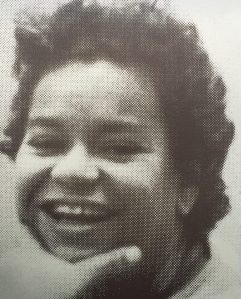
The Bride of Lazarus

Dulce Maria Loynaz
Cuban
1902 – 1997

You come to me at last, just as you were, with your ancient emotion and your unspoiled rose, Lazarus the straggler, a stranger to the fire of hope, forgetting disintegration even as it burned to dust, ashes, nothing more.

You return to me, in one piece and not even out of breath, with your great dream immune to the cold of the tomb, when already Martha and Mary, weary of waiting for miracles and plucking the leaves of twilight, have slowly descended the slope of all the Bethanies in silence.

You come, relying on no more hope than your own hope, no more miracle than your own miracle. Impatient and sure of finding me still yoked to the last kiss.

You come all flowers and new moon, quick to wrap me in your pent-up tides, in your stormy clouds, in your confused fragrances which I begin to recognize one by one.

You come still yourself, safe from time and distance, safe from silence, and bring me like a wedding gift the already-savored secret of death.

But here I am, a bride again, not knowing whether I rejoice or weep at your return, over the terrifying gift you give me, even over the joy which strikes me like a blow. I don’t know whether it is late or early to be glad. Truly, I don’t know; I no longer remember the color of your eyes.
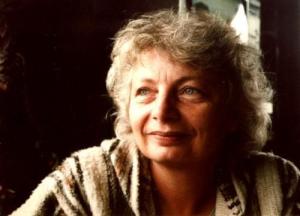
Translation by Judith Kerman

On a Crimson Leaf

We present this work in honor of the poet’s 75th birthday.

Diana Bellessi
Argentine
b. 1946


Infinite mirror the waters of the night.
I listen to the call
of the first siriri-duck
migrating from the south.
Lilies in the still air intoxicate.
A crimson
leaf has fallen and floats on the river.
Might it be the one
that ha T’sui-p-‘in, prisoner in the women’s quarters,
wrote her poem on?
Sent forth to risk the river
in hopes someone in the world of men
may take it from the water.

One Art

We present this work in honor of the poet’s 110th birthday.

Elizabeth Bishop
American
1911 – 1979

The art of losing isn’t hard to master;
so many things seem filled with the intent
to be lost that their loss is no disaster,

Lose something every day. Accept the fluster
of lost door keys, the hour badly spent.
The art of losing isn’t hard to master.

Then practice losing farther, losing faster:
places, and names, and where it was you meant
to travel. None of these will bring disaster.

I lost my mother’s watch. And look! my last, or
next-to-last, of three loved houses went.
The art of losing isn’t hard to master.

I lost two cities, lovely ones. And, vaster,
some realms I owned, two rivers, a continent.
I miss them, but it wasn’t a disaster.

– Even losing you (the joking voice, a gesture
I love) I shan’t have lied. It’s evident
the art of losing’s not too hard to master
though it may look like (Write it!) like disaster.

The Final Poem

We present this work in honor of the 10th anniversary of the poet’s death.

Andree Chedid
Egyptian
1920 – 2011

A forge burns in my heart.
I am redder than dawn,
Deeper than seaweed,
More distant than gulls,
More hollow than wells.
But I only give birth
To seeds and to shells.

My tongue becomes tangled in words:
I no longer speak white,
Nor utter black,
Nor whisper gray of a wind-worn cliff,
Barely do I glimpse a swallow,
A shadow’s brief glimmer,
Or guess at an iris.

Where are the words,
The undying fire,
The final poem?
The source of life?

The Poet at Court

We present this work in honor of the 125th anniversary of the poet’s death.

Lady Jane Wilde
Irish
1821 – 1896


He stands alone in the lordly hall
He, with the high, pale brow;
But never a one at the festival
Was half so great, I trow.
They kiss the hand, and they bend the knee,
Slaves to an earthly king!
But the heir of a loftier dynasty
May scorn that courtly ring.

They press, with false and flattering words,
Around the blood‐bought throne;
But the homage never yet won by swords
Is his—the Anointed One!
His sway over every nation
Extendeth from zone to zone;
He reigns as a god o’er creation
The universe is his own.

No star on his breast is beaming,
But the light of his flashing eye
Reveals, in its haughtier gleaming,
The conscious majesty.
For the Poet’s crown is the godlike brow
Away with that golden thing!
Your fealty was never yet due till now

Kneel to the God‐made King!

Mother Doesn’t Want a Dog

We present this work in honor of the poet’s 90th birthday.

Judith Viorst
American
b. 1931


Mother doesn’t want a dog.
Mother says they smell,
And never sit when you say sit,
Or even when you yell.
And when you come home late at night
And there is ice and snow,
You have to go back out because
The dumb dog has to go.

Mother doesn’t want a dog.
Mother says they shed,
And always let the strangers in
And bark at friends instead,
And do disgraceful things on rugs,
And track mud on the floor,
And flop upon your bed at night
And snore their doggy snore.

Mother doesn’t want a dog.
She’s making a mistake.
Because, more than a dog, I think
She will not want this snake.

Conversation at the Bridgeport Train Station With an Old Man Who Speaks Spanish

We present this work in honor of the 40th anniversary of the poet’s death.

Lourdes Casal
Cuban
1938 – 1981

(for Salvador Ocasio)

Torn coat
dusty shoes
thin white hair
Strange gentleman’s stance
I think: This old man has a Unamuno head.
Trenches rather than furrows
line his olive face.
He speaks haltingly.
Moves his hands slowly.
Sixteen years, he says,
Bridgeport and sixteen years of his life.
Sixteen years without sun
for these colourless trousers
and this bitter weariness
that give his smile a steel hue.

Translation by Margaret Randall

Since I Am Corruptly Fallen

Ann Griffiths
Welsh
1776 – 1805

Since I am corruptly fallen,
Straying from you constantly,
To ascend your sacred mountain
Is the right of rights for me.
There on high your veils are riven,
Every cover nullified,
There above all worldly nothings
Is your glory magnified.

Oh to drink on high forever
Where redemption’s waters flow,
Drink until I thirst no longer
For the fading world below,
Live in wait for my Lord’s coming,
Wakeful for the coming night
When I swiftly open to him
In his image, in his sight.

Translation by A.Z. Foreman