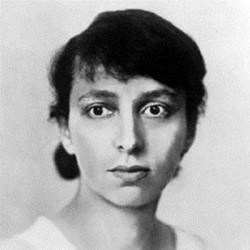
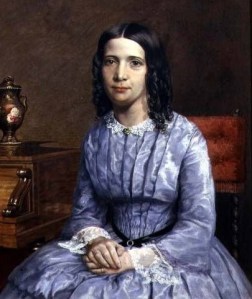
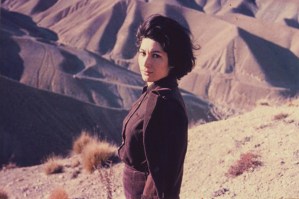
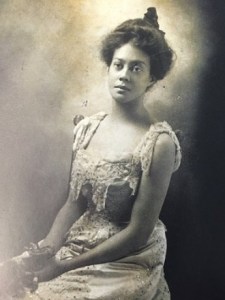
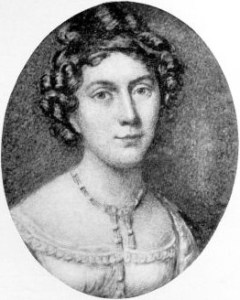
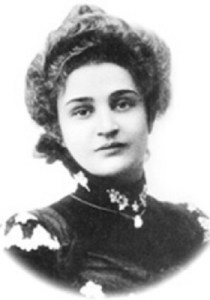
We present this work in honor of the poet’s 125th birthday.
Gertrud Kolmar German 1894 – 1943
I am in the darkness and alone.
In front of me stands the door.
When I open it, I am bathed in light.
There are a father, a mother and sister,
A dog, which, dumb, still barks in friendliness.
How can I lie, and how can I say
That I, hidden there in darkness, have not come to harm them?
I drag myself over the threshold.
Snow blossoms in my eyes.
I saw him bowing to me courteously;
How much that hurt me.
How could my heart find peace,
When round it raced the voice of the old man?
I live in coldness.
I dried my tears and went
To where the man was eating with his family.
It was so calm and loving a reception.
I felt the violins sounding inside me
At first, so sweetly, so gently.
They will never sound again, when I have finished.
Fear drenched my hands.
Beneath me I could almost taste my womb.
A sneer seemed to say: ‘Have you no shame?
What have you done with the wedding-ring on your finger?
Terrible thief, where did you hide your courage?
Does the nakedness of my right hand mean so little to me?’
I felt so poor and naked.
I wriggled in my chair
And trembled to think what I must do.
Pity clawed at my heart and shook my body
Like a tree in a winter field blown by the wind
Shedding leaves.
I told myself it was time to go,
Scolding my wan, faded self for my little worries.
Pleased with myself again, I steeled myself for the torture.
The joy of it! Oh, how I want to be
Just like an animal and be happy again!
I sharpen my claws with a knife.
It is still night, and that thing called shame,
I may not let it show itself.
I know the train that tears through the woods.
I go out to the unfeeling rails.
Weary, I am glad to go to bed,
Running across two flat sticks of iron.
How do I love thee? Let me count the ways.
I love thee to the depth and breadth and height
My soul can reach, when feeling out of sight
For the ends of Being and ideal Grace.
I love thee to the level of every day’s
Most quiet need, by sun and candlelight.
I love thee freely, as men strive for Right;
I love thee purely, as they turn from Praise.
I love with a passion put to use
In my old griefs, and with my childhood’s faith.
I love thee with a love I seemed to lose
With my lost saints, — I love thee with the breath,
Smiles, tears, of all my life! — and, if God choose,
I shall but love thee better after death.
They were coming across the prairie, they were galloping hard and fast;
For the eyes of those desperate riders had sighted their man at last—
Sighted him off to Eastward, where the Cree encampment lay,
Where the cotton woods fringed the river, miles and miles away.
Mistake him? Never! Mistake him? the famous Eagle Chief!
That terror to all the settlers, that desperate Cattle Thief—
That monstrous, fearless Indian, who lorded it over the plain,
Who thieved and raided, and scouted, who rode like a hurricane!
But they’ve tracked him across the prairie; they’ve followed him hard and fast;
For those desperate English settlers have sighted their man at last.
Up they wheeled to the tepees, all their British blood aflame,
Bent on bullets and bloodshed, bent on bringing down their game;
But they searched in vain for the Cattle Thief: that lion had left his lair,
And they cursed like a troop of demons—for the women alone were there.
“The sneaking Indian coward,” they hissed; “he hides while yet he can;
He’ll come in the night for cattle, but he’s scared to face a man.”
“Never!” and up from the cotton woods rang the voice of Eagle Chief;
And right out into the open stepped, unarmed, the Cattle Thief.
Was that the game they had coveted? Scarce fifty years had rolled
Over that fleshless, hungry frame, starved to the bone and old;
Over that wrinkled, tawny skin, unfed by the warmth of blood.
Over those hungry, hollow eyes that glared for the sight of food.
He turned, like a hunted lion: “I know not fear,” said he;
And the words outleapt from his shrunken lips in the language of the Cree.
“I’ll fight you, white-skins, one by one, till I kill you all,” he said;
But the threat was scarcely uttered, ere a dozen balls of lead
Whizzed through the air about him like a shower of metal rain,
And the gaunt old Indian Cattle Thief dropped dead on the open plain.
And that band of cursing settlers gave one triumphant yell,
And rushed like a pack of demons on the body that writhed and fell.
“Cut the fiend up into inches, throw his carcass on the plain;
Let the wolves eat the cursed Indian, he’d have treated us the same.”
A dozen hands responded, a dozen knives gleamed high,
But the first stroke was arrested by a woman’s strange, wild cry.
And out into the open, with a courage past belief,
She dashed, and spread her blanket o’er the corpse of the Cattle Thief;
And the words outleapt from her shrunken lips in the language of the Cree,
“If you mean to touch that body, you must cut your way through me.”
And that band of cursing settlers dropped backward one by one,
For they knew that an Indian woman roused, was a woman to let alone.
And then she raved in a frenzy that they scarcely understood,
Raved of the wrongs she had suffered since her earliest babyhood:
“Stand back, stand back, you white-skins, touch that dead man to your shame;
You have stolen my father’s spirit, but his body I only claim.
You have killed him, but you shall not dare to touch him now he’s dead.
You have cursed, and called him a Cattle Thief, though you robbed him first of bread—
Robbed him and robbed my people—look there, at that shrunken face,
Starved with a hollow hunger, we owe to you and your race.
What have you left to us of land, what have you left of game,
What have you brought but evil, and curses since you came?
How have you paid us for our game? how paid us for our land?
By a book, to save our souls from the sins you brought in your other hand.
Go back with your new religion, we never have understood
Your robbing an Indian’s body, and mocking his soul with food.
Go back with your new religion, and find—if find you can—
The honest man you have ever made from out a starving man.
You say your cattle are not ours, your meat is not our meat;
When you pay for the land you live in, we’ll pay for the meat we eat.
Give back our land and our country, give back our herds of game;
Give back the furs and the forests that were ours before you came;
Give back the peace and the plenty. Then come with your new belief,
And blame, if you dare, the hunger that drove him to be a thief.”
O white little lights at Carney’s Point,
You shine so clear o’er the Delaware;
When the moon rides high in the silver sky,
Then you gleam, white gems on the Delaware.
Diamond circlet on a full white throat,
You laugh your rays on a questioning boat;
Is it peace you dream in your flashing gleam,
O’er the quiet flow of the Delaware?
And the lights grew dim at the water’s brim,
For the smoke of the mills shredded slow between;
And the smoke was red, as is new bloodshed,
And the lights went lurid ‘neath the livid screen.
O red little lights at Carney’s Point,
You glower so grim o’er the Delaware;
When the moon hides low sombrous clouds below,
Then you glow like coals o’er the Delaware.
Blood red rubies on a throat of fire,
You flash through the dusk of a funeral pyre;
And there hearth fires red whom you fear and dread
O’er the turgid flow of the Delaware?
And the lights gleamed gold o’er the river cold,
For the murk of the furnace shed a copper veil;
And the veil was grim at the great cloud’s brim,
And the lights went molten, now hot, now pale.
O gold little lights at Carney’s Point,
You gleam so proud o’er the Delaware;
When the moon grows wan in the eastering dawn,
Then you sparkle gold points o’er the Delaware.
Aureate filagree on a Croesus’ brow,
You hasten the dawn on a gray ship’s prow.
Light you streams of gold in the grim ship’s hold
O’er the sullen flow of the Delaware?
And the lights went gray in the ash of day,
For a quiet Aurora brought a halcyon balm;
And the sun laughed high in the infinite sky,
And the lights were forgot in the sweet, sane calm.
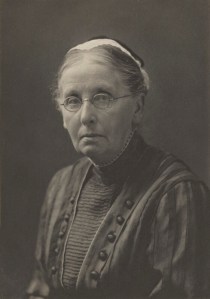
We present this work in honor of the 225th anniversary of the poet’s death.
Alison Cockburn Scots 1712 – 1794
If your lass is coquettish and frisky,
Make up to her easy and briskly;
If she frown on ye, turn on your heel,
Make love to another, your heart to recover;
You’ll quickly discover she would keep you her lover,
Tho’ her heart be as hard as the steel.
She will try all her tricks to entice ye,
Sometimes sweet, sometimes sour, sometimes spicy;
Affect all these humours yourself,
See that ye vex her, be sure to perplex her,
Provoke her and coax her, roast her and toast her,
She’s as sure in your pouch as your pelf.
If your lassie is modest and shy,
Watch every cast of her eye;
If she blushes, she’s halflings your own;
Approach by degrees, her hand ye may seize,
And give it a squeeze, then down on your knees,
And prefer her to kings, or their crown.
If she answer you no way but flying,
Depend on’t she will be complying,
So follow as fast as you can.
But if coolly she stay, I’m afraid she’ll say nay,
Pray pack up your heart and be gone,
For ye may leave her to some other man.
Through jewelled windows in the walls
The tender daylight smiles;
Majestic music swells and falls
Adown the stately aisles;
Shadows of carven roof and rood,
Of stony saints and angels, brood
Above the altar-glow;
They cannot dim the shining face
Of one conspicuous in his place
Amid the forms below.
He that was once my little boy,
With merry voice and look,
My babe, that quarrelled with his toy
And tore his hated book;
But yesterday a laughing lad,
In his dear worldly garments clad,
Talking of college wins,
Wickets, and bumping boats, and goals,
And not of shepherd and lost souls –
His sermons and their sins.
The same, he kneels there, pale and awed,
In cloud of prayer and hymn,
And we are to behold our Lord
Made manifest in him;
To sit, his pupils, and be taught,
Who knows not what the years have brought
To mothers and to men;
To take him for our heaven-sent guide
On seas he never voyaged – wide
And wild beyond his ken.
With all the lore of schools, and none
Of stern and suffering life,
A child with wooden sword and gun,
Unarmed for vital strife;
His mind a bud of spring, unblown,
Its flowering shape as yet unknown,
Its fruit awaiting birth –
A seedling of a thousand strains,
A parasite of dead men’s brains,
Though sprung from living earth.
There, in his proud belief, he stands,
This simple boy of mine,
Transformed by necromantic hands
To something half divine –
All in a moment, in a breath,
An oracle of life and death,
A judge above us all!
What spell is this that has him fast,
When age of miracle is past,
And past beyond recall?
O knight of dreams, in fairy mail!
If for his sake I pray,
It is that fairy arms may fail
And tough steel win the day –
Aye, though his dear heart take the thrust,
And he be trampled in the dust.
But mother fears forbode
(May God have mercy and forefend!)
A tamer journey and an end
Upon an easier road.
A long fulfilling of the vow
Within the vow he spake –
To close the gates of knowledge now,
And no more dare to take
The broad highways of marching thought
By his unfettered brothers sought,
Who follow every clue
On every line, where’er it leads,
Heedless of heresies or creeds,
To find the Right and True.
The mother-love, so apt for woe,
Visions the joyless track
Where the belovèd feet may go
And nevermore come back;
The boy become a thinking man,
That has outgrown the changeless plan
Once fitted to his shape;
The traveller, confident, serene,
Caught in an ambush unforeseen,
Whence there is no escape.
Struggling a little – overborne –
Perplexed – persuaded – spent
With dim self-pity and self-scorn
Supine in discontent.
No – no escape, by any arts,
Save through a score of bleeding hearts –
A stair too steep to climb;
Wherefore be wise and hide the chains,
Drug conscience, with its pangs and pains.
Give peace, Lord, in our time!
O waste of precious force and fire!
The sacred passion pales.
The soaring pinions droop and tire.
Our standard-bearer fails
To keep his battle-flag aloft;
The strong young arm is slack and soft;
The eager feet are slow;
The shining mail is dulled with rust
Of contact with mediaeval dust,
And will not bear a blow.
And under harness so decayed,
What ravage unrevealed?
What moral textures soiled and frayed
And moral sores unhealed?
He must not know that dares not tell.
Hush! It is nothing. All is well.
Peace in our time, O Lord!
And leave the fighting for the heirs.
The blood of sacrifice be theirs
Who cannot shirk the sword.
O boy of mine, that played the game,
And never learned to cheat,
Nor knew such word or thought as shame
In victory or defeat!
Will he be found, when he grows old,
Passing off spurious coin for gold,
Selling dry husks for grain –
The pottage of the Esau’s bowl
That bought the birthright of a soul
His all-sufficient gain?
The image and the robes of what
He seems to serve and seek
But veils – although he knows it not –
On Mammon’s brazen cheek;
His bishop’s smile, his patron’s nod,
The homage of his flock, his god;
His sensuous worship drest
In forms and colours rich and rare –
The spirit’s sanctuary bare –
Heart emptily at rest . . . . . .
Let organ music swell and peal,
And priests and people pray;
Let those who can at altar kneel –
I have no heart to stay.
I cannot bear to see it done –
The hands whose work has scarce begun
Locked in these gyves of lead –
The living spirit gagged and bound,
And tethered to one plot of ground –
A prisoner of the dead.
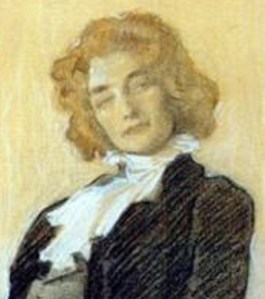
We present this work in honor of the poet’s 150th birthday.
Mirra Lokhvitskaya Russian 1869 – 1905
I love you as the sea loves the sunrise,
As Narcissus loves the glimmer and the coldness of dreamy waters.
I love you as the stars love the crescent moon,
As the poem loves its creator inspired by fancy.
I love you like the flame that attracts the moth to its Death, from exhaustive love and haunted by melancholy.
I love you as the rushes love the eager wind.
I love you with all my will, and all the strings of my soul.
I love you as I love enchanting dreams,
More than the sun itself, more than the happiness itself, more than life or the joy of spring.