The Well

We present this work in honor of Durga Puja.

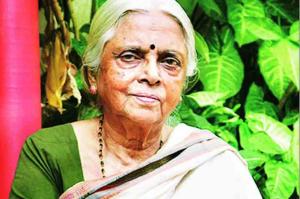
Padma Sachdev
Indian
b. 1940


To the right
of our hill
there’s a shining well
full of water.
Last year
summer covered it
with green mango blossom.
The green tempted
a calf,
which fell in
and drowned.
Since then
people have stopped
drinking from that well.
Now, like a thief,
I bathe in it
at night.
I cup my hands
and drink from it
at night.
But the water
doesn’t quench
my thirst, my desire.
In the dark depths
of the well
there are shadows
still waiting for
the girls
who’d slung a rope
on its hook
but never came back
to draw water.
The well’s darkness
is waiting
for the moment
when I’ll have
the courage
to stretch out my hands
and drink its water
in broad daylight.

When the Day Empties Itself

In honor of Rosh Hashanah, we present this work by one of the 20th century’s great Jewish poets.

Nellie Sachs
German
1891 – 1970


When the day empties itself
In the twilight,
When the imageless time begins,
The lonely voices join together—
The animals are nothing other than the hunting
Or the hunted—
The flowers no more than fragrance—
When everything becomes nameless as in the beginning—
You go under the catacombs of Time,
Which open for those that are near the end—
There where the heart buds grow—
Into the dark inwardliness
You sink downward—
Already past death
Which is only a windy passageway—
And freezing from going out
You open your eyes
Where a new star
Has already left its reflection—

A Woman’s Place

Parvin E’tesami
Persian
1907 – 1941


A home without a woman lacks amity and affection.
When one’s heart is cold, the soul is dead.

Providence has nowhere decreed in book or discourse.
that excellence is man’s, defect woman’s share.

In creation’s edifice woman has always been the pillar.
Who can build a house without a foundation?

If woman hadn’t shone like the sun above life’s mountain.
love’s jeweler in vain would seek for gems in the mine.

Woman was an angel the moment she showed her face.
How ironic, then, that Satan slanders the angel!

Plato and Socrates were great because the mothers
who nurtured them were themselves great.

Loghman was succored by his mother in the cradle
long before attendance at school made him a philosopher.

Whether heroes or mystics, ascetics or jurists,
they all were first pupils in her school.

How can a child with no mother learn to love?
A kingdom with no ruler offers no safety and order.

Do you want to know the duties of man and woman?
The wife is the ship, the husband the sailor.

When the captain is wise and the ship solidly built.
why should there be fear of maelstroms and tempests?

If disaster strikes on this sea of troubles.
both can rely on each other’s diligence and effort.

Today’s girls are tomorrow’s mothers.
On the mothers rests the greatness of the sons.

The clothes of good men would be all tattered,
if good women’s hands didn’t mend their holes.

Wherein lie man’s strength and sustenance? In his wife’s support.
What are woman’s riches? Love of her children.

A good wife is more than the lady of the house.
She is its physician and nurse, guardian and protector.

In times of felicity she is comrade and tender friend.
In times of adversity she shares the trouble and is helpmate.

An understanding wife frowns not in times of paucity.
A gentle husband fouls not his mouth with ugly words.

If life becomes restive like an unruly horse,
husband and wife assist each other in drawing the reins.

That man or woman succeeds to greatness
who gathers in fruits from the garden of knowledge.

In the world of arts and science are proffered attractive goods.
Let’s trade in that market.

A woman who neglects to buy the gems of education and learning
has sold the jewel of her precious life too cheaply.

Alive are only those who wear a robe of excellence;
dead are those whose worth is measured by their nakedness.

Providence provides us with countless books of ideas.
We tear them all apart in search of a title or slogan.

When schools were wisely opened, we behaved foolishly.
When the arts flourished, we hid ourselves.

If the Devil’s booth of selfishness and langor
is torn down, we are all lost.

Our time is spent in things like finding out
how much this one’s dress cost, how much that one’s shoes.

For our bodies we buy fanciful ornaments.
For our souls we tailor only coats of contempt.

We undermine the foundation of our spiritual building with conceit.
but build up new shops everywhere for our body’s sake.

This attitude betrays corruption, nor dignity.
This conduct represents abjection, not glory.

We do not grow wild like weeds on plains and river banks.
We are not little birds content with some seeds.

If we stick to wearing our own homespun, what matter to us
Whether others’ brocade has gone up in price or down.

Worn out cloth of our own manufacture is comelier
Than the silk produced by foreigners.

Is there any robe more precious than that of knowledge?
What brocade is prettier than that of learning?

Any clew spun by the spindle of wisdom
in the workshop of ambition turns into linen and silk.

Not by wearing earrings, necklaces, and coral bracelets
can a woman count herself a great lady.

What are colorful gold brocades and glittering ornaments good for,
if the face lacks the beauty of excellence?

The hands and neck of a good woman, O Parvin,
deserve the jewels of learning, not of color.

The Eternal Song

Rosemonde Gérard
French
1871 – 1953


When you are old and I am old,
When my blond hair will be white hair,
In the brightening sun of the May garden,
We’ll go and warm our old trembling limbs.
As renewal sets our hearts in joy,
We will still believe to be young lovers,
And I’ll smile at you while shaking my head,
And we’ll be an adorable old couple.
We’ll look at each other, sitting under our vine,
With small eyes, tender and bright,
When you are old and I am old,
When my blond hair will be white hair.

On our friendly bench, all greenish with moss,
On the bench of old, we’ll talk again,
We will have a tender and very sweet joy,
Each sentence always ending in a kiss.
How many times may I have said “I love you”?
Then with great care we will recount them.
We will remember a thousand things, even
Exquisite little nothings we will ramble on.
A ray will descend, with a soft caress,
Among our white hair, all pink, to rest,
When on our old bench all greenish with moss,
On the bench of old, we’ll talk again.

And as every day I love you more,
Today more than yesterday and much less than tomorrow,
What will facial wrinkles matter then?
My love will be more thoughtful—and serene.
Considering that everyday memories are piling up,
These memories of mine will be yours too.
Those common memories entwine us all the more
And constantly between us weave other links.
It’s true, we’ll be old, very old, weakened by age,
But stronger each day I will squeeze your hand
For you see, every day I love you more,
Today more than yesterday and much less than tomorrow.

And of this dear love that passes like a dream,
I want to keep everything at the bottom of my heart,
To remember if I can the too short impression
To slowly savour it again later.
I bury everything that comes from it like a miser,
Hoarding with ardour for my old age;
I will be rich then of a rare wealth
For I’ll have kept all the gold of my young love!
So from this ending past of happiness,
My memory will sometimes bring back the sweetness;
And all this dear love that passes like a dream
I will have it preserved at the bottom of my heart.

When you are old and I am old,
When my blond hair will be white hair,
In the brightening sun of the May garden,
We’ll go and warm our old trembling limbs.
As renewal sets our hearts in joy,
We will still believe in the happy days of yesteryear,
And I’ll smile at you while shaking my head
And you will quaver love words to me.
We’ll look at each other, sitting under our vine,
With small eyes, tender and bright,
When you are old and I am old,
When my blond hair will be white hair.

Witness

We present this work in honor of the poet’s 75th birthday.

Eavan Boland
Irish
b. 1944


Here is the city—
its worn-down mountains,
its grass and iron,
its smoky coast
seen from the high roads
on the Wicklow side.

From Dalkey Island
to the North Wall,
to the blue distance seizing its perimeter,
its old divisions are deep within it.

And in me also.
And always will be.

Out of my mouth they come:
The spurred and booted garrisons.
The men and women
they dispossessed.

What is a colony
if not the brutal truth
that when we speak
the graves open.

And the dead walk?

Report on Horst K., or the Rehabilitation of the Individual

Elisabeth Borchers
German
1926 – 2013


1

Raised without a mother,
the father a drinker.
Once at fourteen, again at sixteen
then off to a facility.
At twenty a third time.
Fifteen years in total,
petty crimes: the possessions of others.
Not a Picasso
or a run through the bank.
Bicycle, briefcase,
a coat, ill-fitting
but warm.
Backsliding: slipping out on the check.

Enough of that, my friend,
now things are looking up,
with gentleness and hope
into a happy life.
Congratulations,
a spot on the sunny side
has opened up.

2

Forced entry into an empty house,
consumption of canned food, use of a bed.
That wasn’t long ago.
The winter is hard.
Then once again
doing time in the warmth.
They remember it.
A story appeared in the paper.
It’s too much to bear
and we become hardened.

3

After release
a rehabilitated man at last.
In the final night of the year
he took refuge,
laid himself down in the woods and froze.
A story appeared in the paper.
The angel who carried him out of the woods
is not mentioned.

The Strangers

Audrey Alexandra Brown
Canadian
1904 – 1998


Early this morning,
About the break of day,
Hoofbeats came clashing
Along the narrow way—

And I looked from my window
And saw in the square
Four white unicorns
Stepping pair by pair.

Dappled and clouded,
So daintily they trod
On small hooves of ivory
Silver shod.

Tameless but gentle,
Wondering yet wise,
They stared from their silver-lashed
Sea-blue eyes.

The street was empty
And blind with dawn—
The shutters were fastened,
The bolts were drawn,

And sleepers half-rousing
Said with a sigh,
“There goes the milk”
As the hooves went by!

Siren Song

Margaret Atwood
Canadian
b. 1939


This is the one song everyone
would like to learn: the song
that is irresistible:

the song that forces men
to leap overboard in squadrons
even though they see the beached skulls

the song nobody knows
because anyone who has heard it
is dead, and the others can’t remember.

Shall I tell you the secret
and if I do, will you get me
out of this bird suit?

I don’y enjoy it here
squatting on this island
looking picturesque and mythical

with these two faethery maniacs,
I don’t enjoy singing
this trio, fatal and valuable.

I will tell the secret to you,
to you, only to you.
Come closer. This song

is a cry for help: Help me!
Only you, only you can,
you are unique

at last. Alas
it is a boring song
but it works every time.