It’s time to prolong the rhythm where silence rests create vertigo maybe the horror sharpen the irony die laughing at myself caress the edges of silence with pure words. The sun hides its light every dawn In time my space increases or decreases and my love goes crazy Palm trees wave high behind their green background the ants in a row are arranged low long tasks in short life but my wait is neither high nor long. When tilling the land, certain fruits have a bittersweet flavor. Yes. Thus the pale hours of fear soften me until I spread my desires on the avenues where sadness lies. There everything is mine and I have nothing the orange tree blooms when the dust sweeps the afternoon.
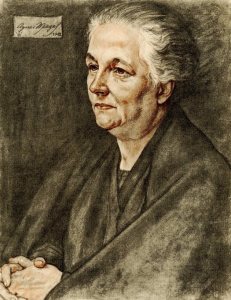
We present this work in honor of the Nigerian holiday, Mothering Sunday.
Molara Ogundipe Nigerian 1940 – 2019
When they smile and they smile and then begin to say with pain o their brows and songs in their voice: ‘the nose is a cruel organ and the heart without bone for were the nose not cruel, it would smell my love for you and the heart if not boneless, would feel my pain for you and the throat, O, has no roots or it would root to flower my love’; run for shelter, friend, run for shelter.
Nights of jasmine & thunder, torn petals wind in the tangled kadamba trees. Nothing has changed- Spring has come again and we’ve simply grown older.
In the cane groves of the Narmada he deflowered my girlhood, long before we were married. And I grieve for those far-away nights when we played at love By the water.
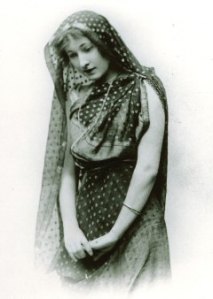
We present this work in honor of the poet’s 200th birthday.
Lucy Larcom American 1824 – 1893
All day she stands before her loom; The flying shuttles come and go: By grassy fields, and trees in bloom, She sees the winding river flow: And fancy’s shuttle flieth wide, And faster than the waters glide.
Is she entangled in her dreams, Like that fair-weaver of Shalott, Who left her mystic mirror’s gleams, To gaze on light Sir Lancelot? Her heart, a mirror sadly true, Brings gloomier visions into view.
“I weave, and weave, the livelong day: The woof is strong, the warp is good: I weave, to be my mother’s stay; I weave, to win my daily food: But ever as I weave,” saith she, “The world of women haunteth me.
“The river glides along, one thread In nature’s mesh, so beautiful! The stars are woven in; the red Of sunrise; and the rain-cloud dull. Each seems a separate wonder wrought; Each blends with some more wondrous thought.
“So, at the loom of life, we weave Our separate shreds, that varying fall, Some strained, some fair: and, passing, leave To God the gathering up of all, In that full pattern wherein man Works blindly out the eternal plan.
“In his vast work, for good or ill, The undone and the done he blends: With whatsoever woof we fill, To our weak hands His might He lends, And gives the threads beneath His eye The texture of eternity.
“Wind on, by willow and by pine, Thou blue, untroubled Merrimack! Afar, by sunnier streams than thine, My sisters toil, with foreheads black; And water with their blood this root, Whereof we gather bounteous fruit.
“There be sad women, sick and poor: And those who walk in garments soiled: Their shame, their sorrow, I endure; By their defect my hope is foiled: The blot they bear is on my name; Who sins, and I am not to blame?
“And how much of your wrong is mine, Dark women slaving at the South? Of your stolen grapes I quaff the wine; The bread you starve for fills my mouth: The beam unwinds, but every thread With blood of strangled souls is red.
“If this be so, we win and wear A Nessus-robe of poisoned cloth; Or weave them shrouds they may not wear,— Fathers and brothers falling both On ghastly, death-sown fields, that lie Beneath the tearless Southern sky.
“Alas! the weft has lost its white. It grows a hideous tapestry, That pictures war’s abhorrent sight:— Unroll not, web of destiny! Be the dark volume left unread,— The tale untold,—the curse unsaid!”
So up and down before her loom She paces on, and to and fro, Till sunset fills the dusty room, And makes the water redly glow, As if the Merrimack’s calm flood Were changed into a stream of blood.
Too soon fulfilled, and all too true The words she murmured as she wrought: But, weary weaver, not to you Alone was war’s stern message brought: “Woman!” it knelled from heart to heart, “Thy sister’s keeper know thou art!”
High rises the Eastern Peak Soaring up to the blue sky. Among the rocks—an empty hollow, Secret, still, mysterious! Uncarved and unhewn, Screened by nature with a roof of clouds. Times and Seasons, what things are you Bringing to my life ceaseless change? I will lodge for ever in this hollow Where Springs and Autumns unheeded pass.
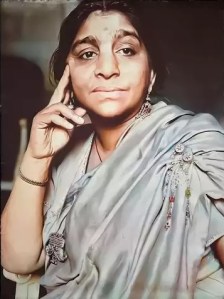
We present this work in honor of the 75th anniversary of the poet’s death.
Sarojini Naidu Indian 1879 – 1949
What do you sell O ye merchants? Richly your wares are displayed. Turbans of crimson and silver, Tunics of purple brocade, Mirrors with panels of amber, Daggers with handles of jade.
What do you weigh, O ye vendors? Saffron and lentil and rice. What do you grind, O ye maidens? Sandalwood, henna, and spice. What do you call, O ye pedlars? Chessmen and ivory dice.
What do you make, O ye goldsmiths? Wristlet and anklet and ring, Bells for the feet of blue pigeons Frail as a dragon-fly’s wing, Girdles of gold for dancers, Scabbards of gold for the king.
What do you cry, O ye fruitmen? Citron, pomegranate, and plum. What do you play ,O musicians? Cithar, sarangi and drum. what do you chant, O magicians? Spells for aeons to come. What do you weave, O ye flower-girls?
With tassels of azure and red? Crowns for the brow of a bridegroom, Chaplets to garland his bed. Sheets of white blossoms new-garnered To perfume the sleep of the dead.
Fifteen boys and maybe more, or fewer than fifteen, maybe, said to me in frightened voices: “Let’s go to a movie or the Museum of Fine Arts.” “I haven’t time.” Fifteen boys presented me with snowdrops. Fifteen boys in broken voices said to me: “I’ll never stop loving you.” I answered them more or less like this: “Well see.”
Fifteen boys are now living a quiet life. They have done their heavy chores of snowdrops, despair and writing letters. Girls love them — some more beautiful than me, others less beautiful. Fifteen boys with a shoe of freedom, and at times spite salute when we meet, their liberation, normal sleep and regular meals.
In vain you come to me, last boy. I shall place your snowdrops in a glass of water, and silver bubbles will cover their stocky stems… But, you see, you too will cease to love me, and, mastering yourself, you’ll talk in a superior way, as though you’d mastered me, and I’ll walk off down the street, down the street…






 Poets Corner