To Cassandra

We present this work in honor of the poet’s 500th birthday.

Pierre Ronsard
French
1524 – 1585

Sweetness, Let’s go see whether the Rose
who this morning had opened
her dress of crimson to the Sun,
this evening has at all lost
the pleats of her crimson dress
and her complexion the same as yours.

Alas! Behold how, in a little space,
Sweetness, she has, on the spot, alas, alas
let all her beauties fall!
O Nature is truly a cruel mother
since such a flower lasts
only from morning to evening.

So, if you will believe me, Sweetness,
while your age is in flower
in its green newness,
gather, gather your youth:
for, the same as this flower, old age
will tarnish your beauty.

Translation by William Calin

Lady Iseut, If He Showed

Almucs de Castelnau
French
c. 1140 – c. 1184


Lady Iseut, if he showed some contrition
he might be able to erase
the effects of his disgrace
and I might grant him some remission;
but I think I’d be unwise,
since by his silence he denies
the wrong he’s done, to in any way relieve
a man who was so eager to deceive.
Still, if you can get him to repent his perfidy
you’ll have no trouble in converting me.

Translation by Meg Bogin

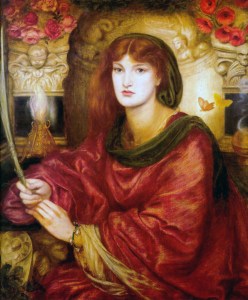
Lady Almucs, With Your Permission

Iseut de Capio
French
b. c. 1140


Lady Almucs, with your permission
let me request that in place
of anger and bad grace
you show a kinder disposition
toward him who slowly dying lies
lamenting amidst moans and sighs
and humbly begs reprieve;
but if you want him dead let him receive
the sacraments, to guarantee
that he’ll refrain from doing further injury.

Translation by Meg Bogin

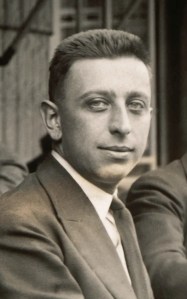
The Voice

We present this work in honor of V-E Day.

Robert Desnos
French
1900 – 1945


A voice, a voice from so far away
It no longer makes the ears tingle.
A voice like a muffled drum
Still reaches us clearly.

Though it seems to come from the grave
It speaks only of summer and spring.
It floods the body with joy.
It lights the lips with a smile.

I listen. It is simply a human voice
Which passes over the noise of life and its battles
The crash of thunder and the murmur of gossip.

And you? Don’t you hear it?
It says “The pain will soon be over”
It says “The happy season is near.”

Don’t you hear it?

Translation by William Kulik

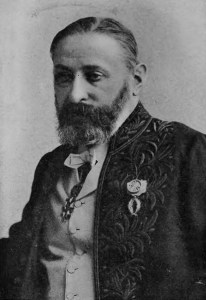
The Broken Vase

We present this work in honor of the poet’s 185th birthday.

Sully Prudhomme
French
1839 – 1907


The vase where this verbena is dying
was cracked by a blow from a fan.
It must have barely brushed it,
for it made no sound.

But the slight wound,
biting into the crystal day by day,
surely, invisibly crept
slowly all around it.

The clear water leaked out drop by drop.
The flowers’ sap was exhausted.
Still no one suspected anything.
Don’t touch! It’s broken.

Thus often does the hand we love,
barely touching the heart, wound it.
Then the heart cracks by itself
and the flower of its love dies.

Still intact in the eyes of the world,
it feels its wound, narrow and deep,
grow and softly cry.
It’s broken. Don’t touch!

To Invite All Creatures to Praise God

Anne de Marquets
French
c. 1533 – 1588


O sky and earth, and you, furious seas,
O fields and meadows adorned with blooms and trees,
In short, all things in this great universe,
Praise him, the one whom I love—

He who defeated inglorious Death,
Destroyed sin, and toppled Satan,
Who died through so many martyrs,
To grant me most fortunate redemption.

O such a singular and perfect reward
From this great God who fashioned me so well,
And who will make me as I wish it!

Would I not be incredibly ungrateful,
If I didn’t treasure him above all others—
Such a lover, a master, and father?

Translation by Annick MacAskill

canso fragment

Tibors de Sarenom
French
c. 1130 – c. 1198


Sweet handsome friend, I can tell you truly
that I’ve never been without desire
since it pleased you that I have you as my courtly lover;
nor did a time ever arrive, sweet handsome friend,
when I didn’t want to see you often;
nor did I ever feel regret,
nor did it ever come to pass, if you went off angry,
that I felt joy until you had come back

Chansons II

Pernette du Guillet
French
c. 1520 – 1545


When, every day, the spark of chaste,
Pure Love betwixt us—arms enlaced—
Flashes anew; when such you see,
Ought you not, then, my lover be?

When you see how I pine, debased,
By hidden bale and bane laid waste,
Languishing in my misery,
Ought you not, then, my lover be?

When you see that I have no taste
To carp on one less beauty-graced,
And that I want you all to me,
Ought you not, then, my lover be?

When I, by some new love embraced,
Never would wish your love replaced,
Lest you lament my cruelty,
Ought you not, then, my lover be?

When you see time, in fleeting haste,
Prove me to be not many-faced
But true to you eternally,
Ought you not, then, my lover be?

Translation by Norman R. Shapiro

Futile Petition

We present this work in honor of the 125th anniversary of the poet’s death.

Stephane Mallarme
French
1842 – 1898


Princess! to envy the fate of a Hebe
Who appears on this porcelain cup at a kiss
from your lips,
I enjoy my passion but have no rank
other than priest
And I shall scarcely be shown naked on pottery.
As I am not your furry lapdog,
Neither rouge, nor clever games
And I feel your close glance falling on me,

Blonde whose divine coiffeurs are goldsmiths!
Name us… you whose raspberry laughter
Is joined in a flock of tamed lambs
Grazing on vows and bleating to their
heart’s content,
Name us… so that Love with fanlike wings
Combs me, fingering his flute, as I slumber
in the sheepfold,
Princess, name us shepherd of your smiles.