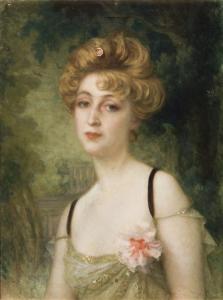
The Eternal Song

Rosemonde Gérard
French
1871 – 1953


When you are old and I am old,
When my blond hair will be white hair,
In the brightening sun of the May garden,
We’ll go and warm our old trembling limbs.
As renewal sets our hearts in joy,
We will still believe to be young lovers,
And I’ll smile at you while shaking my head,
And we’ll be an adorable old couple.
We’ll look at each other, sitting under our vine,
With small eyes, tender and bright,
When you are old and I am old,
When my blond hair will be white hair.

On our friendly bench, all greenish with moss,
On the bench of old, we’ll talk again,
We will have a tender and very sweet joy,
Each sentence always ending in a kiss.
How many times may I have said “I love you”?
Then with great care we will recount them.
We will remember a thousand things, even
Exquisite little nothings we will ramble on.
A ray will descend, with a soft caress,
Among our white hair, all pink, to rest,
When on our old bench all greenish with moss,
On the bench of old, we’ll talk again.

And as every day I love you more,
Today more than yesterday and much less than tomorrow,
What will facial wrinkles matter then?
My love will be more thoughtful—and serene.
Considering that everyday memories are piling up,
These memories of mine will be yours too.
Those common memories entwine us all the more
And constantly between us weave other links.
It’s true, we’ll be old, very old, weakened by age,
But stronger each day I will squeeze your hand
For you see, every day I love you more,
Today more than yesterday and much less than tomorrow.

And of this dear love that passes like a dream,
I want to keep everything at the bottom of my heart,
To remember if I can the too short impression
To slowly savour it again later.
I bury everything that comes from it like a miser,
Hoarding with ardour for my old age;
I will be rich then of a rare wealth
For I’ll have kept all the gold of my young love!
So from this ending past of happiness,
My memory will sometimes bring back the sweetness;
And all this dear love that passes like a dream
I will have it preserved at the bottom of my heart.

When you are old and I am old,
When my blond hair will be white hair,
In the brightening sun of the May garden,
We’ll go and warm our old trembling limbs.
As renewal sets our hearts in joy,
We will still believe in the happy days of yesteryear,
And I’ll smile at you while shaking my head
And you will quaver love words to me.
We’ll look at each other, sitting under our vine,
With small eyes, tender and bright,
When you are old and I am old,
When my blond hair will be white hair.
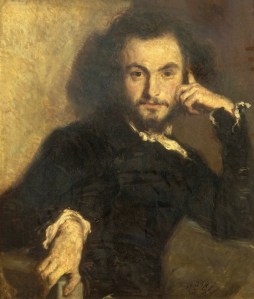
Long-Felt Desires

Louise Labé
French
c. 1524 – 1566


Long-felt desires, hopes as long as vain—
sad sighs—slow tears accustomed to run sad
into as many rivers as two eyes could add,
pouring like fountains, endless as the rain—
cruelty beyond humanity, a pain
so hard it makes compassionate stars go mad
with pity: these are the first passions I’ve had.
Do you think love could root in my soul again?
If it arched the great bow back again at me,
licked me again with fire, and stabbed me deep
with the violent worst, as awful as before,
the wounds that cut me everywhere would keep
me shielded, so there would be no place free
for love. It covers me. It can pierce no more.

Be Drunk

Charles Baudelaire
French
1821 – 1867


Always be drunk.
That’s it!
The great imperative!
In order not to feel
Time’s horrid fardel
bruise your shoulders,
grinding you into the earth,
Get drunk and stay that way.
On what?
On wine, poetry, virtue, whatever.
But get drunk.
And if you sometimes happen to wake up
on the porches of a palace,
in the green grass of a ditch,
in the dismal loneliness of your own room,
your drunkenness gone or disappearing,
ask the wind,
the wave,
the star,
the bird,
the clock,
ask everything that flees,
everything that groans
or rolls
or sings,
everything that speaks,
ask what time it is;
and the wind,
the wave,
the star,
the bird,
the clock
will answer you:
“Time to get drunk!
Don’t be martyred slaves of Time,
Get drunk!
Stay drunk!
On wine, virtue, poetry, whatever!”

The Young Captive

We present this work in honor of the 225th anniversary of the poet’s death.

André Chénier
French
1762 – 1794


“The corn in peace fills out its golden ear;
Through the long summer days, the flowers without a fear
Drink in the strength of the noon.
And I, a flower like them, as young, as fair, as pure,
Though at the present hour some trouble I endure,
I would not die so soon!

“No, let the stoic heart call upon Death as kind!
For me, I weep and hope; before the bitter wind
I bend like some lithe palm.
If there be long, sad days, others are bright and fleet;
Alas! what honeyed draught holds nothing but the sweet?
What sea is ever calm?

“And still within my breast nestles illusion bright;
In vain these prison walls shut out the noonday light;
Fair Hope has lent me wings.
So from the fowler’s net, again set free to fly,
More swift, more joyous, through the summer sky,
Philomel soars and sings.

“Is it my lot to die? In peace I lay me down,
In peace awake again, a peace nor care doth drown,
Nor fell remorse destroy.
My welcome shines from every morning face,
And to these downcast souls my presence in this place
Almost restores their joy.

“The voyage of life is but begun for me,
And of the landmarks I must pass, I see
So few behind me stand.
At life’s long banquet, now before me set,
My lips have hardly touched the cup as yet
Still brimming in my hand.

“I only know the spring; I would see autumn brown;
Like the bright sun, that all the seasons crown,
I would round out my year.
A tender flower, the sunny garden’s boast,
I have but seen the fires of morning’s host;
Would eve might find me here!

“O Death, canst thou not wait? Depart from me, and go
To comfort those sad hearts whom pale despair, and woe,
And shame, perchance have wrung.
For me the woods still offer verdant ways,
The Loves their kisses, and the Muses praise:
I would not die so young!”

Thus, captive too, and sad, my lyre none the less
Woke at the plant of one who breathed its own distress,
Youth in a prison cell;
And throwing off the yoke that weighed upon me too,
I strove in all the sweet and tender words I knew
Her gentle grief to tell.

Melodious witness of my captive days,
These rhymes shall make some lover of my lays
Seek the maid I have sung.
Grace sits upon her brow, and all shall share,
Who see her charms, her grief and her despair:
They too “must die so young”!

Luna

We present this work in honor of Bastille Day.

Victor Hugo
French
1802 – 1885


O France, although you sleep
We call you, we the forbidden!
The shadows have ears,
And the depths have cries.

Bitter, glory-less despotism
Over a discouraged people
Closes a black thick grate
Of error and prejudice;

It locks up the loyal swarm
Of firm thinkers, of heroes,
But the Idea with the flap of a wing
Will part the heavy bars,

And, as in ninety-one,
Will retake sovereign flight,
For breaking apart a cage of bronze
Is easy for bronze bird.

Darkness covers the world,
But the Idea illuminates and shines;
With its white brightness it floods
The dark blues of the night.

It is the solitary lantern,
The providential ray;
It is the lamp of the earth
That cannot help but light the sky.

It calms the suffering soul,
Guides life, puts the dead to rest;
It shows the mean the gulf,
It shows the just the way.

In seeing in the dark mist
The Idea, love of sad eyes,
Rise calm, serene and pure,
On the mysterious horizon,

Fanaticism and hatred
Roar before each threshhold,
As obscene hounds howl
When appears the moon in mourning.

Oh! Think of the mighty Idea,
Nations! its superhuman brow
Has upon it, from now on, the light
That will show the way to tomorrow!

Awakening

We present this work in honor of the poet’s 130th birthday.

Jean Cocteau
French
1889 – 1963


Grave mouths of lions
Sinuous smiling of young crocodiles
Along the river’s water conveying millions
Isles of spice
How lovely he is, the son
Of the widowed queen
And the sailor
The handsome sailor abandons a siren,
Her widow’s lament at the south of the islet
It’s Diana of the barracks yard
Too short a dream
Dawn and lanterns barely extinguished
We are awakening
A tattered fanfare

from The Daughter of Heaven

Judith Gautier
French
1845 – 1917


Oh! Daughter of Heaven, whom
we swear to serve faithfully! To the end
that you may accomplish the work
of your deified ancestors, never forget
the ten precepts which are the rule
of conduct of all sovereigns. As they
are engraved here on the precious jade,
it is my privilege to read them to you
this day in the hearing of all.

Fear Heaven.
Love the people.
Exalt the soul.
Cultivate the sciences.
Honour merit.
Listen to wise counsels.
Lessen taxes.
Mitigate the laws.
Spare the treasury.
Avoid the allurements of the senses!

Obeying these commands, one is sure
to follow in the right path.
But one must advance along this road
without turnings aside or falterings.
Oh! our Sovereign, be attentive
and anxious, as though each hour
of the day you carried a chalice filled
to the brim with water not one drop
must be spilled. Act thus, and then
your conduct will be just and
your dynasty endure eternally—
Ten thousand years!
Ten thousand years!

Riddle

Madeleine de l’Aubespine
French
1546 – 1596


(About a lute)

As the sweetest diversion that I could ever choose,
Frequently, after dinner, for fear of getting bored,
I take his neck in hand, I touch him, and I stroke,
Till he’s in such a state as to give me delight.

I fall upon my bed and, without letting go,
I grasp him in my arms, I press him to my breast,
And moving hard and fast, all ravished with pleasure,
Amidst a thousand delights I fulfill my desire.

If he sometimes unfortunately happens to slacken,
I erect him with my hand, and right away I strive
To enjoy the delight of such a tender stroking.

Thus my beloved, so long as I pull on his sinew,
Contents and pleases me. Then away from me, softly,
Tired and not sated, I finally withdraw him.

The Museum

Yves Bonnefoy
French
1923 – 2016


A clamor, in the distance. A crowd running under the rain beating
down, between the canvases the sea wind set clattering.

A man passes crying something. What is he saying? What he
knows! What he has seen! I make out his words. Ah, I almost
understand!

I took refuge in a museum. Outside the great wind mixed with
water reigns alone from now on, shaking the glass panes.

In each painting, I think, it’s as if  God were giving up on finishing
the world.