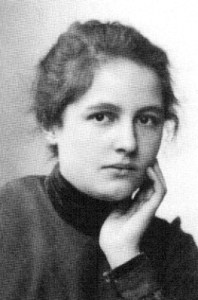
We present this work in honor of the poet’s 120th birthday.
Marie Luise Kaschnitz German 1901 – 1974
A quarter turn, one more,
And there you are facing evening,
You are red-faced
Like a frightened bride.
Your reflecting eyes
Dismayed
By what the sky is kindling:
Too ornate
A wedding for you
Too eternal
A night.
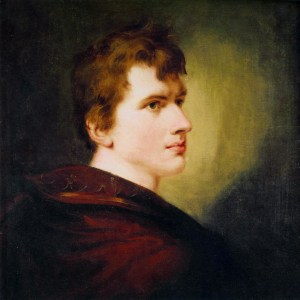
We present this work in honor of the poet’s 240th birthday.
Achim von Arnim German 1781 – 1831
O nightingale, your noble sound, brings us great joy,
Your voice roams all mountains and valleys, in the beautiful summertime,
When you start to pull out, the birds are silent
Nobody shows up, nobody wants to sing anymore.
We present this work in honor of the 10th anniversary of the poet’s death.
Eva Stritmatter German 1930 – 2011
How terrible was the flame
In which together we once burned
In the end an ember remains
And the usual happens, even to us.
That’s not ash, that last trace of fire
Shows our daily work. And how precious
this tiny bit of warmth, I learned
in this worst year
of all my years.
Should another winter like this come
and another such snow fall upon me
Only this warmth can save me
from death. What else
should hold me? What remains of our Love:
We had each other. No grass
will grow over us, no stone
so long as this ember glows.
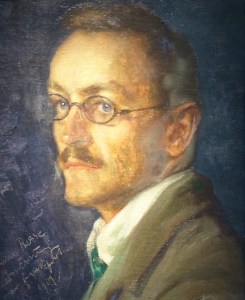
We present this work in honor of the 25th anniversary of the poet’s death.
Heiner Müller German 1921 – 1995
In the fourth book of the Annals Tacitus complains
About the duration of peacetime, seldom interrupted
By silly border wars with whose description he
Has to make do, filled with envy
Of the historians before him
Who had mammoth wars at their disposal
Conducted by emperors who thought Rome was not grand enough
Subjugated nations, captured kings
Uprisings and state crises: great stuff.
And Tacitus apologizes to his readers.
As for me two thousand years after him
I have no need to apologize and can not
Complain about the lack of great stuff.
We present this work in honor of the 280th anniversary of the poet’s death.
Sidonia Hedwig Zäunemann German 1711 – 1740
If you’ve stained your matrimonial life, deceived your creditor,
gained by lies your neighbour’s pasture and field;
if you’ve hurt your fellow-being’s coat of innocence or good reputation,
and with guile rendered yours
the token of the oppressed, which you had taken as a pawn:
Then you must not turn despondent, even though how grave they’d sue you at the court.
Soon only endeavor after an attorney, after one
who bears his good conscience in the manner that
he wears his sleeves, as if a priest’s,
who feels amused as highly by disputes,
instances of taking advantage as by quarrels,
as may feel a man, who’s been out at war,
who’s come to find lots of things to plunder,
one whose heart is full of spitefulness,
whose head of trickery,
his soul full of deceit and daring malice,
who writes seven lines only on one page,
but always swells all his writings into twenty folders,
who produces as many expenditures, as what is desired in every cause of conflict,
as he tosses and turns the procedure
until the case will have gone on for many a good year.
Him you ought to fill his bent hands with golden treasures from Ophir,
then soon will he lash out and hit on the rights of the opposite party;
then even turn to the counterpart’s and win that attorney’s favor, too;
bestow him a gift of a stately piece to wear,
a staunch and fat pig,
a barrelful of grape wine, as well as other nice things,
thus you will make that one mild and
he’ll be favouring you, too.
Likewise go and see the judge, and fill his hand –
wild men at hand – with gold from the Hungarian land.
And should he refrain from taking your things; then give them to his wife,
damask, silk and velvet for her body,
ribbons, laces, linen, and furs for her petticoats,
Fill up their store-rooms and kitchen house;
thus you’ll gain for any pending case more time,
your attorney will put things off,
your judge procrastinate them;
although how hard your opponent might attempt to see the final verdict coming.
Should he complain, o dear, tired of all the payments,
asking for justice at long last,
then it will be pointed out:
‘you have no rights.
He who’s been sparing the money shall always be the winner.’
Light of light, O Sun of heaven,
O Thou bright and morning Star,
To mankind in mercy given,
Send Thy radiance from afar,
Bringing light to all the earth,
Health and strength, and joy and mirth;
Darkness past, the dawn is breaking,
All creation is awaking.
Still my soul is thickly shrouded
In the chilling mist of sin,
And my conscience is beclouded
By the ignorance within.
Lead me by the hand, I pray,
Lest in error’s path I stray;
Make Thy light my sole attraction,
Guiding every thought and action.
Spirit of the heavenly morning,
Shine into my darkened heart,
That, the way of life discerning,
I may choose the better part.
Make my erring walk secure,
Every thought and action pure;
Whereso’er my feet be turning,
Keep Thy zeal within me burning.
Deign Thy feeble flock to strengthen
By the bonds of sacred love,
And Thy lines of empire lengthen
By Thy power from above.
Help us govern in Thy sight,
That our laws be just and right;
That we suffer no oppression,
Make our land Thine own possession.
Let our lamp of faith be burning
On that awful judgment day.
While in sin’s domain sojourning,
Guide us in the heavenward way:
Then their praise and thanks to Thee,
Lord, in all eternity
Shall Thy happy children render,
For Thy mercies, kind and tender.
We present this work in honor of German Unity Day.
Agnes Miegel German 1879 – 1964
When Sir Ulrich’s widow in church knelt to pray,
From the church yard toward her floated a lay.
The organ on high did cease to sound,
The priests and the boys all stood spellbound;
The congregation hearkened, old man, child and bride
To singing like a nightingale’s so fair, outside:
“Dear mother, in the church where the sexton’s bell rings,
Dear mother, hark outside how your daughter sings!
For I cannot come to you in the church—ah, nay,
Before the shrine of Mary I cannot kneel to pray,
For I have lost salvation in everlasting time,
For I wedded the waterman with all his black, black slime.
My children—they play in the lake with fishes fleet,
They have fins on their hands and fins on their feet,
Their little pearly frocks no sunlight ever dries,
Not death nor yet a dream can close my children’s eyes.—
Dear mother, oh, I beg of thee,
Lovingly, longingly:
Wilt thou and all thy servants pray
For my green-haired water-sprites alway,
Will ye pray to the saints and to our Lady kind,
By every church and every cross that on the fields ye find!
Dearest mother, I beseech thee so—
Every seven years I may hither go—
Unto the good priest tell,
The church door he shall open well—
That I may see the candle-light
And see the golden monstrance bright,
That my little children may be told
How the gleam of the Cup is like sunlight gold!”
The organ pealed when the voice sang no more,
And then they opened wide the door—
And while they all inside high mass were keeping,
A wave all white, so white, outside was leaping.
In honor of Oktoberfest, we present this work by one of the great German-American poets.
Liesel Mueller German 1924 – 2020
In Sleeping Beauty’s castle
the clock strikes one hundred years
and the girl in the tower returns to the world.
So do the servants in the kitchen,
who don’t even rub their eyes.
The cook’s right hand, lifted
an exact century ago,
completes its downward arc
to the kitchen boy’s left ear;
the boy’s tensed vocal cords
finally let go
the trapped, enduring whimper,
and the fly, arrested mid-plunge
above the strawberry pie
fulfills its abiding mission
and dives into the sweet, red glaze.
As a child I had a book
with a picture of that scene.
I was too young to notice
how fear persists, and how
the anger that causes fear persists,
that its trajectory can’t be changed
or broken, only interrupted.
My attention was on the fly:
that this slight body
with its transparent wings
and life-span of one human day
still craved its particular share
of sweetness, a century later.
He who would braid and decorate
Your noble chaplet with flowers
Must bear within his breast
The blooming May branch of the arts
In order to adorn it
With rose-read phrases
And decorate it all around
With words like violets
To purify it utterly
Of everything false,
And most beautifully interweave
The herbs of exotic rhymes
Beneath, around, between
The blossoms of sweet speech.
My Pillow gazes upon me at night
Empty as a gravestone;
I never thought it would be so bitter
To be alone,
Not to lie down asleep in your hair.
I lie alone in a silent house,
The hanging lamp darkened,
And gently stretch out my hands
To gather in yours,
And softly press my warm mouth
Toward you, and kiss myself, exhausted and weak-
Then suddenly I’m awake
And all around me the cold night grows still.
The star in the window shines clearly-
Where is your blond hair,
Where your sweet mouth?
Now I drink pain in every delight
And poison in every wine;
I never knew it would be so bitter
To be alone,
Alone, without you.







 Poets Corner