We present this work in honor of the poet’s 90th birthday.
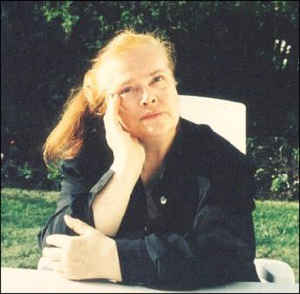
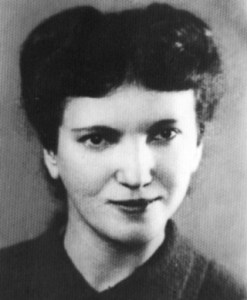
Eva Strittmatter German 1930 – 2011
Moon-snow lies on the meadows
as from you I go.
We’ve loved one another long now
not just since the last snow.
Yet every time, I come to you,
it’s so:
I don’t know, who I am, or where,
I’m sad and I’m madly happy.
(Part heathen and part saint.)
In honor of the German holiday, Three Kings Day, we present this work by one of Medeival Germany’s most significant poets.
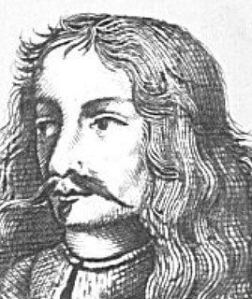
Hartmann von Aue German 1165 – 1210
If one can save one’s soul by lying,
Then I know someone who is holy.
He has often sworn false oaths to me.
His shrewd cunning overwhelmed me
And I chose him as a friend.
I thought I had found in him constancy.
But my own good sense deserted me,
As I now announce to the world:
He is as free of duplicity
As the sea is free of waves.
Why should I seek help from others
Since it was my own heart that deceived me?
It led me to the one
Who is worthless to me or to any good woman.
It hardly honors men
How this man conducts himself with regard to women.
He is so well versed in uttering sweet phrases
That one could not write them down.
I followed them even onto slippery ice.
Now I am suffering the harm they caused.
If I were now to begin to detest all men,
I would do so out of hatred of him alone.
But how are they all at fault for this?
Many men show better gratitude to their ladies.
One lady, by using her good sense,
Chose a friend who makes her happy.
She is laughing while I am sad.
Our lives play themselves out quite differently.
I have begun with suffering.
May God, the mighty One, ease my pain.
We present this work in honor of the poet’s 125th birthday.
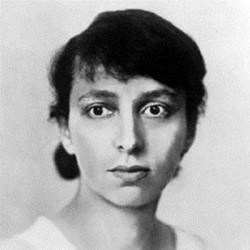
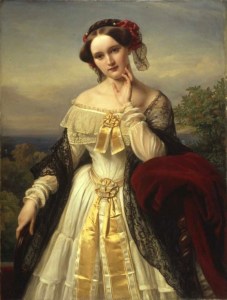
Gertrud Kolmar German 1894 – 1943
I am in the darkness and alone.
In front of me stands the door.
When I open it, I am bathed in light.
There are a father, a mother and sister,
A dog, which, dumb, still barks in friendliness.
How can I lie, and how can I say
That I, hidden there in darkness, have not come to harm them?
I drag myself over the threshold.
Snow blossoms in my eyes.
I saw him bowing to me courteously;
How much that hurt me.
How could my heart find peace,
When round it raced the voice of the old man?
I live in coldness.
I dried my tears and went
To where the man was eating with his family.
It was so calm and loving a reception.
I felt the violins sounding inside me
At first, so sweetly, so gently.
They will never sound again, when I have finished.
Fear drenched my hands.
Beneath me I could almost taste my womb.
A sneer seemed to say: ‘Have you no shame?
What have you done with the wedding-ring on your finger?
Terrible thief, where did you hide your courage?
Does the nakedness of my right hand mean so little to me?’
I felt so poor and naked.
I wriggled in my chair
And trembled to think what I must do.
Pity clawed at my heart and shook my body
Like a tree in a winter field blown by the wind
Shedding leaves.
I told myself it was time to go,
Scolding my wan, faded self for my little worries.
Pleased with myself again, I steeled myself for the torture.
The joy of it! Oh, how I want to be
Just like an animal and be happy again!
I sharpen my claws with a knife.
It is still night, and that thing called shame,
I may not let it show itself.
I know the train that tears through the woods.
I go out to the unfeeling rails.
Weary, I am glad to go to bed,
Running across two flat sticks of iron.
Would I the lofty spirit melt
Of that proud dame who dwells so high,
Kind heaven must aid me, or unfelt
By her will be its agony.
Joy in my soul no place can find:
As well might I a suitor be
To thunderbolts, as hope her mind
Will turn in softer mood to me.
Those cheeks are beautiful, are bright
As the red rose with dewdrops grac’d;
And faultless is the lovely light
Of those dear eyes, that, on me plac’d,
Pierce to my very heart, and fill
My soul with love’s consuming fires,
While passion burns and reigns at will;
So deep the love that fair inspires!
But joy upon her beauteous form
Attends, her hues so bright to shed
O’er those red lips, before whose warm
And beaming smile all care is fled.
She is to me all light and joy,
I faint, I die, before her frown;
Even Venus, liv’d she yet on earth,
A fairer goddess here must own…
While many mourn the vanish’d light
Of summer, and the sweet sun’s face
I mourn that these, however bright,
No anguish from the soul can chase
By love inflicted: all around,
Nor song of birds, nor ladies’ bloom,
Nor flowers upspringing from the ground,
Can chase or cheer the spirits’ gloom…
Yet still thine aid, belov’d! impart,
Of all thy power, thy love, make trial;
Bid joy revive in thise sad heart,
Joy that expires at thy denial:
Well may I pour my prayer to thee,
Beloved lady, since ‘tis thine
Alone to send such care on me;
Alone for thee I ceaseless pine.
In honor of German Unity Day, we present this work by one of Germany’s greatest modern writers.
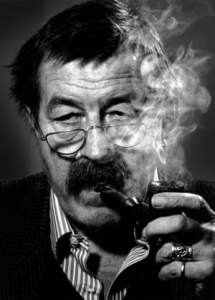
Günter Grass German 1927 – 2015
The shoes are at the bottom.
They are afraid of a beetle
On the way out,
Of a penny on the way back,
Of a beetle and a penny on which they might tread
Till it impresses itself.
At the top is the home of the headgear.
Take heed, by wary, not headstrong.
Incredible feathers,
What was the bird called,
Where did its eyes roll
When it knew that its wings were too gaudy?
The white balls asleep in the pockets
Dream of moths.
Here a button is missing,
In this belt the clasp grows weary.
Doleful silk,
Asters and other inflammable flowers,
Autumn becoming a dress.
Every Sunday filled with flesh
And the salt of folded linen.
Before the wardrobe falls silent, turns into wood,
A distant relation of pine-trees,—
Who will wear the coat
One day when you’re dead?
Who move his arm in the sleeve,
Anticipate every movement?
Who will turn up the collar,
Stop in front of the pictures
And be alone under the windy cloche?
In honor of Rosh Hashanah, we present this work by one of the 20th century’s great Jewish poets.
Nellie Sachs German 1891 – 1970
When the day empties itself
In the twilight,
When the imageless time begins,
The lonely voices join together—
The animals are nothing other than the hunting
Or the hunted—
The flowers no more than fragrance—
When everything becomes nameless as in the beginning—
You go under the catacombs of Time,
Which open for those that are near the end—
There where the heart buds grow—
Into the dark inwardliness
You sink downward—
Already past death
Which is only a windy passageway—
And freezing from going out
You open your eyes
Where a new star
Has already left its reflection—
In honor of Oktoberfest, we present this work by a legendary modern German poet.
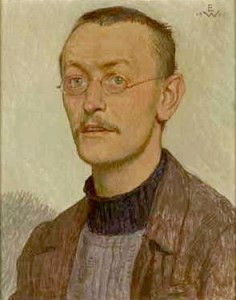
Hermann Hesse German 1877 – 1962
Don’t be downcast, soon the night will come,
When we can see the cool moon laughing in secret
Over the faint countryside,
And we rest, hand in hand.
Don’t be downcast, the time will soon come
When we can have rest. Our small crosses will stand
On the bright edge of the road together,
And rain fall, and snow fall,
And the winds come and go.


 Poets Corner