In honor of Greek Independence Day, we present this work by a giant of Greek literature.
Nikos Kazantzakis Greek 1883 – 1957
Then flesh dissolved, glances congealed, the heart’s pulse stopped,
and the great mind leapt to the peak of its holy freedom,
fluttered with empty wings, then upright through the air
soared high and freed itself from its last cage, its freedom.
All things like frail mist scattered till but one brave cry
for a brief moment hung in the calm benighted waters:
“Forward, my lads, sail on, for Death’s breeze blows in a fair wind!”
through the monotonous rain
the mud
the ashen atmosphere
the trams pass
and through the deserted marketplace
• deadened by the rain –
they proceed towards
the
terminals
my thought
filled with emotion
follows them lovingly until
they reach
there where the fields begin
where the fields are drowned by the rain
at the terminals
what sorrow it would have been – my God –
what sorrow
if my heart was not consoled
by the hope of marble
and the prospect of a bright sunray
which shall give new life
to the splendid ruins
Nothing is sweeter than love; all other bliss comes second.
And compared to it, even honey is too bitter to hold in my mouth.
This I say: Whom Kypris has not kissed
Does not know her flowers, what kinds of things roses are.
When you set out on your journey to Ithaca,
pray that the road is long,
full of adventure, full of knowledge.
The Lestrygonians and the Cyclops,
the angry Poseidon — do not fear them:
You will never find such as these on your path,
if your thoughts remain lofty, if a fine
emotion touches your spirit and your body.
The Lestrygonians and the Cyclops,
the fierce Poseidon you will never encounter,
if you do not carry them within your soul,
if your soul does not set them up before you.
Pray that the road is long.
That the summer mornings are many, when,
with such pleasure, with such joy
you will enter ports seen for the first time;
stop at Phoenician markets,
and purchase fine merchandise,
mother-of-pearl and coral, amber and ebony,
and sensual perfumes of all kinds,
as many sensual perfumes as you can;
visit many Egyptian cities,
to learn and learn from scholars.
Always keep Ithaca in your mind.
To arrive there is your ultimate goal.
But do not hurry the voyage at all.
It is better to let it last for many years;
and to anchor at the island when you are old,
rich with all you have gained on the way,
not expecting that Ithaca will offer you riches.
Ithaca has given you the beautiful voyage.
Without her you would have never set out on the road.
She has nothing more to give you.
And if you find her poor, Ithaca has not deceived you.
Wise as you have become, with so much experience,
you must already have understood what Ithacas mean.
Death is the bullies bashing
against the black walls and roof tiling,
death is the women being loved
in the course of onion peeling.
Death the squalid, unimportant streets
with their glamorous and pompous names,
the olive-grove, the surrounding sea, and even
the sun, death among all other deaths.
Death the policeman bending over
to weigh, a “lacking” portion,
death the harebells on the balcony
and the teacher with the newspaper.
Base, Guard, Sixty-man Prevezian Rule.
On Sunday we’ll listen to the band.
I’ve taken out a savings booklet,
my first deposit drachmas thirty one.
Walking slowly on the quay,
“do I exist?” you say, and then: “you do not!”
The ship approaches. The flag is flying.
Perhaps Mr. Prefect will be coming.
If at least, among these people,
one would die of sheer disgust
silent, bereaved, with humble manners,
at the funeral we’d all have fun.
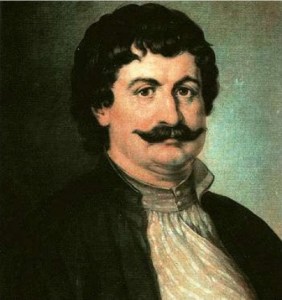
Until when are we, oh brave young men, going to live in constraint,
Lonely like likons, on the ridges of the mountains?
Better have an hour of free life
Than forty years of slavery and prison.
Shall we dwell in caves, just looking out at the branches,
Leaving from the world into the bitter slavery?
Better live one hour in freedom
Than forty years in slavery and prison.
Do we lose our brothers, homeland, and parents,
Our friends, children, and all of our kin?
Better live one hour in freedom
Than forty years in slavery and prison.
You work all day, and no matter what he tells you,
He strives again, only to drink your blood.
Soutzos, as well as Mourouzis, Petrakis, Skanavis
Grikas and Mavrogenis, mirror is for your reflection.
Unseen by these, the king his entry made:
And, prostrate now before Achilles laid,
Sudden (a venerable sight!) appears;
Embraced his knees, and bathed his hands in tears;
Those direful hands his kisses press’d, embrued
Even with the best, the dearest of his blood!
As when a wretch (who, conscious of his crime,
Pursued for murder, flies his native clime)
Just gains some frontier, breathless, pale, amazed,
All gaze, all wonder: thus Achilles gazed:
Thus stood the attendants stupid with surprise:
All mute, yet seem’d to question with their eyes:
Each look’d on other, none the silence broke,
Till thus at last the kingly suppliant spoke:
“Ah think, thou favour’d of the powers divine!
Think of thy father’s age, and pity mine!
In me that father’s reverend image trace,
Those silver hairs, that venerable face;
His trembling limbs, his helpless person, see!
In all my equal, but in misery!
Yet now, perhaps, some turn of human fate
Expels him helpless from his peaceful state;
Think, from some powerful foe thou seest him fly,
And beg protection with a feeble cry.
Yet still one comfort in his soul may rise;
He hears his son still lives to glad his eyes,
And, hearing, still may hope a better day
May send him thee, to chase that foe away.
No comfort to my griefs, no hopes remain,
The best, the bravest, of my sons are slain!
Yet what a race! ere Greece to Ilion came,
The pledge of many a loved and loving dame:
Nineteen one mother bore—Dead, all are dead!
How oft, alas! has wretched Priam bled!
Still one was left their loss to recompense;
His father’s hope, his country’s last defence.
Him too thy rage has slain! beneath thy steel,
Unhappy in his country’s cause he fell!
“For him through hostile camps I bent my way,
For him thus prostrate at thy feet I lay;
Large gifts proportion’d to thy wrath I bear;
O hear the wretched, and the gods revere!
“Think of thy father, and this face behold!
See him in me, as helpless and as old!
Though not so wretched: there he yields to me,
The first of men in sovereign misery!
Thus forced to kneel, thus grovelling to embrace
The scourge and ruin of my realm and race;
Suppliant my children’s murderer to implore,
And kiss those hands yet reeking with their gore!”
These words soft pity in the chief inspire,
Touch’d with the dear remembrance of his sire.
Then with his hand (as prostrate still he lay)
The old man’s cheek he gently turn’d away.
Now each by turns indulged the gush of woe;
And now the mingled tides together flow:
This low on earth, that gently bending o’er;
A father one, and one a son deplore:
But great Achilles different passions rend,
And now his sire he mourns, and now his friend.
The infectious softness through the heroes ran;
One universal solemn shower began;
They bore as heroes, but they felt as man.
 Poets Corner