We present this work in honor of the 110th anniversary of the poet’s death.
Altaf Hussain Hali Indian 1837 – 1914
They rejuvenated Aristotle’s dead tomes Plato from oblivion was brought back to life Turned each spot to ‘Greece’, refined all the homes Taste of wisdom’s manna, they offered to all From universal eye they removed the dense veil From slumber woke up Time, set it ready to sail.
We present this work in honor of the 20th anniversary of the poet’s death.
Arun Kolatkar Indian 1932 – 2004
Who has the tigers and who the sheep never seems to make any difference. The result is always the same: She wins, I lose. But sometimes when her tigers are on the rampage, and I’ve lost half my herd of sheep, help comes from unexpected quarters: Above. The Rusty Shield Bearer, neutral till then, para-drops a winning flower — yellow and irrelevant — on the checkerboard drawn on the pavement in charcoal, cutting off the retreat of one tiger, and giving a check to the other; and quickly follows it up with another flower — just as yellow and just as irrelevant — except that it comes down even more slowly; a flower without a search warrant that brushes past her earlobe, grazes her cheek, and disappears down the front of her low-cut blouse — where she usually keeps her stash of hash — to confuse her even further, with its mildly narcotic but very distracting fragrance.
In honor of Ganesh Chaturthi, we present this work by one of India’s most vivid poets.
Gangadevi Indian 14th Century
O King! The city, which is called Madhurapuri for its honeyed loveliness, has now become the city of cruel beasts; it now lives up to its earlier name of Vyaghrapuri, the city of tigers because humans don’t dwell there anymore.
Those temples of Gods, which used to reverberate with the sacred melody of the mridangam, now echo the dreadful howls of jackals.
In the Brahmin Quarters Agraharams of our city, huge columns of smoke emanating from the scared Yagnas used to rise up and reach the skies amid the sacred Vedic chants but alas! today those selfsame Quarters send up wretched stenches of meat roasted by the Turushkas; the Vedic chants are today replaced by the beastly cacophonies of drunken hoodlums.
During the days of Pandyas, our women used to bathe in river Taamraparni, whose waters turned white from the sandal-paste applied to their breasts. My lord! Now she’s coloured only in red from the currents of blood flowing into her from all the cows slaughtered by its wicked occupiers all over the country.
O King! I cannot bear to look at the countenance of those Dravida ladies who were bounteously endowed with beauty. Ravished horribly by the scourging Turushkas, these delicate women now sport lifeless lips and exhale hot breaths, and their abundant tresses that have come undone are painful to the eyes. I don’t have the words to describe the suffering and dishonour painted on their faces, which know neither redemption nor protection.
We present this work in honor of the poet’s 125th birthday.
Kazi Nazrul Islam Indian 1899 – 1976
O poets of the future, may you arise Like the morning sun, Bright and red like hibiscus blossoms. In the golden dawn for which we long May you wake up like countless flocks of birds. I sing in the hope that you will come To soar in the blue sky that I create. I leave behind the memory of my greetings to you: Play on my veena the song of the new day.
We present this work in honor of the 50th anniversary of the poet’s death.
Ramdhari Singh Dinkar Indian 1908 – 1974
My king of mountains! My magnificent one! Radiant embodiment of great glory! Flame of fierce, accumulated prowess! Snowy diadem of my motherland! Effulgent brow of my Bharat! My king of mountains! My magnificent one!
Unvanquished, unfettered, free through the ages, Sacred, righteously proud and great through the ages, What glory have you been radiating Through the ages in the limitless sky? How unbroken is your eternal meditation! Sages of sages! How unending your concentration! Pouring into infinite space, what intricate problems Do you seek to solve? What intractable web of perplexities? My king of mountains! My magnificent one!
O sage engrossed in silent tapasya! Open your eyes at least for a moment! Our country is burning, in flames Writhing restlessly at your feet! The blessed Indus, the five rivers, Brahmaputra
Ganga and Yamuna – the nectar-swept streams That flow to the blessed land Are abundant with your melting compassion. At the gates of that land, You, the guardian of its borders, Have challenged, ‘You must cut off my head Before you can trample over this land. O pious sage, a great misfortune has fallen today On that same land of piety! Afflicted, the children are writhing Bitten by countless snakes from four directions. My king of mountains! My magnificent one!
We present this work in honor of the poet’s 115th birthday.
Henry Louis Vivian Derozio Indian 1809 – 1831
How felt he when he first was told A slave he ceased to be; How proudly beat his heart, when first He knew that he was free !—- The noblest feelings of the soul To glow at once began; He knelt no more; his thoughts were raised; He felt himself a man. He looked above—-the breath of heaven Around him freshly blew; He smiled exultingly to see The wild birds as they flew, He looked upon the running stream That ‘neath him rolled away; Then thought on winds, and birds, and floods, And cried, ‘I’m free as they!’ Oh Freedom! there is something dear E’en in thy very name, That lights the altar of the soul With everlasting flame. Success attend the patriot sword, That is unsheathed for thee! And glory to the breast that bleeds, Bleeds nobly to be free! Blest be the generous hand that breaks The chain a tyrant gave, And, feeling for degraded man, Gives freedom to the slave.
Nights of jasmine & thunder, torn petals wind in the tangled kadamba trees. Nothing has changed- Spring has come again and we’ve simply grown older.
In the cane groves of the Narmada he deflowered my girlhood, long before we were married. And I grieve for those far-away nights when we played at love By the water.
We present this work in honor of the 75th anniversary of the poet’s death.
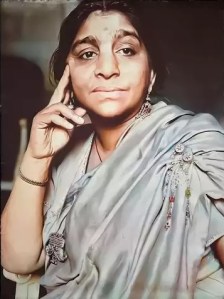
Sarojini Naidu Indian 1879 – 1949
What do you sell O ye merchants? Richly your wares are displayed. Turbans of crimson and silver, Tunics of purple brocade, Mirrors with panels of amber, Daggers with handles of jade.
What do you weigh, O ye vendors? Saffron and lentil and rice. What do you grind, O ye maidens? Sandalwood, henna, and spice. What do you call, O ye pedlars? Chessmen and ivory dice.
What do you make, O ye goldsmiths? Wristlet and anklet and ring, Bells for the feet of blue pigeons Frail as a dragon-fly’s wing, Girdles of gold for dancers, Scabbards of gold for the king.
What do you cry, O ye fruitmen? Citron, pomegranate, and plum. What do you play ,O musicians? Cithar, sarangi and drum. what do you chant, O magicians? Spells for aeons to come. What do you weave, O ye flower-girls?
With tassels of azure and red? Crowns for the brow of a bridegroom, Chaplets to garland his bed. Sheets of white blossoms new-garnered To perfume the sleep of the dead.




 Poets Corner