The Place of the Damned

Jonathan Swift
Irish
1667 – 1745

All folks who pretend to religion and grace,
Allow there’s a HELL, but dispute of the place:
But, if HELL may by logical rules be defined
The place of the damned -I’ll tell you my mind.
Wherever the damned do chiefly abound,
Most certainly there is HELL to be found:
Damned poets, damned critics, damned blockheads, damned knaves,
Damned senators bribed, damned prostitute slaves;
Damned lawyers and judges, damned lords and damned squires;
Damned spies and informers, damned friends and damned liars;
Damned villains, corrupted in every station;
Damned time-serving priests all over the nation;
And into the bargain I’ll readily give you
Damned ignorant prelates, and counsellors privy.
Then let us no longer by parsons be flammed,
For we know by these marks the place of the damned:
And HELL to be sure is at Paris or Rome.
How happy for us that it is not at home!

Mother

We present this work in honor of Mother’s Day.

05-08 Ridge
Lola Ridge
Irish
1873 – 1941

Your love was like moonlight
turning harsh things to beauty,
so that little wry souls
reflecting each other obliquely
as in cracked mirrors…
beheld in your luminous spirit
their own reflection,
transfigured as in a shining stream,
and loved you for what they are not.

You are less an image in my mind
than a luster
I see you in gleams
pale as star-light on a gray wall…
evanescent as the reflection of a white swan
shimmering in broken water.

Clearing Out

We present this work in honor of the poet’s 70th birthday.

04-22 Dawe
Gerald Dawe
Irish
b. 1952

I pick up a ball of twine
to tie-off newspapers
for recycling –

thick brown twine
that’s been here for ages –
twine from the butchers,

twine from the electricians,
twine for parcels
the kind everyone had –

alongside candles,
Camp coffee, waxed oven paper,
little bottles of essences –

the last thing
you’d ever think of
until you’d go looking

in the cubby hole
under the stairs
where the splintered mirror

lies upended,
reflecting whatever comes its way –
all those quick glances

before work each morning
or last thing at night,
taking in the sunlight,

the frost and the rain,
the unfamiliar heat,
the bedroom quiet.

Easter Day

We present this work in honor of Easter Day.

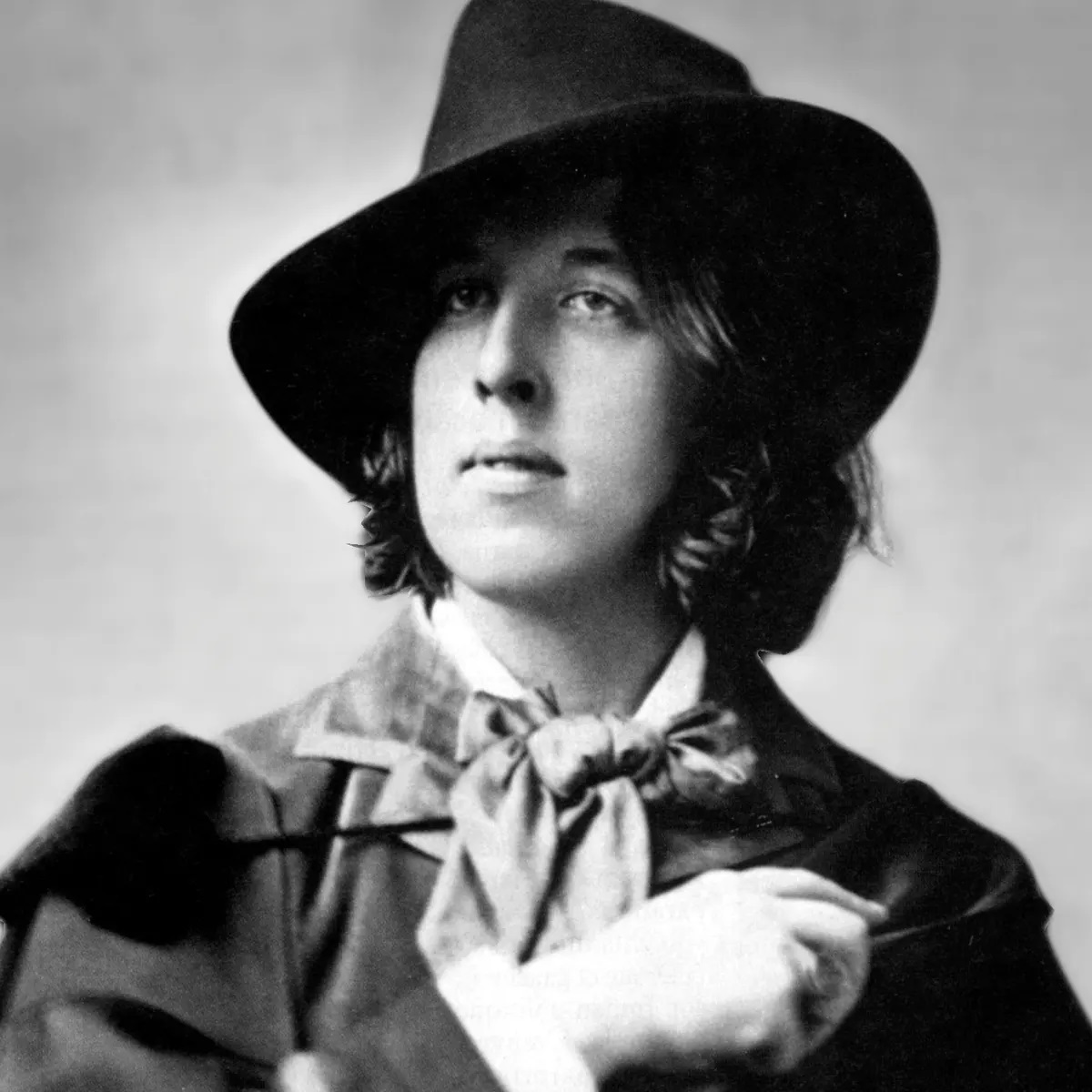
04-17 Wilde
Oscar Wilde
Irish
1854 – 1900

The silver trumpets rang across the Dome:
The people knelt upon the ground with awe:
And borne upon the necks of men I saw,
Like some great God, the Holy Lord of Rome.

Priest-like, he wore a robe more white than foam,
And, king-like, swathed himself in royal red,
Three crowns of gold rose high upon his head:
In splendor and in light the Pope passed home.

My heart stole back across wide wastes of years
To One who wandered by a lonely sea,
And sought in vain for any place of rest:
“Foxes have holes, and every bird its nest,

I, only I, must wander wearily,
And bruise My feet, and drink wine salt with tears.”

Scene-Shifter Death

03-29 O'Neill
Mary Devenport O’Neill
Irish
1898 – 1967


As it is true that I, like all, must die,
I crave that death may take me unawares
At the very end of some transcendent day;
May creep upon me when I least suspect,
And, with slick fingers light as feather tips,
Unfasten every little tenuous bolt
That held me all my years to this illusion
Of flesh and blood and air and land and sea.

I’d have death work meticulously too –
Splitting each moment into tenths of tenths,
Replacing each infinitesimal fragment
Of old dream-stuff with new.

So subtly will the old be shed
That I’ll dream on and never know I’m dead.

Christy Brown Came to Town

03-15 Harris
Richard Harris
Irish
1930 – 2002

Christy Brown came to town riding on a wheelchair

Christy Brown came to town riding on a wheelchair
Back strapped to wheel and chair
Freewheeling down all his days
Into the byways in our heads
Visions bursting from his pen
Ink in blood, left foot in rapture
Riding through Fleet Street pulp
Past paper stand and paste
Ploughing stairs to heaven
Riding on and on and on
His chariot wheels
Conquering heroes in space
In the time allotted for his spin.
Reared in masses his childhood
Playpen on concrete slabs
Turned into flowing fountains
In his fountain pen toes
Ceasing to suffer in the kennel of his bark
Spent dark years with his ears
Tied to his mother’s tongue.
Where are you mother?
I am here, I am here Christy
Growing flowers in your yard
Sending fruit to the marketplace in your soul
Patiently bending my breasts
To feed the hunger in your mind.
Dear bended lady
Drawing she drew in midnight whispers
The elements of verse
Vocalising grammar, building his armory for battle
Filling his long, sleepless, limping nights
With the music of her challenge
And she took a dead season from her womb
And built a birth as bright as Christmas.
In his schoolroom slum
That buried some and crippled most
The toast from her womb grew legs in her words
And walked long distance to the corners of the eart
Striding beyond Getsemane past the Avenue of the Sorrows
Out of Golgatha into resurrection.

Christy Brown came to town riding on a donkey

Christy Brown came to town riding on a donkey
Streets in palms carpeting his Sunday visit
He rode barebacked the donkey of the Apocalypse
Over bridges where crippled water stood still
In the lame shores of our crime.
He rode heaven high over tears and pity
Through the attending city
Where skeletons hid high in the cupboards of our complacency
He rode on and on and on and on her rode
On the laughter in his size
Everlasting in song
Storming our ears in wonder
Making his face shine upon us
And throwing from the seaweeds of his wisdom
Iodine
To heal the wounds of a waiting world.

To Miss Whyte on Seeing a Picture of Her Designed for Her Father

z 03-07-22
Henrietta Battier
Irish
c. 1751 – 1813

To say you are lovely is to say no more,
Than what ten thousand must have said before;
To say that beauty and her handmaid grace,
Attend your footsteps and illume your face,
Is truth, dear maid! in the most literal sense,
Your form possessing every excellence:
Yet face and shape may be pourtray’d by art;
But who can paint the beauties of your heart,
The glow of tenderness and filial joy,
That only fervent bliss without alloy,
Which sweetly mantles on your virgin cheek,
Whene’er your honour’d father’s name you speak?—
Thus, heavenly maid! the reason is reveal’d
Why every artist in your likeness fail’d;
Their earthy pencils could not draw the line
Between mere beauty and the rays divine,
That prove your form all lovely and refin’d,
The casket only of a lovelier mind.

The Cloister of Bones

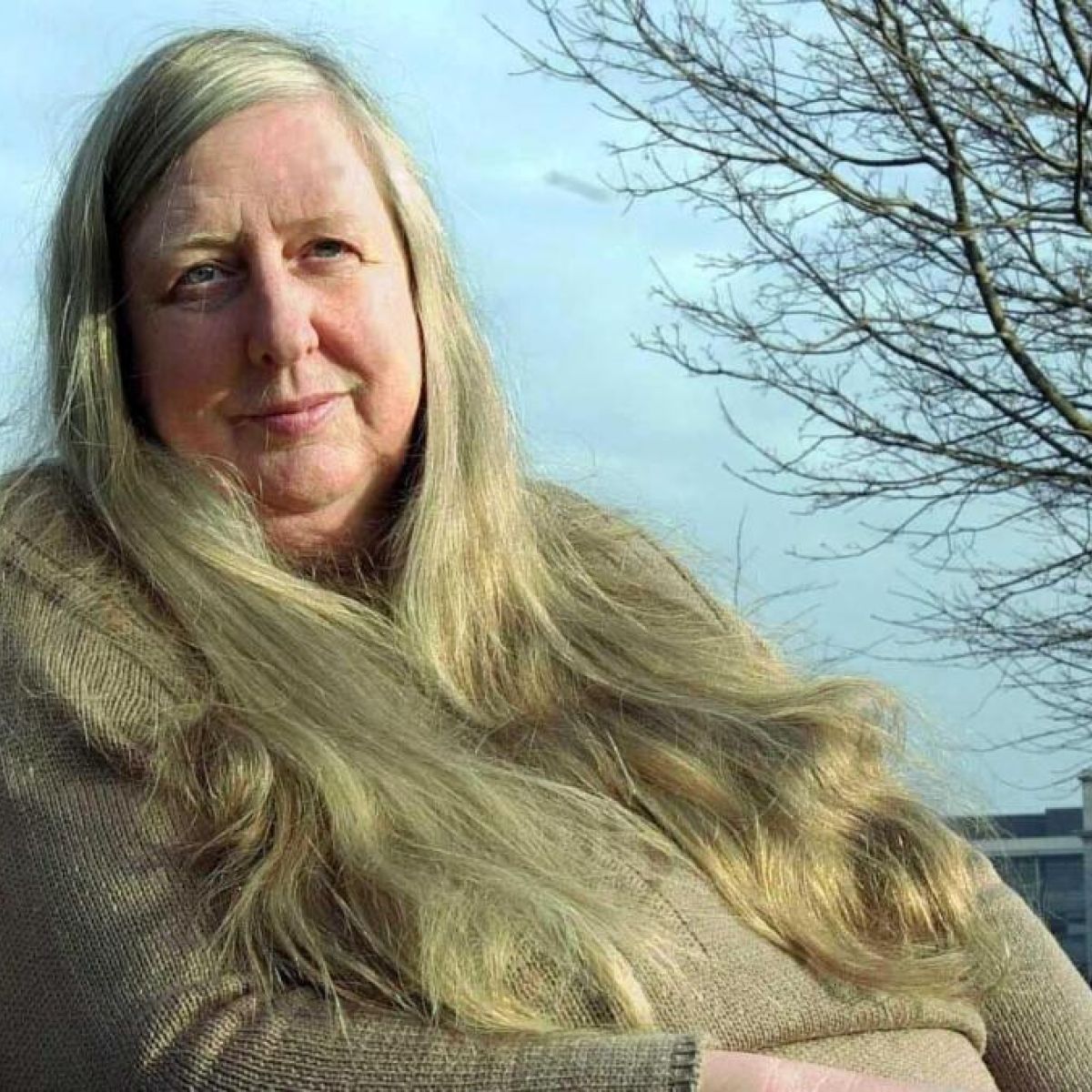
03-04 Ni Cuilleanain
Eiléan Ní Chuilleanáin
Irish
b. 1942

I begin from the highest point,
Best of all a belltower.

I see the tops of heads, cobbles,
Terraces all scuttling down
As if they hunted something buried
Between ledges where tables are set in the morning,
Under plants that grow over walls and pergolas,
The slopes of sheds, the stashed pruning-shears,
Under the measured walk of cats.

I am searching for a shape, a den, watching
For the cloistering blank of a street wall,
A dark reticence of windows
Banked over an inner court,
Especially rooves, arched and bouncing
Naves; a corseted apse,
And always, even if the chapel sinks
Deep inside, lit from a common well,
I search for hints of doors inside doors,
A built-in waiting about
Of threshold and washed floors,
An avid presence demanding flowers and hush.

If I guess right I hope for
A runner of garden, the right length
For taking a prayerbook for a walk,
A small stitching of cemetery ground,
Strict festivals, an hour for the tremble
Of women’s laughter, corners for mile-high panics:

And to find the meaning of the women’s Christmas.

I Heard a Bird at Dawn

02-17 Stephens
James Stephens
Irish
1880 – 1950

I heard a bird at dawn
Singing sweetly on a tree,
That the dew was on the lawn,
And the wind was on the lea;
But I didn’t listen to him,
For he didn’t sing to me.

I didn’t listen to him,
For he didn’t sing to me
That the dew was on the lawn
And the wind was on the lea;
I was singing at the time
Just as prettily as he.

I was singing all the time,
Just a prettily as he,
About the dew upon the lawn
And the wind upon the lea;
So I didn’t listen to him
As he sang upon a tree.

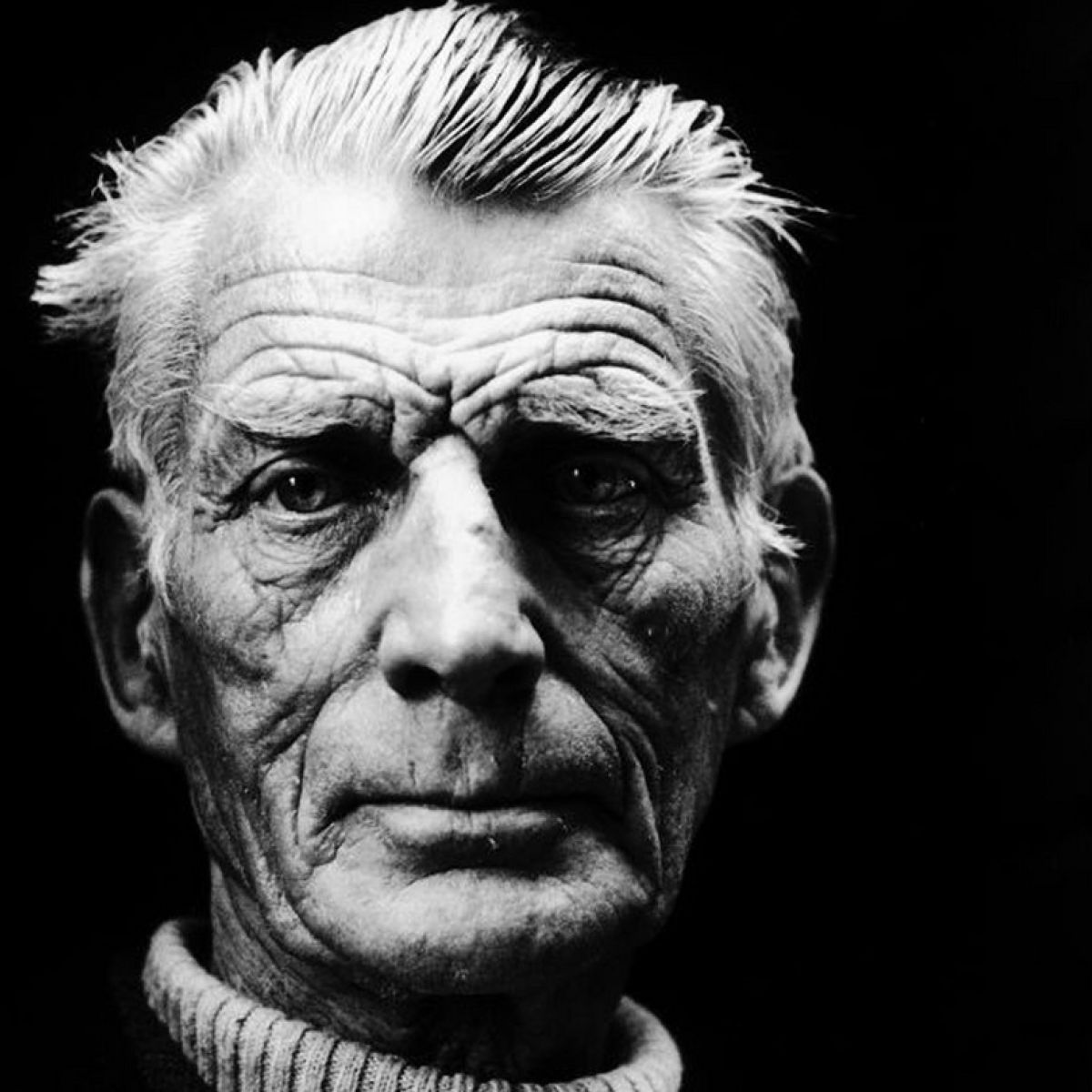
What Would I Do Without This World

01-30 Beckett
Samuel Beckett
Irish
1906 – 1989

what would I do without this world faceless incurious
where to be lasts but an instant where every instant
spills in the void the ignorance of having been
without this wave where in the end
body and shadow together are engulfed
what would I do without this silence where the murmurs die
the pantings the frenzies towards succour towards love
without this sky that soars
above its ballast dust

what would I do what I did yesterday and the day before
peering out of my deadlight looking for another
wandering like me eddying far from all the living
in a convulsive space
among the voices voiceless
that throng my hiddenness