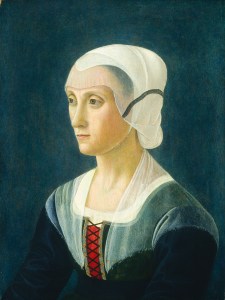
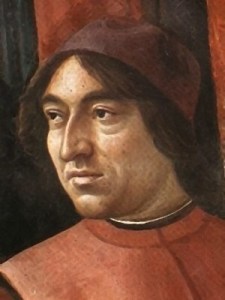
Hope and Fear Consume Beautiful Florence

Veronica Gambara
Italian
1485 – 1550


Hope and fear consumes beautiful Florence
who hoped her famous heroes would provide
liberty and peace, and she calls out repeatedly,
at times gently, and then again wildly:

“O my wise and noble sons, why do you not
follow of those who with iron and boldness
opened for you a real roadway to peace?
You know you admired them so much.

Why are you so late coming to my aid?
I didn’t bear you freely and gladly
so you’d desert me, a grief-striken slave

With what strength you can get together,
with wise counsel and powerful hands,
liberate me, save yourselves and your peace.”

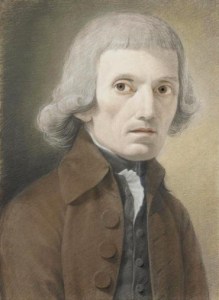
Translation by Ellen Moody

For Who Is Enemy to Woman

We present this work in honor of Women’s Equality Day.

Laura Terracina
Italian
1519 – 1577


So deep does envy’s arrow pierce your heart,
That woman you treat so vile.
Against woman, male does not war,
In all other creatures of the Earth.

O enemy of heaven, and of nature,
How dare you raise hand,
Against so young and beautiful a vision,
Where comes, this, your so perverse desire?

The divine and goodly maker, of your rib,
Of beautiful design, for you brought forth woman,
So, that of one faith, and one love,
In this realm, you would be united!

Well may you claim glory and pride,
Among lions cruel, and evil beasts,
Yet however by nature violent they be,
To the female, their male forbears.

Perhaps not first, nor second,
To your own ill, you will do what you would,
But hold. In peace with your woman live:
For behind the Lion, the Lioness doth lie.

from Il Giorno

We present this work in honor of the 225th anniversary of the poet’s death.

Giuseppe Parini
Italian
1729 – 1799


Swiftly now the blade,
That sharp and polished at thy right hand lies,
Draw naked forth, and like the blade of Mars
Flash it upon the eyes of all. The point
Press ‘twixt thy finger-tips, and bowing low
Offer the handle to her. Now is seen
The soft and delicate playing of the muscles
In the white hand upon its work intent.
The graces that around the lady stoop
Clothe themselves in new forms, and from her fingers
Sportively flying, flutter to the tips
Of her unconscious rosy knuckles, thence
To dip into the hollows of the dimples
That Love beside her knuckles has impressed.

Translation by W.D. Howells

I Concern Myself with You No More

Lucrezia Tornabuoni
Italian
1427 – 1482


I concern myself with you no more;
I have taken up strong arms against you;
I do not answer when you call;
I ridicule and deride you instead.

O enemy, I now have passed
The dubious way.
My Jesus has freed me;
You gain nothing by remaining.
I have known his grace, so I will not fall;
No longer tempt me with hook and bait
I do not answer when you call;
I ridicule and deride you instead.

You believe you have good reason
To shower me with pleasures;
But I no longer think of you
So I will not offend my Lord.
I want you to leave me be,
I no longer want to hear your cries.
I do not answer when you call;
I ridicule and deride you instead.

Who makes his way to the side of Christ,
Has little need of your words;
Who takes care to stop his ears
Is not harmed by your calls.
I go to follow him who died on the cross;
Do what you will, I desire you not.
I do not answer when you call,
I ridicule and deride you instead.

Now I want you to leave me be,
With your threat of mortal wounds!
I will think only on my sins
And on God, whose bounty is infinite.
I want now to lead my life
So that God will love me.
I do not answer when you call;
I ridicule and deride me instead.

Now show me what you can do
How many pleasures you know.
If you were you and of your party,
You would have from me nothing else.
Consider my struggle at an end
With your false and trivial ways!
I do not answer when you call,
I ridicule and deride you instead.

Translation by Jane Tylus

What Infinite Providence and Art

We present this work in honor of the 650th anniversary of the poet’s death.

Petrarch
Italian
1304 – 1374


What infinite providence and art
He showed in his wonderful mastery,
who created this and the other hemisphere,
and Jupiter far gentler than Mars,

descending to earth to illuminate the page
which had for many years concealed the truth,
taking John from the nets, and Peter,
and making them part of heaven’s kingdom.

It did not please him to be born in Rome,
but in Judea: to exalt humility
to such a supreme state always pleases him;

and now from a little village a sun is given,
such that the place, and nature, praise themselves,
out of which so lovely a lady is born to the world.

Translation by A.S. Kline

Ballad I

We present this work in honor of the poet’s 570th birthday.

Angelo Poliziano
Italian
1454 – 1494


Maidens, I found myself one morn serene
Of middle May within a garden green.
Violets bloomed round about and lilies too
In verdant grass and buds of every hue,
Azure and gold and purest white and red,
Whereat to gather them my fingers sped,
That I might deck therewith my flaxen hair
And weave a garland for my forehead fair

But when I’d well-night culled a lapful, lo,
I saw the roses multi-coloured, so
I ran to fill my skirts with them and they
Breathed such rare fragrancy that straight away
I felt awaken in this heart of mine
Tender desire and happiness divine.

To savour the sweet roses I was fain,
But to describe their loveliness were vain;
Some I beheld just bursting into flower,
Some still in bud, some who had spent their dower:
Then Love said unto me: “Go, gather them
Thou seest most sweetly blooming on the stem!”

When the rose every petal doth unfold,
When she is tenderest, fairest to behold,
Before her loveliness hath passed its prime,
To set her in a garland it is time.
So, maidens, let us go and pull the rose
When she most sweetly in the garden blows.

Translation by Lorna de’Lucchi

Madrigal V

We present this work in honor of the 420th anniversary of the poet’s death.

Isabella Andreini
Italian
1562 – 1604


My charming murderer,
So quick to wound, but slow in healing me,
After a sighing vain,
A yearning, an insane delirium,
More handsome than ever turned his glance on me,
Then, like lightning, fled.
Thus my eyes he bedazzled—broke my heart.

Translation by James Wyatt Cook

When It’s Dark

In honor of Republic Day, we present this work by one of Italy’s greatest war poets.

Helle Busacca
Italian
1915 – 1996


We went out around midnight into the deserted Milan
streets, orso Italia, with Anna Maria Ortese
and Massimo Leli
and Guido Ballo and I don’t know who else,
and I held the tender hand
of a little girl whose black curls
and big eyes I remember but not her name,
and all of a sudden she said in a loud voice:
“It’s dark. When it’s dark, we must be quiet.”

Well then, I thought, we must be quiet all the time.

Translation by Margaret Spiegelman

Let Us Live

Catullus
Italian
84 B.C. – 54 B.C.


Let us live, my Lesbia, and let us love,
and let us value all the rumors of
more severe old men at only a penny!
Suns are able to set and return:
when once the short light has set for us
one perpetual night must be slept by us.
Give me a thousand kisses, then a hundred,
then another thousand, then a second hundred,
then immediately a thousand then a hundred.
then, when we will have made many thousand kisses,
we will throw them into confusion, lest we know,
or lest anyone bad be able to envy
when he knows there to be so many kisses.