We present this work in honor of the 410th anniversary of the poet’s death.
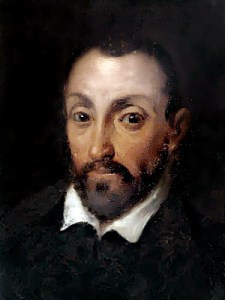
Giovanni Battista Guarini Italian 1538 – 1612
Sweet and dear kisses, sustenance of my life, which now steal away, now give back my heart for your sake I must learn how a stolen heart feels no pain of dying and yet dies. All that is sweet in love, whenever I kiss you, oh sweetest roses, resides in you. And if I could, with your sweet kisses, end my life— oh what a sweet death!
The song of little birds from spray to spray, The fragrant breeze that wafts among the flowers, The lights that in transparent liquors play, Awaking laughter in these eyes of ours,
Are here since nature and the heavens agree With him who willeth that the whole world fall Under love’s spell; hence sweetest melody And fragrance thrill earth, wind, and waters all.
Wherever foot doth tread and eye doth rove A passionate spirit kindleth, fraught with love, Which giveth warmth before the summer days; At his caressing smile and soft, sweet gaze
The flowers don brilliant hues, the grass grows green, The waves are quieted, the skies serene.
Ha, the gentlest that there ever was made! The pleasantest that any woman knew! Most perfect to receive a high acclaim! The best beloved of any woman too! Of my true heart ever the sweetest food! My only love on earth, my paradise, All that I love, my sweetest desire, And the most perfect joy of my eyes! Your sweetness in me fierce war does inspire.
Your sweetness has truly forced its way Into a heart, that never thought to rue Such a state, yet has been so inflamed, By ardent desire, life would leave it too, If Sweet Thought did not comfort it anew: But Memory comes to lie with it, and I Hold and embrace you in my thought the while, Yet when your sweet kisses are denied, Your sweetness in me fierce war does inspire.
My sweet love, loved with all my heart, I say, The thought does not exist that could remove That sweet glance from my heart, that your gaze Enclosed within it: Nothing could so do – Nor your voice, nor gentle touch of those two Dear hands, that barely causing me to sigh, Wish everywhere to search and to enquire: Yet when I cannot see you with my eyes, Your sweetness in me fierce war does inspire.
Fairest and best to capture my heart, I Pray you, remember me: this I require, For when I cannot see you as I desire Your sweetness in me fierce war does inspire.
Beside a fountain in a little grove That fresh green fronds and pretty flowers did grace, Three maidens sat and talked methinks of love. Mid golden locks, o’ershadowing each sweet face,
For coolness was entwined a leaf-green spray, And all the while a gentle zephyr played Through green and golden in a tender way, Weaving a web of sunshine and of shade.
After a while, unto the other two One spoke, and I could hear her words: “Think you That if our lovers were to happen by We would all run away for very fright?”
The others answered her: “From such delight She were a little fool who’d wish to fly!”
How often do we see a little stream That trickles from Alpine springs so meagerly Its scanty drops can scarcely slake at all A weary pilgrim’s parched and burning thirst,
Enriched with rain, grow suddenly so proud That nothing can restrain it in its course, For, grown imperious, it carries all In ample tribute to the mighty sea;
Likewise, at first, this tyrant love had but A weak ability to do me harm And begged in vain for victory o’er my thoughts.
But now, he overmasters so my heart That speedily his furor drives to death My Feelings, and my Reason, and my Soul.
We present this work in honor of the 240th anniversary of the poet’s death.
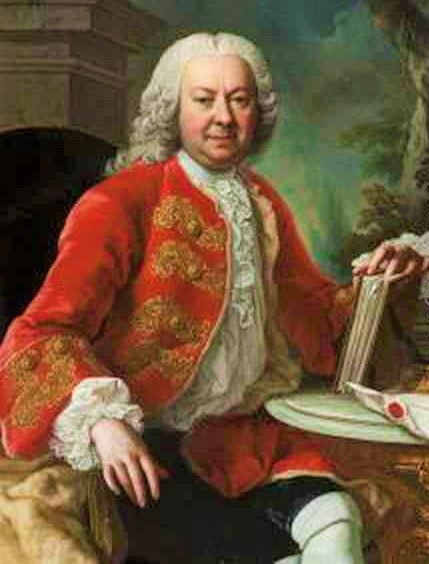
Pietro Metastasio Italian 1698 – 1782
If every man’s internal care Were written on his brow, How many would our pity share Who raise our envy now? The fatal secret, when revealed, Of every aching breast, Would prove that only while concealed Their lot appeared the best.
Once I wrote of leaders violating sacred tracts, of those who cling to their terrible thirst for power; of so many slaughters, the cruel campaigns of Kings, of blood-brothers at battle, illustrious shields spattered with kindred gore, trophies taken from would-be allies, cities widowed once again of their countless peoples: of these, I confess, I once wrote. It is enough to record such evil. Now, all-powerful God, take, I pray, my sacred song, loosen the voices of your eternal, seven-fold Spirit; unlock the innermost chambers of my heart, that I, Proba, the prophet, might reveal its secrets. Now I spurn the nectar of Olympus, find no joy in calling down the Muses from their high mountain haunts; not for me to spread the idle boast that rocks can speak, or pursue the theme of laureled tripods, voided vows, the brawling gods of princes, vanquished votive idols: Nor do I seek to extend my glory through mere words or court their petty praise in the vain pursuits of men. But baptised, like the blest, in the Castalian font – I, who in my thirst have drunk libations of the Light – now begin my song: be at my side, Lord, set my thoughts straight, as I tell how Virgil sang the offices of Christ.
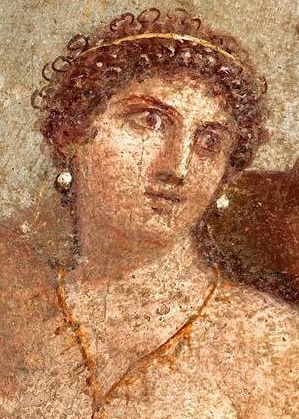
At last. It’s come. Love, the kind that veiling will give me reputation more than showing my soul naked to someone. I prayed to Aphrodite in Latin, in poems; she brought him, snuggled him into my bosom. Venus has kept her promises: let her tell the story of my happiness, in case some woman will be said not to have had her share. I would not want to trust anything to tablets, signed and sealed, so no one reads me before my love— but indiscretion has its charms; it’s boring to fit one’s face to reputation. May I be said to be a worthy lover for a worthy love.
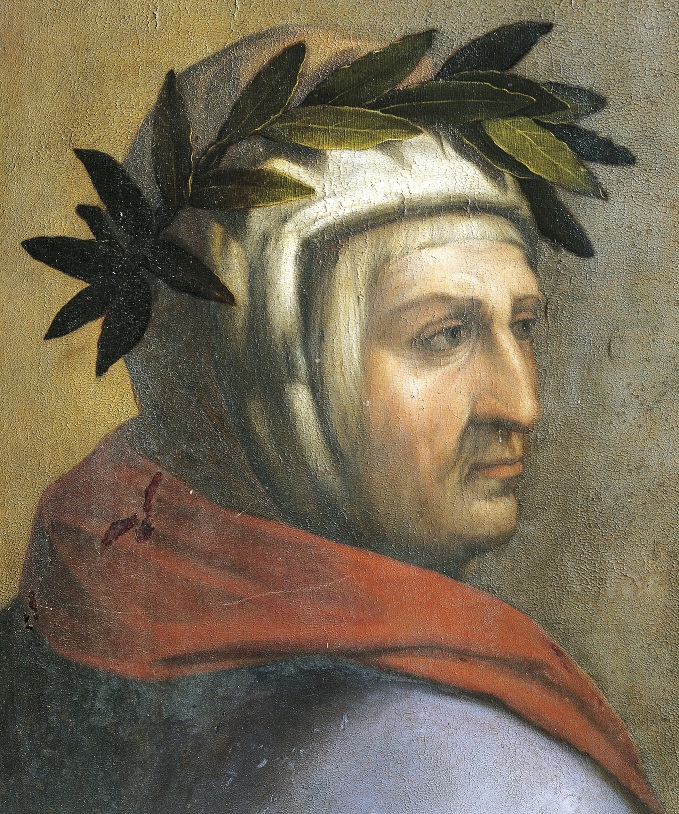
A lady asks me – I speak for that reason Of an effect – that so often – is daring And so haughty – he’s called Amore: He who denies him – now realise the truth! I speak – to those present – with knowledge, Owning no expectation – that the base-hearted Can gain understanding through explanation: Nor that – without practical demonstration I have the talent – to prove at will Where he lives, or who gave him creation, Or what his power is, or what his virtue, His essence too – and his every movement, Nor the delight – so that we say: ‘to love’, Nor whether a man can show him to gazing.
In the place – that memory inhabits He has his station – and takes on form Like a veil of light – born of that shadow Which is of Mars – that arrives and remains; He is created – has sensation – name, From the soul, manner – from the heart, will. And comes from visible form that takes on, And embraces – in possible intellect, As in the subject – location and dwelling. And yet he has no weight in that state Since he is not as a quality descending: Shines out – of himself perpetual impression; Takes no delight – except in awareness; Nor can scatter his likenesses around. He is not virtue – but out of that comes Which is perfection – (so self-established), And through feeling – not rationally, I say; Beyond balance – yet proclaiming judgement, That will itself – ’stead of reason – is valid: Poor in discernment – so vice is his friend. Oft from his power then death will follow, He’s strong – and, virtue opposing him, Thus runs counter to what brings succour: Not that he is by nature in conflict; But twisted awry from true perfection By fate – no man possessor of life can say That once established – he has no lordship. Likewise he has power though men forget.
He comes into being – when will is such That a further measure – of nature’s – at play; Then he will never adorn himself – with rest. Moving – changing colour, laughing through tears, Contorting – the features – with signatures of fear; Scarce pausing; – yet you will note of him He’s most often found with people of worth. His strange quality gives rise to sighing, And makes a man gaze – into formless places Arousing the passion that stirs a flame, (No man can imagine him who’s not known him) Unmoving – yet he draws all towards him, Not turning about – to discover joy: Nor minded to know whether great or small. From his like he elicits – the complex glance That makes – the pleasure – appear more certain: Nor can stay hidden – when he is met with. Not savage indeed – yet beauty his arrow, So that desire – for fear is – made skilful: Following all merit – in the piercing spirit. Nor can be comprehended from the face: Seen – as blankness fallen among objects; Listening deep – yet seeing not form itself: But led by what emanates from it. Far from colour, of separate being, Seated – in midst of darkness, skirting the light, Yet far from all deceit – I say, worthy of trust, So that compassion is born from him alone.
Canzone, confidently, now you may go Wherever you please, I’ve adorned you so Your reasoning – will be praised by everyone Who makes the effort to comprehend you: though You will reveal no art to other than them.






 Poets Corner