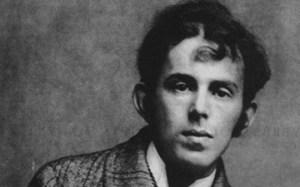
We present this work in honor of the 85th anniversary of the poet’s death.
Osip Mandelstam Russian 1891 – 1938
My age, my beast, who will ever Look into your eyes And with his own blood glue together The backbones of two centuries? Blood the builder gushes From the throat of earthly things, Only the parasite trembles On the threshold of new days.
As long as it holds life, a creature Must carry to the end a spine, And a wave plays With the unseen backbone. Like a child’s tender cartilage Is the age of earth’s infancy— Once more, like a sacrificial lamb, The crown of life’s skull is offered up.
To wrest the age from captivity, To begin a new world, The knees of gnarled and knotted days Must fit together like a flute. It is the age that rocks the wave With human yearning, And in the grass an adder breathes The golden measure of the age.
And again the buds will swell, Shoots of greenery will spring up, But your backbone is broken, My beautiful, pathetic age. And with a senseless smile You look back, both cruel and weak, Like a beast that once was lithe, Upon the prints of your own paws.
Blood the builder gushes From the throat of earthly things, And the seas’ warm cartilage splashes ashore like a burning fish. And from the high bird netting, From humid billows of azure Cool indifference pours, pours down On your mortal injury.
We present this work in honor of the poet’s 80th birthday.
Abdelhamid Laghouati Algerian 1943 – 2021
To embrace the stone and reinvent the tropics hug the rock till it crumbles redo the desert people it with love pick up the stone turn it into the plinth of a day.
We present this work in honor of the 25th anniversary of the poet’s death.
Vivian Virtue Jamaican 1911 – 1998
Like uncombed urchin suns they blaze along The public border of this autumn garden; Their sallow, bronze and golden faces harden Against the coming frost, as keen gusts throng The dusk, scattering the frail evensong Of some late robin. Sidling the dew comes Upon them—grave-gay last chrysanthemums— As, at a parting, tears betray the strong.
Why does he linger so intently gazing Upon them, this last straggler in the park— Has he not heard the keeper’s closing bell? I wish I had not seen his sere hand raising In an intolerable gesture of farewell,
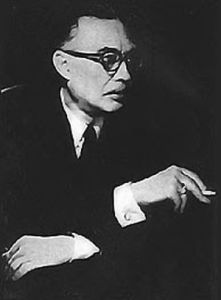
We present this work in honor of the 65th anniversary of the poet’s death.
Abdel Rahman Shokry Egyptian 1886 – 1958
Life is but a continual dying, goodness and pleasure are but borrowed. Would that I were like the flower whose life is but a summer; then I would fade before the afflictions of winter. To life with its pleasures, from me, one greeting; but ah, a thousand to peace-giving death ! Who will convey my greeting unto the dead? Peace be upon them… nay , upon me: For in their graves they have no need of mercy as I do in my life.
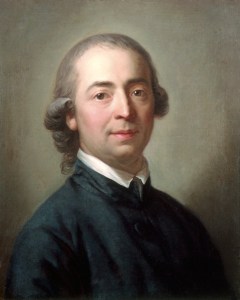
We present this work in honor of the poet’s 415th birthday.
John Milton English 1608 – 1674
How soon hath Time, the subtle thief of youth, Stol’n on his wing my three-and-twentieth year! My hasting days fly on with full career, But my late spring no bud or blossom shew’th.
Perhaps my semblance might deceive the truth That I to manhood am arriv’d so near; And inward ripeness doth much less appear, That some more timely-happy spirits endu’th.
Yet be it less or more, or soon or slow, It shall be still in strictest measure ev’n To that same lot, however mean or high,
Toward which Time leads me, and the will of Heav’n: All is, if I have grace to use it so As ever in my great Task-Master’s eye.
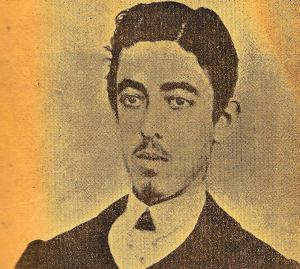
We present this work in honor of the 150th anniversary of the poet’s death.
Manuel Acuña Mexican 1849 – 1873
Without tears, without complaints, without farewells, without a sob! We carried on until the last… fortune brought us here with the same objective, we both came to bury the soul beneath the tomb of scepticism.
Without tears…tears have no power to bring a cadaver back to life; our flowers fall and they turn but at least in the turning, they leave us with dry sight and a firm conscience.
Now you see it! for your soul and mine spaces and the world are deserts… we have concluded both, covered with sadness and affliction, we’re not at the end, we’re just two corpses in search of the shroud of forgetting.
Children and dreamers when we barely left the cradle, pain, still alien to our lives slipping along sweet and serene like a swan’s wing in a lagoon; when the dawn of the first caress hasn’t yet peeked beneath the veil that the virginal ignorance of the child extends between his eyelids and the sky your soul like mine, in its clock advancing the hour and in their darknesses lighting the day, they saw a panorama that opened beneath a kiss and at that dawn’s light; and feeling, upon seeing that countryside the wings of a supreme force, we opened them early, and early they brought us to the end of the voyage.
We gave to earth the tints of love, and of the rose; to our garden nests and songs to our heaven birds and stars; we used up the flowers on the road to fashion from them a crown for the angel of destiny… and today in the midst of sad discord of such an agonized or dead flower one lifts only the pale and deserted bloom that is poisoned by memory.
From the book of life what we write today is the last page… Let’s close it at once and in the sepulchre of lost faith we will also bury our anguish.
And since heaven now concedes that these evils are our last so the soul can prepare to rest, although the final tear cost us we saw the task through to the end. And afterward, when the angel of forgetting has delivered these ashes that guard the painful memory of so many illusions smashed to bits and of so much vanished pleasure, we’ll leave these spaces and return to the tranquil life of earth, now that the night of early pain advances toward and encloses us in the sweet horizons of tomorrow.
Let’s leave these spaces or if you want to, we can try out our breath, a new journey to that blessed region whose only memory resuscitates the cadaver of the soul, upon feeling. Let’s throw ourselves off this world then, where everything is shadow and void, we’ll make a moon from memory if the sun of our love has grown cold; we’ll fly if you like, to the depths of those magic regions and pretending hopes and illusions we’ll smash the tomb and rising on our bold and powerful flight, we will form a heaven between shadows and we will be the owners of that heaven.





 Poets Corner