The History of the Airplane

We present this work in honor of 9/11.

Lawrence Ferlinghetti
American
1919 – 2021


And the Wright brothers said they thought they had invented
something that could make peace on earth
(if the wrong brothers didn’t get hold of it)
when their wonderful flying machine took off at Kitty Hawk
into the kingdom of birds but the parliament of birds was freaked out
by this man-made bird and fled to heaven

And then the famous Spirit of Saint Louis took off eastward and
flew across the Big Pond with Lindy at the controls in his leather
helmet and goggles hoping to sight the doves of peace but he did not
Even though he circled Versailles

And then the famous Yankee Clipper took off in the opposite
direction and flew across the terrific Pacific but the pacific doves
were frighted by this strange amphibious bird and hid in the orient sky

And then the famous Flying Fortress took off bristling with guns
and testosterone to make the world safe for peace and capitalism
but the birds of peace were nowhere to be found before or after Hiroshima

And so then clever men built bigger and faster flying machines and
these great man-made birds with jet plumage flew higher than any
real birds and seemed about to fly into the sun and melt their wings
and like Icarus crash to earth

And the Wright brothers were long forgotten in the high-flying
bombers that now began to visit their blessings on various Third
Worlds all the while claiming they were searching for doves of
peace

And they kept flying and flying until they flew right into the 21st
century and then one fine day a Third World struck back and
stormed the great planes and flew them straight into the beating
heart of Skyscraper America where there were no aviaries and no
parliaments of doves and in a blinding flash America became a part
of the scorched earth of the world

And a wind of ashes blows across the land
And for one long moment in eternity
There is chaos and despair

And buried loves and voices
Cries and whispers
Fill the air
Everywhere
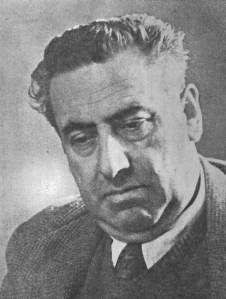
The Leopard’s Spots

We present this work in honor of the 55th anniversary of the poet’s death.

Pablo de Rokha
Chilean
1894 – 1968


To Winett

Oh, peoples! I am like the total fuck up of the world.
The song face to face with Satan himself,
dialogues with the tremendous science of the dead,
and my pain spurts blood at the city.

Even my days are what remains of enormous antiques,
Baby, last night “God” cried between worlds that go
like this, alone, and you say: “I love you”,
when you talk with “your” Pablo, without ever hearing me.
The man and the woman reek of tomb;
my body crumples onto the brute earth
the same as the red coffin of the wretched.

A total enemy, I howl through the streets,
A horror more barbarous, more barbarous, more barbarous
than the baying of a hundred dogs left to die.

Translation by Sebastián Sánchez

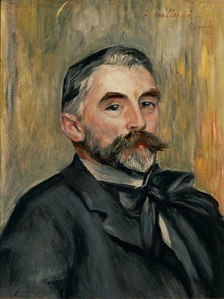
Futile Petition

We present this work in honor of the 125th anniversary of the poet’s death.

Stephane Mallarme
French
1842 – 1898


Princess! to envy the fate of a Hebe
Who appears on this porcelain cup at a kiss
from your lips,
I enjoy my passion but have no rank
other than priest
And I shall scarcely be shown naked on pottery.
As I am not your furry lapdog,
Neither rouge, nor clever games
And I feel your close glance falling on me,

Blonde whose divine coiffeurs are goldsmiths!
Name us… you whose raspberry laughter
Is joined in a flock of tamed lambs
Grazing on vows and bleating to their
heart’s content,
Name us… so that Love with fanlike wings
Combs me, fingering his flute, as I slumber
in the sheepfold,
Princess, name us shepherd of your smiles.

Dreams

We present this work in honor of the poet’s 165th birthday.

Victor Daley
Australian
1858 – 1905


I have been dreaming all a summer day
Of rare and dainty poems I would write;
Love-lyrics delicate as lilac-scent,
Soft idylls woven of wind, and flower, and stream,
And songs and sonnets carven in fine gold.

The day is fading and the dusk is cold;
Out of the skies has gone the opal gleam,
Out of my heart has passed the high intent
Into the shadow of the falling night
Must all my dreams in darkness pass away?

I have been dreaming all a summer day:
Shall I go dreaming so until Life’s light
Fades in Death’s dusk, and all my days are spent?
Ah, what am I the dreamer but a dream!
The day is fading and the dusk is cold.

My songs and sonnets carven in fine gold
Have faded from me with the last day-beam
That purple lustre to the sea-line lent,
And flushed the clouds with rose and chrysolite;
So days and dreams in darkness pass away.

I have been dreaming all a summer day
Of songs and sonnets carven in fine gold;
But all my dreams in darkness pass away;
The day is fading, and the dusk is cold.

The Fool

We present this work in honor of the 140th anniversary of the poet’s death.

Ivan Turgenev
Russian
1818 – 1883


There lived a fool.

For a long time he lived in peace and contentment; but by degrees rumours began to reach him that he was regarded on all sides as a vulgar idiot.

The fool was abashed and began to ponder gloomily how he might put an end to these unpleasant rumours.

A sudden idea, at last, illuminated his dull little brain… And, without the slightest delay, he put it into practice.

A friend met him in the street, and fell to praising a well-known painter…

‘Upon my word!’ cried the fool,’ that painter was out of date long ago… you didn’t know it? I should never have expected it of you… you are quite behind the times.’

The friend was alarmed, and promptly agreed with the fool.

‘Such a splendid book I read yesterday!’ said another friend to him.

‘Upon my word!’ cried the fool, ‘I wonder you’re not ashamed. That book’s good for nothing; every one’s seen through it long ago. Didn’t you know it? You’re quite behind the times.’

This friend too was alarmed, and he agreed with the fool.

‘What a wonderful fellow my friend N. N. is!’ said a third friend to the
fool. ‘Now there’s a really generous creature!’

‘Upon my word!’ cried the fool. ‘N. N., the notorious scoundrel! He swindled all his relations. Every one knows that. You’re quite behind the times.’

The third friend too was alarmed, and he agreed with the fool and deserted his friend. And whoever and whatever was praised in the fool’s presence, he had the same retort for everything.

Sometimes he would add reproachfully: ‘And do you still believe in authorities?’

‘Spiteful! malignant!’ his friends began to say of the fool. ‘But what a brain!’

‘And what a tongue!’ others would add, ‘Oh, yes, he has talent!’

It ended in the editor of a journal proposing to the fool that he should undertake their reviewing column.

And the fool fell to criticising everything and every one, without in the least changing his manner, or his exclamations.

Now he, who once declaimed against authorities, is himself an authority, and the young men venerate him, and fear him.

And what else can they do, poor young men? Though one ought not, as a general rule, to venerate any one … but in this case, if one didn’t venerate him, one would find oneself quite behind the times!

Fools have a good time among cowards.

Translation by Constance Garnett

August Song

Óscar Hahn
Chilean
b. 1938


My love

many things
could have happened in August
but will not happen

many fireflies
could have shone in your eyes
but will not shine

and the month of August will be buried
without pomp or circumstance
without flowers or processions

like so many days
that never got to be trees

like so many trees
that never got to be birds

like so many birds
that never got to fly

Translation by James Hoggard

Algeria: Prison Bestiaries

We present this work in honor of the 50th anniversary of the poet’s death.

Jean Sénac
Algerian
1926 – 1973


I love you that’s true I love you that’s false
crows on my tongue
wage war with swallows
we’ve got blackness inside our backs
But if one day the beloved
or the beauty comes along
we find our spinning tops again
sunlight scars the water
All around the air thins
we throw a shovel
of earth on the thighs
the ivy comes into focus
Migratory pleasures
you bequeath to the heart
decaying nymphs
and we go on living
gropingly under the waves
like crayfish
I love you
for you I write poems
to stop thinking
drunk on images
I invent margins
to prolong you
If I had at least
your name to speak
o my unknown my madwoman of the streets
honored in my veins
like a king by his empire
My needle of gold missing in the hay!

Translation by Justin Vicari

In the Train

We present this work in honor of the 275th anniversary of the poet’s death.

James Thomson
Scots
1700 – 1748


As we rush, as we rush in the Train,
The trees and the houses go wheeling back,
But the starry heavens above the plain
Come flying on our track.

All the beautiful stars of the sky,
The silver doves of the forest of Night,
Over the dull earth swarm and fly,
Companions of our flight.

We will rush ever on without fear;
Let the goal be far, the flight be fleet!
For we carry the Heavens with us, dear,
While the Earth slips from our feet!

Tequila

We present this work in honor of the poet’s 100th birthday.

Álvaro Mutis
Colombian
1923 – 2013


Tequila is a clean flame that clambers up the walls
and shoots over tiled roofs, relief to despair.
Tequila isn’t for sailors
because it blurs the navigational instruments
and dismisses the wind’s tacit orders.
But tequila, on the other hand, enraptures those returning by train
and those driving the train, because it stays faithful
and blind in its loyalty to the rails’ parallel delirium
and to hurried greetings in the stations
where the train pauses to testify to
its inscrutable destination, errant, subject to the inevitable laws.
There are trees under whose shadow it is wonderful to drink it
with the parsimony of those who preach in wind
and other trees where tequila can’t stand the shade
that dims its powers and in whose branches it stirs up
a flower blue as the warnings on bottles of poison.
When tequila waves its fringed, serrated flag,
the battle halts and armies return
the order they intended to impose.
Often two squires accompany it: salt and lime.
But it is always ready to start the conversation
without any more help than its lustrous clarity.
From the start, tequila doesn’t recognize borders.
But there are propitious climates
just as certain hours suggest it, knowing full well: to fix
the time when night arrives at its stores,
in the splendor of an afternoon without obligations,
in the highest pitch of doubt and hesitation.
It is then when tequila offers us its consoling lesson,
its infallible joy, its unreserved indulgence.
Also, there are foods that call for its presence:
those springing from the ground from which it, too, was born.
Inconceivable if they didn’t bond with millenary certainty.
To break that pact would be a grave breach with dogma
prescribed to allay the rough job of living.
If “gin smiles like a dead girl,”
tequila spies on us with the green eyes of a prudent sentry.
Tequila has no history, no anecdote
confirming its birth. It is so from the beginning
because it is the gift of the gods
and, usually, when they promise something they aren’t telling tales.
That is the office of mortals, children of panic and habit.
Such is tequila and so it will be
keeping us company
all the way to the silence from which no one returns.
Praise be, then, until the end of our days
and praise the daily effort toward denying that end.

Translation by Forrest Gander